Why smart managers are moving artist ad budgets from Spotify to YouTube
Learn why experienced managers are shifting ad spend from Spotify to YouTube to monetise content directly and convert streams into ticket sales.

Key Takeaways
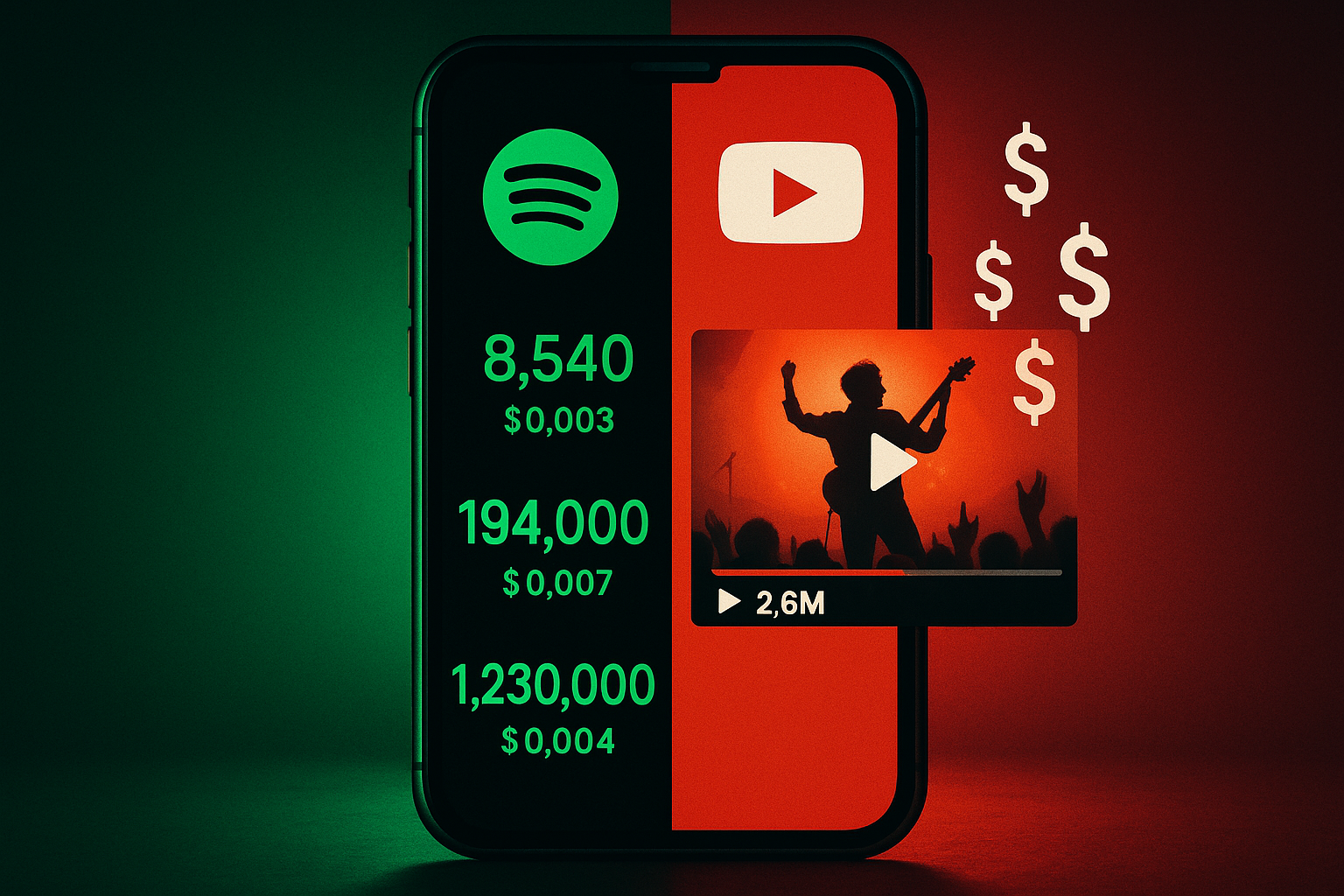
YouTube pays you for views. Spotify pays fractions and keeps the growth.
A music video is an evergreen asset. A Spotify stream disappears after playback.
Video content converts casual fans into live ticket buyers better than audio alone.
Geotargeted YouTube ads let you build audience in cities where you actually tour.
At the 2026 "Music Managers: The New Power" panel, manager Barreto said something that turned heads: stop spending your ad budget to push fans to Spotify. Redirect it to YouTube. That's where the artist earns from the view. That's where video content shows potential ticket buyers exactly what they're paying for before they click purchase. Julie Klein, COO of C3 Management, was on the same stage. The room paid attention.
The spend model most artists get wrong
Most independent artists treat Spotify as the primary growth channel. Streams feel like proof that you're building something. But Spotify pays fractions of a penny per stream and takes zero advertising risk on your behalf. When you run Spotify ads or playlist campaigns to grow your monthly listeners, you're funding another company's product. Not your own.
YouTube works differently. It pays ad revenue directly to your channel. It functions as the world's second-largest search engine, which means your content has a shelf life measured in years, not days. And it gives casual fans a visual proof of concept that converts them into live ticket buyers.
In 2026, with live revenue increasingly central to the independent artist's business model, the platforms that fuel live conversion deserve the marketing spend.
Why YouTube monetises in your favour
Revenue mechanics:
YouTube's Partner Programme pays you for ad impressions served against your content. Your ad spend on discovery can return direct revenue. A music video or live session is an evergreen asset. A Spotify stream is consumed and forgotten.
YouTube's search algorithm surfaces content months and years after upload. Spotify's playlist-driven model does not.
Live conversion:
Video gives a prospective ticket buyer a full emotional preview of the live experience. Spotify gives them audio only. Artists who invest in quality visual content on YouTube consistently report higher live conversion rates, according to managers citing internal data at the 2026 panel.
Targeting precision:
YouTube TrueView and Shorts ads can be targeted by geography (critical for tour routing), interest, and even competing artist audiences. A modest budget directed at a target tour city, running a live performance clip or music video, plants a seed that pays off at the box office.
Who this works for (and who should wait)
This strategy requires at minimum one piece of strong visual content to anchor the campaign. An audio-only lyric video will underperform. If you have no live footage or music video, your first investment should be content production, not ad spend.
This approach is most effective for artists who are actively touring or who have a specific live show, ticket, or merch conversion goal. If you are purely building streaming numbers with no live roadmap, this is the wrong tool for the moment.
How to redirect your ad spend
Step 1: Audit your current spend
List every platform you are currently spending money on to promote your music. Calculate cost per new listener across each. Write it down.
Step 2: Identify your best visual asset
This should be a performance clip, music video, or studio session with strong production quality. Something that communicates the live experience.
Step 3: Set a geo-targeted YouTube campaign
Choose one city where you plan to play in the next 90 days. Run a 30-day TrueView campaign targeting music fans in that city aged 18 to 35. Budget: as little as £150 to £300 can produce meaningful reach in a mid-size UK city.
Step 4: Track the right metric
Measure view-through rate and, where possible, ticket link clicks embedded in the video description. Not just raw views.
Step 5: Reinvest the YouTube ad revenue
As your channel grows and monetises, loop the ad earnings back into the next campaign. This is the compound effect Spotify can never offer.
Step 6: Build a content calendar
Managers who recommend YouTube as a primary channel do so because consistency, not one viral moment, is what builds audience there. Aim for one new piece of visual content per month.
The CEO question
The artist who routes ad spend based on where a platform feels important is making an emotional decision. The artist-as-CEO asks a different question: where does my marketing investment return the most value across revenue, live conversion, and long-term discoverability?
YouTube is not a backup to Spotify. For many independent artists in 2026, it is the primary growth engine. Moving your budget there is not abandoning streaming. It is choosing to build an asset you can monetise, rather than one that monetises the platform.
**
Related Reading:
Ready to streamline your workflow?
Stop piecing together spreadsheets and scattered notes. Join the waitlist for Music Artist Manager and get your entire rollout in one place.
Written By
Gavin Alexander
Senior Marketeer
As the founder of Music Artist Manager, Gavin has spent years at the intersection of music and technology. Seeing firsthand how chaotic release rollouts and split sheets can be, he designed a platform that brings major-label infrastructure to independent artists and their teams. He writes extensively about industry trends, artist leverage, and workflow optimisation.