The Multi-Return rule: Why every promotional pound must do more than one job
Learn why the best managers shift promotional spend to platforms that return on discovery, revenue, and live pipelines — not just streams.

Key Takeaways
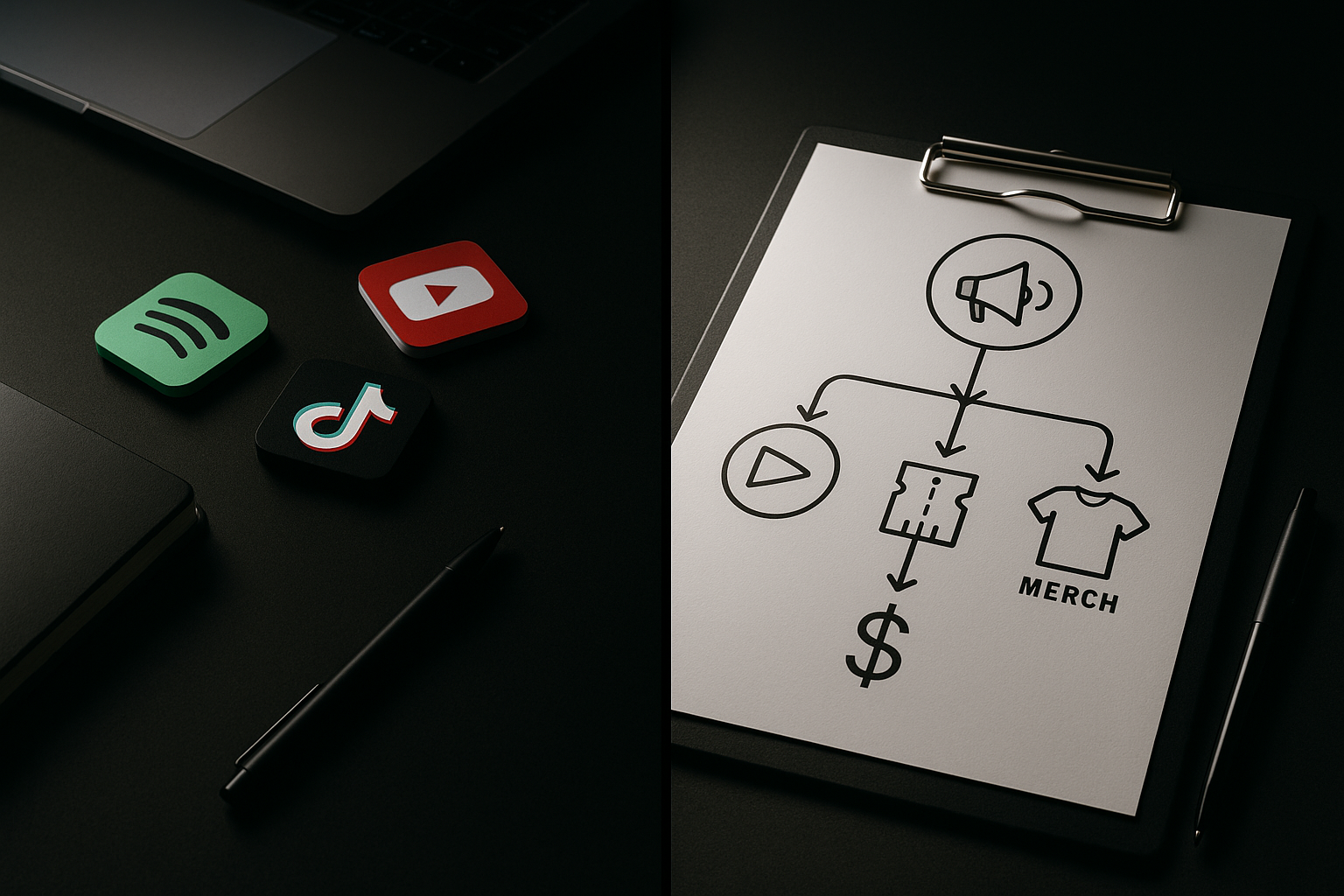
Every promotional pound you spend should return on at least three revenue streams simultaneously.
YouTube campaigns compound across discovery, ad revenue, live bookings, and email growth in ways Spotify never will.
Single-axis spends like Spotify ads produce streams only and nothing you can carry forward into your next campaign.
Track every spend against multiple return vectors before you allocate budget or you are guessing with working capital.
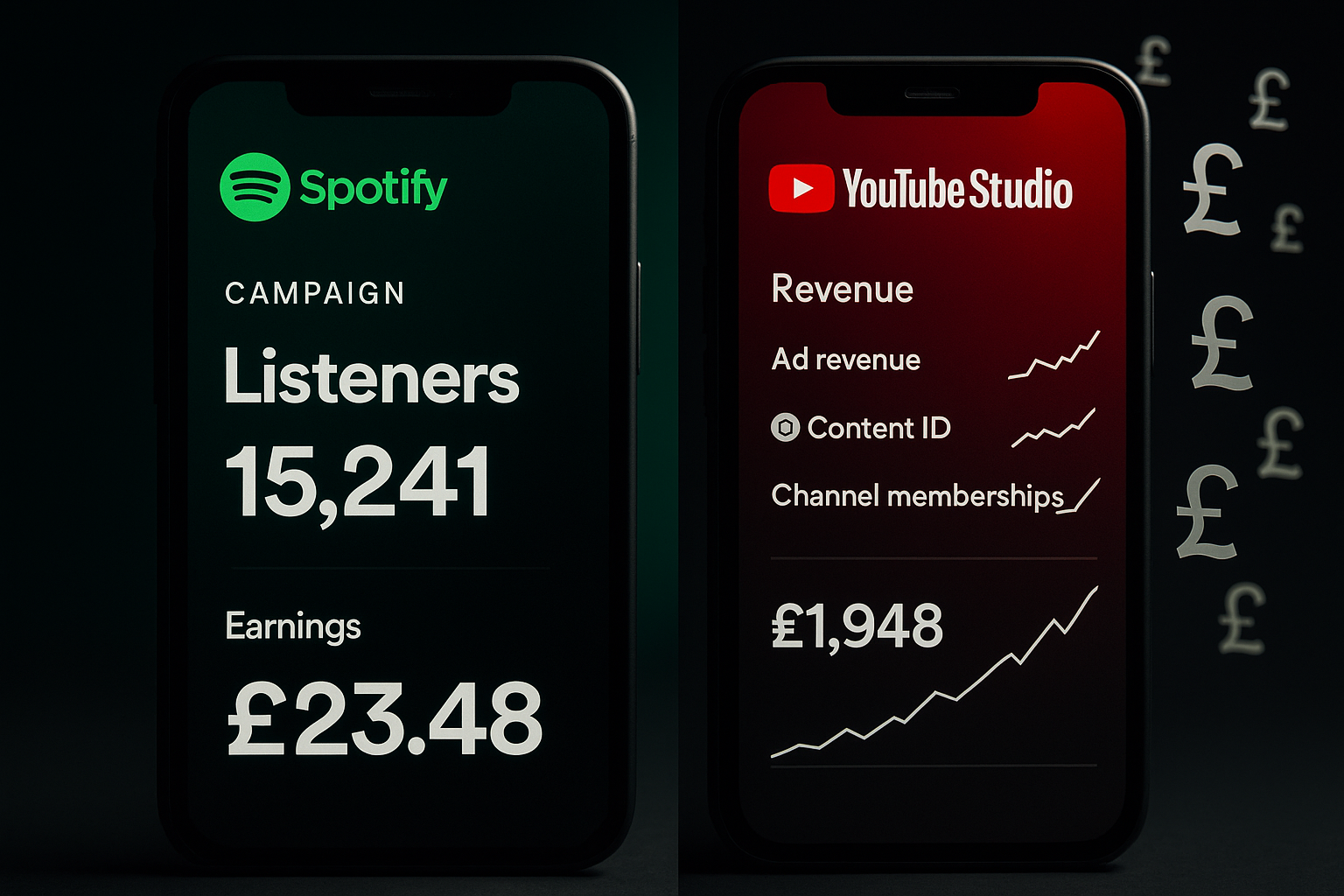
At a recent industry summit on artist management in 2026, Julie Klein (COO of C3 Management, one of the most respected live-touring management firms in the world) made a point that should sit in every independent artist's business plan: when you shift promotional spend from Spotify to YouTube, the promotional pound does multiple jobs at once. It drives discovery, it monetises through ad revenue, and it sets live-show expectations for audiences before they've ever bought a ticket.
That single observation is a lens change. Not a platform preference. A capital allocation principle.
Most independent artists treat a promotional budget as an expense. The managers winning in 2026 treat it as an investment. And they only make investments that return on more than one axis.
The promotional fragmentation problem
The promotional landscape for independent artists has fragmented dramatically. In 2026, artists are expected to operate across streaming, short-form video, long-form video, email lists, live performance pipelines, and sync licensing. Simultaneously, with limited resources.
The result: promotional spend stretched thin, spread across platforms without a strategic framework, producing diluted, untrackable results.
What is shifting beneath the surface is a reframing at the management level. Progressive managers are not asking "which platform should I spend on?" They are asking "which spend produces the most returns across the most revenue streams?" These are fundamentally different questions.
The managers who are winning are applying a capital allocation lens to marketing. The same discipline a fund manager applies to a portfolio. Every allocation must justify itself across multiple return vectors.
What is a multi-return promotional spend?
A spend produces a single return when it drives only one measurable outcome (e.g., Spotify streams from a Spotify campaign). It produces multiple returns when a single spend drives measurable outcomes across two or more distinct revenue streams.
Here is how that distinction plays out in practice:
| Spend type | Platform | Returns generated |
|---|---|---|
| Spotify ad campaign | Spotify | Stream count only |
| YouTube content ad | YouTube | Discovery + monetisation + live pipeline |
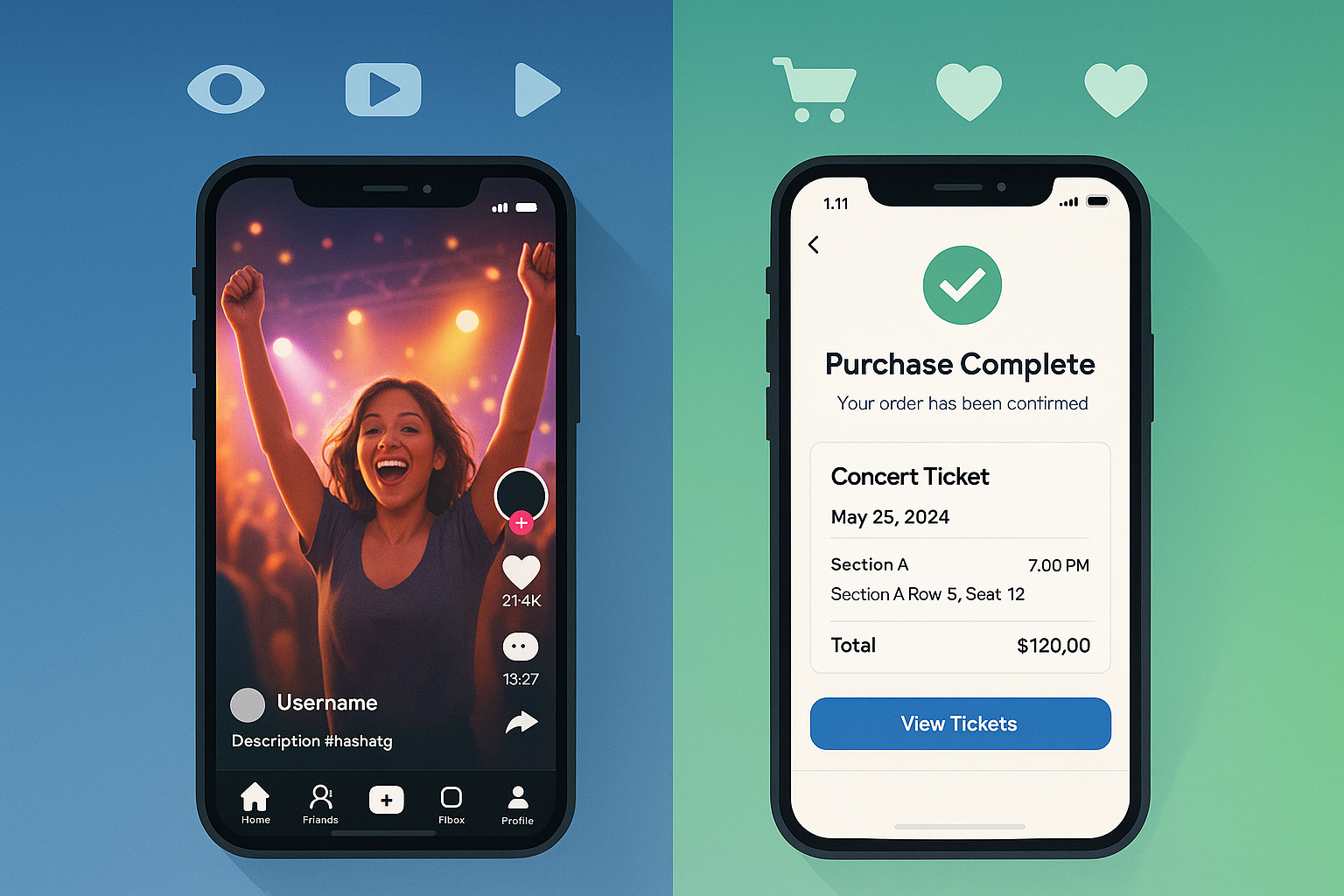
| Short-form video production | TikTok / Reels | Discoverability + sync pitching asset + merch driver |
| Email list campaign | Direct sales + tour pre-sale + merch | |
| Press release + editorial | Blog / Playlist editorial | SEO + streaming context + industry credibility |
The principle: Before allocating budget, map every proposed spend against its return vectors. If it returns on only one axis, it ranks lowest in the allocation. If it returns on three or more axes simultaneously, it leads the budget.
Why this is a systems insight, not a tactics insight
Lyor Cohen built his management and label approach around one core idea: systems that compound. He was not chasing individual moments. He was building machines. The multi-return framework is not about the next campaign. It is about building a promotional system where each spend feeds the next.
A YouTube spend compounds: views → subscriber growth → live audience → merch buyer → email opt-in → tour ticket. A Spotify-only spend terminates: streams → nothing carried forward.
Reality check: who this is for
This framework is most relevant for artists who:
- Have at least one commercially releasable track or project
- Have some promotional budget (even modest: £200–£500 per release cycle)
- Are actively building across more than one revenue stream (not purely streaming)
- Have a manager or are managing themselves with business discipline
This is not for artists whose primary problem is the quality of their music or their live proposition. No promotional framework rescues an underdeveloped product.
It is also worth being honest: this framework requires more planning and tracking than a simple "boost this post" approach. The return is compounding, but it is not instant.
Practical action plan
Before your next promotional spend, run this audit:
1. List every promotional channel you have spent money on in the past 12 months. Write down what you spent and what tangible outcomes you can attribute to each.
2. Map each spend to its return vectors. For each spend, ask: did this return on streams? On audience growth? On live revenue? On merch? On sync opportunities? Count the vectors per spend.
3. Identify your lowest-return spends. Any spend that returned on only one vector (and particularly one that is a closed loop, e.g., Spotify streams with no audience development outcome) goes to the bottom of your next allocation.
4. Rebuild your budget allocation using the multi-return framework. Allocate the largest share of your promotional budget to spends that return on three or more axes. Allocate the smallest share to single-axis spends.
5. Set up measurement. Before you spend, define what you are measuring as a return for each axis. This does not need to be complex. A simple spreadsheet tracking streams, subscriber growth, email sign-ups, merch sales, and live enquiries against each campaign is sufficient.
6. Review quarterly. Your multi-return stack will shift as your career develops. A spend that returned on three axes early in your career may only return on one axis at a later stage, and vice versa. Review the allocation every quarter.
The difference between an artist and an artist-owner
The difference between an artist and an artist-owner is not creative. It is operational. A performing artist asks: What should I perform? An artist-owner asks: Where does this promotional pound work hardest for the business?
Julie Klein's point about YouTube was not a tech recommendation. It was a reminder that every resource decision in an artist's career is a capital allocation decision. The managers who treat it that way build careers with compounding momentum. The ones who don't spend their careers chasing individual moments and wondering why nothing sticks.
Your budget is not an expense. It is working capital. Deploy it like one.
Use Music Artist Manager's Revenue Tracker to map your active revenue streams before planning your next promotional campaign, so you know exactly which axes each spend needs to return on.
[Link to MAM Revenue Tracker / Business Dashboard feature]
**
Related Reading:
- https://www.musicartistmanager.com/blog/live-nation-verdict-touring-power
- https://www.musicartistmanager.com/blog/wrightymedia-technical-briefing-2026-07-23
- https://www.musicartistmanager.com/blog/reclaiming-digital-velocity-architecting-headless-crm
Further Reading:
- [How to be an Artist Manager in 2026 — Julie Klein / C3 Management cited] — artistforartist.com — https://www.artistforartist.com/post/how-to-be-an-artist-manager-in-2026
- [Why your promotional budget belongs on YouTube, not Spotify] — musicartistmanager.com — https://www.musicartistmanager.com/blog/why-your-promotional-budget-belongs-on-youtube-not-spotify
- [Music Marketing Strategies for Labels, Managers & Artists in 2026] — Revelator — https://revelator.com/blog/music-marketing-2026-what-actually-moves-the-needle
- [The Best Ad Strategy for Music Promotion in 2026] — Substream Magazine — https://substreammagazine.com/2026/06/the-best-ad-strategy-for-music-promotion-in-2026-spotify-youtube-combined/
Ready to streamline your workflow?
Stop piecing together spreadsheets and scattered notes. Join the waitlist for Music Artist Manager and get your entire rollout in one place.
Written By
Gavin Alexander
Senior Marketeer
As the founder of Music Artist Manager, Gavin has spent years at the intersection of music and technology. Seeing firsthand how chaotic release rollouts and split sheets can be, he designed a platform that brings major-label infrastructure to independent artists and their teams. He writes extensively about industry trends, artist leverage, and workflow optimisation.