Why you're not sync-ready (and what managers do about it)
Why music supervisors now avoid direct artist contact, and the four admin steps that make you sync-ready before the opportunity arrives.

Why music supervisors now avoid direct artist contact, and the four admin steps that make you sync-ready before the opportunity arrives
In May 2026, artist manager and sync agent Ian Yap said what most managers already know but rarely put in writing: "A lot of artists want opportunities before they understand the cost of them. Syncs, brand deals, releases, playlisting. Many aren't ready. Their rights aren't clear. Their assets aren't ready. Their business structure doesn't exist."
One week later, a music supervisor posted on LinkedIn confirming the other side of this problem. Music supervisors are actively moving away from cold pitches and direct artist contact. They default to labels, publishers, sync agencies, and trusted libraries instead. Intermediaries. Sources they can rely on to deliver cleared, on-budget music without a chase.
The gap between those two statements is the sync opportunity most independent artists are missing.
The structural shift happening in 2026
Sync licensing is one of the most lucrative and brand-building revenue streams available to an independent artist. Placement fees range from hundreds to tens of thousands of pounds depending on the medium. A well-placed sync can introduce an artist to an entirely new audience overnight.
But 2026 has introduced a critical structural shift. The volume of music available to supervisors has exploded, and their workflows have contracted. They don't have time to vet artists they don't already know. They work through trusted intermediaries who pre-clear, pre-qualify, and pre-deliver.
What this means in practice: the bottleneck is no longer discovering opportunity. It's being structurally ready to receive it.
An artist who is fully sync-ready has immediate access via the intermediary network. An artist who is not ready is invisible to it, regardless of how good their music is.
What "sync-ready" actually means: the four pillars
1. Clear rights and ownership
Every split, co-writer, producer credit, and sample clearance must be documented and resolved before a placement enquiry arrives. Supervisors will not wait for you to work out who owns what.
This includes master ownership percentages, publishing splits, and any third-party clearances. In writing. Signed. Dated.
2. Registered works
All masters and compositions registered with your PRO (PRS, ASCAP, SESAC, etc.) and, in markets that require it, with the MLC. Unregistered works cannot generate performance royalties even after a placement.
If your catalogue is not fully registered, you are leaving money on the table even if you secure the placement.
3. Clean, formatted assets
Broadcast-quality stems (instrumental, TV track for dialogue replacement), full mix, and a vocal-up/vocal-down version. Most libraries and supervisors will reject pitches that arrive without stems.
This is not optional. It is table stakes.
4. Correct metadata
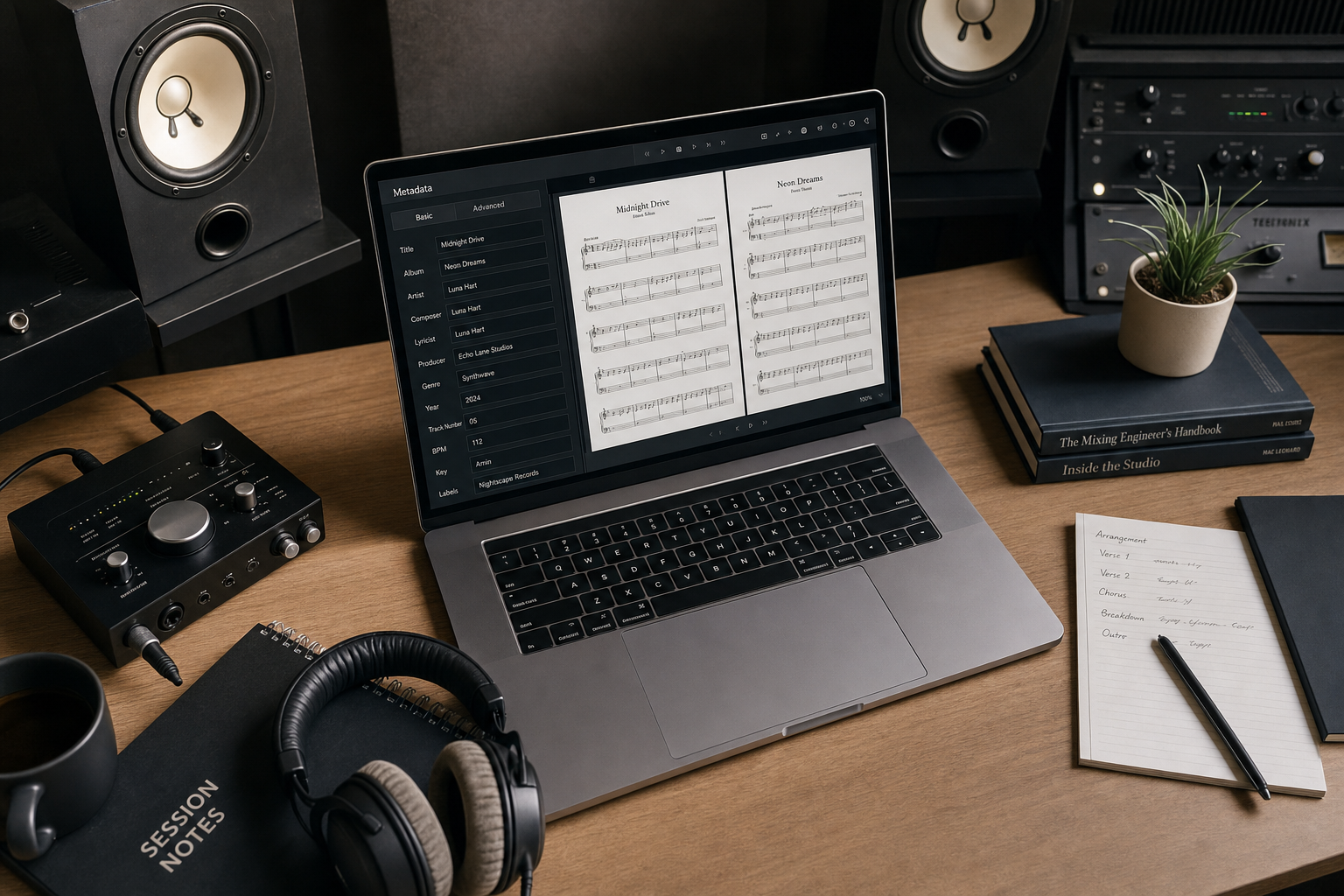
ISRC, ISWC, BPM, key, mood, genre tags, and contact info embedded in the file. Not in a separate email. Not in a Google doc. In the file itself.
This is a standard expectation in professional sync workflows. Supervisors search by metadata. If yours is incomplete or incorrect, your track does not surface.
Ian Yap describes the manager's role as "protection of the artist, of the partner, of the relationship, and even protection of the opportunity itself." That is architecture thinking. The manager builds and maintains the infrastructure that makes opportunities viable when they arrive, not after.
Who this applies to (and who it doesn't)
**This is for you if:**
- You have released music and plan to continue releasing
- You want sync income but have never been approached (or been approached and fallen through)
- You cannot currently answer "yes, stems and splits are ready, works are registered" in under 60 seconds
**This is not a quick fix if:**
- Your catalogue has uncleared samples. Those need legal work before any of this applies.
- You are still splitting rights informally with collaborators via verbal agreement. That is a liability before it is an asset.
- You have fewer than 10 released and polished tracks. The sync pipeline favours volume and catalogue depth.
How to become sync-ready this quarter
Step 1: Audit your catalogue this week
For every released track: confirm the master and publishing split in writing, confirm PRO registration, and list which files you have (stems, instrumentals, TV mix).
Create a spreadsheet. One row per track. Columns for splits, registration status, and available assets. Fill every cell.
Step 2: Register everything missing
Log into PRS (or your PRO), check your works list, register any unregistered tracks. This takes 20 minutes per track.
If you have 30 tracks in your catalogue, block out 10 hours. Do it over two weekends if you need to. This is non-negotiable foundational work.
Step 3: Build a sync asset folder
For each track, create a folder: Full Mix / Instrumental / Stems / TV Mix. If you don't have stems, flag those tracks for re-export from your DAW project files.
Name your files clearly: `TrackTitle_ArtistName_FullMix.wav`, not `Final_Master_v3_NEW.wav`.
Step 4: Standardise your metadata
Embed ISRC, BPM, key, mood, and your contact details in every file's ID3/metadata tags. Tools like Mp3Tag or the metadata editor in Music Artist Manager can handle this at scale.
Do not skip this step. Metadata is how your music gets found once it's inside a library or catalogue search tool.
Step 5: Approach a sync agency with a complete package
Most mid-tier sync agencies (Musicbed, Artlist, and UK equivalents) accept applications with 10 to 20 cleared, well-produced tracks. This is how you enter the trusted intermediary network.
Research which agencies work in your genre. Read their submission guidelines. Apply with your best work, properly packaged.
Step 6: Set a quarterly rights review
Every new release should clear the same four-pillar checklist before distribution. Make it operational, not ad hoc.
Add it to your release calendar. Rights review happens before mastering is finalized. Not after distribution.
The reframe that changes everything
Most artists chase the sync opportunity. A manager builds the conditions in which opportunities can land.
Ian Yap describes slowing things down as "protection, not resistance." That reframe is the difference between an artist and a CEO. The CEO designs the system so the deal can close. The artist hopes the deal happens to arrive when they're ready.
Your sync infrastructure is not a creative task. It is an administrative and legal one. Treating it as such is the single most leverage-efficient thing an independent artist can do this quarter.
The music supervisor is already looking. The question is whether they can find a properly packaged version of you through someone they trust.
---
**
Related Reading:
- How Spotify's 1,000-stream threshold is restructuring independent catalogue strategy — Music Artist Manager
- Why major labels are now offering working capital loans to unsigned artists — Music Artist Manager
- The major label replatforming strategy independent artists need to understand now — Music Artist Manager
- Use Music Artist Manager's Rights & Royalties dashboard to track split agreements, PRO registration status, and file availability across your entire catalogue-so when the sync inquiry arrives, your answer takes seconds, not days.
- [Get started with Music Artist Manager →]
Ready to streamline your workflow?
Stop piecing together spreadsheets and scattered notes. Join the waitlist for Music Artist Manager and get your entire rollout in one place.
Written By
Gavin Alexander
Senior Marketeer
As the founder of Music Artist Manager, Gavin has spent years at the intersection of music and technology. Seeing firsthand how chaotic release rollouts and split sheets can be, he designed a platform that brings major-label infrastructure to independent artists and their teams. He writes extensively about industry trends, artist leverage, and workflow optimisation.