The sync shortcut major labels can't copy: Your One-Stop advantage
How independent artists who own their masters and publishing can close sync deals in hours while major label artists wait weeks.

Key Takeaways
Music supervisors face tight turnarounds and prioritize One-Stop tracks that can be fully cleared within 24 to 48 hours.
Controlling 100% of master and publishing rights eliminates the multi-party legal gridlock that plagues major-label catalogs.
Organize pre-cleared instrumental stems, metadata, and split sheets so supervisors can license your music with zero friction.
A single well-timed indie sync placement creates recurring backend PRO royalties that outperform short-term playlist spikes.
Music supervisors working on tight deadlines need tracks cleared fast. When a major label artist gets the call, the clearance splits between master owner and publisher, often across multiple territories and co-writers. When an independent artist who owns everything gets the call, they can say yes in one conversation and close the deal same-day.
Music supervisors are under deadline pressure every single day. A TV production needs a track cleared by tomorrow morning. A brand campaign has a 48-hour window to confirm before the budget moves to another supplier. When they call a major label artist, the clearance process splits immediately: master rights with the label, publishing rights with the publisher, and potentially a co-write split between three different admin companies across two territories. That process can take weeks.
When they call an independent artist who owns everything, the process takes one phone call and a PDF.
In 2026, sync supervisors are increasingly building their shortlists around this operational reality. Independent artists who hold full rights are functionally more attractive to license, and the market is beginning to price that in. The industry term for this is one-stop clearance, and it is one of the most underutilised structural advantages in independent music.
The market is moving toward speed
The global sync licensing market continues to expand in 2026, driven by an insatiable demand from streaming series, brand campaigns, sports content, and short-form video platforms. All of which move on compressed production timelines. A 2026 Velveteen.fm industry guide explicitly notes that supervisors prefer "one-stop" licenses when working to deadline, and that independent artists who control both master and sync rights represent the most frictionless path to a cleared track.
What is shifting beneath the surface: brands and post-production houses are building direct relationships with independent catalogue owners, bypassing traditional music licensing intermediaries entirely. Independent Latin and Afrobeat artists are landing placements precisely because they can deliver cleared tracks in hours, not weeks. The competitive moat for major label artists (the prestige and production budget) is being eroded by the speed advantage of artists who own everything themselves.
What one-stop clearance actually means
A sync license requires two separate permissions:
1. **Master license**: the right to use the specific recording (owned by whoever funded or now controls the recording, typically a label for signed artists)
2. **Sync license**: the right to synchronize the underlying composition to picture (owned by the songwriter/publisher)
For a major label artist, these two rights are frequently held by entirely separate entities. A supervisor must identify the master owner, identify all publishing administrators (often multiple parties on a co-write), obtain quotes from each, and negotiate separately. If any party is slow, unresponsive, or overpriced, the track dies.
For an independent artist who:
- Owns their masters (retained ownership, no label deal)
- Holds their publishing (not signed to a publishing admin who requires approval, or has an admin deal where they retain approval rights)
- Has no co-writers, or has written agreements with co-writers pre-authorizing sync deals
…they are the single point of contact. The supervisor gets one "yes" and the deal closes.
Additional concepts you need to understand
**PRO registration**: Tracks must be registered with a Performing Rights Organization (PRS, ASCAP, SOCAN, etc.) for backend performance royalties. Separate from sync fees.
**Metadata hygiene**: ISRC codes, ISWC codes, split sheets, and licensing-ready metadata all need to be in order before pitching.
**Fee structure**: Sync fees are typically paid upfront (master + sync combined for one-stop deals). Performance royalties flow later via PRO.
Reality check: do you actually qualify?
This is for independent artists who genuinely own their masters and have clean publishing. Not every independent artist qualifies. If you:
- Have released through a label even on a limited-term deal where they hold master ownership
- Have co-writers without a signed split sheet that pre-authorizes sync deals
- Have assigned publishing to a third-party publisher who requires deal approval
…your one-stop status is compromised or absent. The first step is an honest audit of what you actually control, before pitching as "one-stop" to a supervisor. Misrepresenting rights status is a serious professional credibility issue.
For artists who are genuinely clean: this is an actionable, legitimate competitive edge. Not a workaround. Not a hustle. A structural business advantage.
How to position yourself as one-stop
1. Conduct a rights audit
For every released track, confirm in writing: who owns the master, who administers publishing, and whether any co-write agreements explicitly authorize sync deals without individual co-writer approval. Build a spreadsheet.
2. Formalize co-write split sheets
If you have historical co-writes without signed documentation, address this now. A simple split sheet template signed by all parties, even retroactively, removes ambiguity and protects your one-stop status.
3. Register all works with your PRO and claim publishing
If you haven't registered the publisher's share as well as the writer's share, you are leaving performance royalties uncollected. Set up a self-publishing entity (even a sole trader trading name is sufficient in the UK). Register with PRS for Music as a publisher member.
4. Build a sync-ready catalogue document
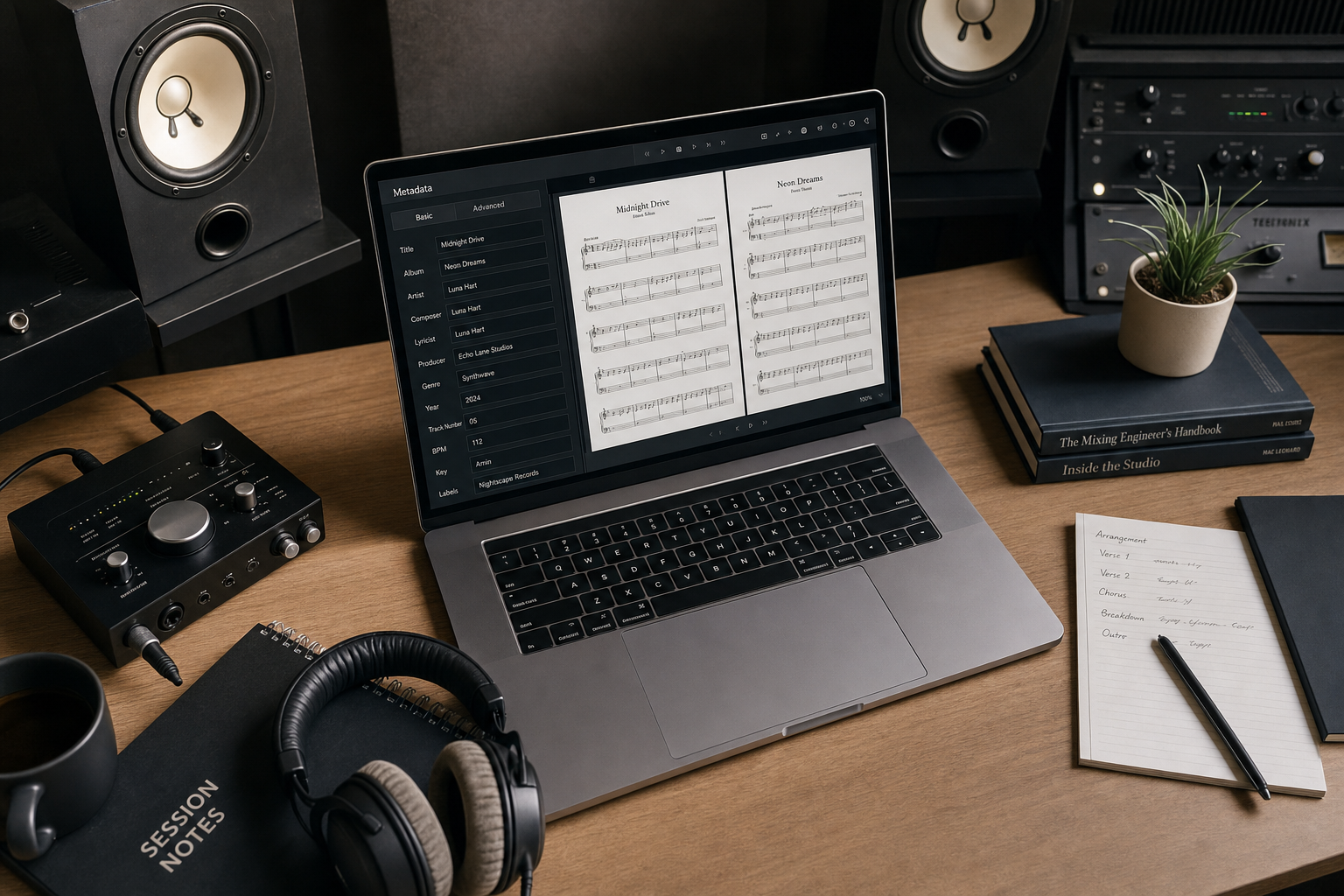
Create a master document for each track: title, ISRC, ISWC, BPM, key, mood tags, rights ownership statement (master owner + sync licensor = [your name]), contact email, standard license fee range. Supervisors appreciate this professionalism enormously.
5. Register with at least two sync platforms that surface one-stop catalogues
Platforms like Musicbed, Artlist, and direct library submissions flag one-stop availability explicitly.
6. Add a sync licensing page to your artist website
A clean, professional page stating your rights status, catalogue availability, and contact point signals you understand the business. Most independent artists have nothing like this. It differentiates you immediately.
7. Pitch strategically, not broadly
Research 5–10 supervisors whose recent placements match your sound. Reach out directly with a short, professional email and a link to your sync catalogue document. Broad spray-and-pray pitching to music libraries yields low returns. Relationship-first outreach to supervisors who are actively seeking your genre yields placements.
Own the IP. Control the deal.
The conversation about masters ownership has been dominated by the recording side. Keeping your recordings, building catalogue value, avoiding label advances that cost you ownership. That is right. But the publishing side of your catalogue is equally sovereign, and the two together create something that a signed artist can never offer a music supervisor: a single phone call.
This is not a niche monetization strategy for artists who can't get streams. This is how artists (at any stage of their career) convert the business structure they've already built into an active revenue stream with commercial clients who have real budgets. The artist who owns everything is the artist every supervisor wants to work with.
---
**Music Artist Manager's Splits and Tracks tools helps you document your ownership position across your full catalogue, so when a supervisor calls, you can answer in minutes, not weeks.**
---
Ready to streamline your workflow?
Stop piecing together spreadsheets and scattered notes. Join the waitlist for Music Artist Manager and get your entire rollout in one place.
Written By
Gavin Alexander
Senior Marketeer
As the founder of Music Artist Manager, Gavin has spent years at the intersection of music and technology. Seeing firsthand how chaotic release rollouts and split sheets can be, he designed a platform that brings major-label infrastructure to independent artists and their teams. He writes extensively about industry trends, artist leverage, and workflow optimisation.