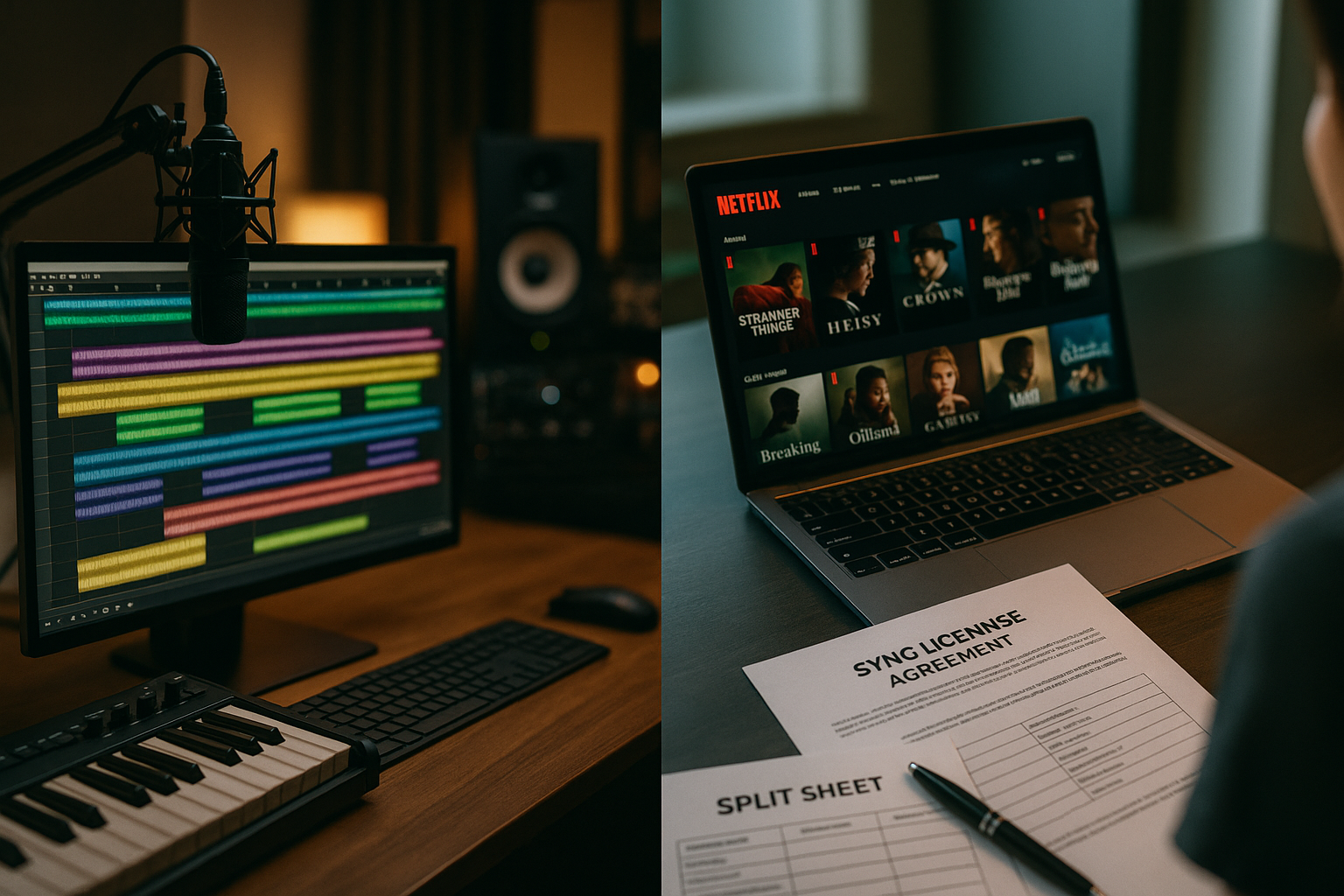
Why independent artists hold the sync advantage in 2026
Independent artists who own their masters and publishing can clear sync placements in one call, making them faster and more profitable than signed artists in 2026.
Key Takeaways
Independent artists who own both master and publishing can clear sync deals in one call.
Sync placements paid £400 to £40,000 per licence in 2026, often beating six months of streaming income.
Music supervisors now skip tracks with split rights ownership because approval chains kill time-sensitive deals.
One-stop clearance with stems ready is your structural advantage over every signed artist competing for placements.
Sync licensing paid £400 to £40,000 per placement in 2026. Independent artists who own both their masters and publishing can clear deals in one call. Major-label artists usually can't.
The shift
In 2026, sync licensing has shifted from a lottery ticket to a clearance test. Music supervisors for TV, film, and advertising now move on tracks in days, not weeks. When a placement goes live, the first question they ask is: can this be cleared in one call?
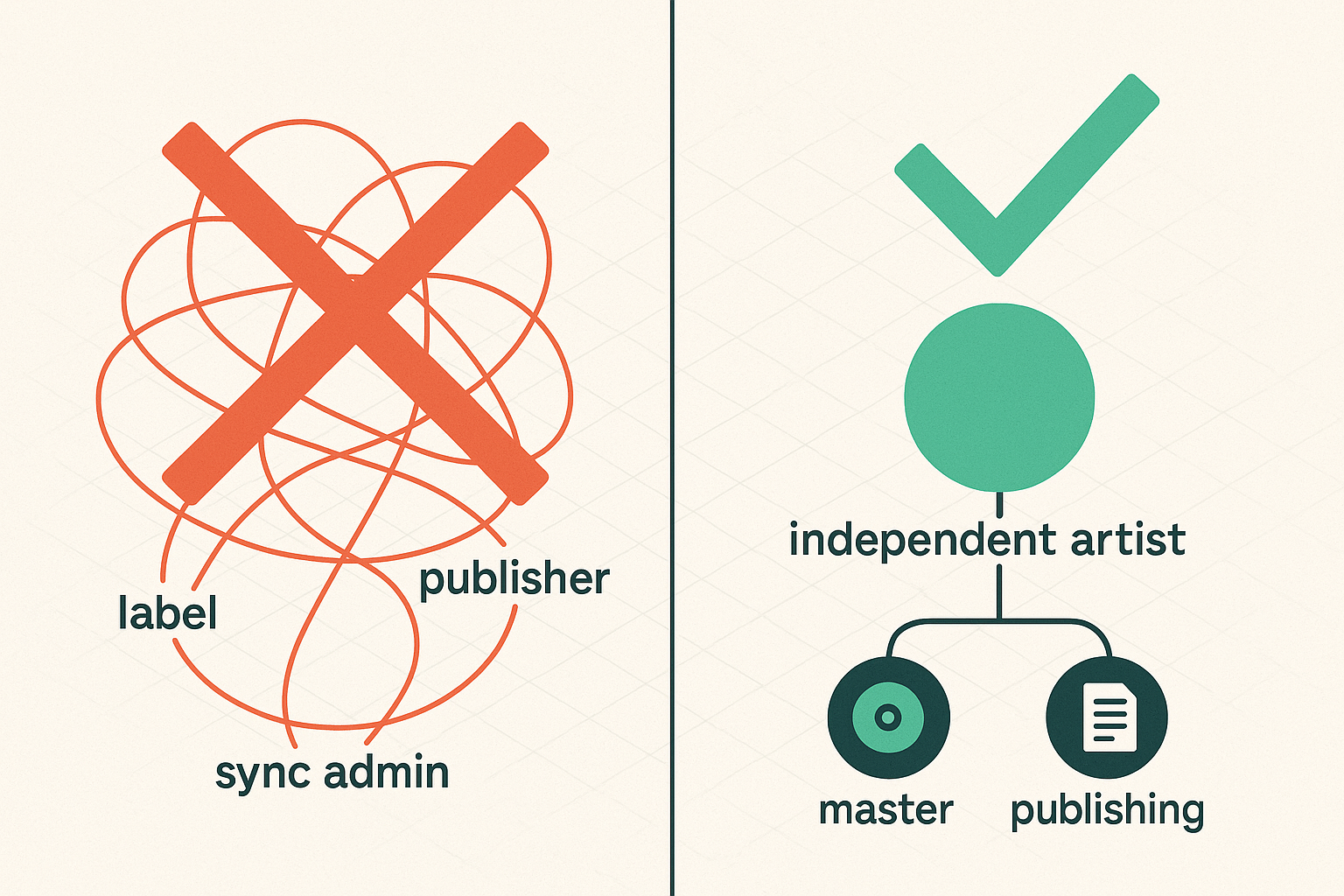
That means both master and publishing rights owned by a single party. Major-label artists can rarely satisfy that demand. Independent artists who've kept their masters can — immediately.
The numbers are real: sync placements paid £400 to £40,000 per licence in 2026 (Chartlex, January 2026). A single mid-tier TV placement can outperform six months of streaming income.
Market context
The production pipeline for content — streaming series, advertising, branded content, video games — has accelerated dramatically. Music supervisors now clear tracks under compressed timelines. Split rights ownership (master at a major, publishing at a separate admin) introduces delays, approval chains, and negotiation complexity that kills deals in real time.
Simultaneously, sync briefs are increasingly distributed via direct outreach and curated networks rather than traditional library submissions. Supervisors are building direct relationships with indie artists and managers who can move fast. The gatekeeping function of major sync libraries is eroding.
The independent artist who owns 100% of their masters and publishing — and has organised their catalogue with stems and instrumentals ready — is now structurally positioned better than a signed artist for this revenue stream.
The education layer
One-stop clearance means a single entity can grant permission for both the master recording (the actual audio file) and the underlying composition (melody + lyrics). When these are split between different owners, both must independently approve and negotiate terms. This often kills time-sensitive deals.
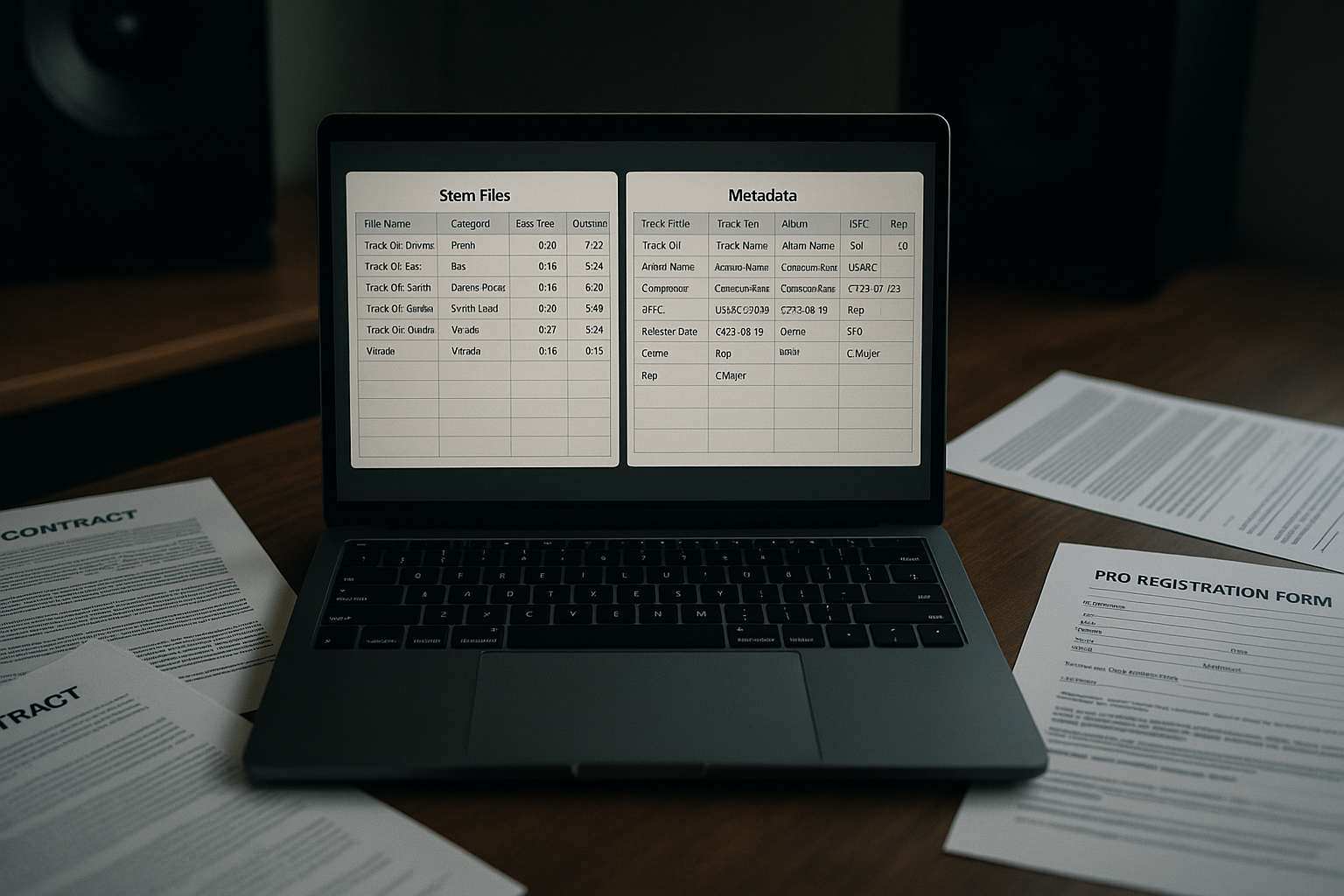
Stems and instrumentals are separate audio files (drums only, vocals only, guitar only) that supervisors request to fit music to picture, adjust levels, or create a customised edit. Artists who have not prepared these cannot compete for placements that require them.
Sync fee vs. performance royalty: A sync fee is a one-time licence payment for the placement. A performance royalty is generated every time the finished content is broadcast or streamed. Both flow to the rights owner. An independent artist retains both. A signed artist may share or forfeit the sync fee portion contractually.
One-stop rights process
1. You own master → registered with your distributor or directly
2. You own publishing → registered with your PRO (PRS in the UK) and a publishing admin such as Songtrust or SongSpace
3. You can grant both rights in a single email
Reality check (eligibility)
This is for artists who:
- Own 100% of their masters (no label deal, no 50/50 joint venture)
- Have registered their compositions with a PRO
- Have at minimum stereo masters; ideally stems exported and archived
This is not immediately applicable to artists who have:
- Signed a recording contract that transferred master ownership
- Co-written songs with collaborators who have not assigned publishing or registered with a PRO
- Sample-based music with uncleared samples embedded in their masters
For artists with co-writers: the briefing still applies, but all co-writers must align on a single publishing admin or each grant permission independently. This needs to be arranged before pitching.
Practical action plan
1. Audit your catalogue for one-stop eligibility. List every released track. For each: who owns the master? Who co-wrote it? Where is the publishing registered? Flag any track where you cannot grant both rights alone.
2. Register all compositions with PRS for Music (UK) and a publishing admin. PRS handles performance royalties. A publishing admin (Songtrust, SongSpace, or similar) handles international sub-publishing and sync licensing support.
3. Export and archive stems for your top 20 tracks. Standard deliverable: drums, bass, vocals, and a full instrumental. Store these in a named folder per track with BPM, key, and ISRC in the file naming convention.
4. Build a sync-ready metadata sheet. For each track: title, ISRC, BPM, key, genre, mood tags, lyric summary, and one-stop status (yes/no). This is what supervisors ask for during a brief.
5. Research active placements for artists in your lane. Tools like Tunefind, IMDb music credits, and Supervisors.io show which supervisors are licensing similar music. Build a targeted outreach list of 15–20 supervisors.
6. Pitch with a brief, professional one-page package. Subject line, three track recommendations with streaming links, stems availability confirmation, and one-stop status. No attachments on first contact.
7. Respond to holds within 24 hours. A hold means a supervisor has flagged your track for a specific project. They are not exclusive, but speed matters. Confirm promptly and ask for a timeline.
Mindset closer
Most independent artists think sync is a passive windfall — a lucky break that happens to other people. The artists landing consistent placements in 2026 are treating it as a B2B sales operation: catalogue as product, metadata as spec sheet, supervisors as clients, and one-stop rights as their primary competitive advantage over every signed artist on the planet.
A manager's job is to make the artist the easiest person in the room to work with. In sync, that means having everything organised before the brief arrives, not after. The infrastructure is the competitive edge.
Owning your masters was never just a philosophical victory. In 2026, it is a direct commercial advantage with a measurable revenue upside. The question is whether you've built the systems to activate it.
Next step
Use Music Artist Manager's Rights & Royalties tracker to log your master ownership status, PRO registration, and sync eligibility for every track in your catalogue — so when a brief lands, your team can respond in hours, not days.
Ready to streamline your workflow?
Stop piecing together spreadsheets and scattered notes. Join the waitlist for Music Artist Manager and get your entire rollout in one place.
Written By
Gavin Alexander
Senior Marketeer
As the founder of Music Artist Manager, Gavin has spent years at the intersection of music and technology. Seeing firsthand how chaotic release rollouts and split sheets can be, he designed a platform that brings major-label infrastructure to independent artists and their teams. He writes extensively about industry trends, artist leverage, and workflow optimisation.