Why smart managers treat every new release as a sync asset first
Learn how to prep your catalogue for sync placements that pay more than 18 months of streaming revenue.

Key Takeaways
Treating every new release as a sync asset from day one doubles your commercial monetization avenues before release day.
Deliver complete metadata packages, lyric sheets, and clean instrumental versions directly upon master delivery.
Sync supervisors favor catalogs with clear emotional utility, distinct production dynamics, and immediate clearability.
A single high-profile television placement can finance your entire next production cycle through backend mechanicals and PRO payouts.
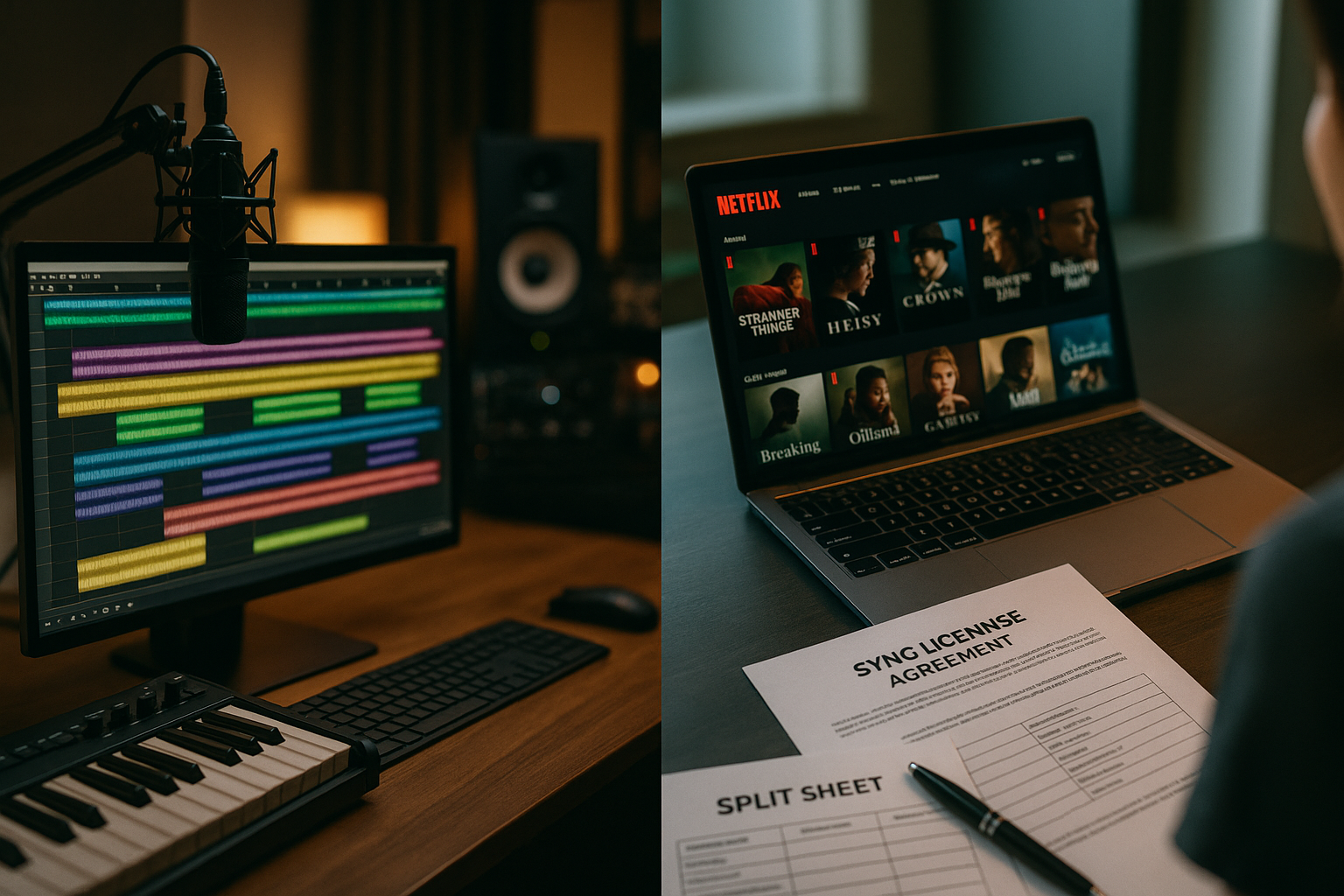
Most independent artists discover sync licensing after they've already been rejected. A music supervisor wanted their track for a Netflix series, but the sample wasn't cleared, the stems were missing, or the metadata was incomplete. The placement was gone before the pitch ever happened.
In 2026, Netflix, Amazon Prime Video, and Apple TV+ collectively spend an estimated £15–20 billion per year on original content. Every series, documentary, and film in that pipeline needs music. Sync licensing fees for independent artists now range from £400 to £40,000+ per placement. Platforms are actively sourcing from self-released catalogues because major label clearances are slow, expensive, and creatively limiting.
Most independent artists find out about sync after a music supervisor passes on their track for a technical reason. A sample that isn't cleared. A missing split sheet. Metadata errors. Stems that were never archived. The placement was lost before the pitch was ever made.
The managers who are building durable artist income in 2026 are treating every new release as a sync asset first, and a streaming release second.
The structural shift in sync licensing
Three changes have converged to open the sync market to independent artists:
- **Content volume is at an all-time high.** Streaming platforms launched more original content in 2025–2026 than any prior period. The music budget scales with production volume. Music supervisors cannot clear enough major label music fast enough for the demand.
- **Sync libraries have democratised access.** Platforms like Musicbed, Artlist, Pond5, and Music Vine now accept independent submissions. An unsigned artist in Manchester can pitch the same brief as a Sony imprint.
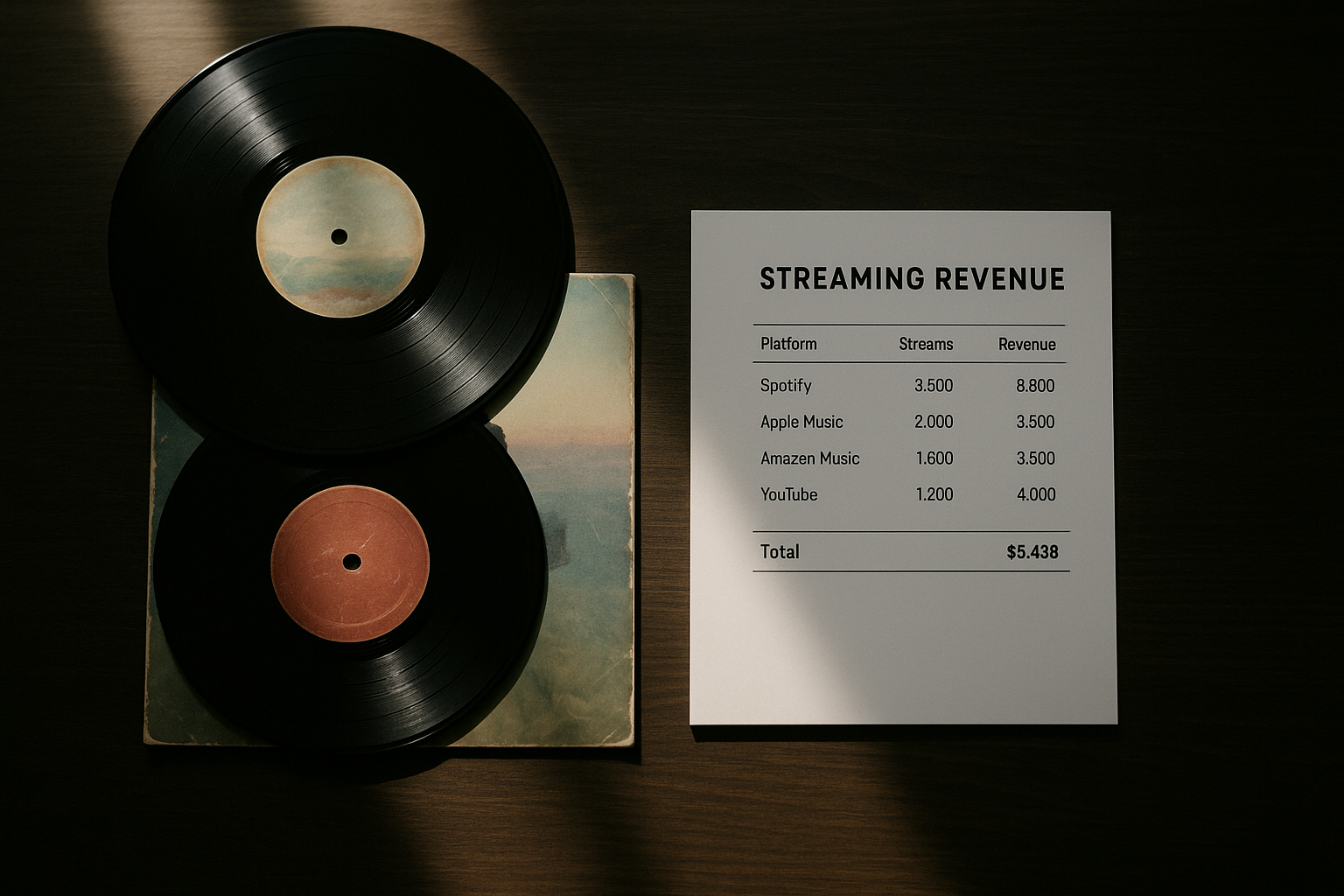
- **The per-placement economics are transformational.** A single mid-tier TV placement (£2,000–£8,000) can exceed 18 months of streaming income for most independent artists. A recurring theme placement in a successful series can generate royalties for years.
What has not democratised is the preparation. Music supervisors reject tracks instantly for preventable reasons. Metadata gaps. Unclearanced samples. Missing ISRC codes. No split sheets. Stems unavailable on request. The artists who are landing placements are the ones whose catalogues are operationally ready.
Understanding sync licensing economics
Sync licensing has two fee components:
- **Master licence fee.** Paid to whoever owns the recording (the artist, their distributor, or their label). As an independent artist who owns your masters, this goes directly to you.
- **Sync licence fee.** Paid to the publisher controlling the composition (the songwriter). If you write your own music and control your publishing, you receive both.
Owning your masters and your publishing means you receive 100% of the sync fee. An artist signed to a label and publishing deal may see as little as 15–25% after splits.
What sync-ready actually means
- **Clean audio files.** No samples, or fully cleared samples with documented licences.
- **Stems available.** Music supervisors often need instrumental, vocal-only, or stripped versions.
- **Correct and complete metadata embedded.** ISRC, ISWC, split sheet, BPM, key, mood tags.
- **PRO registration.** PRS for Music, ASCAP, BMI. Without this, you cannot collect performance royalties from the broadcast.
- **A clean, professional one-line pitch.** Describe the track's emotional and commercial use case.
Who this strategy actually works for
Sync is not passive income you stumble into. This strategy is best suited for:
- Artists with a catalogue of 10+ fully cleared, stem-accessible tracks
- Songwriters who own both their master and their publishing
- Artists willing to create instrumental and stripped-back versions of their releases
- Artists working in genres with established sync demand: indie, electronic, hip-hop instrumentals, Afrobeats, cinematic, singer-songwriter
It is a poor fit for artists with:
- Samples that are not cleared (this is an immediate disqualifier)
- Tracks with unresolved publishing splits
- No stems archived from the original session
The seven-step sync preparation system
1. Audit your existing catalogue for sync eligibility
Flag every track with uncleared samples. Either remove the sample, clear it formally, or retire that track from sync pitching.
2. Create a stems archive
Go back to every session and export: full mix, instrumental, a cappella, and main elements (drums, bass, keys, lead). Store them in a dedicated folder labelled by track name and ISRC.
3. Register your catalogue with your PRO
In the UK: PRS for Music (compositions) and PPL (master recordings). This is non-negotiable. A placement without PRO registration means no broadcast royalties.
4. Complete your metadata
For every track: ISRC, ISWC, songwriter splits, BPM, key, mood descriptors, and genre tags. Your distributor's metadata panel and your PRO's portal should match exactly.
5. Submit to at least three sync libraries
Start with: Music Vine (UK-strong, editorial quality), Artlist (global, high-volume), and Musicbed (premium, brand-focused). Each has a submission and approval process. Allow 4–8 weeks.
6. Build a sync one-sheet
A single-page PDF per track: title, artist, mood, tempo, key, genre, a 2-sentence description of the emotional arc, and a direct download link to the watermarked MP3 and stems. Music supervisors move fast. Make it frictionless.
7. Pitch proactively to music supervisors
LinkedIn is underused for this. Identify supervisors working on shows in your genre. Follow their credits on IMDbPro. Send a brief, direct cold pitch with your one-sheet. Aim for five pitches per month.
The asset value mindset
Most independent artists define success as streaming numbers. A savvy manager defines success as asset value. Your catalogue is an IP portfolio. Every track you release is a potential licensing vehicle for film, TV, advertising, games, and brand partnerships.
The artist who treats their releases as content to upload thinks short-term. The artist who treats their releases as assets to licence thinks like a business owner.
The managers building lasting artist careers in 2026 are not chasing playlists. They are building catalogues that generate income in five different directions simultaneously. Sync is one of the most concrete, documentable, and scalable of those directions. Most of your competition hasn't started yet.
- **Use Music Artist Manager's Splits and Tracks to log your sync-ready tracks, track split sheet status, PRO registration, and stem availability all in one place. Know exactly which releases are pitch-ready before a music supervisor asks.**
Ready to streamline your workflow?
Stop piecing together spreadsheets and scattered notes. Join the waitlist for Music Artist Manager and get your entire rollout in one place.
Written By
Gavin Alexander
Senior Marketeer
As the founder of Music Artist Manager, Gavin has spent years at the intersection of music and technology. Seeing firsthand how chaotic release rollouts and split sheets can be, he designed a platform that brings major-label infrastructure to independent artists and their teams. He writes extensively about industry trends, artist leverage, and workflow optimisation.