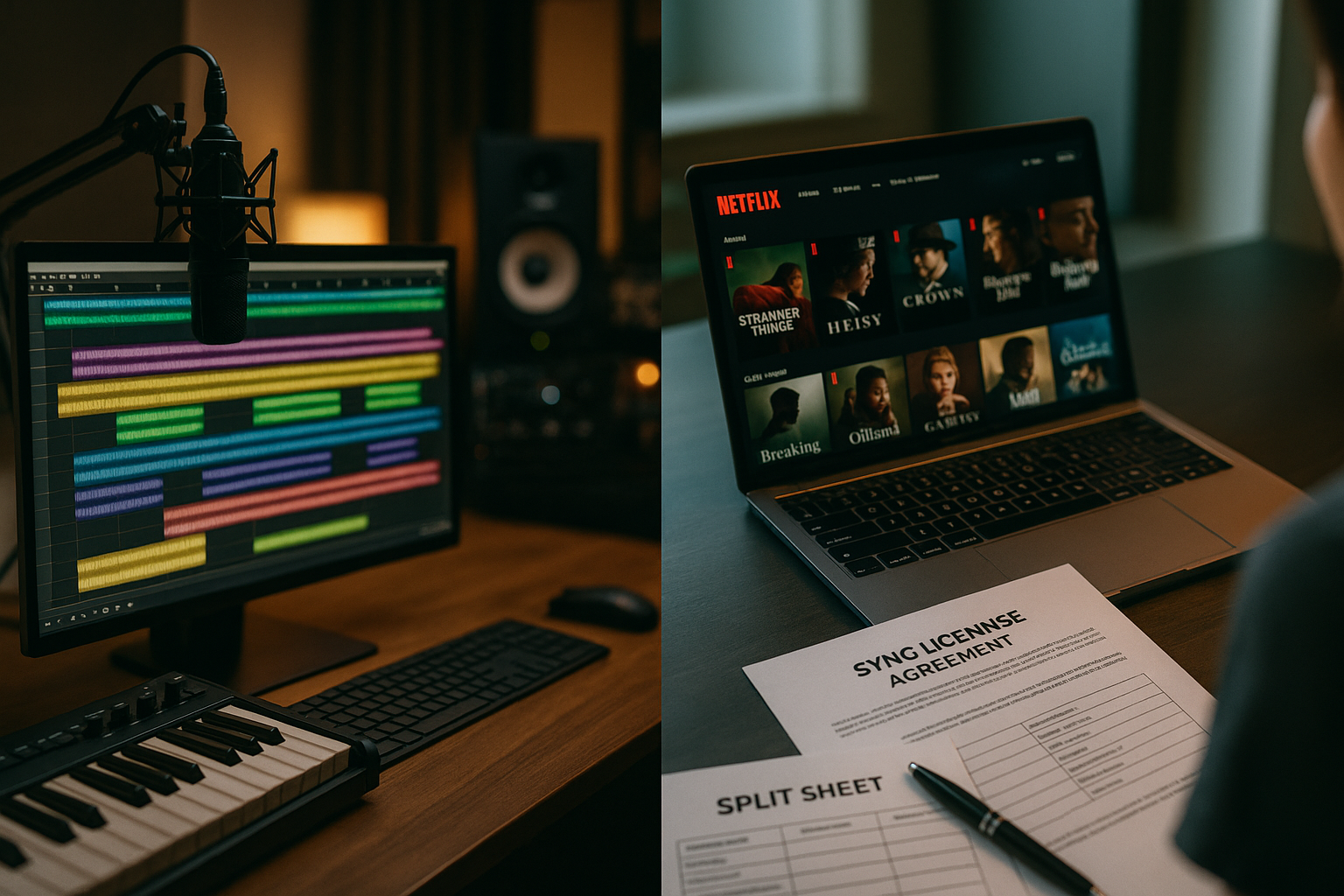
How to actually land a sync deal: The pitch mistake most independent artists make
Most artists pitch music supervisors like A&R reps. This is why your sync submissions get ignored, and how to fix it.

Key Takeaways
Music supervisors are not discovering artists. They are solving editorial problems for directors on tight deadlines.
One-stop licensing — owning both master and publishing — is your biggest competitive advantage over label-signed acts.
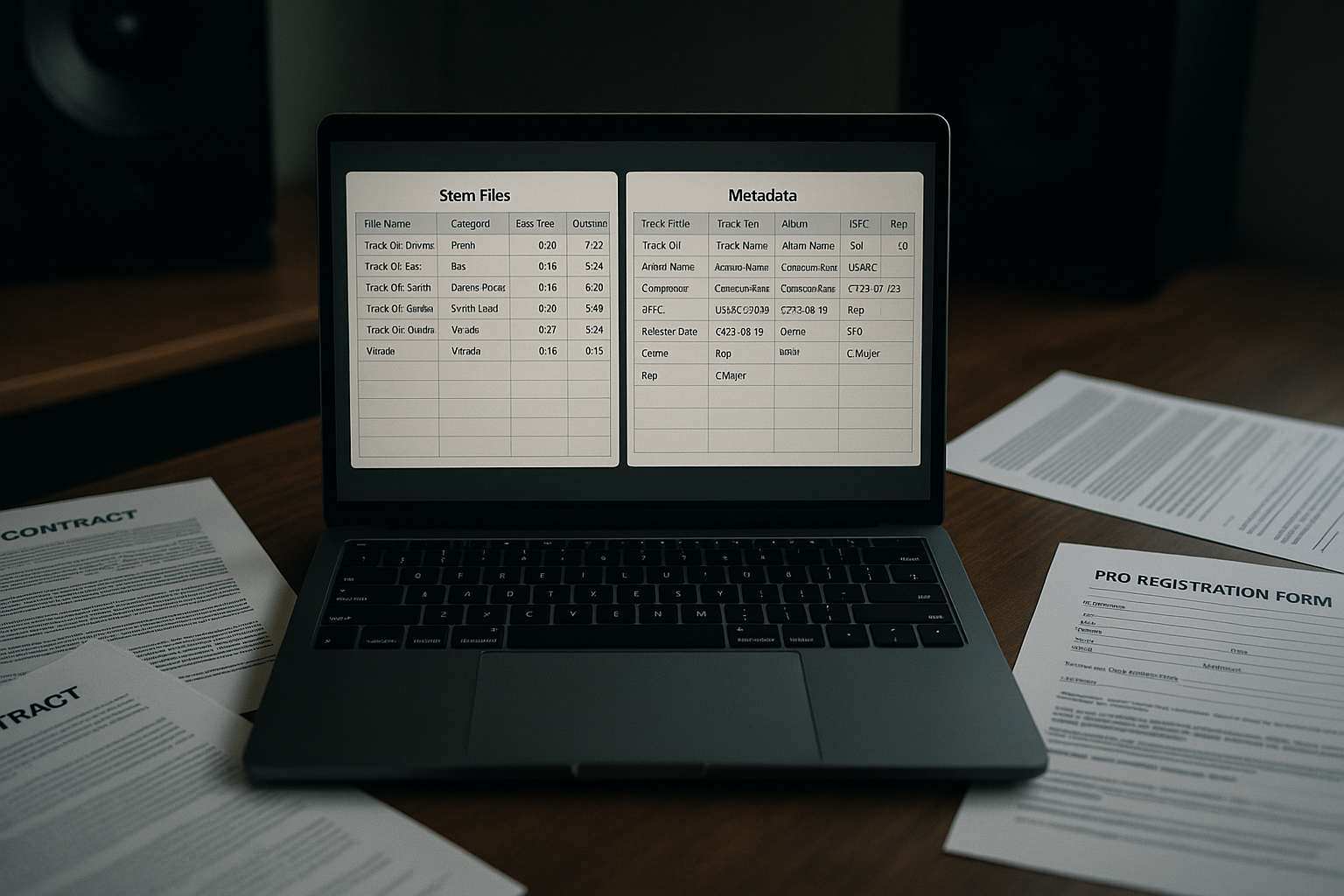
Sync-ready means stems available, metadata clean, PRO registered, and mastered to broadcast standard before you pitch.
Artists landing sync deals in 2026 are not the most talented. They are the most operationally prepared.
Most independent artists pitch sync supervisors like they're pitching A&R reps. They lead with their story, their sound, their artistic vision. Music supervisors don't care about any of that. They're solving a scene problem for a director on a deadline, and they need someone who can deliver stems, confirm one-stop licensing, and respond within 24 hours.
Independent artists are positioning sync licensing as a primary income stream in 2026. Platforms are reporting a surge in catalogue submissions and placement deals ranging from £400 to £40,000+ per placement. But there's a critical flaw in how most artists approach it.
They pitch music supervisors the same way they'd pitch an A&R representative. They lead with their story, their journey, their brand. Music supervisors don't care. They're solving a scene problem for a director on a deadline. Artists who understand this distinction are landing deals. The ones who don't are being ignored.
Why sync income is structurally different
Sync income has quietly become one of the most structurally sound revenue pillars for independent artists. It rewards catalogue depth and master ownership rather than streaming volume. Unlike playlist algorithms or social virality, sync placements are negotiated, one-to-one, and IP-driven.
The 2026 landscape has opened further. Streaming platforms like Netflix, Amazon, and Apple TV+ are commissioning more original content than ever. Branded content budgets have rebounded post-pandemic. Music supervisors are increasingly open to independent artists who own their masters outright. One-stop licensing makes clearance simple. The barrier isn't talent. It's operational readiness and pitch intelligence.
What a music supervisor actually does
A music supervisor is hired by a production company, ad agency, or streaming platform to source music that solves an editorial problem. A tonal gap. An emotional beat. A scene that needs texture. They are not discovering artists. They are delivering solutions to their client.
One-stop licensing is the single biggest competitive advantage an independent artist has over a major-label-signed act. You own both the master recording and the publishing rights. Labels complicate clearance. You simplify it.
Sync vocabulary you must understand
Sync fee: Upfront placement fee. Negotiable. Ranges wildly by medium.
Master licence: Permission to use your recorded track.
Sync licence: Permission to use the underlying composition.
Buy-out vs. blanket: One-time fee vs. ongoing licensing agreement.
Non-exclusive: You retain the right to pitch the same track elsewhere.
What a sync-ready track looks like
- Stems available: instrumental, no-vocal, percussion-only versions
- Clean metadata: tempo, key, mood tags, ISRC codes
- Registered with a PRO: PRS in the UK
- Mastered to broadcast standard: integrated loudness at –16 LUFS for online
Is this the right move for you right now?
Sync licensing is not a shortcut. It rewards preparation and catalogue volume. One or two tracks rarely generate consistent income. Artists who build sync income typically have 20–50+ registered, well-tagged tracks available for pitch.
This strategy suits artists who:
- Own their masters outright (or have master clearance)
- Have a catalogue with sonic diversity (different moods, tempos, instrumentals)
- Can operate professionally (respond to briefs promptly, deliver stems on demand)
- Are not dependent on instant returns (sync deals can take weeks or months to close)
It is not the right first move for an artist who has just released their debut single and is still building a foundation.
Your 10-step sync activation plan
1. Audit your catalogue for sync viability. Identify tracks that are instrumentally strong, emotionally clear, and owned outright. Flag which need stems bounced.
2. Register everything with PRS and PPL. Every track must be registered before it can earn performance royalties from a broadcast placement.
3. Create instrumental and stem versions. Bounce instrumentals, no-vocal versions, and at minimum a drums/percussion stem for every viable track.
4. Write a sync metadata sheet. For each track, document: BPM, key, mood descriptors (e.g., "tense, cinematic, sparse"), similar artists, best-use scenarios.
5. Draft a one-stop licensing declaration. A simple written statement confirming you own both master and publishing. Supervisors will ask for this. Have it ready.
6. Build a pitch shortlist of supervisors and libraries. Identify 10–15 music supervisors whose projects align with your sound. Research their recent credits on IMDb and LinkedIn. Cold pitches without research get deleted.
7. Write a brief-focused pitch email. Lead with the problem it solves, not your biography. Format: one streaming link, mood/BPM, one-stop confirmation, comp artists. Keep it under 100 words.
8. Submit to at least two non-exclusive sync libraries. Platforms like Musicbed, Artlist, and Pond5 accept independent submissions. Non-exclusive means you continue to pitch directly in parallel.
9. Track pitches and follow-ups in a CRM. Treat this like a B2B sales pipeline. Log every pitch, expected response window, and outcome.
10. Set a 90-day sync sprint. Commit to a defined period of active pitching. Minimum 3 pitches per week. Review what gets traction.
Treat your catalogue as inventory
Most artists think of their music as art to be discovered. A CEO thinks of their catalogue as a portfolio of licensable IP. Every track you've ever recorded is a potential recurring asset. But only if it's registered, prepared, tagged, and actively pitched.
The artists landing sync deals in 2026 aren't necessarily the most talented in the room. They're the most operationally ready. Treat your back catalogue as inventory. The music supervisor isn't your fan. They're your client. Serve them accordingly.
Use Music Artist Manager's Catalogue Manager to register your tracks, log stem availability, and track pitches — all in one place. Never lose a sync opportunity to disorganisation again.
Ready to streamline your workflow?
Stop piecing together spreadsheets and scattered notes. Join the waitlist for Music Artist Manager and get your entire rollout in one place.
Written By
Gavin Alexander
Senior Marketeer
As the founder of Music Artist Manager, Gavin has spent years at the intersection of music and technology. Seeing firsthand how chaotic release rollouts and split sheets can be, he designed a platform that brings major-label infrastructure to independent artists and their teams. He writes extensively about industry trends, artist leverage, and workflow optimisation.