Why your independence is your sync licensing superpower
Learn why owning both your master and publishing rights makes you faster to license than major-label artists in 2026's sync market.

Key Takeaways
Music supervisors now prioritise speed over prestige when clearing sync deals for TV and film.
Owning both your master and publishing means one email clears the entire placement, not three weeks of label approvals.
Most-Favoured-Nation clauses let independent artists benefit twice when sync fees get negotiated upward during clearance.
Your independence is structural leverage in a time-sensitive licensing market if you register and pitch correctly.
Date: 2026-09-13 Evergreen Theme: Ownership & Leverage Mogul Lens Applied: Larry Jackson (IP) — farm-to-table verticalisation, multi-format IP, culture-first media architecture Source: Trending News — Music Gateway / Chartlex / GrayGroupIntl (April–June 2026 sync licensing coverage)
Hook
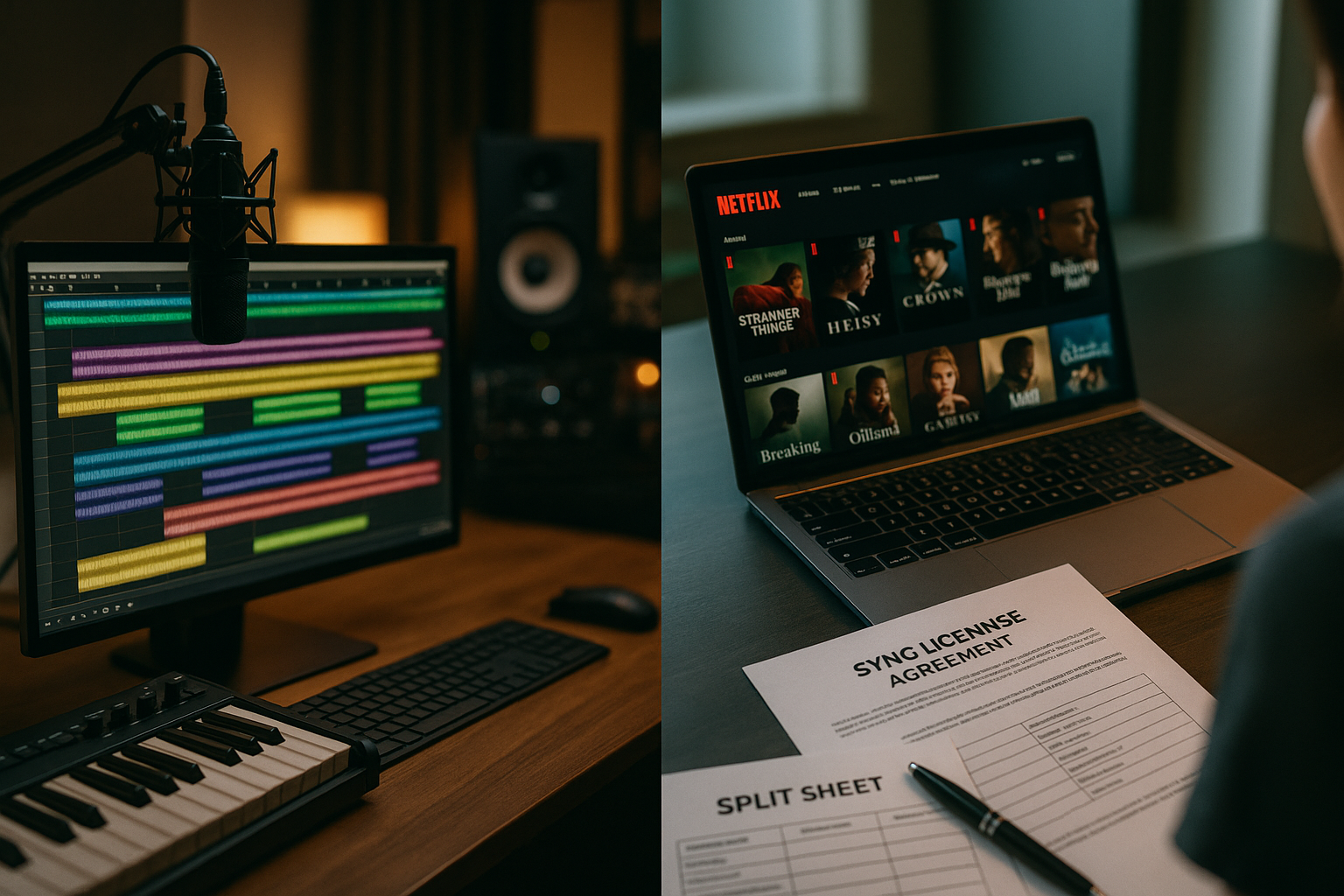
Music supervisors working on TV, film, and advertising campaigns in 2026 are increasingly bypassing major-label catalogues and going direct to independent artists. The reason is deceptively simple: when an independent artist owns both their master recording and their publishing, a single email from one person clears the deal. No A&R approval chain. No label legal department. No three-week wait. According to multiple licensing platforms and supervisors quoted in mid-2026 industry coverage, this "clean title" advantage is now a genuine competitive edge. Most independent artists have no idea they hold it.
Market context
The sync licensing market is expanding rapidly in 2026. Streaming platform original content is exploding. Brand campaigns are targeting niche subcultures. Digital-first markets like India, Mexico, and Southeast Asia are producing locally-commissioned content at scale. Fees range from £400 to £40,000+ per placement depending on usage, territory, and exclusivity. Most-Favoured-Nation (MFN) clauses, standard in film and TV, now protect rights-owning independent artists from being undercut relative to the other side of the deal. The structural shift is this: complexity and speed are now more important gating factors for music supervisors than back-catalogue prestige.
The education layer
Two separate licences are required for every sync placement:
Synchronisation licence: Covers the composition (melody and lyrics). Granted by whoever controls the publishing: the songwriter, their publisher, or a publishing administrator.
Master use licence: Covers the sound recording. Granted by whoever controls the master: typically the label, or the artist if self-released.
For a major-label artist, these are almost always held by different entities. Each requires separate negotiation and approval. For an independent artist who self-released and retained publishing, both licences are cleared by one person: you. The Most-Favoured-Nation clause then ensures that if a supervisor negotiates the sync fee up, the master fee rises to match. You benefit twice from a single negotiation.
Understanding how to register your composition (via a PRO like PRS in the UK, or ASCAP/BMI in the US), how to register your master (via SoundExchange or your distributor), and how to hold both correctly is foundational to capitalising on this advantage.
Reality check (eligibility)
This advantage exists only if you have:
- Released music independently and not assigned your masters to a label or distributor that claims ownership. Check your distribution agreement terms carefully. Some older or free-tier deals include rights grabs.
- Not signed a full publishing deal that assigns your composition copyright to a third party.
- Properly registered both your composition and master with the relevant collecting societies.
If you've signed away either side, the advantage evaporates. This brief is specifically for artists who are truly rights-clean, or who are actively working to reclaim or preserve that status on future releases.
Practical action plan
1. Audit your rights position today. List every released track. For each: who owns the master? Who controls the publishing? If you are not the answer to both questions, note it and do not actively pitch those tracks for sync until you understand the terms.
2. Register your compositions with a PRO. In the UK: PRS for Music. Register every released composition as a work. Register yourself as both composer and publisher if you have not assigned publishing.
3. Register your masters with SoundExchange (for US digital performance) and ensure your distributor is correctly claiming neighbouring rights on your behalf in the UK and EU.
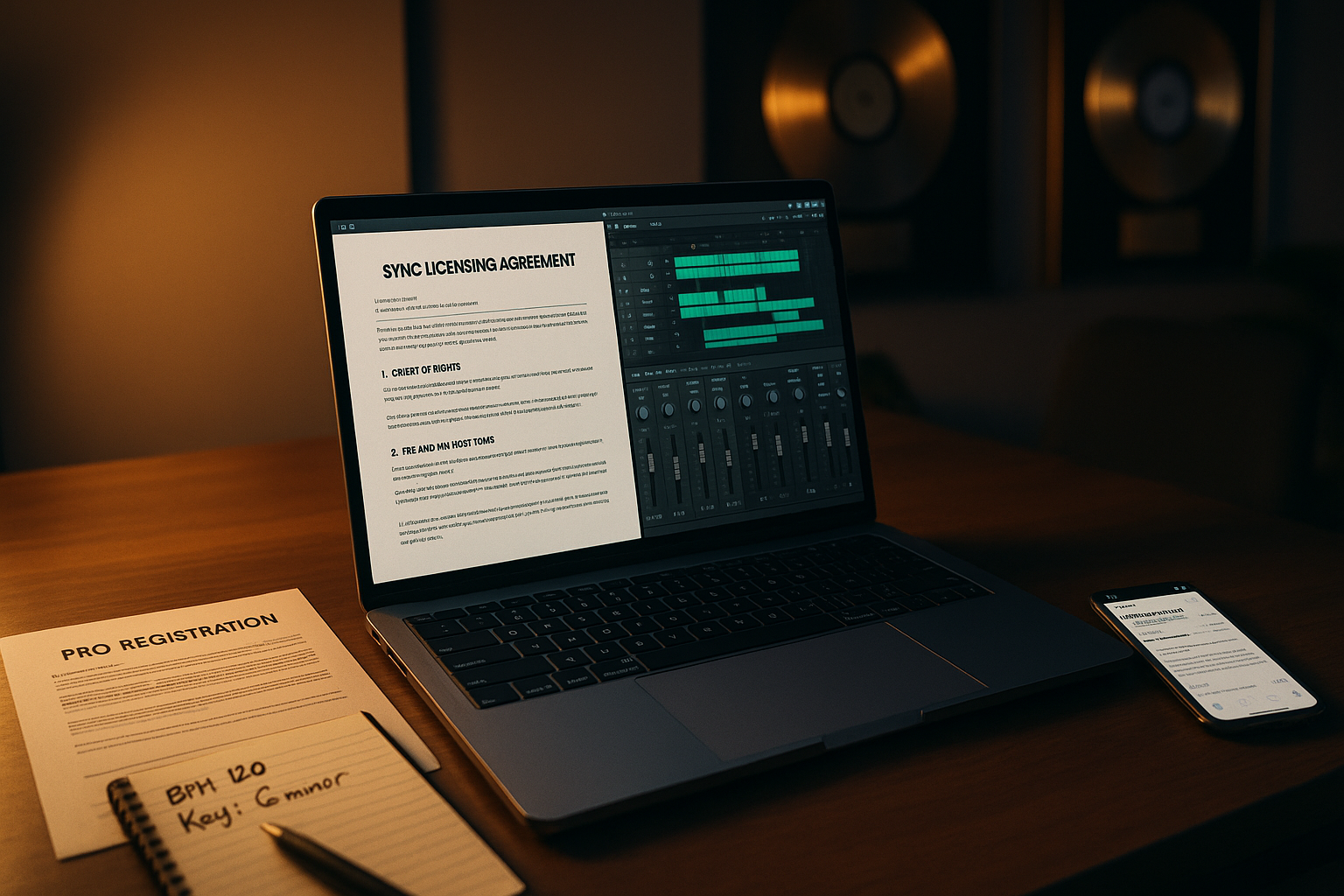
4. Build a sync-ready catalogue sheet. One-page document listing your tracks with BPM, key, mood tags, genre, lyric/instrumental flag, and your direct contact. Music supervisors work fast. Make it frictionless.
5. Pitch direct, not through aggregators. Use platforms like Music Gateway, Musicbed, or Artlist for passive placement. But also identify music supervisors who work on shows or brands aligned with your sound and reach out directly with your catalogue sheet. A clean pitch from an artist who controls all rights is more valuable than a complex pitch from a well-known act.
6. Price yourself correctly. Use the MFN clause to your advantage: quote a single fee that applies to both master and sync. Do not undersell because you're independent. The speed of clearance is worth a premium.
Mindset closer
Major labels built empires partly by consolidating rights. Independent artists have traditionally seen this as the label holding power they lack. The shift in 2026 is that holding your own rights is not a consolation prize. It is a structural advantage in an increasingly time-sensitive licensing market. A music supervisor on deadline does not want to wait three weeks for a label legal team. They want to move today. Your independence, if properly structured, makes you the fastest, cleanest option in the room. That is business leverage. Operate it like one.
Proposed CTA
Use Music Artist Manager's Rights & Catalogue tools to log your master and publishing status for every release, set reminders for PRO registration deadlines, and generate a sync-ready catalogue sheet for supervisor pitches. All in one place.
External references:
- Sync Licensing for Independent Artists 2026: Pitch and Get Paid — Chartlex — April 2026
- Sync Licensing in 2026: Your Golden Ticket to Actually Getting Paid — Music Gateway — 2026
- Music Sync Licensing: The Definitive Artist Guide (2026) — Artist.Tools — April 2026
- Music Sync Licensing in 2026: The Complete Guide — GrayGroup International — February 2026
SEO Keywords: Independence, Sync, Licensing, Superpower
Ready to streamline your workflow?
Stop piecing together spreadsheets and scattered notes. Join the waitlist for Music Artist Manager and get your entire rollout in one place.
Written By
Gavin Alexander
Senior Marketeer
As the founder of Music Artist Manager, Gavin has spent years at the intersection of music and technology. Seeing firsthand how chaotic release rollouts and split sheets can be, he designed a platform that brings major-label infrastructure to independent artists and their teams. He writes extensively about industry trends, artist leverage, and workflow optimisation.