Accessing the dark catalogue of unclaimed digital royalties
A tactical guide to auditing, identifying, and claiming unclaimed royalties from obscure DSPs, micro-syncs, and international collection societies.
Key Takeaways
Most independent artists lose between 12% and 18% of their catalogue income to unclaimed digital royalties every year.
International collection societies, obscure DSPs, and micro-sync placements generate real money that never reaches your account without proper infrastructure.
You cannot claim what you do not audit, and most artists have never run a full catalogue reconciliation.
Building a revenue recovery system is not optional if you are serious about treating your catalogue like the asset it is.
Most independent artists are leaving money on the table, not because they lack streams, but because their royalty infrastructure has gaps. This guide walks you through how to audit your catalogue, identify unclaimed earnings from obscure DSPs and international collection societies, and actually get paid for work you released years ago.
You have money sitting in accounts you didn't know existed.
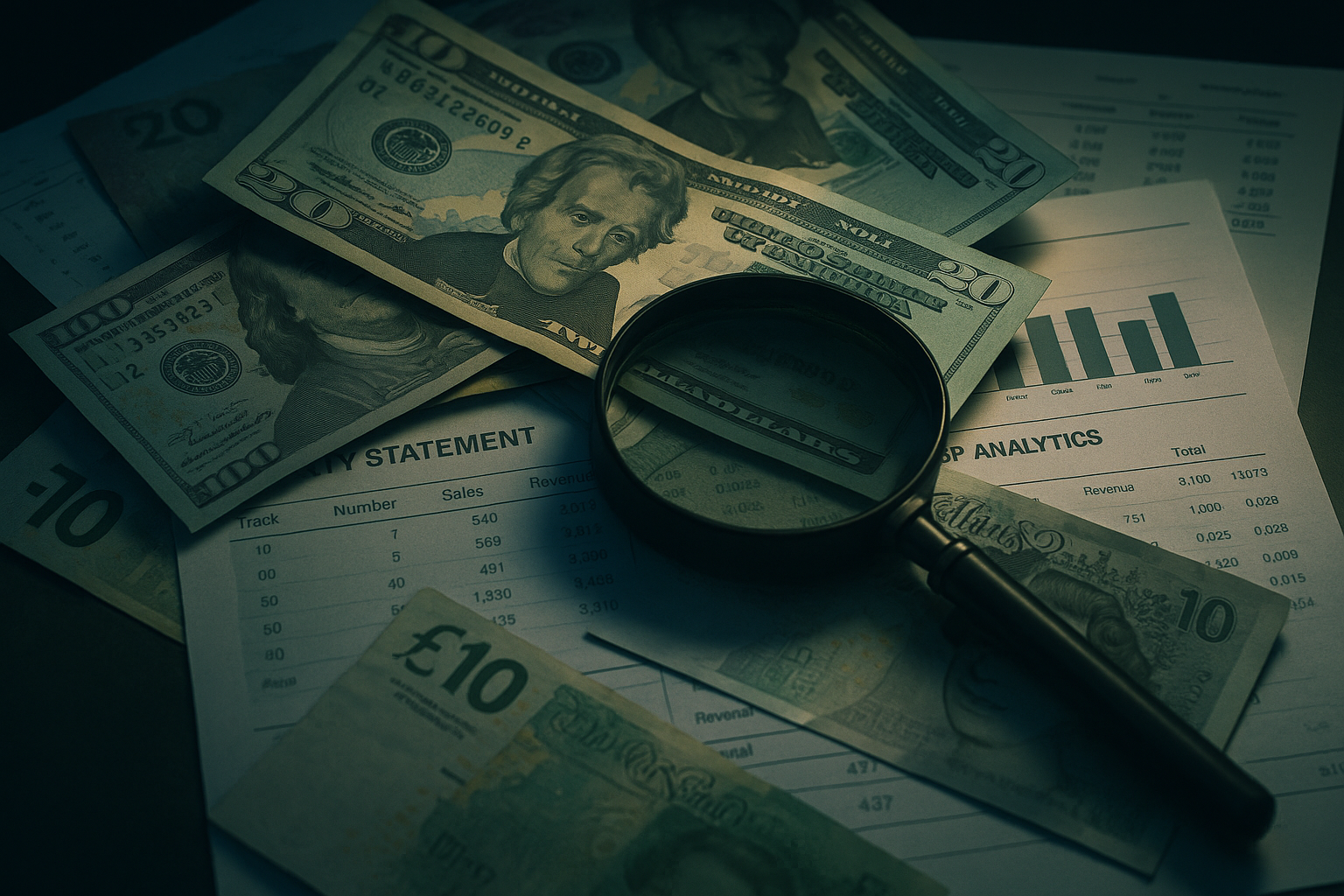
Not pennies. Not rounding errors. Real revenue from platforms you've never logged into, collection societies you didn't register with, and micro-sync deals your distributor never flagged. This is dark catalogue income, and most independent artists never claim it because they don't know where to look or how the collection infrastructure actually works.
This guide is your audit protocol. We're walking through every overlooked corner of the digital royalty system, how to identify what you're owed, and how to pull it out.
Why unclaimed royalties pile up in the first place
Digital music royalties flow through a fragmented system. Your distributor handles some. Your PRO handles others. Mechanical rights, neighboring rights, and sync royalties all travel through separate pipelines with separate registration requirements.
Miss one registration and your royalties sit in a holding account. Release a track without tagging metadata correctly and your streams generate revenue that never reaches you. Fail to affiliate with an international collection society and your plays in Germany or Japan just vanish into their local pool.
It's not a conspiracy. It's infrastructure. And most artists don't realize how many collection points exist until years after release.
The four main sources of unclaimed royalties
1. Neighboring rights from international plays
When your recording plays on digital radio, satellite radio, or certain streaming tiers outside the U.S., it generates neighboring rights royalties. These are separate from performance royalties. They're paid to the recording owner and the performers, not the songwriter.
Most U.S. artists don't register with SoundExchange or their international equivalents. That means royalties from Spotify in Brazil, Apple Music in Japan, or Deezer in France sit unclaimed.
What to do
Register with SoundExchange if you're U.S.-based. Register with PPL if you have UK plays. Use a neighboring rights aggregator like Songtrust or check if your distributor has reciprocal agreements. Pull historical statements and cross-reference play counts against what you've actually been paid.
2. Mechanical royalties from streaming and downloads
Every time someone streams your song, a mechanical royalty is generated for the underlying composition. In the U.S., this flows through the Mechanical Licensing Collective. Outside the U.S., it flows through local societies.
If you didn't register your compositions with the MLC or didn't affiliate with mechanical societies abroad, you're not getting paid.
What to do
Go to themlc.com and claim your U.S. mechanical royalties. Register your catalogue with a publishing administrator or sign up directly with societies like GEMA, SACEM, or APRA AMCOS depending on where your streams are coming from. Pull your distributor's territory breakdowns and map them to the societies that cover those regions.
3. Micro-syncs and background placements
Your track might appear in a YouTube video with 200 views, a Twitch stream, or a corporate training module. These are micro-syncs. They're low-dollar individually, but they add up, especially if you have a deep catalogue.
Most of these placements are tracked through Content ID or direct licensing platforms you never signed up for.
What to do
If your distributor offers YouTube Content ID, turn it on. If not, sign up directly through a service like IdentifyYourMusic or use a third-party administrator. Audit your YouTube account for unmonetized uploads of your music. Check platforms like Epidemic Sound or Artlist to see if your tracks were uploaded by a third party without your knowledge.
For more on how Content ID shifts your revenue model, read Why Your Promotional Spend Should.
4. Obscure DSPs and regional platforms
Your distributor might send your music to 150 platforms. You probably check five. The other 145 still generate royalties, but they report on different schedules, through different systems, and sometimes not at all unless you claim them manually.
Platforms like Anghami, JioSaavn, NetEase, and Yandex Music all pay. But their reporting lag can be 12 to 18 months. If you switched distributors during that window, the payment might not follow you.
What to do
Log into every DSP your distributor lists. Create accounts, claim your artist profiles, and check for unpaid balances. If you switched distributors, email your old one and request a final royalty statement with a full platform breakdown. If they say there's nothing left, ask for the raw data anyway. Cross-reference it with your new distributor's intake report.
For more on what your distributor isn't telling you, read Your distributor's black box.
How to audit your catalogue for unclaimed royalties
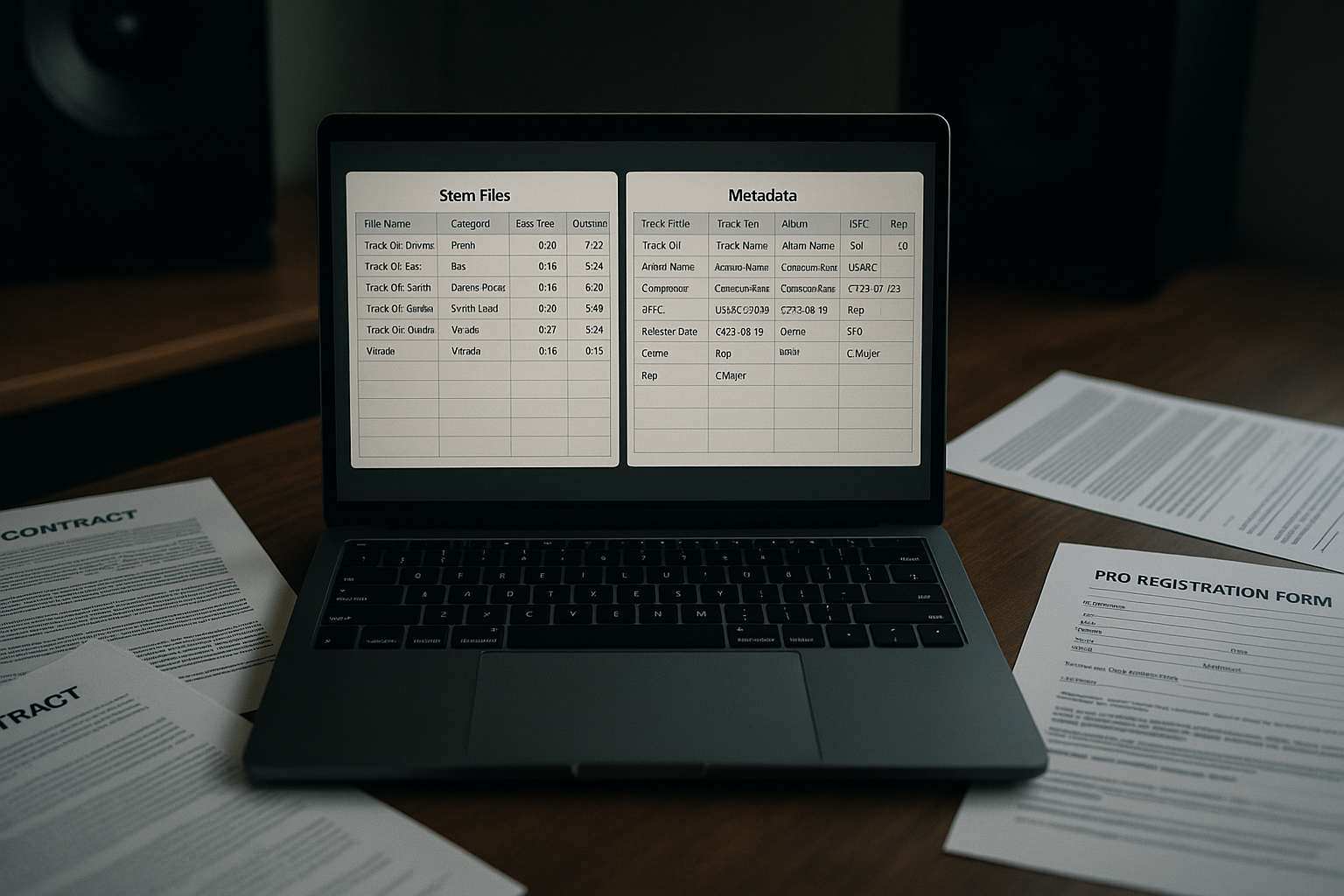
Start with your ISRC and ISWC codes. These are the fingerprints of your recordings and compositions. If they're not registered correctly, your royalties don't flow.
Pull every ISRC from every release. Cross-check them in your distributor's dashboard, your PRO's catalogue, the MLC database, and SoundExchange. If an ISRC is missing from any of those systems, that's a gap.
Do the same for ISWCs. If you wrote the song, you should have an ISWC registered with your PRO or publishing administrator. If you don't, register it now and backdate the claim as far as the system allows.
Next, map your revenue by territory. Pull your streaming analytics from Spotify for Artists, Apple Music for Artists, and your distributor. Compare the play counts to your royalty statements. If your streams in Germany are high but your mechanical or neighboring rights payouts are low, that's a red flag.
Finally, search for your own music. Go to YouTube and type in your song titles. Check SoundCloud, TikTok, Instagram, and Twitch. If someone else uploaded your track and it's monetized, you're not getting paid unless you've claimed it.
The financial infrastructure you need to collect everything
You can't claim what you're not set up to receive. Here's the minimum stack:
- A PRO (ASCAP, BMI, SESAC) for performance royalties
- SoundExchange for U.S. neighboring rights
- The MLC for U.S. mechanical royalties
- A publishing administrator or direct affiliations with foreign societies for international mechanicals
- A neighboring rights aggregator or direct registrations with PPL, SENA, etc. for international neighboring rights
- YouTube Content ID or a third-party service for sync and UGC royalties
- Access to every DSP your distributor sends to
If any of those are missing, you're leaving money on the table.
For more on why your direct-to-fan infrastructure matters more than social reach, read Your mailing list is worth more than your follower count — here's why.
When to hire someone to do this for you
If your catalogue is more than 50 tracks, if you've been releasing for more than three years, or if you've switched distributors or PROs, this audit will take weeks. That's when you bring in a royalty auditor or a publishing administrator with forensic capabilities.
They charge either a flat fee or a percentage of recovered royalties. The percentage model only makes sense if your catalogue is large and your unclaimed balance is likely five figures or more. Otherwise, pay the flat fee and keep the recovery.
What to do once you've claimed everything
Once your royalties are flowing correctly, set a calendar reminder every six months to re-audit. New platforms launch. Old platforms shut down. Metadata gets corrupted. Distributors change reporting formats. Every six months, you check again.
This isn't a one-time project. It's maintenance. Your catalogue is an asset. Treat it like one.
You've already done the work to create the music. Now do the work to get paid for it.
Ready to streamline your workflow?
Stop piecing together spreadsheets and scattered notes. Join the waitlist for Music Artist Manager and get your entire rollout in one place.
Written By
Gavin Alexander
Senior Marketeer
As the founder of Music Artist Manager, Gavin has spent years at the intersection of music and technology. Seeing firsthand how chaotic release rollouts and split sheets can be, he designed a platform that brings major-label infrastructure to independent artists and their teams. He writes extensively about industry trends, artist leverage, and workflow optimisation.