How independent artists turn their catalogue into a licensing revenue
Learn how to turn your catalogue into a commercial asset through sync licensing — and why independent artists who own their masters are perfectly positioned to do it.
Key Takeaways
Sync licensing is not a bonus revenue stream. It is a structured commercial marketplace that rewards operational readiness.
Independent artists who own both master and publishing rights can clear placements faster than major-label artists navigating corporate approvals.
A single 30-second advert placement can generate more revenue than 800,000 streams. Backend performance royalties compound for years after the initial fee.
The sync economy rewards quality and clearability over volume. Uncleared samples and missing PRO registration kill opportunities before they start.
A single song that generates £2,600 from 800,000 streams can bring in £25,000 from one advert placement. Most independent artists own both their master and publishing rights, which makes them structurally ideal for sync licensing. Here's how to turn your catalogue into a licensing revenue engine.
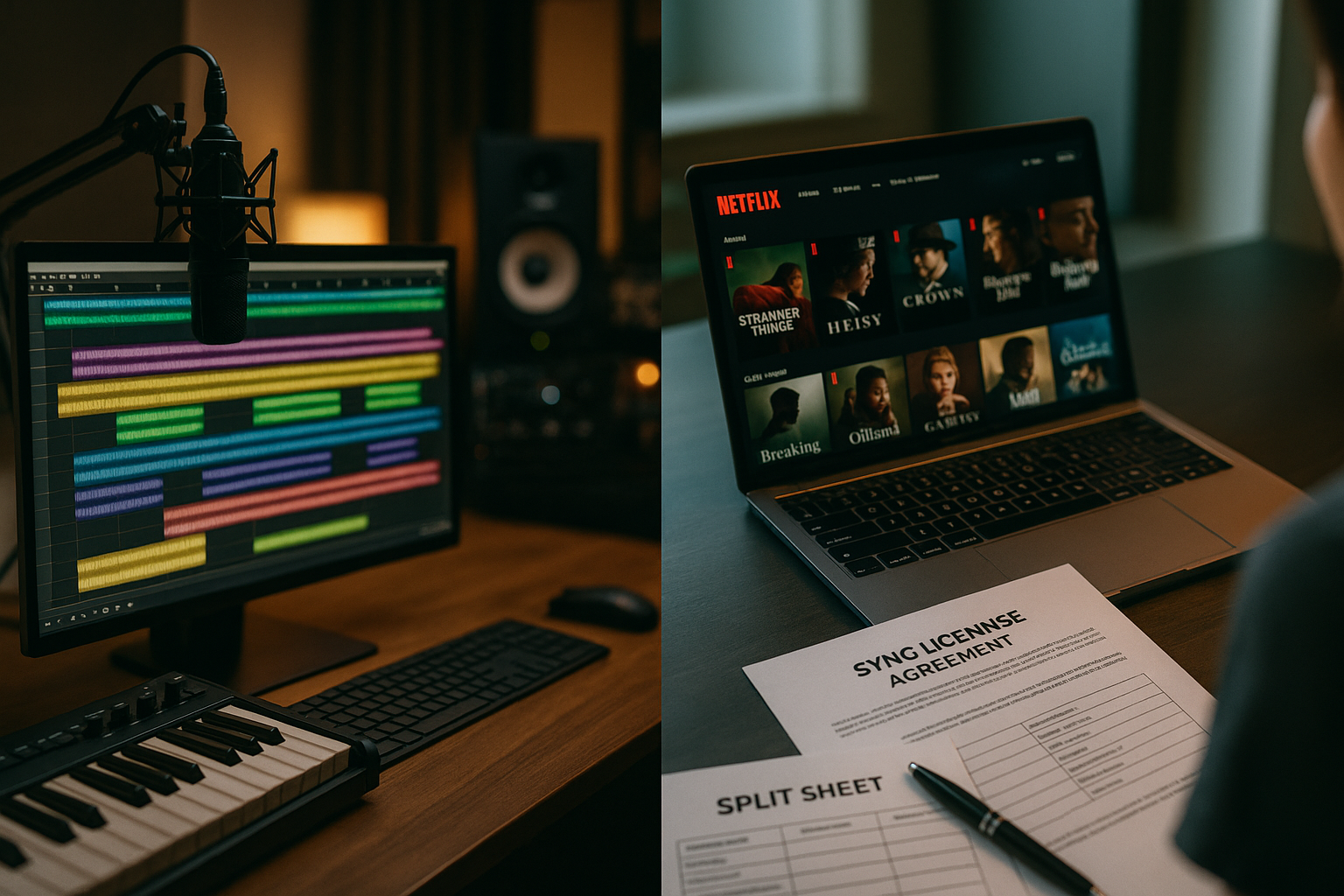
A mid-tier independent artist releases a song. It streams 800,000 times in its first month — generating roughly £2,600 at current rates. That same song, placed in a 30-second car insurance advert, might generate £8,000–£25,000 in a single transaction. Used in a Netflix series, it could generate a six-figure sync fee plus backend performance royalties paid every time the episode streams globally.
Most independent artists have no idea this market exists for them — because nobody told them it did.
The sync licensing market is not a lottery for catalogue legends. It is a structured commercial marketplace that rewards artists who treat their music as intellectual property — not just content.
The market you're not accessing
The global sync licensing market is projected to exceed £3.5 billion in 2026, driven by demand from streaming platforms (Netflix, Amazon, Disney+, Apple TV+), video games, advertising agencies, and branded content studios. All of them are hungry for non-mainstream music — because sync supervisors are actively seeking tracks that don't sound like every other major-label placement.
What is shifting beneath the surface: the democratisation of music production has created a glut of catalogue, but not a glut of clearable catalogue. The practical bottleneck for sync supervisors is not finding good music. It is finding music where both the master rights and the publishing rights are held by a single, responsive party who can clear quickly.
Independent artists who own both sides of their masters are, structurally, the ideal sync partner. Most have simply never been told to position themselves that way.
The second shift: brand content studios and mid-tier streaming productions no longer go exclusively through major music publishers for sync. They use specialist libraries, direct outreach, and platforms like Musicbed, Artlist, and Songtradr. Entry points exist at every catalogue tier. The barrier is not catalogue size. It is catalogue readiness.
How sync licensing works
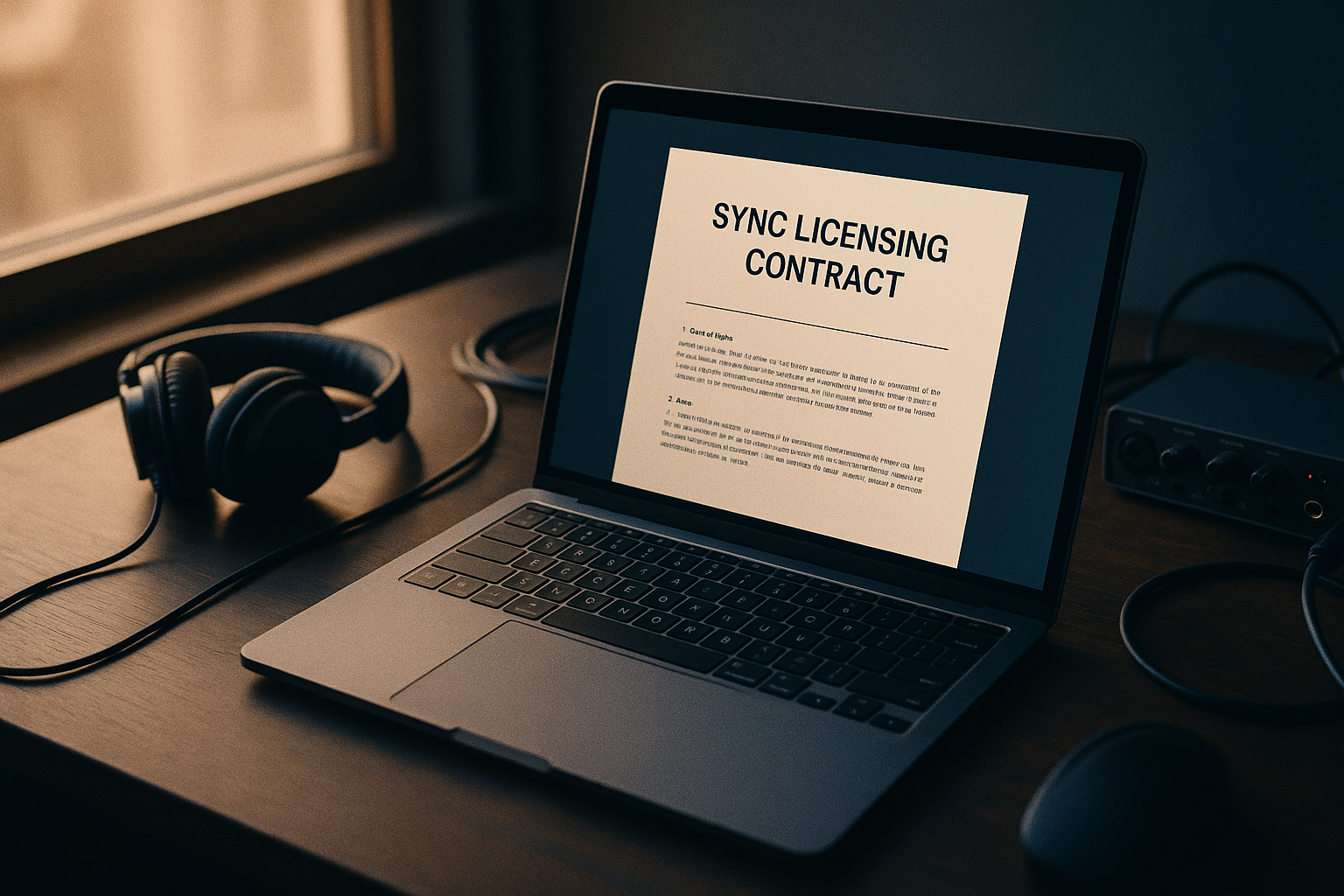
Sync licensing involves two separate rights clearances that must both be granted before a track can be used:
1. The master licence — permission from whoever owns the master recording. For independent artists who own their masters, this is you.
2. The publishing/sync licence — permission from the songwriter or their publisher. For independent artists who write their own material, this is also you.
This dual ownership — which independent artists typically have and major-label artists typically don't — is an enormous commercial advantage. A sync supervisor can close a deal with a single email rather than negotiating with two separate corporate entities over weeks.
Key concepts
Flat fee sync: One-time payment for the right to use the track in a specific project. Common in advertising. Range: £500 (student film) to £500,000+ (global advertising campaign).
Blanket licence: A subscription or annual fee giving access to a library catalogue. Common via Artlist/Musicbed.
Performance royalties (backend): Paid by broadcasters to your PRO (PRS in the UK, ASCAP/BMI in the US) every time a licensed piece of content airs or streams. This is passive, recurring income that continues for years.
PRO registration: Tracks must be registered with a Performing Rights Organisation before any performance royalties can be collected. Many independent artists release music without ever completing this step — and forfeit years of retroactive income.
Reality check: Are you ready?
Sync licensing is not for everyone at every stage.
You are a good candidate if
- You have a growing catalogue (10+ professionally produced tracks)
- You own your masters outright — no outstanding label obligations, no uncleared samples
- Your music is produced to broadcast standard (not home demo quality)
- You have registered all your works with your PRO and have a publishing agreement or self-publishing setup
You are not ready yet if
- Your catalogue contains uncleared samples (a sync supervisor will walk away immediately)
- You have signed away publishing rights to a label or publisher without a reversion clause
- Your catalogue is under five tracks — too thin to build a library pitch
No hype: Most independent artists will not land a Netflix placement in year one. The path to high-value sync is built incrementally. Start with libraries, build relationships with music supervisors, pitch for lower-tier productions, and let placements accumulate track record and backend royalties over time.
Your practical action plan
1. Audit your catalogue for clearability. List every track. Flag any that contain uncleared samples. These cannot be pitched for sync until cleared. This is non-negotiable.
2. Register every track with your PRO. In the UK: PRS for Music. Register every track you own and every underlying composition. Set up a self-publishing entity to collect the publishing side of performance royalties. This is free money most artists are leaving on the table.
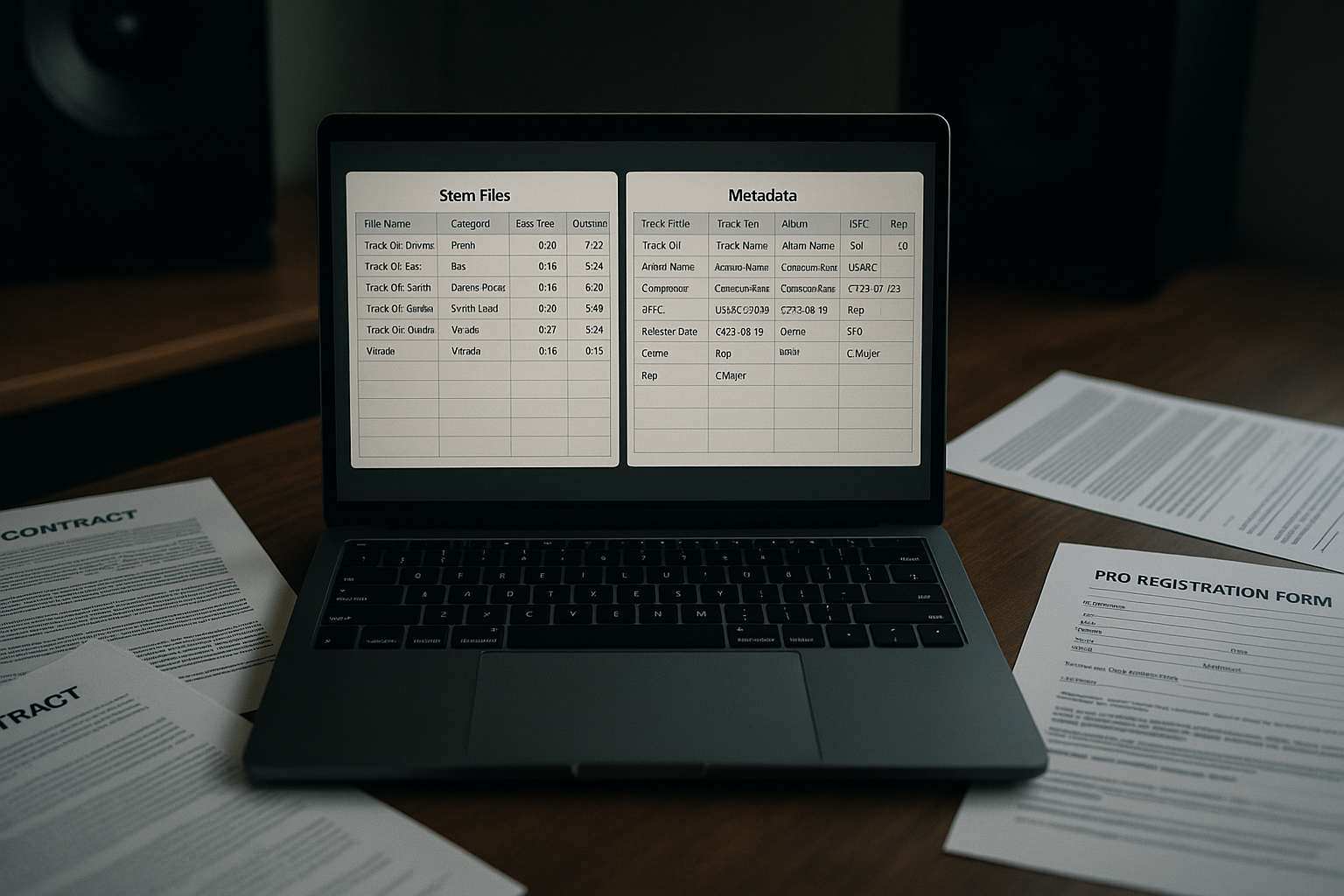
3. Create metadata-rich stems and alternates. Sync supervisors often need stems (individual track layers) and alternates (60-second cut, 30-second cut, instrumental version). Artists who deliver these immediately are far more likely to close placements.
4. Build a one-page sync pitch document. Genre tags, BPM, mood, instrumentation, key themes. Think like a search engine. Supervisors search catalogues by keyword. If your music isn't tagged correctly, it doesn't exist.
5. Submit to three non-exclusive libraries. Start with Musicbed, Artlist, or Epidemic Sound for blanket licensing (good for passive income). In parallel, reach out directly to three independent sync agencies who handle your genre.
6. Track every placement and register it. Every broadcast, every streaming episode — these generate backend royalties for years. Many artists discover placements only after the money arrives. Build a system to track what's been placed and where.
7. Use Music Artist Manager to log your sync pipeline. Track submissions, follow-up dates, placement fees, and royalty schedules in one place rather than a scattered inbox.
From content to intellectual property
The artist who views their catalogue as content is dependent on platform algorithms to survive. The artist who views their catalogue as intellectual property has a commercial asset that can be licensed, sub-licensed, and monetised across dozens of industries simultaneously — without releasing a single new track.
Sync licensing is not a bonus income stream. For independent artists who approach it systematically, it is a financial foundation: a set of recurring royalty streams and one-off fees that fund studio time, touring, and business operations.
The streaming economy rewards volume. The sync economy rewards quality, clearability, and relationships. These are three things a manager can build.
The shift is not from musician to businessperson. It is from releasing music to deploying intellectual property.
Ready to streamline your workflow?
Stop piecing together spreadsheets and scattered notes. Join the waitlist for Music Artist Manager and get your entire rollout in one place.
Written By
Gavin Alexander
Senior Marketeer
As the founder of Music Artist Manager, Gavin has spent years at the intersection of music and technology. Seeing firsthand how chaotic release rollouts and split sheets can be, he designed a platform that brings major-label infrastructure to independent artists and their teams. He writes extensively about industry trends, artist leverage, and workflow optimisation.