AI snapshot: What Music Artist Manager actually knows about where you are in your career
Learn how AI Snapshot reads your actual stage and traits to generate career assessments built for where you are, not the average artist.
Key Takeaways
AI Snapshot reads your actual stage and traits, not an imaginary average artist.
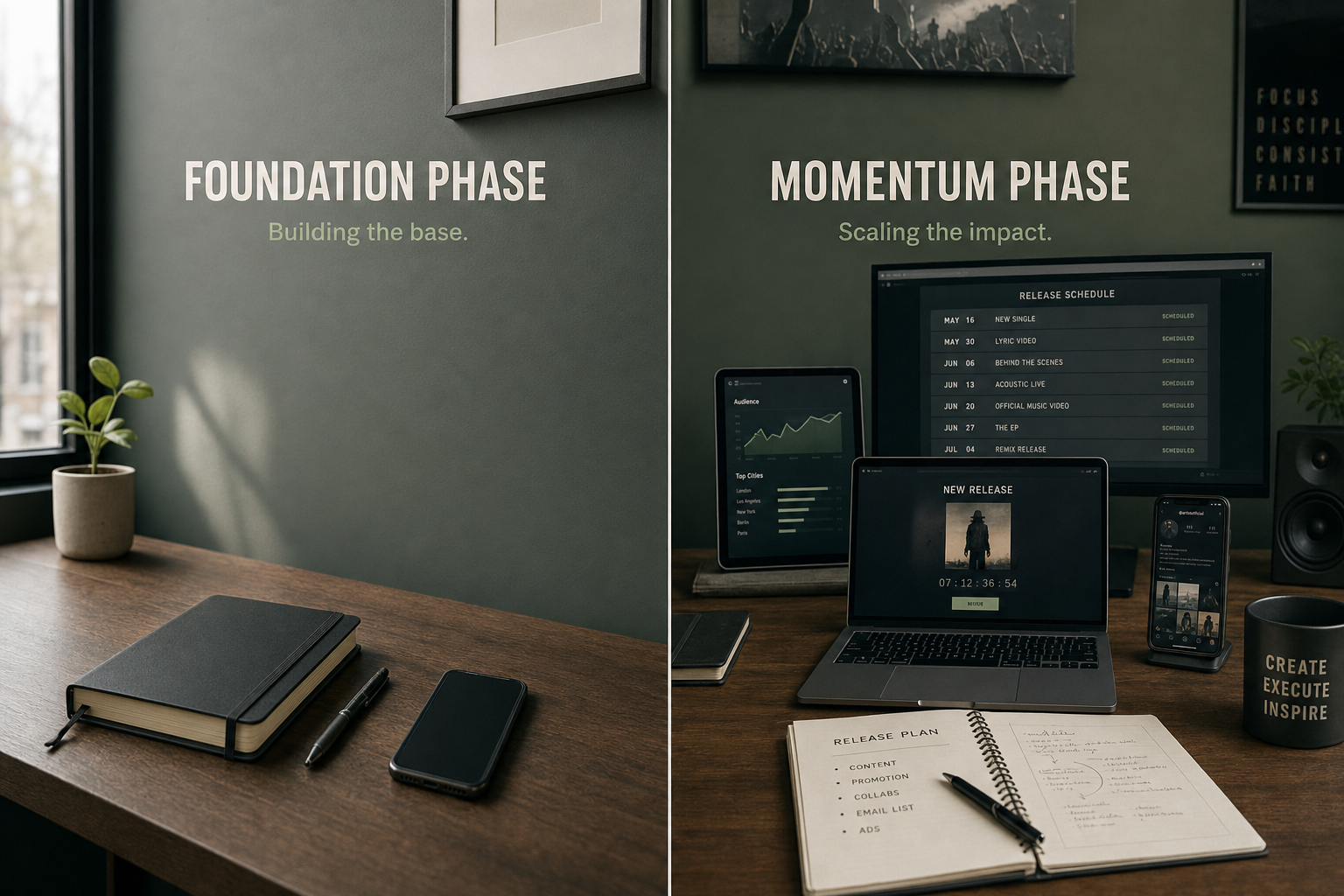
Foundation Phase artists need different guidance than Momentum Phase artists, and generic advice ignores that.
The feature pulls from your existing data inside Music Artist Manager to generate a specific assessment.
Use it as a starting point before planning a release or working with Manager chat.
Most career advice treats every artist the same. AI Snapshot reads your actual stage and traits inside Music Artist Manager, then generates an assessment based on where you are right now. Foundation Phase and Momentum Phase need different moves, and this feature makes that call before you plan your next release.
Most music career advice is written for a composite artist who doesn't exist. The guidance assumes a middle ground: some streams but not many, some social reach but nothing major, some budget but not a label deal. It stacks tactics without asking what stage you're actually in.
An artist six months into their first release campaign needs different guidance than one with three years of catalogue and a stable monthly listener base. The right next move for one is the wrong move for the other. But almost no one writes advice that starts by naming which phase you're in and building the plan from there.
Music Artist Manager's AI snapshot reads your real position. It looks at the traits stored in your account, determines whether you're in Foundation Phase or Momentum Phase, then generates an assessment based on that actual state. Not average advice. Not a one-size template. A read of where you are right now, which changes what the next tactical decision should be.
Foundation phase and momentum phase are not the same game
The difference between these two stages is not scale. It's what works.
Foundation Phase is about proof of concept. You are testing whether the music connects, whether the audience you think exists actually shows up, whether you can complete a release cycle and register everything correctly. The tactical priorities here are catalogue sequencing, release discipline, royalty registration, and early audience signal. You should not be hiring a publicist. You should not be chasing playlist placements before you have three to five releases that show consistent listener return. The job is to build the foundational mechanics so that when momentum does arrive, you can capture it.
Momentum Phase means you have proof. The music is connecting. You have streaming data that shows listener return, playlist additions that weren't bought, some level of repeat engagement across releases. Now the job is to accelerate what is already working, expand reach strategically, and start building the team and commercial relationships that turn momentum into sustainability. This is when you book the right supports, negotiate the right split with a manager, test paid marketing with a clear attribution model, and think about publishing admin.
The tactical playbook for one stage does not transfer to the other. And generic advice content rarely makes that distinction explicit.
How the snapshot works
AI snapshot sits inside your Music Artist Manager account. It is not a public-facing quiz. It is not a marketing tool. It is a feature that reads the traits you have already entered, the data stored in your project workspace, and the current career stage that Music Artist Manager has determined from that read.
The technical flow: `/api/snapshot-analysis` reads your stored artist traits, determines whether you are in Foundation Phase or Momentum Phase, then generates an assessment grounded in that stage. This sits alongside the same intelligent technology that powers Manager chat and the executive summary per project. It is one part of the same system, not a separate product.
What it gives you is a starting point. An honest read of where you currently stand, written for your actual stage, not for an averaged-out musician who might be you or might be someone five years ahead or behind you in the cycle.
Why this is not just content
There are two reasons this matters operationally.
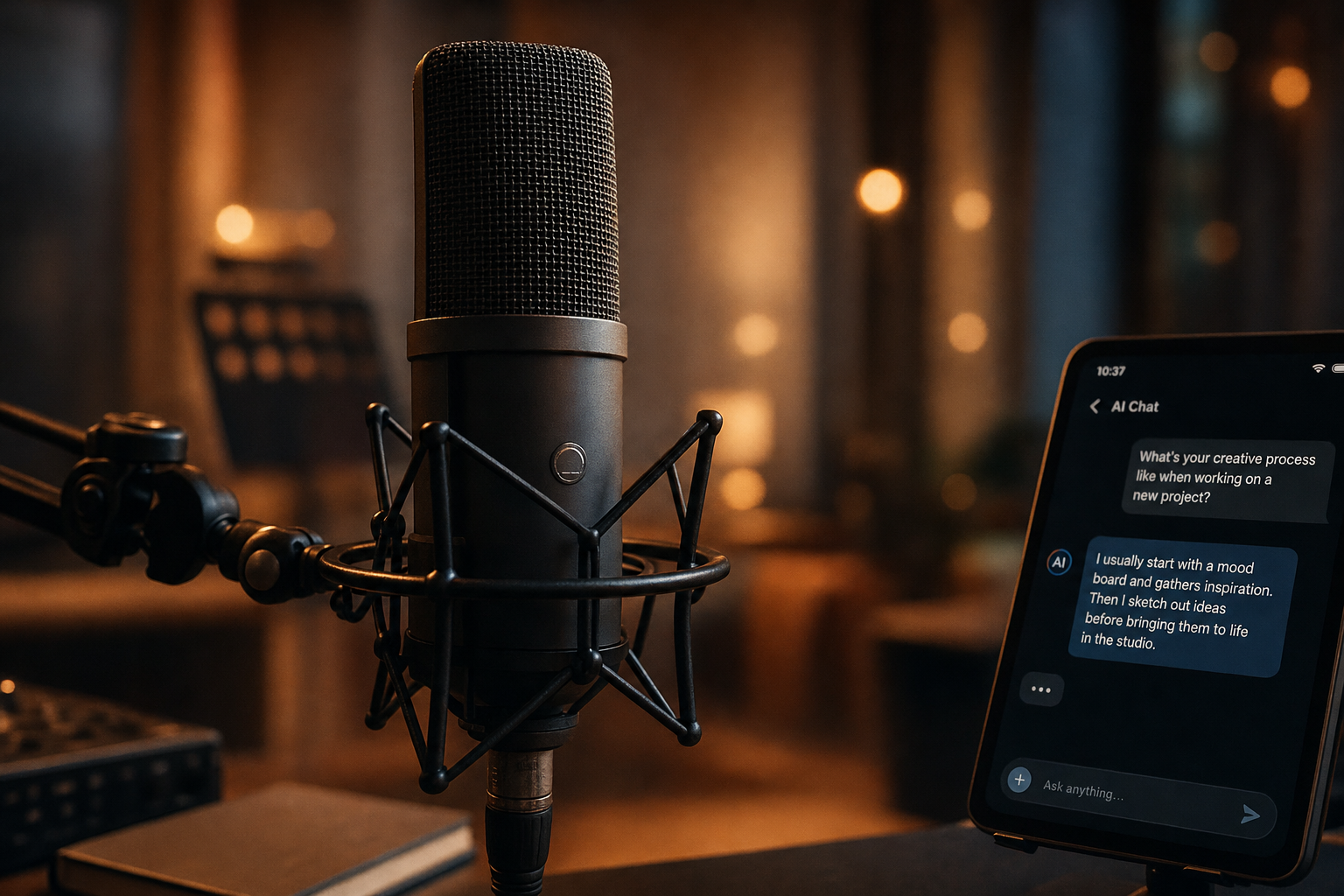
First, it changes the conversation inside Manager chat. If the system already knows you are in Foundation Phase, the guidance it offers when you ask about release strategy or budget allocation is calibrated to that phase. It will not suggest tactics that only work if you already have momentum. It will not assume you have team infrastructure that you do not yet have. The advice lands where you are, not where you wish you were.
Second, it removes the guesswork when you are planning a release or evaluating a next step. You are not interpreting vague advice and trying to map it onto your own situation. You are starting from a named position, with tactics that match that position. This is especially useful before a rollout, when the wrong strategic assumption costs time and money you do not get back.
Who this is for
Any artist or manager who wants an honest, stage-specific read before making a tactical decision.
If you are trying to decide whether to release two singles or one EP, whether to register with PRS now or after the next release, whether to bring on a co-manager or wait another six months, the snapshot gives you a baseline. It tells you what phase you are in, which tells you what the right sequencing is.
If you are working with Manager chat and want the advice to be calibrated from the start, running the snapshot first means the system already knows your context. You do not spend the first three questions explaining where you are.
If you are a manager working with multiple artists at different stages, the snapshot per artist gives you a consistent framework. You can see which artists are still in Foundation Phase and need foundational work, and which are in Momentum Phase and need acceleration tactics. The language is consistent. The tactical priorities are clear.
What this does not do
It does not give you a score. It does not rank you against other artists. It does not tell you whether you are "good enough" or predict whether you will succeed.
It tells you what phase you are in and what that phase requires. That is all. The assessment is specific, operational, and grounded in the traits and data inside your account.
It does not replace judgment. It does not make decisions for you. It gives you a named starting point so that the decisions you do make are based on where you actually are, not where generic advice assumes you might be.
The real reason most advice does not work
Most music career content is written for traffic, not for the artist reading it. The writer does not know whether the reader is in month two or year five. So the advice hedges. It stays general. It lists tactics that could apply to anyone, which means they apply precisely to no one.
The result is that you read the article, nod along, and then do not know what to do next because the advice did not start from your actual position. You are left interpreting, mapping, guessing.
AI snapshot starts from your position. It names the phase. It gives you stage-specific guidance. And because it is built into the same system that powers Manager chat, that specificity carries through into every other piece of advice the system gives you.
That is the difference between content written for search traffic and a feature built for the artist who actually uses it.
Ready to plan your next release?
Stop piecing together spreadsheets and scattered notes. Get your free release strategy and keep your whole rollout in one place.
Written By
Gavin Alexander
Senior Marketeer
As the founder of Music Artist Manager, Gavin has spent years at the intersection of music and technology. Seeing firsthand how chaotic release rollouts and split sheets can be, he designed a platform that brings major-label infrastructure to independent artists and their teams. He writes extensively about industry trends, artist leverage, and workflow optimisation.