The 'pre-mortem' release: How anticipating failure saves your indie campaign
Run a pre-mortem on your next release to spot weak points in your campaign before they kill your momentum.

Key Takeaways
Run a pre-mortem before you launch, not a post-mortem after you fail.
Your weakest link is hiding in plain sight right now.
Every failed release shares the same three blind spots you haven't checked yet.
Risk mitigation isn't defensive, it's how you protect your momentum and your budget.
How to run a pre-mortem on your next music release (and why it might save your campaign)
Most artists plan for success. Very few plan for failure. That is a costly mistake.
A pre-mortem is a strategy tool borrowed from project management. You simulate a failed release before it goes live. You ask: what went wrong? You reverse-engineer the collapse. Then you fix those weak points before they become real problems.
This is not pessimism. This is how professionals protect their campaigns.
What is a pre-mortem?
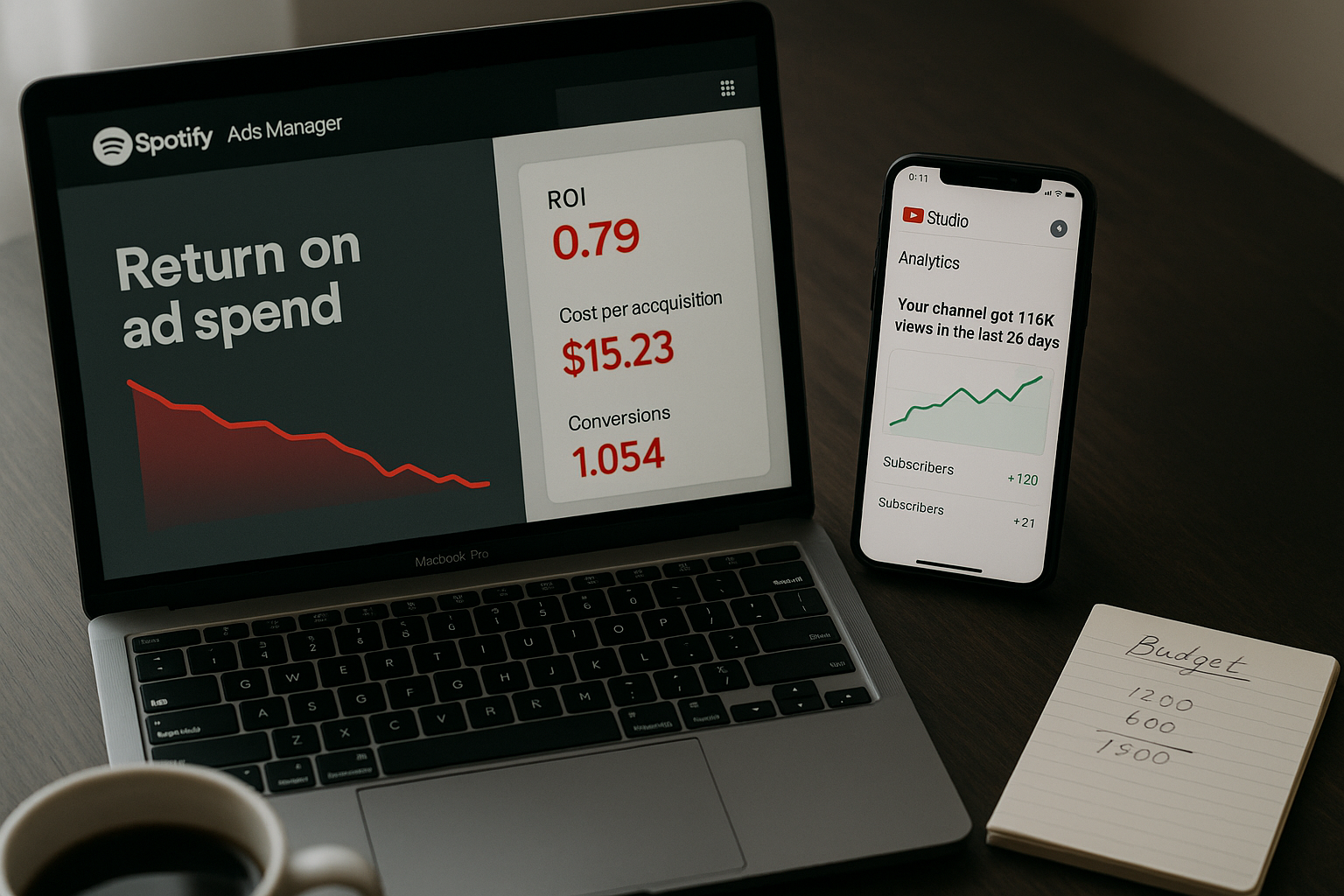
A pre-mortem happens before your release. You gather your team or sit down solo. You imagine your single or album flopped. No playlist adds. No meaningful streaming growth. Poor engagement. Low conversion on your mailing list. The campaign burns budget and goes nowhere.
Now you ask: why did it fail?
You document every reason. You do not filter. You do not soften. You list every weak link in your chain.
Then you build a plan to address each one.
Why this works for independent artists
Most release campaigns fail quietly. The song drops. The artist posts. The numbers stay flat. By the time you realize something is not working, it is too late to course-correct.
A pre-mortem gives you visibility before launch. It forces you to confront gaps in your distribution strategy, content calendar, playlist pitching timeline, and fan communication. You stop operating on hope. You start operating on contingency.
This is the same approach major labels use when stress-testing a rollout. You should be doing it too.
How to run a pre-mortem on your release
Step 1: set the scenario
Sit down two to four weeks before your release date. Write this sentence at the top of a document:
"It is [release date + 30 days]. The release failed. What went wrong?"
Be specific. Define what failure looks like for this campaign. Is it under 5,000 streams in week one? No playlist adds? Poor email open rates? Zero press coverage? Write your failure metrics clearly.
Step 2: list every possible failure point
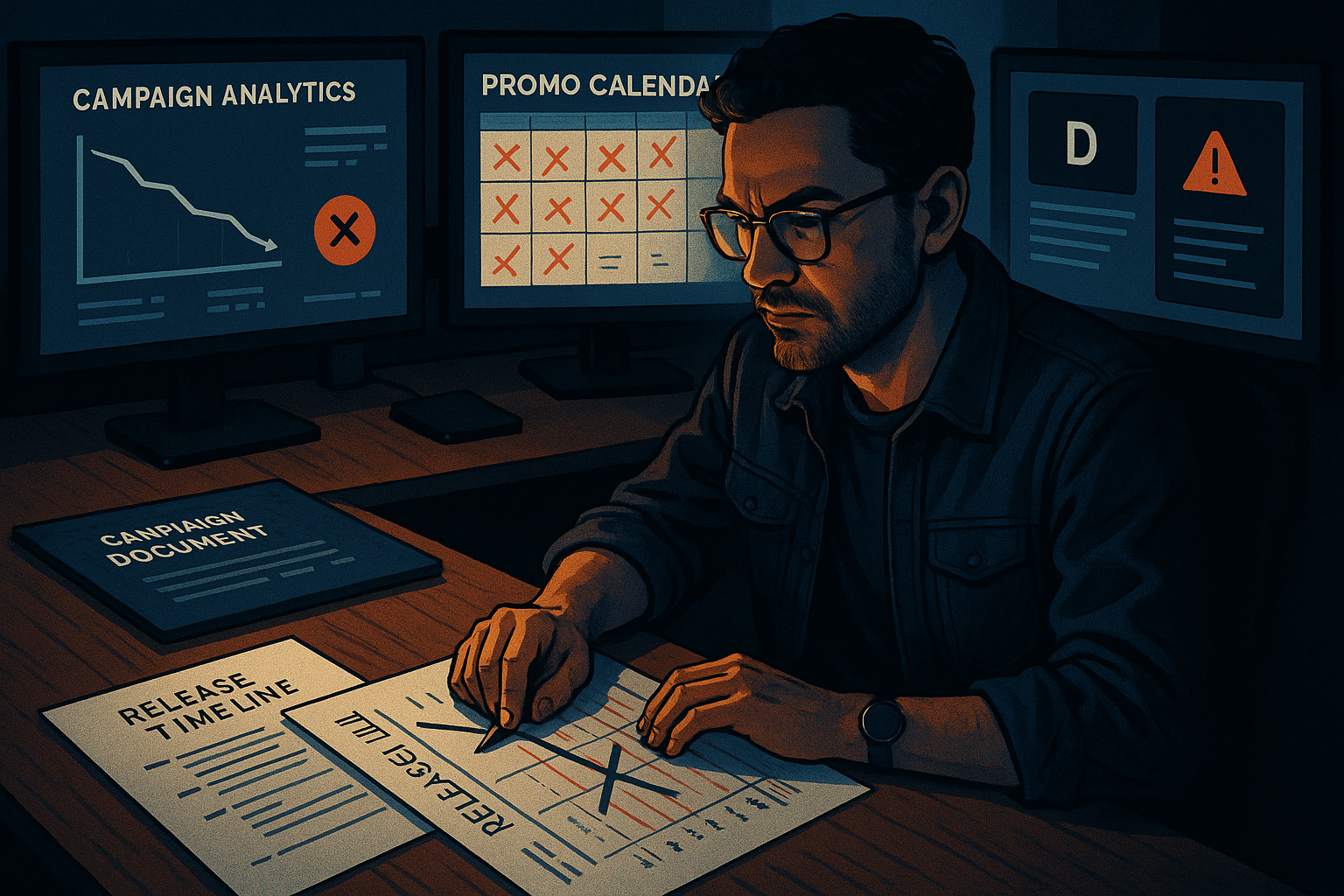
Now brainstorm. Write down every reason the campaign could collapse. Do not hold back. Include the uncomfortable stuff.
Here are common failure points for independent releases:
- Release date conflicts with a major artist drop in your genre
- Playlist pitching happened too late or with weak metadata
- Content calendar was not finished before release week
- No confirmed press or blog coverage
- Mailing list is cold or has not been prepped with a nurture sequence
- Distributor delay or metadata rejection
- Song length or intro is not DSP-optimized
- No pre-save or pre-add campaign
- Budget allocated poorly between ads, PR, and content production
- No clear call to action in social posts
- Collaboration partner did not fulfill promo obligations
- Release went live without a Spotify for Artists pitch submitted
- No plan for what happens after week one
Your list will be different. That is the point. You are identifying your specific vulnerabilities.
Step 3: prioritize by impact and likelihood
Not every risk is equal. Some will kill your campaign. Others are minor inconveniences.
Go through your list. Mark each item as high, medium, or low impact. Then mark each as high, medium, or low likelihood.
Focus on anything that is high impact and medium-to-high likelihood. Those are your critical risks.
Step 4: build a mitigation plan for each critical risk
Now you fix it. For each high-priority risk, write a one-sentence action that reduces or removes the threat.
Examples:
- Risk: playlist pitching happens too late.
Mitigation: submit Spotify for Artists pitch 7 days before release and prep independent curator outreach 14 days out.
- Risk: mailing list is cold.
Mitigation: send two value-driven emails before the release announcement to warm engagement.
- Risk: no content calendar.
Mitigation: batch-create 10 pieces of content this week and schedule in advance.
- Risk: collaboration partner does not promote.
Mitigation: confirm promo commitment in writing and provide assets two weeks early.
Do this for every critical item. Your mitigation plan becomes part of your release checklist.
Step 5: assign owners and deadlines
If you are working with a team, assign each mitigation task to a specific person. Set a deadline. Put it in your project management tool or shared calendar.
If you are solo, block time on your own calendar to execute each task. Treat these deadlines as non-negotiable.
Step 6: review one week before release
One week out, revisit your pre-mortem document. Check which risks you mitigated. Identify any new risks that surfaced since your first session.
This is your final stress test. If something still feels fragile, you have one week to shore it up or adjust expectations.
Real scenarios where a pre-mortem saves you
Scenario 1: the metadata rejection
You run a pre-mortem. You realize your distributor has rejected metadata before due to incorrect ISRC formatting. You double-check your delivery two weeks early. You catch an error. You resubmit. The release goes live on time.
Without the pre-mortem, you would have discovered the rejection the day before release.
Scenario 2: the cold list
You imagine failure. You realize your email list has not heard from you in three months. Open rates will be terrible if your first message in 90 days is a release announcement.
You send two emails before the drop. One shares a behind-the-scenes studio moment. One offers early access to lyrics. Engagement warms up. Your release email performs.
Without the pre-mortem, you would have sent one email to a cold list and wondered why no one clicked.
Scenario 3: the playlist pitch gap
You realize you never actually submitted a pitch through Spotify for Artists. You assumed your distributor did it. They did not. You submit the pitch manually with two weeks to spare.
Your song gets added to a mid-tier editorial playlist. That would not have happened if you caught the gap on release day.
How this connects to your broader release strategy
A pre-mortem is not a standalone tactic. It plugs into your full release protocol.
If you are following the independent artist release protocol, the pre-mortem happens during your pre-release phase. It is your quality control layer.
It also helps you allocate budget more effectively. If you have already mapped out where things can go wrong, you know where to spend and where to save. That is the same logic behind why independent artists waste their release budget. You stop guessing. You start planning around risk.
And if your pre-mortem reveals that your email list is too small or too cold, that reinforces why your mailing list is worth more than your follower count. Owned channels give you control when everything else is uncertain.
What to do after your release
Run a post-mortem too.
Thirty days after release, sit down again. Review what actually happened. Compare it to your pre-mortem predictions. Which risks materialized? Which did not? What surprised you?
Document it. Use that intel for your next release. Over time, you will build a database of what breaks and what holds. That is how you get better.
Final note
A pre-mortem does not guarantee success. It reduces the chances of an unforced error. It helps you catch the things you can control before they cost you streams, budget, or momentum.
Most campaigns do not fail because the music is bad. They fail because the plan had holes no one looked for.
You are looking now. That puts you ahead.
Related Reading:
- [Why Independent Artists Are Wasting Their Release Budget (And What the Data Says to Do Instead)](https://www.musicartistmanager.com/blog/why-independent-artists-are-wasting-their-release-budget-and-what-the-data-says-to-do-instead)
- [Your mailing list is worth more than your follower count — here's why](https://www.musicartistmanager.com/blog/owned-email-asset)
- [The independent artist release protocol](https://www.musicartistmanager.com/blog/independent-artist-release-protocol-checklist)
Ready to streamline your workflow?
Stop piecing together spreadsheets and scattered notes. Join the waitlist for Music Artist Manager and get your entire rollout in one place.
Written By
Gavin Alexander
Senior Marketeer
As the founder of Music Artist Manager, Gavin has spent years at the intersection of music and technology. Seeing firsthand how chaotic release rollouts and split sheets can be, he designed a platform that brings major-label infrastructure to independent artists and their teams. He writes extensively about industry trends, artist leverage, and workflow optimisation.