Your masters are your fastest paycheck
Learn how to audit, tag and pitch your masters for sync deals worth £400 to £40,000 per placement.

Key Takeaways
Music supervisors clear tracks in 24 to 72 hours. Independent artists who own their masters respond instantly and win the placement.
Sync licensing pays between £400 and £40,000 per placement. The artists landing deals consistently are the ones who can say yes before Friday.
A track without registered metadata, clean edits and stems gets passed over regardless of quality. Sync-readiness is operations, not talent.
Your catalogue is not a streaming archive waiting for discovery. It is a licensing portfolio that earns when you treat it like one.
Music supervisors clear deals in 24–72 hours. If you own your masters, you can say yes before a major label's legal team opens the email. That structural advantage is worth £400 to £40,000 per placement — but only if your catalogue is ready when they call.
Music supervisors don't care about your Spotify streams. They care about one thing: can you clear this track by Friday?
In 2026, sync placements are paying between £400 and £40,000 per placement. TV dramas, brand campaigns, video games, trailers, Netflix originals. The artists landing those deals most consistently aren't the ones with the biggest names. They're the ones who pick up the phone, own their masters, and say yes before a major label's legal team has even opened the email.
This is the structural advantage that independent artists have been sitting on without realising it. Most are completely failing to exploit it.
Why sync is now your most accessible high-value revenue stream
Sync licensing has shifted from nice-to-have to core commercial strategy. The change is structural, not cyclical.
Supervisors are time-poor. Deadlines for placements in TV and ad campaigns run 24 to 72 hours. Major-label tracks require multiple clearance approvals across master owners, publishers, and legal teams. Independent artists with full master and publishing ownership can clear instantly.
Catalogue breadth matters less than catalogue readiness. Supervisors aren't browsing your SoundCloud. They're searching for something specific under deadline pressure. An artist with 15 well-tagged, broadcast-ready tracks beats an artist with 500 unregistered ones every time.
The micro-licensing economy is real. Platforms such as Musicbed have paid over $80 million to independent artists and filmmakers. The deals are smaller, but they stack. They require zero label relationship.
The artists who understand sync don't see their catalogue as something to stream. They see it as a licensing portfolio.
How sync deals actually work: The two-part clearance system
There are three layers to a sync deal that every independent artist must understand.
The two licences required for any placement
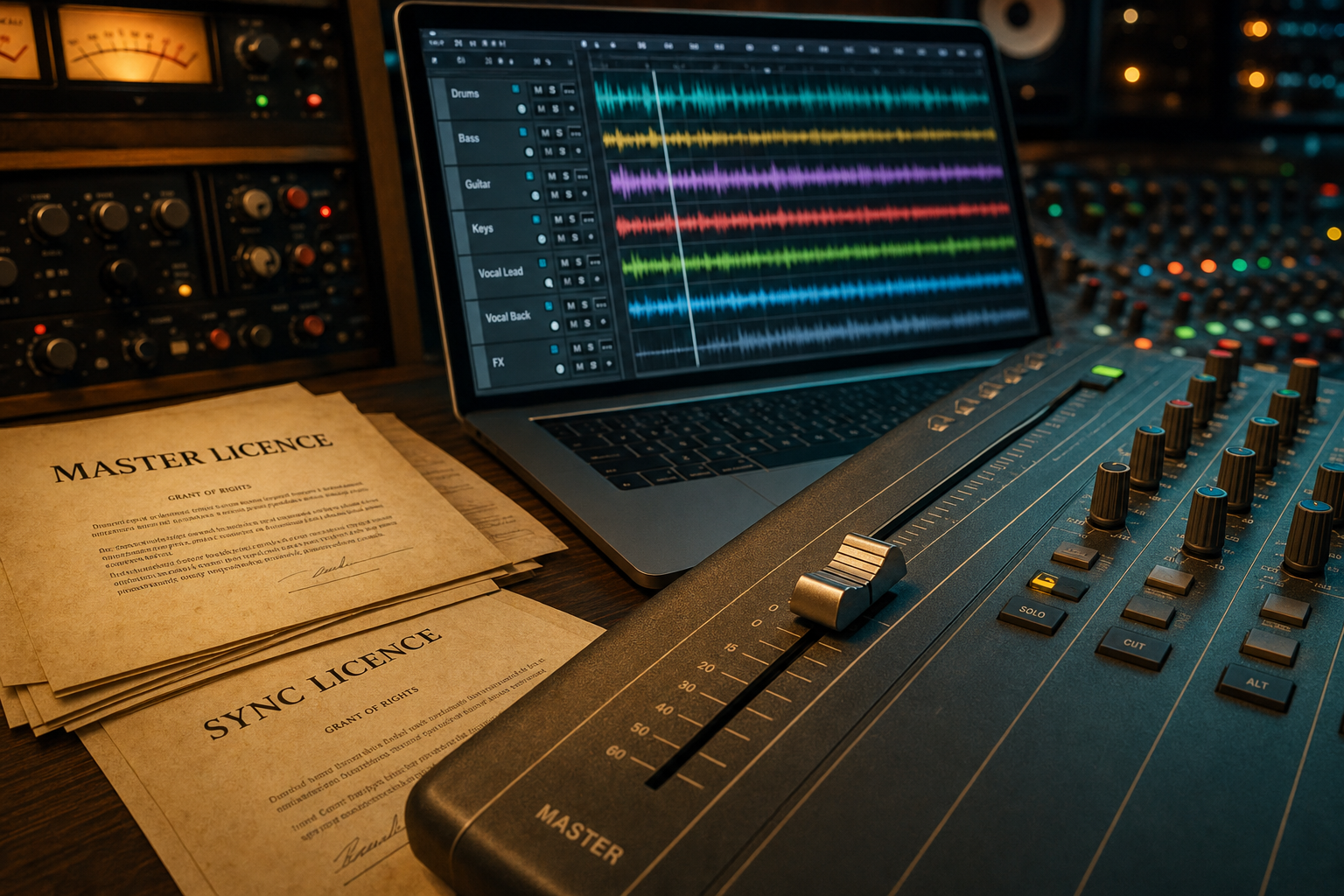
Master licence — permission to use the recording itself. If you own your masters, you control this entirely.
Sync licence (publishing) — permission to use the composition (melody and lyrics). If you are also the songwriter and have not signed to a publisher, you control this too.
Both must be cleared for a placement to happen. Artists signed to major labels typically cannot clear either quickly. An independent artist who owns both can respond in minutes. Supervisors know this.
What makes a track "sync-ready"
A track that sits in your Dropbox is not sync-ready. A sync-ready track means:
- Broadcast-quality master (mixed and mastered to -14 LUFS or per brief)
- Instrumental version available
- Stems or split-stems available on request
- Clean edit (no expletives) where relevant
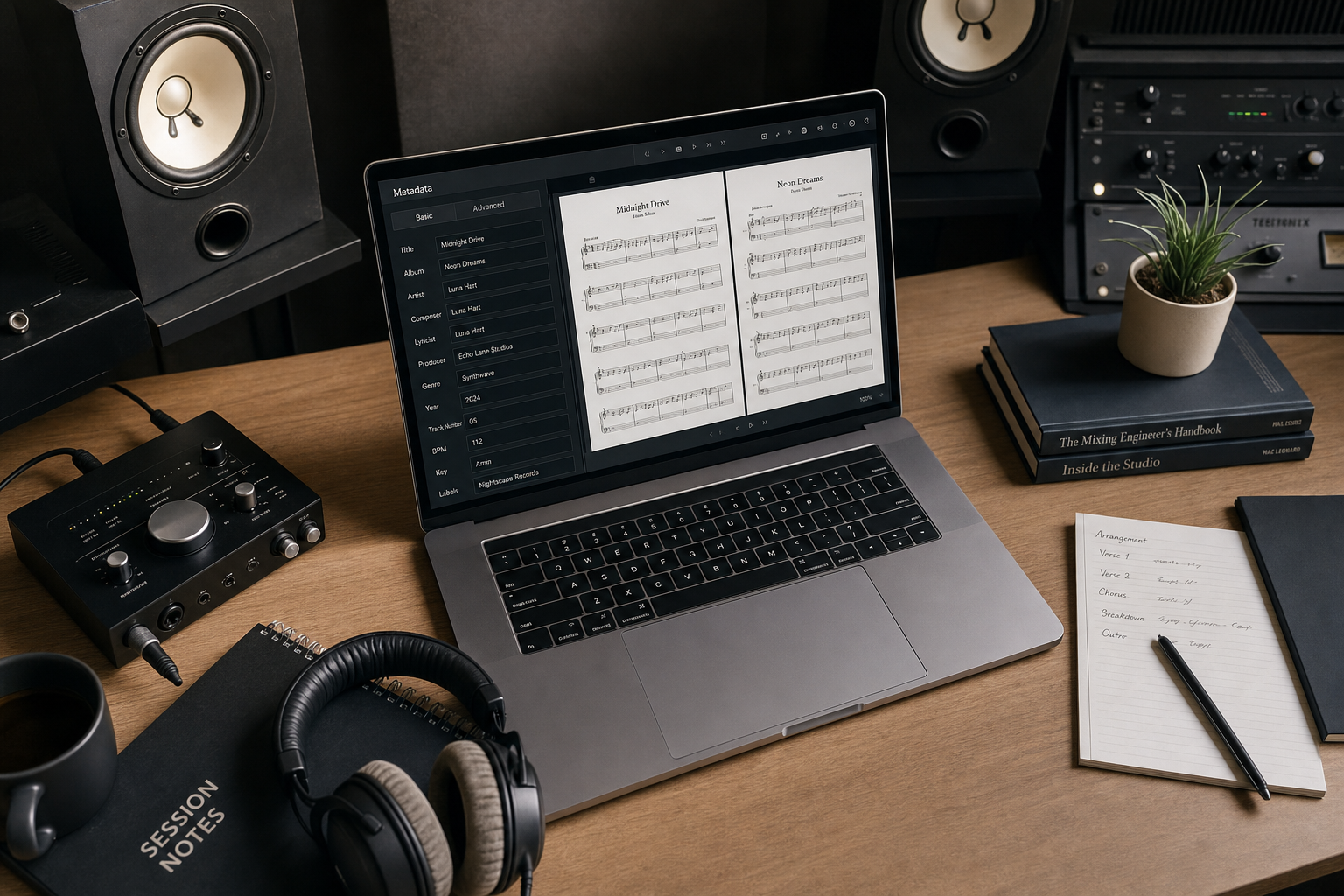
- All metadata correctly registered: ISRC, ISWC, PRO registration (PRS for Music in the UK)
- Clear chain of ownership documented — no samples unless cleared
Without these, even the best track gets passed over. This is pure operations, not talent.
Who this actually works for (and who it doesn't)
Sync is not a guaranteed income stream and it is not passive. It requires active positioning.
This strategy is best suited to artists who:
- Own or co-own their masters and publishing — the speed advantage disappears the moment a label or publisher needs to co-sign
- Produce music that sits in recognisable emotional grooves — cinematic, atmospheric, tension-and-release, or narratively neutral tracks place more easily than highly lyric-forward or genre-specific material
- Are willing to treat their catalogue like a product catalogue — organising, tagging, updating, and pitching it systematically
Artists who are signed to labels without sync carve-out clauses, or who have uncleared samples in their catalogue, face real barriers before they can even pitch.
The seven-step sync positioning system
1. audit your catalogue for sync-readiness
For every track you own outright: confirm ISRC is registered, confirm it is registered with PRS for Music (or your local PRO), and confirm an instrumental version exists. Flag anything with uncleared samples immediately.
2. create a dedicated sync folder structure
For each track: master WAV, instrumental WAV, stems (if available), clean edit, and a one-line descriptor. Format: "Cinematic tension build, 90 BPM, Dm — think BBC drama underscore."
This is not for your creative satisfaction. This is for a supervisor working at 11pm on a Thursday.
3. register with at least two sync licensing platforms
Musicbed, Artlist, Pond5, and Songtrust all operate non-exclusive licensing. You retain your rights while they pitch. Non-exclusive is the default starting point. These platforms do the outreach work while you maintain full ownership.
4. build a one-page sync sheet
Your name, genres, moods, BPM ranges, notable past placements (even small ones), and direct contact for licensing enquiries. This is your B2B pitch document. It is not a press kit. It is a procurement spec sheet.
5. identify and approach five music supervisors directly
LinkedIn, IMDB credits, and industry directories (Music Week, MCPS) list active supervisors. A concise, targeted email with a streaming link (NOT an attachment) and a clear licensing offer converts far better than a cold submission to a crowded inbox.
Write: "I own all masters and publishing. I can clear within 24 hours. Here are three tracks that fit [specific show/brand tone]. Full instrumentals and stems available on request."
6. set your licensing floor price
Know your minimum acceptable fee for a full buyout vs. a term licence. An artist who hesitates or asks the supervisor to wait loses the deal. Decide in advance.
A web series might offer £400. A Netflix placement might offer £8,000. A brand campaign might offer £25,000. Know where your floor sits before the email arrives.
7. track every placement in your Music Artist Manager
Sync income should be a named line item in your P&L, not an occasional windfall. Treat this like a product line. If you placed two tracks this quarter, the question is: what do you need to do to place four next quarter?
The commercial reality most artists miss
Most artists think about sync the wrong way. They see it as a lottery. Something that might happen to them if they get lucky enough for a supervisor to stumble across their SoundCloud.
Managers who build durable income see sync as a B2B sales operation. Your catalogue is a product range. Supervisors are buyers. Your job is to make the product specification and procurement process as frictionless as possible. The competitor who does that beats you, regardless of who makes better music.
The moment an independent artist understands that their masters are not just an ownership principle but a live commercial asset, the entire strategic picture shifts. You are not waiting for discovery. You are running a licensing business.
How to track sync-readiness across your catalogue
Tracks and Splits in Music Artist Manager help you track master ownership, registration status, and sync-readiness across every track. When a supervisor calls, your answer is always "yes, cleared, here are the stems."
Related Reading:
Ready to plan your next release?
Stop piecing together spreadsheets and scattered notes. Get your free release strategy and keep your whole rollout in one place.
Written By
Gavin Alexander
Senior Marketeer
As the founder of Music Artist Manager, Gavin has spent years at the intersection of music and technology. Seeing firsthand how chaotic release rollouts and split sheets can be, he designed a platform that brings major-label infrastructure to independent artists and their teams. He writes extensively about industry trends, artist leverage, and workflow optimisation.