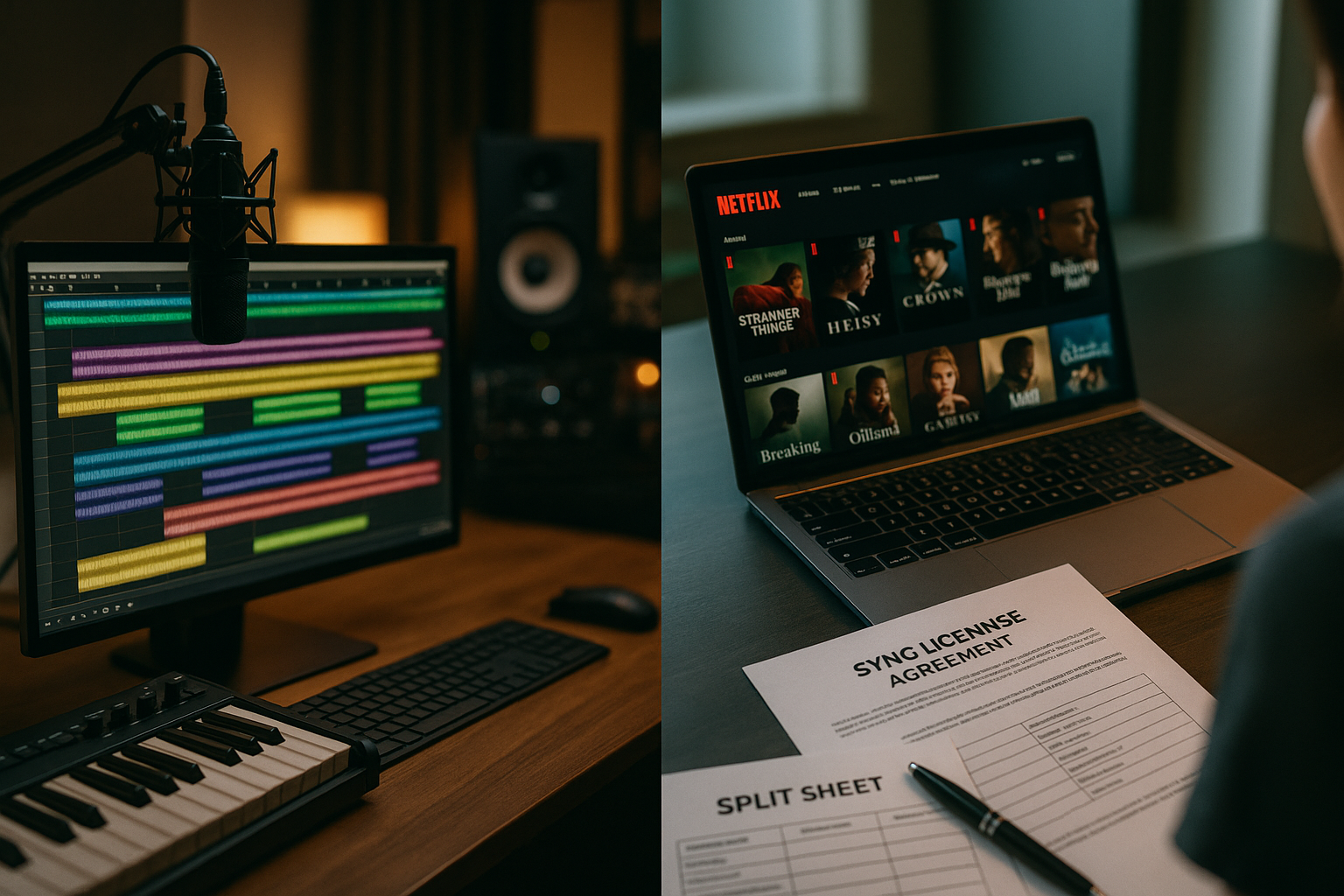
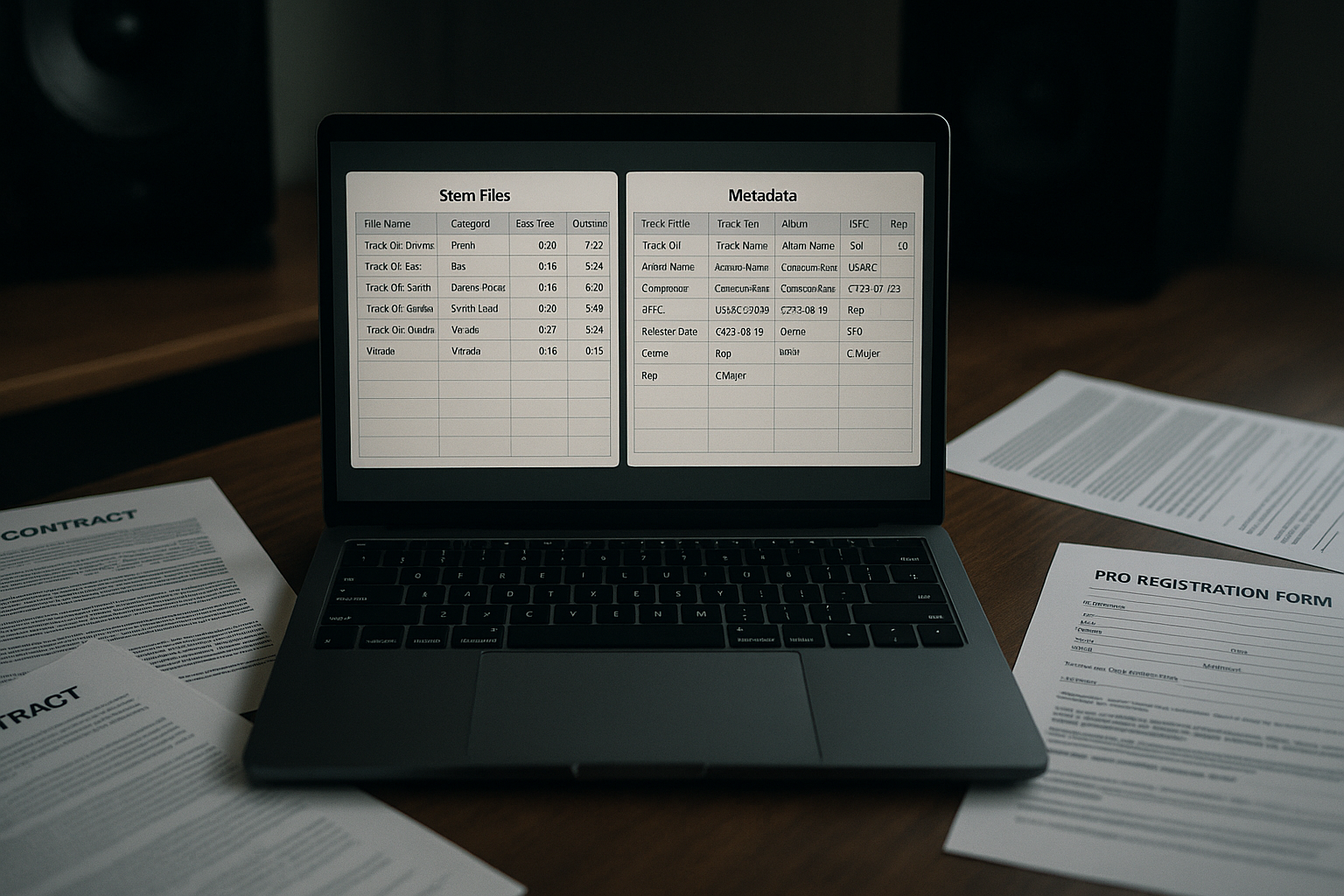
Your music catalogue just became 40% more valuable
Learn how AI licensing deals in 2026 are pushing independent catalog valuations from 8x to 18x multiples.

Key Takeaways
AI licensing now gives your catalog a second revenue stream independent of streaming income.
Catalogs with documented AI licensing rights are valued 40–50% higher than streaming-only catalogs in 2026.
You must separate master recording rights from publishing rights to capture AI licensing revenue.
The artists who document their rights today will control the highest-value catalogs by 2028.
Imagine you've meticulously built a music catalogue, hoping for long-term monetisation, only to see streaming royalties plateau year after year. Now, picture that same catalogue suddenly appreciating by 40–50% in value, not from a viral track or a new release, but from a fundamental industry shift. In June 2026, the NMPA published standardised AI licensing templates, establishing a 50/50 revenue split for masters and compositions, directly challenging the stagnant earnings of the streaming era.
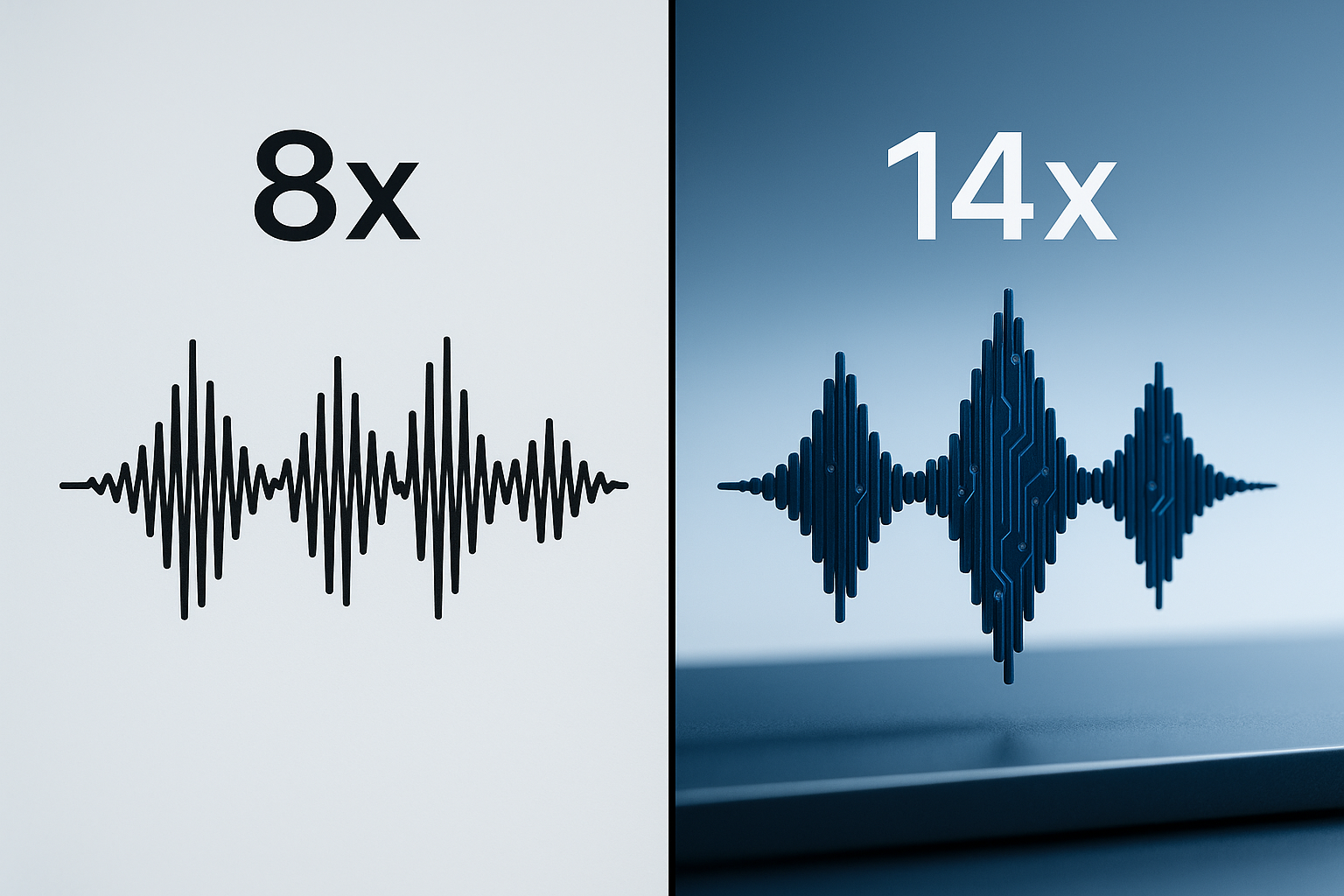
This landmark change is pushing independent catalogue valuations from 8–14x multiples up to 14–18x, driven by AI licensing as a distinct, separately negotiated revenue stream. For independent artists who own their master recordings and publishing, this means your existing assets have become significantly more valuable. Understanding how to document and position your rights now is crucial for optimising this unprecedented financial uplift.
Here's what changed, what it means for you, and how to position your catalog to capture the uplift.
The valuation shift no one is talking about yet
For two decades, catalog valuation followed one model: streaming multiples. If your catalog generated $1,000/month in net royalties and showed stable or growing income, a buyer would pay you 8–14x your annual earnings. A $12,000/year catalog might sell for $96,000 to $168,000, depending on genre, growth trajectory, and rights clarity.
That model still exists. But in June 2026, the NMPA announced standardized AI licensing template agreements with Udio and Klay Music, establishing a 50/50 revenue split between composition and master recording rights. Universal Music Group and Warner Music Group had already signed proprietary deals earlier in 2026, but the NMPA templates were the first open, opt-in framework for independent publishers and artists.
What changed: AI platforms now pay separately for the right to train generative models on your compositions and master recordings. This is structurally different from streaming. There is no label margin, no distributor cut, and no algorithmic playlist gatekeeping. If you own your rights and opt in, you receive direct licensing revenue based on catalog size and usage frequency.
Buyers see this as a second revenue surface. Your catalog now generates income from two distinct sources: streaming royalties and AI licensing fees. That diversification lowers risk and increases predictability, which pushes independent catalogs into the 14–18x valuation multiple range. This is the tier that used to be reserved for proven, multi-year hit-generating catalogs with major-label backing.
According to Chartlex's 2026 catalog valuation guide, catalogs with documented AI licensing optionality are consistently valued 40–50% higher than catalogs with identical streaming income but no clear AI licensing rights.
Real example: An independent artist earning $1,400/month in stable catalog income saw their valuation jump from $67,000–$100,000 (at 8x multiple) to $140,000–$168,000 (at 14x multiple) after formally opting into an AI licensing agreement and separating their master recording rights from publishing in their catalog registration. No new music. No viral moment. Just clear documentation and strategic opt-in.
Why AI licensing changes the valuation game
Streaming payout rates have plateaued. Spotify pays $0.003–$0.005 per stream in 2026. Apple Music pays slightly higher at $0.006–$0.007. For most independent artists, streaming is not a growing revenue source. It is a floor.
AI licensing represents the first new revenue category in a decade that pays in advance and based on rights ownership, not on listener behavior. You do not need playlisting. You do not need virality. You need clear ownership and opt-in registration.
The revenue itself is modest right now. Early NMPA template opt-ins are generating $20–$150/month for mid-tier independent catalogs with 30–100 registered songs. But by 2027–2028, as AI platforms scale and training datasets expand, this revenue stream is expected to grow meaningfully. Smart investors and catalog buyers are pricing in future AI licensing potential, not just today's payouts.
The structural advantage for independent artists: If you own your master recordings, you can negotiate AI licensing directly or through independent publishers. Artists signed to traditional labels often do not have this control. Their labels strike the deals, take the majority share, and pay artists only the remainder after label margins.
This is one of the few times in modern music business where independent ownership delivers a direct financial advantage over major-label backing.
Who this applies to (and who it does not)
This valuation uplift applies to:
- Independent artists and songwriters who own or control both their master recordings and compositions, or have clear written separation of these rights.
- Artists with stable, recurring catalog income of $500/month or more and documented 3+ year earnings history. These catalogs are most attractive to AI licensors and valuation models.
- Artists who actively manage their own publishing or work with independent publishers that allow opt-in to new licensing deals.
This does NOT apply yet to:
- Artists under traditional major-label recording contracts. Your label controls the master and negotiates AI licensing. You receive backend payments only.
- Artists who have not registered their publishing separately from their master recordings. Your rights are ambiguous. Platforms and buyers will undervalue them.
- Artists with sub-$300/month catalog income. Valuations are too small to attract buyer interest yet, but still worth monitoring for future growth.
The cautionary note: AI licensing is in its infancy. Revenue from these deals will remain modest through 2026 and likely into 2027. The real value of the 50/50 NMPA precedent is not today's payouts but the framework and the signaling that this revenue stream exists and is here to stay. Do not over-weight AI licensing income in your financial planning. But ensure your rights are documented and registered so you are ready to capture it when scale arrives.
What you need to understand to act on this
To position your catalog for AI licensing valuation uplift, you need to understand three structural concepts:
Master vs. publishing rights. Your master recording is the actual sound file you recorded. Your composition is the song itself: melody, lyrics, structure. Each can be licensed separately. AI licensing deals apply to both, and the NMPA template treats them as distinct revenue pools. If you own both, you receive both revenue streams. If you only own one, you receive only that stream.
How valuation multiples work. Buyers estimate how much they will pay based on your annual recurring royalty income. If you earn $1,000/month reliably, a buyer at 12x multiple would pay $144,000. The multiple is driven by stability, growth rate, and optionality. Extra revenue streams increase multiples.
Why AI licensing increases multiples. Buyers see your catalog as generating revenue from two sources now: streaming plus AI licensing. That diversification is less risky and more predictable than streaming alone, so they are willing to pay a higher multiple. The increase from 8–14x to 14–18x reflects this diversification premium.
Five actions to capture the AI licensing valuation uplift
Step 1: Audit your rights ownership.
For every song or master recording you have released, document who controls it today. Do you own the master outright? Does a label or distributor claim any part of it? Is your publishing registered with a PRO (ASCAP, BMI, SESAC)? Is it with a publisher, or do you control it directly?
Write this down in a spreadsheet. Ownership ambiguity is the enemy of valuation.
Step 2: Register or re-register your publishing separately from your masters.
If you use a distributor like DistroKid, CD Baby, or Tunecore, they handle sound recording registration but typically do not control publishing. Register your compositions directly with your PRO or through an independent music publisher like Sentric or TuneCore Publishing. This creates a clear, legally documented separation between master and composition.
This step takes 2–4 weeks and costs $0–$50 depending on your PRO.
Step 3: Opt into AI licensing programs as they emerge.
Starting in late 2026, independent publishers and rights-holders are being invited to opt into NMPA template deals with Udio and Klay. Check your email from your distributor or PRO for these invitations.
Read the opt-in agreements carefully. Look for: revenue share percentage (50/50 is now the baseline for indie deals), payment frequency, termination clauses, and whether you retain the right to opt out.
Opting in is optional and reversible. There is no downside to accepting AI licensing revenue, but there is downside to leaving money on the table.
Step 4: Include AI licensing optionality in future negotiations.
When signing new deals with producers, managers, record labels, or publishers, explicitly reserve the right to license your compositions and masters to AI platforms on an opt-in basis, independent of other revenue streams.
Language example: "Artist retains all rights to license their compositions and masters to generative AI platforms, whether or not Artist has signed exclusive recording or publishing agreements with Label/Publisher."
Step 5: Track and project AI licensing revenue.
Once you start receiving AI licensing payouts, log them separately from streaming revenue. This data becomes valuable to catalog buyers and platforms.
Project forward. If you receive $50/month in AI licensing revenue in Q4 2026, you can model a 30–50% annual growth rate and show buyers that your catalog is diversifying its revenue sources.
The professional principle
Your catalog is an asset that compounds over time, but only if you actively manage it. In the streaming era, many independent artists treated their catalogs as passive: you release music, it streams, Spotify pays you. That passive approach is running out of runway.
The artists building sustainable careers in 2026 are the ones who:
1. Know exactly what they own (and what they do not).
2. Monitor how new technologies and platforms value their work, not just how much they pay today, but how valuation multiples change when new revenue streams emerge.
3. Proactively position themselves to capture those new streams by keeping rights clear, staying informed about new deals, and opting in strategically.
AI licensing is the first major test of this approach in the post-streaming era. The artists who treat it as a serious asset class will see their catalogs valued 40–50% higher by 2027–2028 than artists who treat it as a curiosity.
If you control your master recordings and publishing, document it now. If you do not control them yet, negotiate for them in your next deal. And if you are earning stable catalog income, start modeling what a 14–18x multiple looks like for your business.
This is not hype. This is how catalog valuation works when a new revenue surface emerges.
Ready to ensure your music catalogue is positioned to capture this new AI licensing uplift? Use the Music Artist Manager Music Artist Manager to audit and categorise your master recording and publishing rights today. Clearly documented ownership is the first critical step to proving your assets' value and unlocking future monetisation.
Then, leverage the Music Artist Manager Expenses module to track emerging AI licensing payouts alongside your traditional streaming income. By separating these revenue streams, you can accurately project your catalogue's increased valuation and optimise your future earning potential from this exciting new revenue programme. Start building your enriched profile now.
Related Reading:
Further Reading:
- Your Master Recordings Are Worth More Now: The AI Licensing Valuation Jump
Ready to streamline your workflow?
Stop piecing together spreadsheets and scattered notes. Join the waitlist for Music Artist Manager and get your entire rollout in one place.
Written By
Gavin Alexander
Senior Marketeer
As the founder of Music Artist Manager, Gavin has spent years at the intersection of music and technology. Seeing firsthand how chaotic release rollouts and split sheets can be, he designed a platform that brings major-label infrastructure to independent artists and their teams. He writes extensively about industry trends, artist leverage, and workflow optimisation.