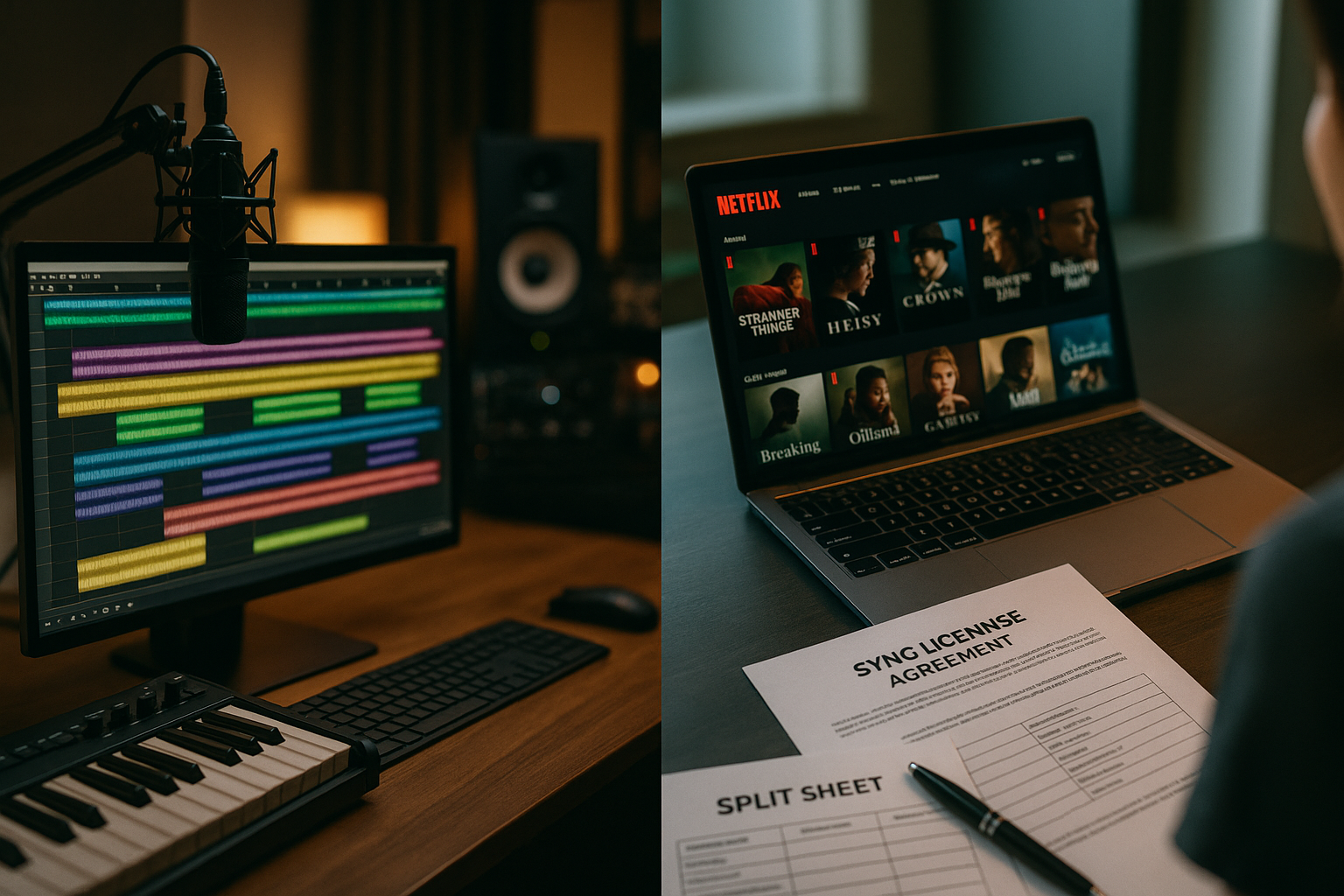
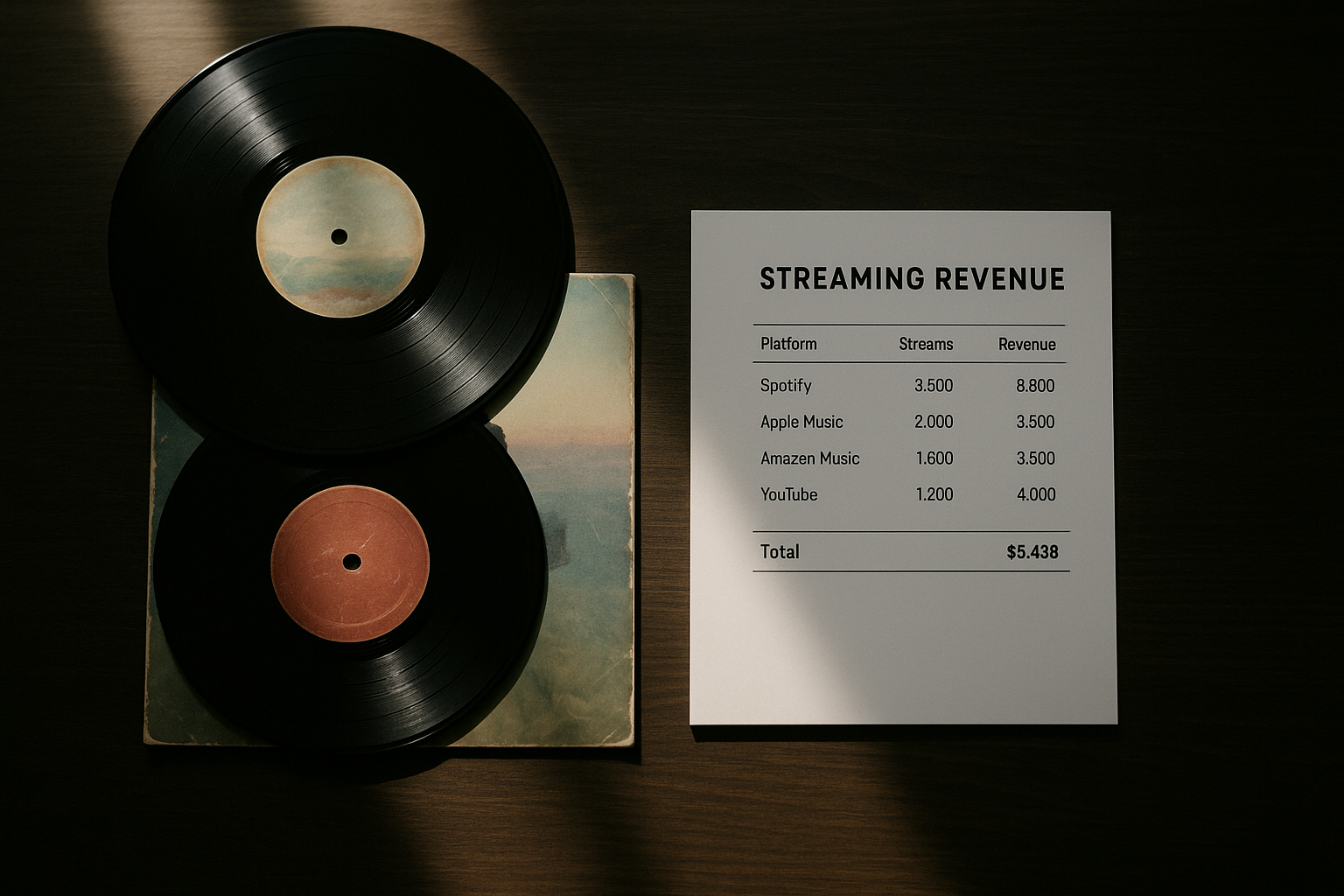
Micro-Sync licensing — the independent artist revenue stream nobody is talking about
How independent artists are earning £500 to £2,000 per month licensing music to YouTubers, podcasters, and indie creators without a sync agent.
Key Takeaways
Micro-sync licensing turns your catalogue into a service for creators who need cleared music right now.
One-stop ownership makes you faster to license than major-label artists stuck in legal delays.
Twenty micro-sync deals at £80 each equals £1,600 monthly income independent of streaming payouts.
The creator economy generates more music demand than traditional media and pays artists directly for access.
Most independent artists are chasing streaming payouts while a parallel income stream sits wide open. Micro-sync licensing lets you sell music directly to YouTubers, podcasters, and indie creators who need cleared tracks right now and will pay $50–500 per license to get them. If you own your master and publishing, you're already more attractive to these buyers than major-label artists, because you can clear deals in hours instead of weeks.
A YouTuber with 200,000 subscribers needs music for three videos per week. They're willing to pay $100 per track for commercial use. Under the old model, they'd pull from a generic stock library. You'd see zero dollars. Under the new micro-sync model, they find your track on Musicatlas, clear it directly, and you collect $300 per week. That's $1,200 per month from one creator. No streaming royalties involved.
This is micro-sync licensing, and it's the most underutilized revenue stream available to independent artists in 2026.
What micro-sync licensing actually is
Traditional sync licensing means a studio licenses your song for a major film, TV show, or national ad. One-time fee. Large payout, anywhere from $1,000 to $50,000 or more. Heavy legal negotiation. Months of waiting.
Micro-sync licensing means a content creator licenses your song for a podcast episode, YouTube video, Instagram reel, or streaming overlay. Lower per-license fee, usually $25 to $500. High volume. Simple digital contracts. No agents needed.
The math: 20 micro-sync deals at $100 each equals $2,000 per month, or $24,000 per year. That's real income for an independent artist, and it's completely separate from streaming payouts.
Why this matters now
The creator economy is generating more demand for music than any traditional media channel. YouTube creators, indie game developers, podcast producers, corporate video teams, and Discord streamers need music that's cheap, fast to clear, and doesn't require navigating label bureaucracy.
Platforms built specifically for this gap (Musicatlas, MusicSupply, Syncmusic, Uppbeat) have matured in 2025 and 2026. The barrier to entry just collapsed. You don't need a distribution deal or licensing agent. You need the right tools and positioning.
Here's the kicker: if you control both your master (recording) and publishing (composition), you're "one-stop." That means supervisors and creators only need one signature to clear your track. Major-label catalogs require multiple approvals, legal reviews, and weeks of delays. Your independence is a competitive advantage in a market optimized for speed.
One music supervisor recently noted they increasingly prefer "polished independent pitches" over major-label catalogs for fast turnarounds. You're more attractive because you're faster.
Who this works for (and who it doesn't)
This works if you have music that's genuinely useful for content creators. Cinematic instrumentals. Lo-fi beats. Electronic background music. Podcast intro tracks. TikTok-friendly hooks. Genre matters.
This doesn't work if your music is intentionally unmarketable, too loud or abrasive for background use, or only valuable to major-label sync scouts.
The catch: you'll get approached by many micro-sync requests, some at rates you won't like. You need clear pricing and terms upfront. No negotiating every $50 deal individually.
Honest assessment: not every artist will see $2,000 per month from micro-sync. But even $200 to $500 per month is more reliable than hoping for a Spotify playlist bump.
How to set this up properly
1. Audit your catalog
Identify five to ten songs that work best as background music, hooks, or mood pieces. Not necessarily your singles. These are your micro-sync candidates.
2. Set your licensing terms
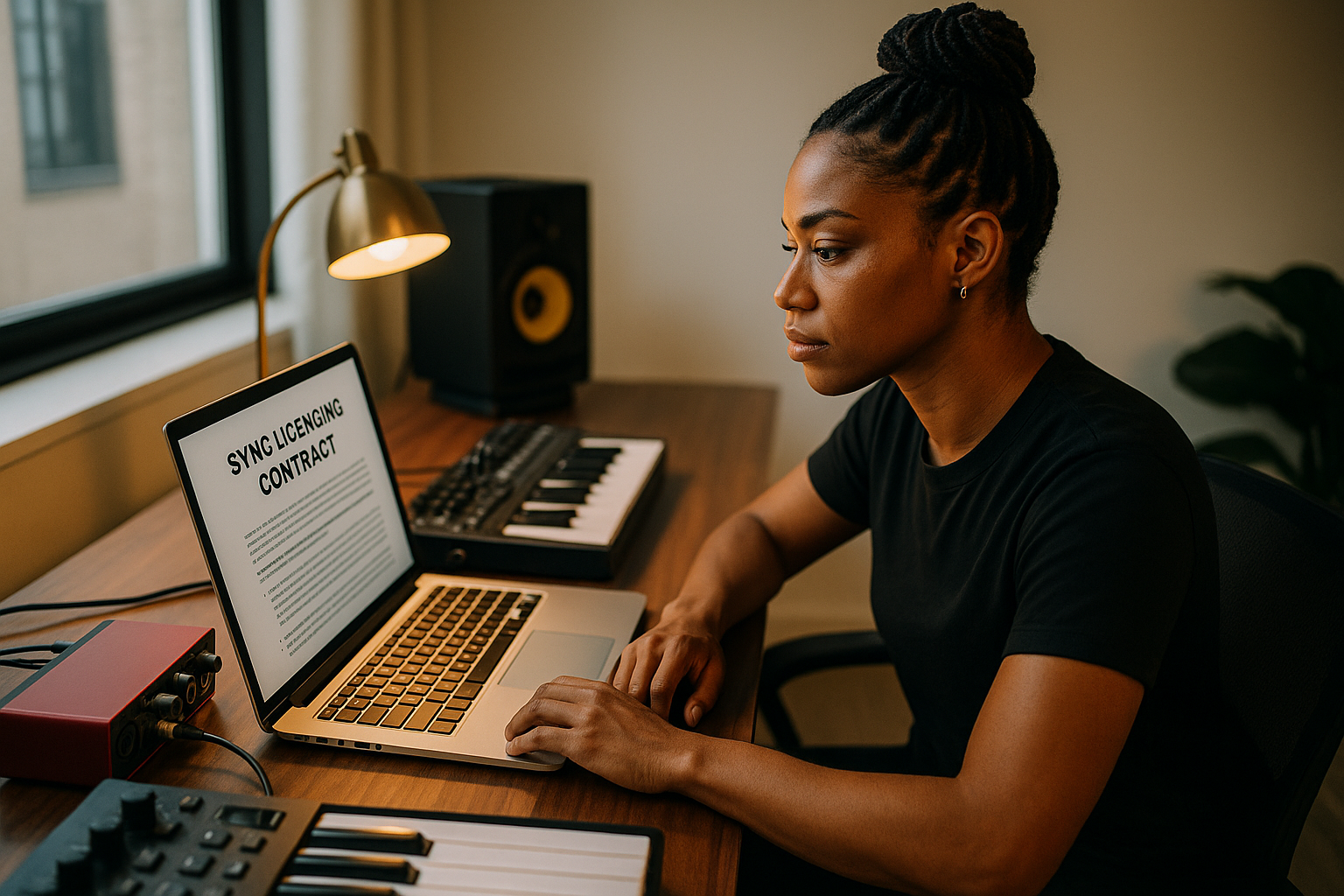
Decide on per-license pricing upfront. $50 to $150 for YouTube monetized videos. $25 to $75 for podcasts. Use templates from music-law resources to avoid reinventing contracts every time.
3. Register on two to three micro-sync platforms
Submit your catalog to Musicatlas, MusicSupply, or Syncmusic. Free or low-cost to list. Commission-based on deals. These platforms connect you directly to creators looking for music.
4. Ensure you own the rights
If you're signed to a label, check your agreement on sync licensing. Many indie deals let artists retain sync rights. This is your income stream. If you don't control it, this won't work.
5. Promote your sync-ready music
Share on LinkedIn, music industry Discord channels, and creator communities (Reddit, TikTok Creator Fund groups) that your music is available for licensing. Don't wait for discovery. Tell people it's available.
6. Automate the admin
Use a simple contract template. Many creators just need a PDF to sign and send back. Don't spend two hours on a $100 deal. The volume model only works if each transaction is friction-free.
The mindset shift
For decades, independent artists have been told: get on playlists, build your fanbase, wait for a major-label deal. That path still exists, but it's congested.
Meanwhile, a parallel economy has emerged. One where your music becomes a service to creators and small businesses. Micro-sync licensing treats your catalog as a legitimate income asset, not a lottery ticket.
The shift: you're not waiting to be discovered. You're actively selling access to your work at prices that matter to people who want it right now. That's real business, and it's available to any independent artist who sets it up properly.
2026 is the first year where micro-sync infrastructure is mature enough for solopreneurs to access it without an agent. The barrier just collapsed. The question is whether you're positioned to take advantage of it.
Download our micro-sync licensing starter kit.Contract templates, pricing models, and platform list to get your first $500 in the next 90 days.
Related Reading:
- [The volume gap: Why more streams doesn't](https://www.musicartistmanager.com/blog/the-volume-gap-streams-vs-income)
- [Why Your Sync Licensing Strategy](https://www.musicartistmanager.com/blog/sync-licensing-proactive-revenue-strategy)
- [Why Your Independence Is Your](https://www.musicartistmanager.com/blog/sync-licensing-ownership-advantage)
Ready to streamline your workflow?
Stop piecing together spreadsheets and scattered notes. Join the waitlist for Music Artist Manager and get your entire rollout in one place.
Written By
Gavin Alexander
Senior Marketeer
As the founder of Music Artist Manager, Gavin has spent years at the intersection of music and technology. Seeing firsthand how chaotic release rollouts and split sheets can be, he designed a platform that brings major-label infrastructure to independent artists and their teams. He writes extensively about industry trends, artist leverage, and workflow optimisation.