Why your sync licensing strategy should be your first revenue line, not your last
Learn how to audit, tag, and pitch your catalogue for sync placements that can outpay a year of streaming revenue.

Key Takeaways
Sync licensing grew 7.4% to £650 million in 2024 whilst streaming payouts continue to compress from AI track saturation.
Independent artists who own both masters and publishing are one-stop shops, making rights clearance faster for music supervisors.
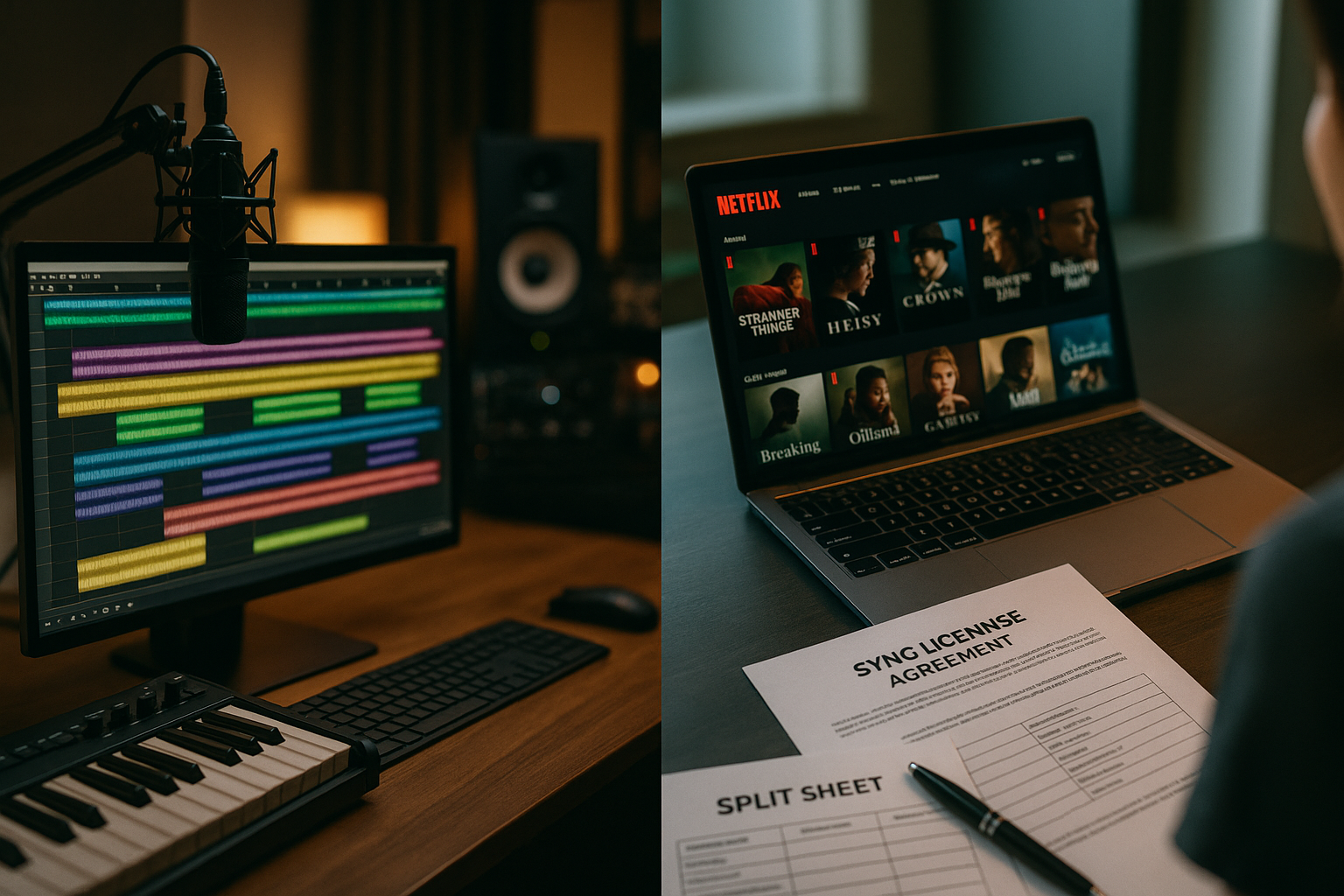
A single mid-size ad sync placement can outpay an entire year of streaming revenue from a 10,000-listener fanbase.
Your catalogue is a product portfolio where each track is a licensable asset with a price, not just something that accumulates passive plays.
Sync licensing generated $650 million in trade revenue in 2024. That's up 7.4% year-on-year. The broader music licensing ecosystem is projected to reach $12.9 billion by 2033. Meanwhile, streaming payouts are being actively eroded by AI-generated tracks flooding Spotify and similar platforms, compressing per-stream rates further. Independent artists who are still treating sync as a "lucky break" are not just missing out on £500–£50,000 per placement. They are choosing to operate in a market that is structurally getting worse, when a structurally improving one sits right next to it.
Two markets are moving in opposite directions
Streaming compression: AI-generated content is flooding DSPs, increasing the total catalogue size without proportionally increasing listener hours. The result is mathematically lower per-stream payouts per artist over time.
Sync appetite is outpacing supply of quality, licensable music: Advertising, gaming (now larger than film and TV in revenue), and streaming video all require human-authored, emotionally resonant music with clean rights. Independent artists who typically own their masters are structurally better positioned for sync than major-label artists whose rights are fragmented across multiple parties.
The manager's job in 2026 is to recognise this divergence and reweight the artist's revenue mix accordingly.
How sync licensing actually pays you
Sync placement equals two revenue streams, not one.
Sync fee (upfront, one-time): Paid by the music supervisor or licensee at the point of placement. Range: £400–£40,000+ depending on territory, usage, and media type.
Performance royalties (backend, ongoing): Generated every time the synced content airs or streams. Collected by your PRO (e.g., PRS for Music in the UK).
Two types of rights must be cleared for any sync deal:
Master rights: Owned by whoever recorded the track. Ideally, the independent artist themselves.
Publishing/sync rights: Owned by the songwriter(s) and/or their publisher.
Independent artists who own both their masters and publishing are "one-stop shops." This is the most attractive option for music supervisors who want to avoid clearing rights with multiple parties. This is a genuine competitive advantage over major-label artists.
Micro-sync platforms like Musicbed, Artlist, and Pond5 have matured significantly. They now offer catalogue licensing at scale, generating long-tail income from YouTube creators, social ads, and corporate videos without requiring the artist to pitch individually.
What sync licensing actually requires
Sync is not passive income you can stumble into. It requires clean catalogue infrastructure.
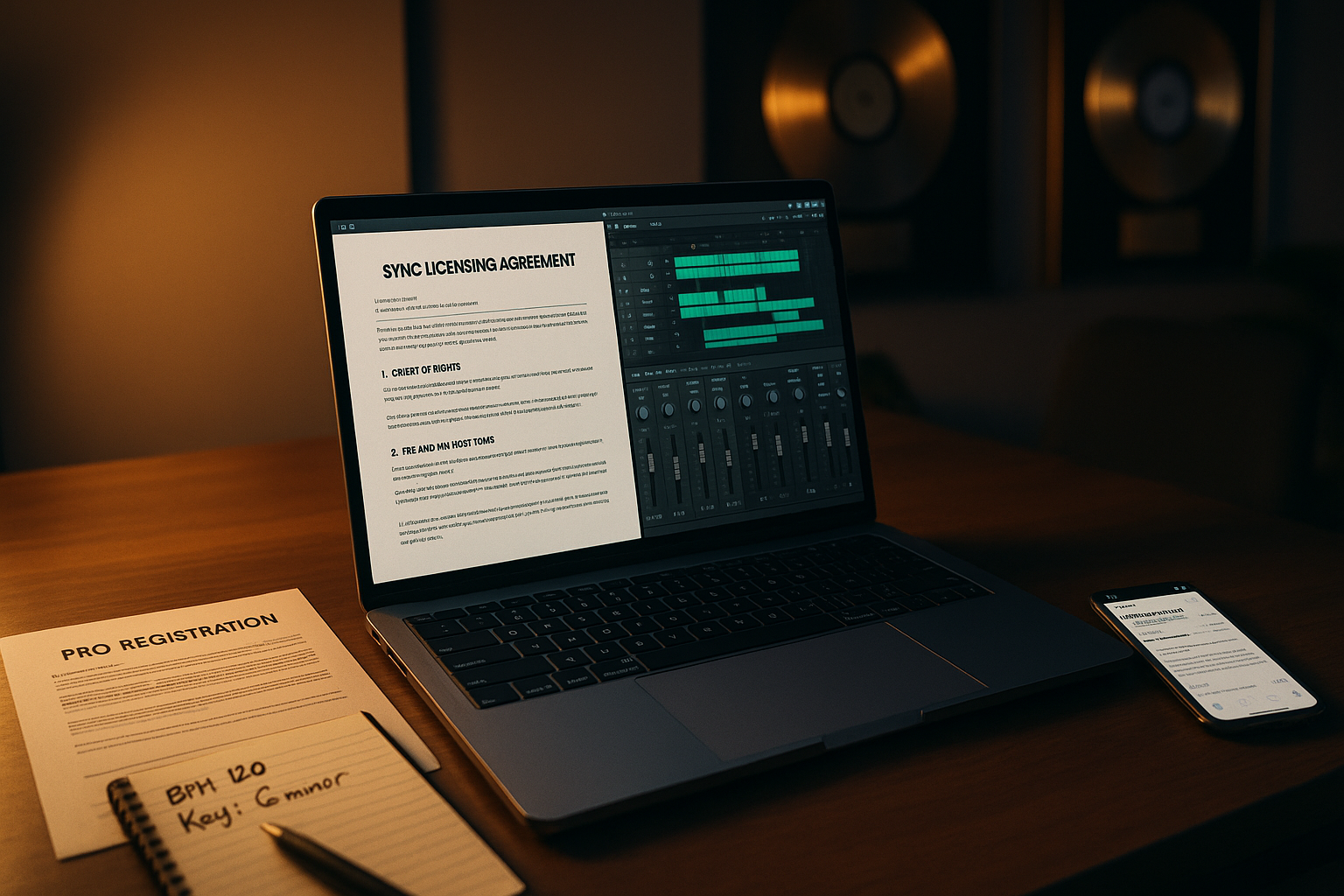
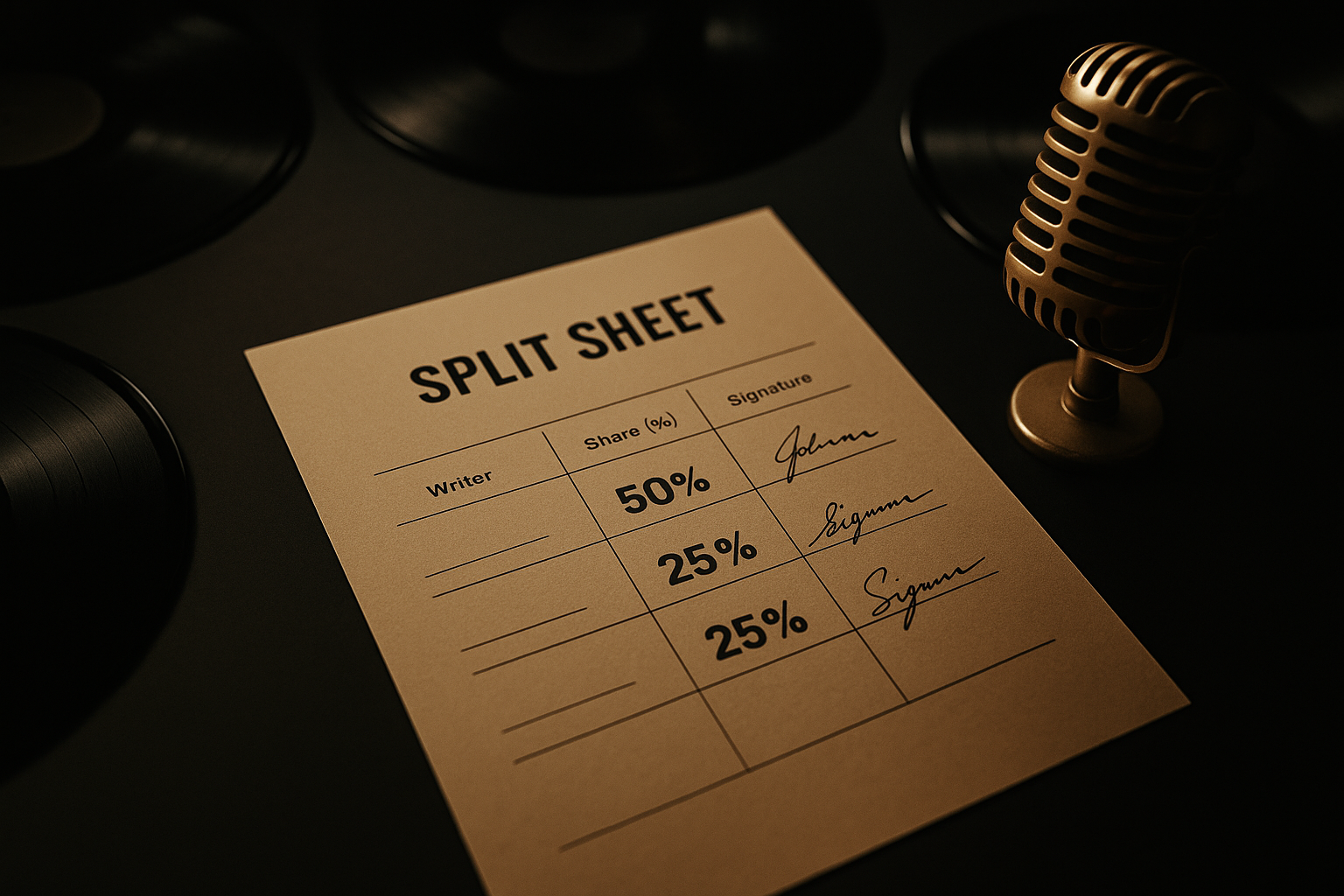
You need a well-tagged catalogue with verified ownership split sheets and no uncleared samples. You need instrumentals or stems available for every track. Many supervisors require these for custom edit requests. You need consistent metadata across ISRC codes, publisher registration, and PRO registration.
You need patience and volume. Most licensing revenue is long-tail. Artists with larger, consistently organised catalogues earn more than those with one or two "good" tracks.
This strategy suits artists who have been releasing consistently for 12+ months and have at least 10–15 tracks with clear rights. If your split sheets are unresolved or you have uncleared samples in your catalogue, fix that first. A placement with murky rights is a legal liability, not an asset.
The seven-step sync readiness protocol
1. Conduct a catalogue rights audit. List every released track. For each one, confirm: who owns the master? Who owns the publishing? Are split sheets signed by all collaborators? Flag any uncleared samples immediately.
2. Register your catalogue with your PRO. In the UK, that is PRS for Music (publishing/sync) and PPL (masters/performance). Every track should be registered before you pitch anywhere.
3. Create stems and instrumentals for your top 10 tracks. Export these from your DAW and store them in a dedicated folder with consistent naming conventions (ArtistTrackNameInstrumental.wav).
4. Tag your catalogue for sync discoverability. Use mood, genre, tempo (BPM), instrumentation, and use-case tags. Think like a music supervisor: "uplifting 90 BPM pop, piano-driven, suitable for lifestyle brand ads."
5. Submit to at least three non-exclusive micro-sync libraries. Non-exclusive is key. You want your catalogue in multiple catalogues simultaneously. Start with Musicbed, Artlist, or Artlist marketplace equivalents.
6. Identify your top five sync targets. Review credits on three recent ad campaigns or TV shows in genres adjacent to your music. Find the music supervisor's name (IMDb, LinkedIn, or the Sync Summit directory). Build a brief, professional pitch list.
7. Track every submission and placement. Use a simple CRM (or MAM's built-in tracking tools) to log pitches, responses, and placements. Treat it like a sales pipeline, because it is one.
Catalogue as product portfolio
The streaming model trained artists to think of their catalogue as something that accumulates plays passively. Sync forces a different mindset: your catalogue is a product portfolio, and each track is a licensable asset with a price. Music supervisors are buyers. Placements are sales. Your PRO registration is your invoicing system.
The artists building durable, multi-year income in 2026 are not the ones with the most monthly listeners. They are the ones who understood earliest that a single sync placement on a mid-size ad campaign can outpay a year's worth of streaming from a 10,000-listener fanbase. That shift in perspective, from performer to IP asset manager, is the core of operating like a business.
Use Music Artist Manager's Catalogue Manager to tag, organise, and track your sync-ready tracks, and log every pitch, placement, and royalty split from one dashboard.
Sources:
- Sync Licensing Trends 2026: What You Need to Know — Syncmusic.rocks
- Sync Licensing for Independent Artists 2026: Pitch and Get Paid — Chartlex
- Music Sync Licensing: The Definitive Artist Guide (2026) — Artist.tools
- How Music Artists Actually Make Money in 2026 — Orphiq
- Independent artists are redefining revenue in 2026 — BR Music Groups
Related Reading:
- [Why Your Independence Is Your](https://www.musicartistmanager.com/blog/sync-licensing-ownership-advantage)
- [Why music supervisors now prefer independent](https://www.musicartistmanager.com/blog/sync-advantage-independent-artists)
- [Building an Artist's Digital Vault: Managing IP, Stems, and Royalties](https://www.musicartistmanager.com/blog/building-artists-digital-vault-ip-stems-royalties)
Ready to streamline your workflow?
Stop piecing together spreadsheets and scattered notes. Join the waitlist for Music Artist Manager and get your entire rollout in one place.
Written By
Gavin Alexander
Senior Marketeer
As the founder of Music Artist Manager, Gavin has spent years at the intersection of music and technology. Seeing firsthand how chaotic release rollouts and split sheets can be, he designed a platform that brings major-label infrastructure to independent artists and their teams. He writes extensively about industry trends, artist leverage, and workflow optimisation.