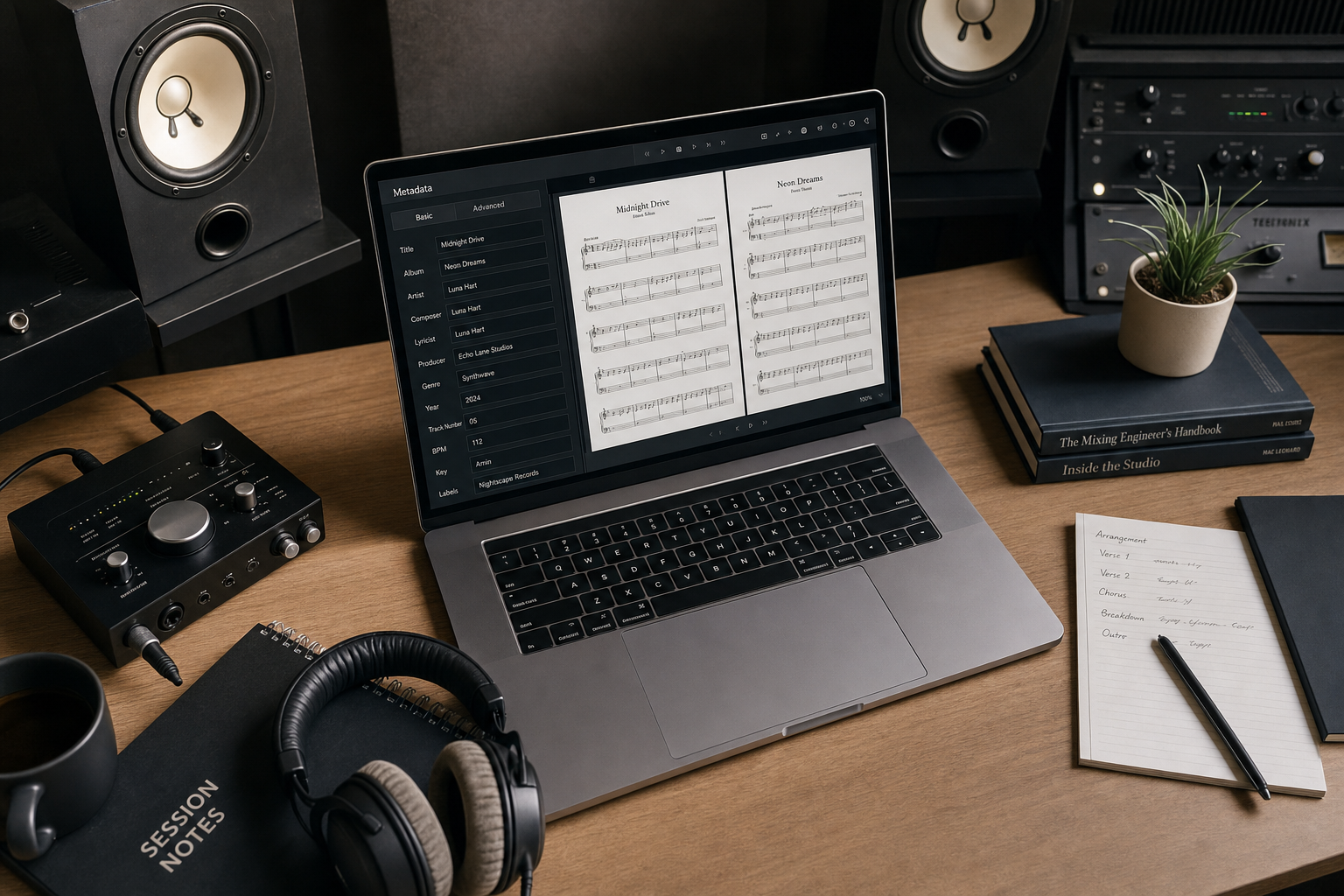
When your independent distributor gets acquired by a major label
Warner bought Revelator. Sony owns The Orchard. Universal has Virgin Music. Every major now controls independent distribution infrastructure. Here's what that means for your royalty data.
Key Takeaways
Every major label now owns the pipes your independent royalties flow through.
Distribution ownership is the new master recording — whoever holds your data holds negotiating power.
Moving distributors mid-career has real costs, so audit your stack before you need to jump.
Separate your rights layers — you can stay with major-affiliated distribution whilst keeping publishing genuinely independent.
In April 2026, Warner Music Group acquired Revelator, a B2B indie distributor used by thousands of independent artists and labels. IMPALA called it "bad for artists, fans, and Europe's diversity." Every major now owns distribution infrastructure that independent artists depend on, and the implications run deeper than most realise.
The acquisition you missed while planning your next release
In April 2026, Warner Music Group completed its acquisition of Revelator. If that name doesn't ring a bell, you should pay attention. Revelator is a B2B distributor and rights management platform used by thousands of independent artists and labels who specifically chose them to stay outside the major label system.
IMPALA, representing over 6,000 independent music companies across Europe, released a statement that cut through the usual industry diplomacy: "It's bad for artists, fans, and Europe's diversity."
Their full response was even more direct: "Labels and artists who made a conscious choice to go with an independent partner now find themselves with a major and the independent ecosystem loses another chunk of its infrastructure."
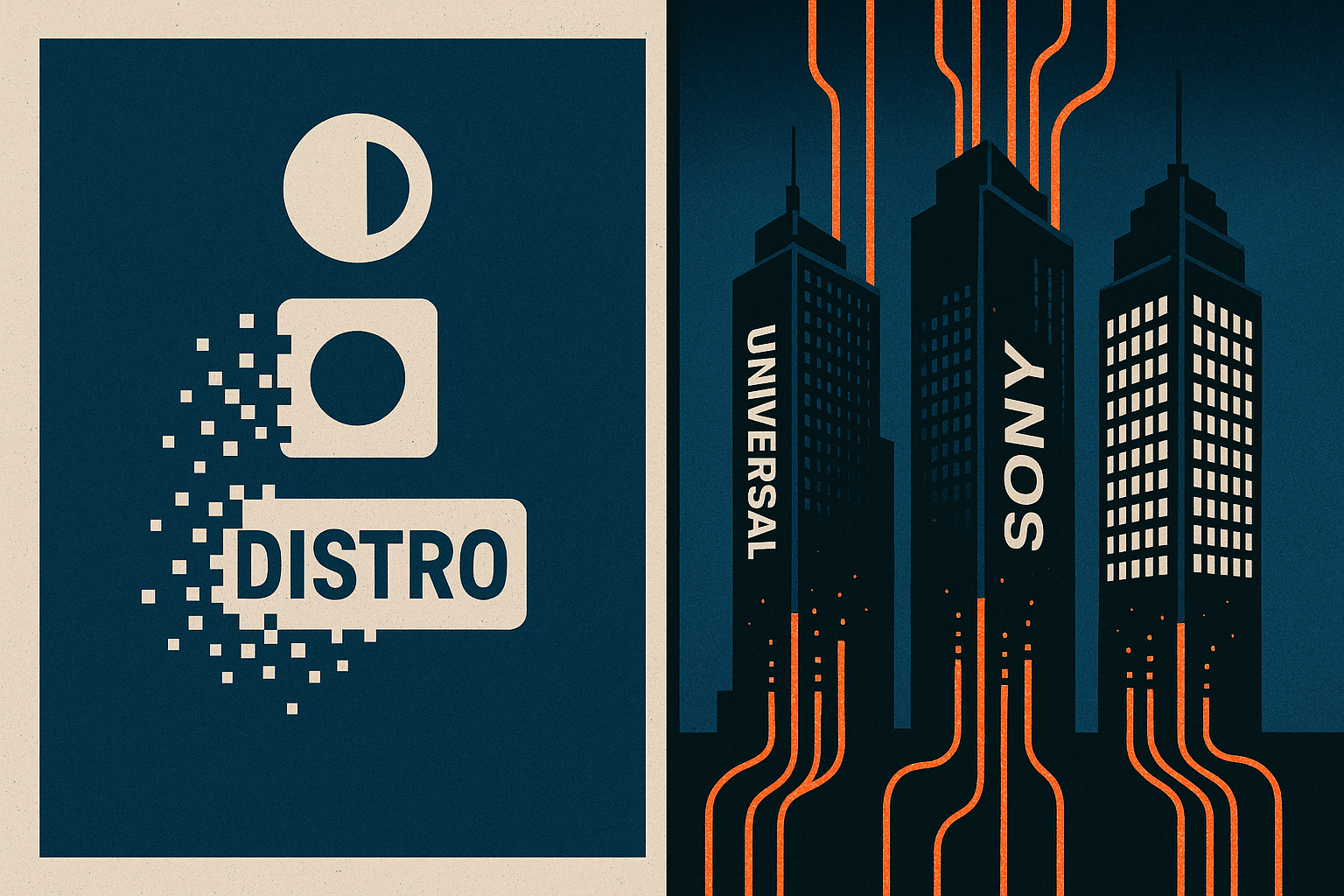
This is not a one-off deal. This is the completion of a three-part strategy:
- Sony Music bought The Orchard
- Universal Music Group bought Virgin Music Group
- Warner Music Group bought Revelator and already owned ADA
Every major now owns distribution infrastructure that independent artists rely on. The question is not whether this affects your career. The question is how deep into your supply chain the influence runs.
Why this is more dangerous than the old gatekeeping model
The music industry has shifted from gatekeeping (majors control radio, retail, press) to infrastructure control (majors control data, distribution rails, royalty admin). This second model is far more dangerous because it is invisible.
Under the gatekeeper model, you knew who controlled access. You could see the barrier. Under the infrastructure model, a major can own your distributor, your publishing admin, your sync platform, and your royalty aggregator without you even noticing.
What majors gain from owning your distributor
- Data. First-party streaming analytics, consumption patterns, playlist performance, demographic breakdowns. They can see which independent artists are building momentum before the market does.
- Float. Control over royalty payment timing. When you are owed money, the entity holding that money benefits from the delay. At scale, this creates significant financial leverage.
- Pipeline insight. Distributors see breakout artists early. A major-owned distributor can internally flag high-performing independents for A&R attention or acquisition offers.
- Consolidation leverage. When negotiating with Spotify, Apple Music, or YouTube, representing a larger combined catalogue (major releases plus thousands of indie releases) creates bargaining power that benefits the parent company first.
If you chose an independent distributor specifically to avoid major label entanglement, you need to audit whether that choice still holds.
The three layers of music distribution (and where acquisition impact hits hardest)
Distribution is not one thing. There are three distinct layers:
Layer 1: D2c distributors
DistroKid, TuneCore, Amuse. Direct-to-artist, consumer-facing platforms. As of July 2026, these remain independently owned, but that could change.
Layer 2: B2B Distributors and label services
Revelator, The Orchard, Virgin Music, ADA. These serve managers and labels operating at scale, often through white-labelled platforms. This is where the Warner acquisition hits hardest.
Layer 3: Collecting societies and pros
PRS, MCPS, PPL in the UK. ASCAP, BMI, SESAC in the US. These remain independent from major labels but rely on distributor-reported metadata. If your distributor reports incorrectly or incompletely, your collecting society payouts suffer.
When a major acquires a B2B distributor, the immediate impact is at Layer 2. But as consolidation continues, the effect ripples down to Layer 1 artists through data sharing agreements, reporting standard changes, and eventual service mergers.
- Royalty data is the new master recording. Whoever holds your consumption data holds negotiating power.
Who should act on this immediately
This brief is urgent if you are:
- Generating meaningful streaming revenue (£5,000+ annually) and relying on a distributor as your primary royalty pipeline
- An artist manager running DIY label operations for multiple clients
- Currently on Revelator, ADA, The Orchard, or Virgin Music and consider yourself "independent"
This is less urgent but still relevant if you are:
- An early-stage artist on DistroKid or TuneCore (still independently owned, but worth monitoring)
- Earning primarily from live performance rather than streaming
- Reality check: Moving distributors mid-career has real costs. ISRC re-registration risks, reporting gaps, potential release takedowns during migration. The answer is not necessarily to move immediately. The answer is to know what you are in and act strategically.
Six actions to take this week
1. audit your entire royalty supply chain
List every company involved: distributor, publishing administrator, sync agency, data analytics platform, royalty collection service. Research their ownership structure. Has any been acquired in the past 24 months?
Do not assume. Check directly.
2. read your current distributor contract
Specifically look for:
- What rights does your distributor have to your consumption data?
- Can they share it internally with affiliated companies?
- What are the notice and termination terms?
- Are there any exclusivity clauses that prevent you from using other services?
If you do not have a copy, request it now.
3. assess your leverage
If you are earning material royalties, you have leverage to negotiate data protection clauses or request exclusivity of your analytics. Use that leverage before your contract renews, not after.
Distributors care about retention when you represent reliable revenue.
4. evaluate genuinely independent alternatives
In the UK and EU context:
- Distribution: Proper Music (independent), Absolute Label Services, Secretly Distribution
- Publishing admin: Songtrust (still independent as of July 2026), or direct membership with PRS/MCPS
- Note: AWAL is now Sony-owned. Sentric is now Believe-owned. Audit carefully. Ownership structures change faster than most artists realize.
5. separate your rights layers
Even if you stay with a major-affiliated distributor for reach and scale, consider keeping publishing administration with a genuinely independent publisher or through direct PRS/MCPS membership.
Separation creates redundancy. Redundancy protects you when one layer gets acquired or changes terms.
6. set a calendar reminder
Every six months, run a quick search on each platform in your stack. Acquisitions happen fast. Industry news moves faster than contract notifications.
Be the first to know, not the last.
The deeper strategic shift
Artists instinctively think about creative ownership: masters, publishing splits, co-writes. Managers think one layer deeper. The most switched-on managers in 2026 are thinking about infrastructure ownership: who holds the pipes, who sees the data, who controls the float.
Lyor Cohen built systems. Jay-Z bought the pipes (Tidal, initially for data and direct fan relationships). The lesson for independent artists in 2026 is not to compete with majors at their own infrastructure game. You cannot win that.
The lesson is to understand exactly where your money flows at every stage, and make deliberate choices about which institutional interests you are feeding.
Treating your career like a business means knowing your suppliers as well as you know your streaming numbers.
What this means for your next release
If you are planning a release in the next 90 days and you are on Revelator, ADA, The Orchard, or Virgin Music:
- Proceed with the release. Do not disrupt active campaigns.
- Immediately audit your contract and data rights.
- Schedule a post-release review (30 days after release) to evaluate whether migration makes sense for future releases.
If you are not locked into an active campaign:
- Pause and audit before you commit your next catalogue entry.
- Consider whether your distributor's ownership structure aligns with your long-term independence strategy.
This is not about panic. This is about information and strategy.
Tools and next steps
Music Artist Manager's deal records lets you log every platform, distributor, and service partner against your release catalogue so you always know who holds what at a glance. Start your audit today.
Related Reading:
Further Reading:
- "Warner music acquires B2B indie distributor revelator" — Digital music news
- "It's bad for artists, fans & europe's diversity": IMPALA responds to WMG's revelator acquisition" — Music week
- "Warner music revelator acquisition: The 3-Way indie distribution war" — Imseankim.com
- "The warner music / revelator deal: What it means for indie artists" — Artistrack
- "Warner acquires revelator: When majors become infrastructure tech companies" — Sync publishing LLC
Ready to streamline your workflow?
Stop piecing together spreadsheets and scattered notes. Join the waitlist for Music Artist Manager and get your entire rollout in one place.
Written By
Gavin Alexander
Senior Marketeer
As the founder of Music Artist Manager, Gavin has spent years at the intersection of music and technology. Seeing firsthand how chaotic release rollouts and split sheets can be, he designed a platform that brings major-label infrastructure to independent artists and their teams. He writes extensively about industry trends, artist leverage, and workflow optimisation.