Unlocking hyper-niche TikTok virality: The micro-sound strategy
How to spot emerging TikTok sounds under 1000 uses and turn them into algorithmic leverage before everyone else does.
**How to spot emerging TikTok sounds under 1000 uses and turn them into algorithmic leverage before everyone else does.**
Most artists chase sounds with 50,000 videos already posted. By then, you are late. The algorithmic advantage is gone. The attention window has closed.
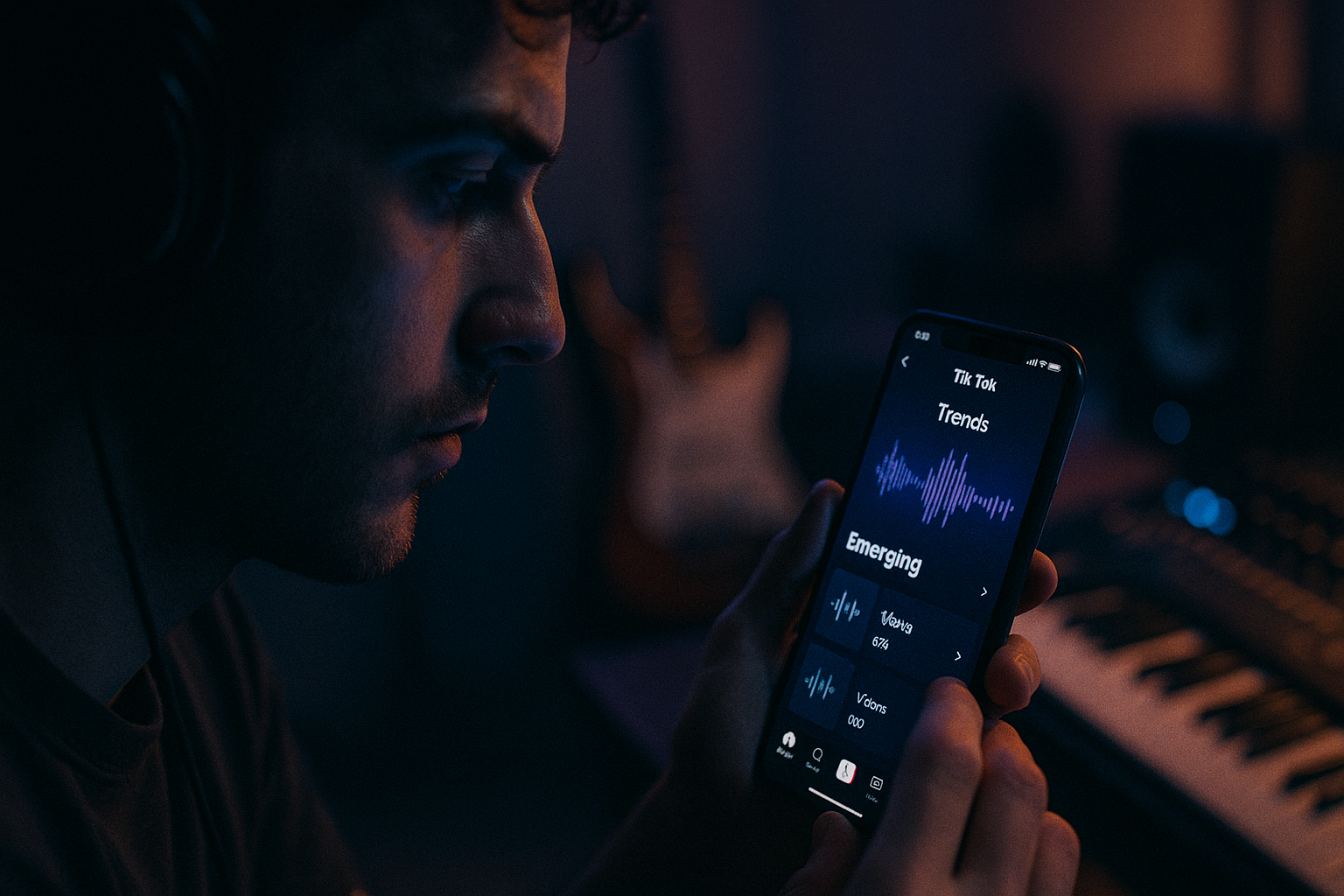
Micro-sounds are different. These are audio clips with fewer than 1,000 videos attached. They are nascent. They have momentum but not saturation. And if you move fast, you can ride the early wave before the platform floods with competition.
This is not about going viral for vanity. This is about engineering disproportionate reach with strategic timing.
Why micro-sounds create algorithmic leverage
TikTok's recommendation engine prioritizes content that performs well within a sound's existing audience. When a sound has 500 videos, your content is competing against 499 others. When it has 50,000, you are invisible.
Early adoption gives you:
- Higher relative engagement rates within a smaller pool
- Increased likelihood of appearing on the sound's dedicated page
- Algorithmic association with a trend before it is categorized as saturated
- Cross-pollination into
Further Reading:
- audio clusters as the trend expands
- You are not hoping to go viral. You are positioning your content where the platform's distribution mechanics work in your favor.
- ## How to identify micro-sounds with momentum
- This is not guesswork. You need a systematic approach.
- ### Step 1: Monitor the "discover" tab daily
- Set a calendar reminder. Spend 10 minutes scrolling through sounds tagged as "trending" but filter by recent uploads. Look for audio clips that feel familiar but not overused yet.
- Pay attention to:
- - Sounds with sudden spikes in daily video count (20 videos yesterday, 150 today)
- - Audio pulled from smaller creators (under 50k followers) rather than celebrities
- - Clips that already have genre-specific subtags forming ("indie rock TikTok," "bedroom pop edit")
- ### Step 2: Use TikTok's native search with intent filters
- Search for keywords adjacent to your music style, then filter results by "this week" or "this month." Watch for sounds that appear in multiple videos but have not hit four-digit video counts yet.
- Example: If you make hyperpop, search "hyperpop edit" and sort by recent. Note which audio clips repeat across 10+ videos but still show under 800 total uses.
- ### Step 3: Cross-reference with external trend tracking
- Use tools like TrendTok or Tokboard to pull metadata on audio growth rates. You want sounds with a steep upward trajectory in the past 72 hours, not sounds that have been climbing slowly for weeks.
- Look for:
- - 200%+ week-over-week growth in video count
- - Geographic clustering (a sound blowing up in one region often spreads globally within 5-7 days)
- - Creator diversity (multiple accounts with different follower counts using the sound, not just one viral post)
- ## How to create content that capitalizes on micro-sounds
- Once you identify a micro-sound, you have roughly 48-72 hours to post before saturation hits.
- ### Match the sound's existing context
- Do not force your content into a trend. Watch the first 20-30 videos using the sound. Identify the visual pattern, the hook structure, and the audience expectation.
- If the sound is being used for transformation videos, do a transformation video. If it is soundtrack for text overlays about industry frustration, structure your content that way.
- Your music and message can still be unique. The format should align with what the algorithm has already learned to distribute.
- ### Create multiple assets from one idea
- Shoot three versions of the same concept with slight variations. Post them 8-12 hours apart. This gives you multiple chances to catch the algorithm's attention without appearing repetitive to your existing followers.
- Variations can include:
- - Different text overlays with the same visual hook
- - Same message, different opening frame to optimize for scroll-stopping power
- - Alternate CTAs (comment vs. share vs. save)
- ### Use strategic tagging without keyword stuffing
- Include 3-5 hashtags maximum. One should be the sound's organic tag if it exists. Two should be sub-genre or audience tags ("indieartist," "bedroomproducer"). One should be engagement-driven ("fyp" or "foryoupage").
- Do not use 15 tags. It signals desperation to the platform and dilutes your content's categorization.
- ## How to analyze performance and iterate
- Posting is only half the strategy. The other half is reading the data and adjusting in real time.
- ### Watch your first-hour metrics
- If your video does not hit at least 300 views in the first 60 minutes, the algorithm is not pushing it. Do not wait three days to pivot. Post a new version with a different hook or visual within the next 12 hours while the sound still has momentum.
- ### Track completion rate over view count
- A video with 2,000 views and 60% completion rate will outperform one with 10,000 views and 20% completion. TikTok rewards watch time, not vanity metrics.
- If your completion rate is low, your hook is weak or your content is too long. Trim it. Repost.
- ### Monitor sound trajectory post-posting
- If the sound you used jumps from 800 videos to 8,000 in 48 hours, consider posting a follow-up that references your original video. Ride the secondary wave of users discovering the trend late and scrolling through older posts.
- ## When to move on from a micro-sound
- Once a sound hits 5,000+ videos, the window is closed. Do not post new content using it unless you have an exceptionally differentiated angle.
- Your time is better spent identifying the next micro-sound. Set a two-video maximum per trend. If neither performs, you were either too early or too late. Either way, the move is to pivot, not double down.
- ## This is not luck. it is timing and repetition.
- Most artists post randomly and hope for traction. You are not most artists. You are running a content operation with the same rigor you apply to release strategy and royalty splits.
- Micro-sounds are not a hack. They are a structural advantage that requires daily discipline, pattern recognition, and fast execution. Do this consistently for 90 days and your reach will compound. Skip the consistency and you are just guessing.
Ready to streamline your workflow?
Stop piecing together spreadsheets and scattered notes. Join the waitlist for Music Artist Manager and get your entire rollout in one place.
Written By
Gavin Alexander
Senior Marketeer
As the founder of Music Artist Manager, Gavin has spent years at the intersection of music and technology. Seeing firsthand how chaotic release rollouts and split sheets can be, he designed a platform that brings major-label infrastructure to independent artists and their teams. He writes extensively about industry trends, artist leverage, and workflow optimisation.