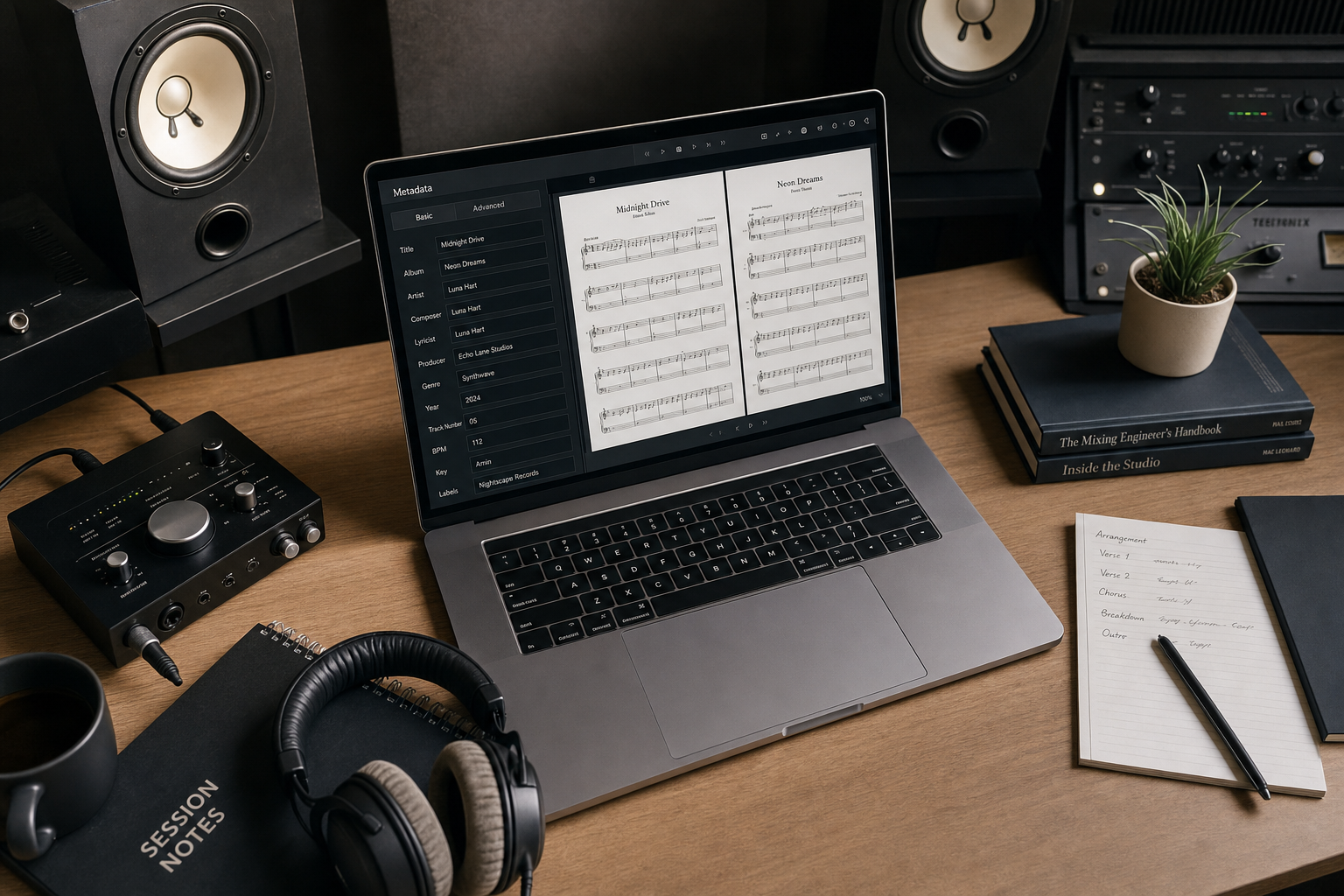
Reallocating digital ad spend away from Spotify to YouTube
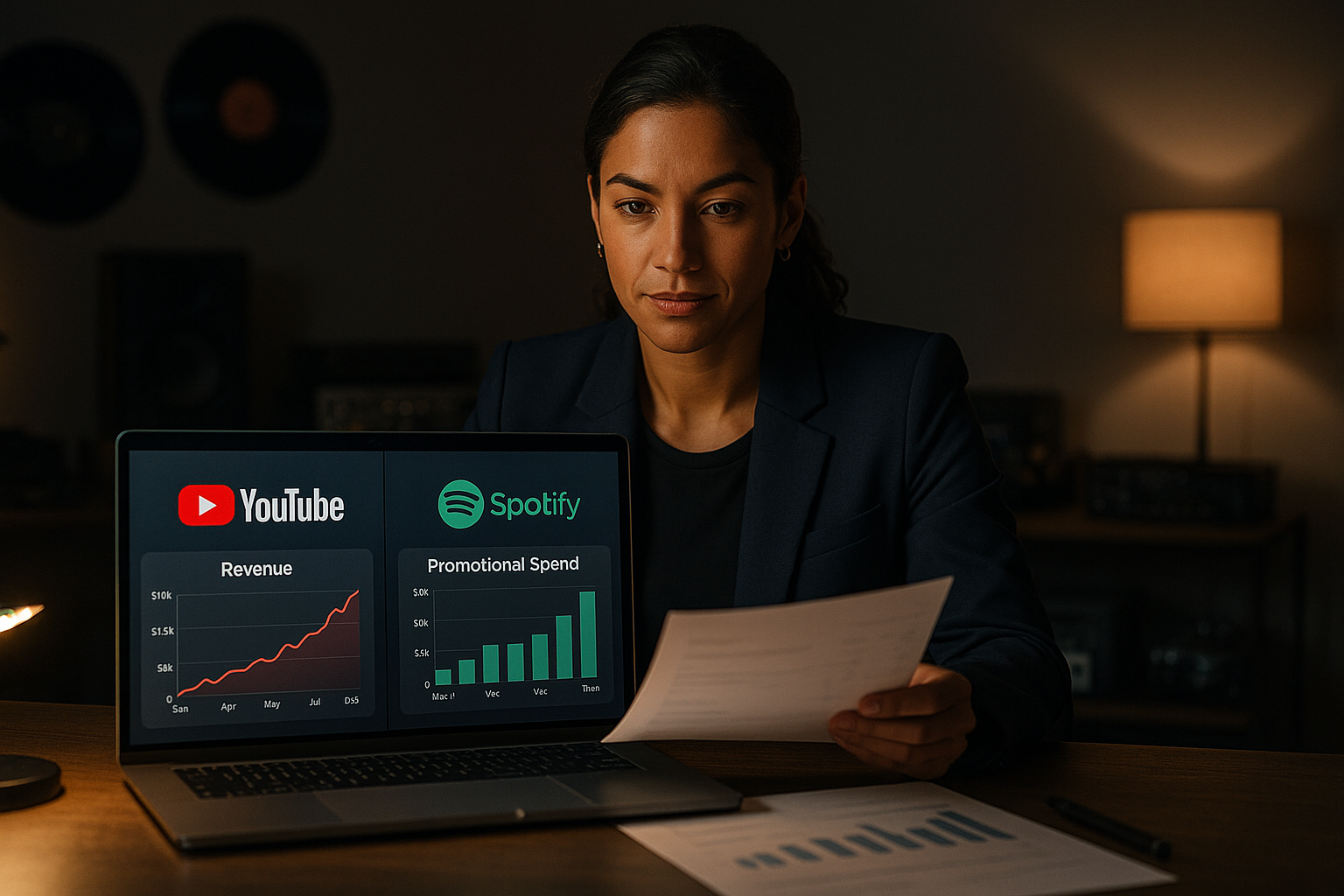
Independent managers are quietly reallocating paid promo budget from Spotify to YouTube - because one platform pays you back while the other just takes your money.
Key Takeaways
Spotify ad spend generates fractions of a penny per stream, with no path to recoup your investment.
YouTube ads build audiences that generate ad revenue back to you while selling tickets through video.
Managers are reallocating 30 to 40 per cent of promo budgets to platforms where capital compounds, not disappears.
YouTube Partner Programme eligibility requires 1,000 subscribers and 4,000 watch hours to activate the monetisation loop.
At a May 2026 panel, Julie Klein (COO, C3 Management) made a case that most independent managers are still reluctant to say out loud: paying Spotify to promote your music is structurally backwards. On Spotify, you spend to generate fractions of a cent per stream. On YouTube, you spend to build an audience that pays you back through ad revenue, memberships, and ticket conversions. The economics are not even close.
The uncomfortable truth about streaming promotion economics
At "Music Managers: The New Power" in May 2026, Julie Klein - COO of C3 Management - said something that made half the room uncomfortable: independent artists are burning marketing budget on Spotify promotion, and it is categorically the wrong platform to be spending on.
The case she made was simple and devastating. On Spotify, you pay to attract listeners who then generate fractions of a cent per stream. On YouTube, you pay to attract viewers who then trigger ad revenue back to you, while also experiencing video content that sells tickets. Same audience, opposite economics.
This is not about Spotify being "bad." It is about where you deploy finite marketing capital.
The structural shift no one is talking about
The asymmetry has been building quietly. YouTube's Content ID now distributes ad revenue at rates that, for premium content, exceed Spotify per-stream payouts by a significant margin. Artists with engaged YouTube audiences of 10,000+ subscribers are reportedly generating £400–£1,600/month in combined ad and membership revenue, before a single ticket sale.
Meanwhile, Spotify's discovery ad products (Marquee, Showcase) charge artists and managers per-click to reach users who may never return.
The fundamental difference: Spotify is a closed monetisation ecosystem where the platform captures value. YouTube is a semi-open one where the creator participates in revenue generated from the very traffic they paid to acquire.
For a manager thinking in systems, this is not a close call.
Platform monetisation architecture: The key distinction
- Spotify Marquee/Showcase
- Artist Pays To...: Drive streams
- Artist Earns From...: Fractions of a cent/stream
- Net economic logic: Capital spent rarely recoups
- YouTube Ads
- Artist Pays To...: Drive views/subs
- Artist Earns From...: AdSense, memberships, Super Chat
- Net economic logic: Capital deployed → audience that generates revenue
- Meta/TikTok Ads
- Artist Pays To...: Drive awareness
- Artist Earns From...: External links only
- Net economic logic: Traffic bridge tool, not monetisation platform
The content id revenue loop
When an artist uploads original content to YouTube and enables monetisation, every ad view on their videos generates revenue. A manager who runs targeted YouTube ads to grow a channel is effectively buying an audience that then subsidises further growth through ad payouts.
This compounding loop does not exist on any streaming-only platform.
The "pre-sell" value of video matters just as much. Managers focused on live revenue increasingly cite YouTube as the closest proxy to a sales funnel. A potential fan who watches four minutes of an artist performing live in a video is demonstrably more likely to buy a ticket than one who passively streams a track.
The ad spend on YouTube thus serves two masters simultaneously: revenue generation and ticket conversion.
Reality check: This strategy is not for everyone at every stage
Minimum viable requirements:
- 1,000 YouTube subscribers and 4,000 watch hours (YouTube Partner Programme eligibility). Below this threshold, there is no monetisation loop to activate. YouTube ads are pure awareness spend.
- Content readiness: Artists must have compelling video content. Lyric videos and static artwork will not retain viewers. Live performance clips, behind-the-scenes footage, or music videos with strong visual identity are required.
- Budget discipline: This is about reallocation, not additional spend. If an artist has £500/month in promotional budget, the question is whether £300 on YouTube delivers better compounding return than £300 on Spotify Marquee. The answer will depend on catalogue size, genre, and existing platform presence.
This is not a Spotify abandonment strategy. Spotify is still the primary streaming discovery platform. The argument is about where paid marketing spend goes, not where you distribute music.
Practical action plan: How to reallocate your promo budget
1. audit your current promo spend
List every paid promotional activity in the last 90 days (Spotify Marquee/Showcase, Meta ads, SubmitHub, playlist pitching services). Calculate what each cost and what measurable return you received.
2. check YouTube partner programme eligibility
If you have 1,000+ subscribers and 4,000+ watch hours, enable monetisation immediately if you haven't already. This is the baseline. Without it, the loop doesn't close.
3. build a YouTube content inventory
Identify your three best-performing live or performance video assets. These become your ad creative for the next campaign.
4. shift 30–40% of your paid promo budget to YouTube TrueView ads
Target by genre interest and competitor artist audiences. Set a conversion goal: subscriber growth, not just views.
5. track the monetisation offset
After 60 days, calculate how much YouTube ad revenue your channel earned during the period you were also running ads. Even partial offset changes the unit economics of your marketing dramatically.
6. build the bridge to live
Add clear calls-to-action in your video descriptions and end screens directing viewers to your mailing list and ticket links. YouTube traffic that converts to email subscribers is the highest-value outcome of this strategy.
7. review and compound
At 90 days, assess: subscriber growth, watch time increase, AdSense earnings, email list growth, and any attributable ticket sales. Reinvest accordingly.
The manager's mindset: Capital deployment, not marketing spend
Most independent artists think of promotional spend as a cost. Money out, hope some awareness back. The manager's mindset is different: every marketing pound is a capital deployment decision, and the question is always which asset gives the best return per unit invested.
Moving ad spend to YouTube is an act of business architecture. You stop being a customer of a platform and start being a partner in it. The artists who understand this shift are treating their YouTube channel as a revenue-generating asset that appreciates with each subscriber, not a vanity metric that lives next to the Spotify follower count.
Lyor Cohen's career was built on understanding one principle: build systems where the money flows through you, not around you. That is what this strategy does.
Track where your promo budget is going and what it's earning back
Use Music Artist Manager's financial tracking and campaign analytics tools to map your spend against your platform revenue in one dashboard.
Related Reading:
Further Reading:
- "How to be an artist manager in 2026" — ArtistForArtist.com
- "Music marketing strategies for labels, managers & artists in 2026" — Revelator
- "YouTube monetization for artists" — Orphiq
- "Indie music industry statistics: 2026 verified data & trends" — GitNux
- "How musicians make money in 2026: All revenue streams" — Chartlex
Ready to streamline your workflow?
Stop piecing together spreadsheets and scattered notes. Join the waitlist for Music Artist Manager and get your entire rollout in one place.
Written By
Gavin Alexander
Senior Marketeer
As the founder of Music Artist Manager, Gavin has spent years at the intersection of music and technology. Seeing firsthand how chaotic release rollouts and split sheets can be, he designed a platform that brings major-label infrastructure to independent artists and their teams. He writes extensively about industry trends, artist leverage, and workflow optimisation.