Before the majors crowd it out
Warner Music just moved into Roblox licensing. Here's why independent artists have 12 months to claim gaming sync revenue before majors crowd the channel.
Key Takeaways
Warner Music's Roblox deal signals gaming platforms are now serious sync venues for all artists.
Independent catalogues need instrumental stems and clean rights before major label inventory fills every slot.
In-game placements generate micro-royalties across millions of users, not single upfront fees like traditional sync.
The window to register with STYNGR and establish gaming placement momentum is 12 to 18 months.
Warner Music Group just licensed its catalogue for use inside Roblox experiences through STYNGR, a platform that handles in-game music licensing with clean rights and automatic splits. The majors are treating gaming as a serious sync channel. Independent artists who submit their catalogues to these platforms now will establish positioning before the available slots fill with major label inventory.
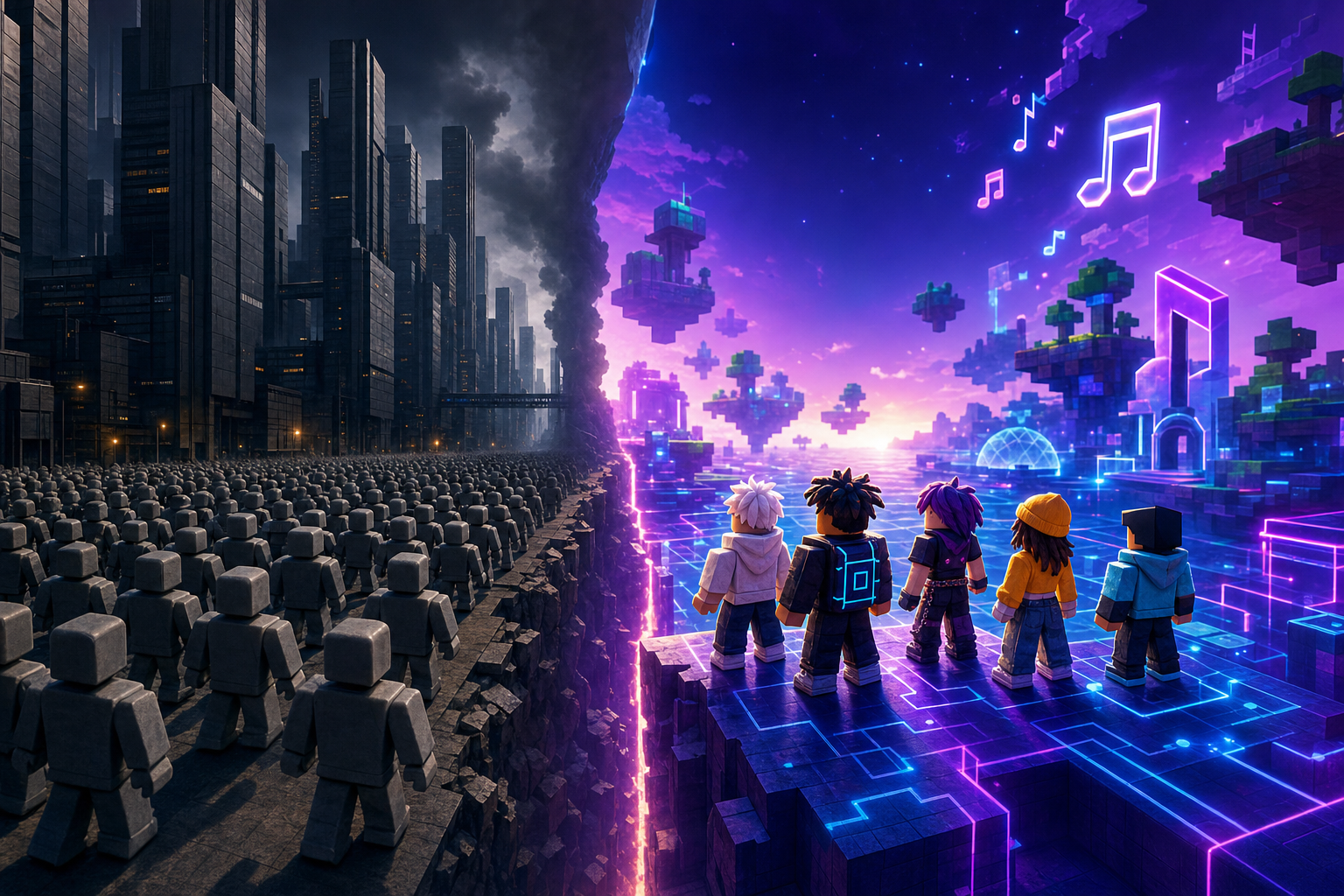
Warner Music Group just struck a deal with STYNGR to put its catalogue inside Roblox experiences. The product, called Batteries, powers in-game boomboxes and dynamically curated radio stations that Roblox players purchase and use inside live experiences. It is a real, commercial music licensing structure, inside a platform with 88 million daily active users.
That announcement is not a curiosity. It is a signal. The majors are now treating gaming platforms as serious sync venues. Independent artists who understand what that means and move before the major label catalogue dominates the available slots have a short, real window to establish themselves in a channel most are not even tracking.
Why gaming is structurally different from every sync channel you already know
Gaming is the largest entertainment sector by participation and one of the fastest-growing by revenue. Yet for years, music licensing within games was chaotic. DMCA takedowns on Twitch, rights clearance nightmares, no clean commercial pipeline for independent catalogues. That is changing structurally in 2026.
Three shifts are converging right now:
Infrastructure is now in place. STYNGR offers SDK and API tools that let game developers integrate licensed music directly. DMCA-compliant, fully cleared, with splits handled automatically. The friction that blocked indie music from gaming is being removed from the supply side.
Roblox's economy is maturing. Roblox crossed 88 million daily active users. Its developer community monetises through in-game items. Music now sits on that shelf. This is not passive background music. It is a purchasable in-experience asset. Artists who are in the catalogue get both placement fees and exposure to hundreds of millions of young listeners in an immersive context.
The window is finite. WMG's Roblox deal signals that major labels are moving. Right now, STYNGR and comparable platforms actively seek to diversify their catalogue with independent artists. In 12 to 18 months, the inventory will be crowded. The artists positioned now will have the advantage of early search visibility, algorithmic recommendation momentum, and established platform relationships.
What makes in-game sync different from tv and film placement
Independent artists need to understand that in-game music licensing operates differently to traditional sync.
Placement is ambient, not narrative. In TV or film sync, your track supports a scene. In-game, your music is the persistent sonic environment of someone's 30-minute session. Mood, tempo, and energy consistency matter more than lyrical story-telling.
Volume beats virality. A deep catalogue with clean stems, alternate versions (instrumental, lo-fi, extended), and multiple BPM variants dramatically increases placement potential. A single hero track will not be enough.
Rights structure must be clean. As with all sync, you need to own or fully control both master and publishing. Split deals with uncleared co-writers will disqualify tracks entirely.
Royalty flows differ. In-game placements often generate per-stream micro-royalties that compound over millions of simultaneous users, rather than one large upfront sync fee. The per-play rate is smaller. The cumulative volume can be significant.
Platforms to register with now: STYNGR (direct SDK integration and catalogue submission), Musicbed, Artlist, and Musicgateway's gaming licensing tier. UnitedMasters also has an active gaming sync pipeline through its brand partnerships with gaming entities.
Who this channel actually suits (and who it doesn't)
This channel is not for every artist. It suits:
- Artists with a catalogue of 10+ completed tracks, not just singles. Ambient, electronic, lo-fi, hip-hop instrumentals, and cinematic genres have the clearest demand.
- Artists who hold clean rights across all tracks with no uncleared samples, unresolved co-writer splits, or third-party master encumbrances.
- Artists willing to produce instrumental stems and alternate mixes. Licensing platforms prioritise this.
It is less suited to artists with:
- Only vocals-forward, lyrically complex tracks in a single genre.
- Catalogue built primarily for radio or streaming aesthetic rather than functional or immersive listening.
- Unresolved publishing registration. Tracks must be registered with a PRO before any royalty-bearing placement will generate income.
What to do this week if you want to be in the room before the majors fill it
1. audit your catalogue for gaming viability
Pull every completed track. Flag instrumental versions, alternate mixes, and tracks with strong mood or tempo consistency. Note which have clean rights and which need clearing.
2. register with your pro if you haven't
PRS for Music (UK), ASCAP or BMI (US), SOCAN (Canada). No registration means no performance royalties from in-game plays. This is not optional.
3. create instrumental and stem versions of your top 10 tracks
Even a simple instrumental export from your existing session files makes every track dramatically more licensable for gaming contexts. If you have a producer or engineer relationship, brief them specifically on gaming placement requirements. They will know what to deliver.
4. submit directly to styngr's artist and label partner programme
Go to styngr.com/devpartners. The platform actively onboards independent catalogues. This is not a long-shot pitch. It is a straightforward commercial application.
5. register on unitedmasters select if your current distributor does not actively pitch sync and brand deals
The gaming pipeline via their ESPN, NBA, and 2K Sports partnerships is real and active in 2026. If your distributor does not have a sync desk, you are leaving money on the table.
6. track placement activity
Set up a simple royalty ledger so you know when in-game plays begin generating micro-royalty income. This data becomes a negotiating asset in future platform conversations. If you are using Music Artist Manager, the Catalogue & Rights tracker gives you a single view of every track, its rights status, and its licensing readiness so you know exactly which assets are ready to pitch to gaming platforms and which need work before you can submit.
Why this matters more than the next playlist pitch
Most independent artists look at the music industry's existing hierarchy and try to climb it. The artists who build lasting businesses do something different. They find the channel that is not yet crowded and plant a flag before the infrastructure gets gatekept.
Gaming is experiencing its Spotify moment. The moment just before all the major label inventory floods in and squeezes out independent artists who didn't move when the door was open.
The WMG and STYNGR deal is not a threat. It is a clock.
A smart manager looks at that deal and sees exactly one thing: a deadline. The independent artists who treat their catalogue as a licensable business asset, not a creative output waiting to be discovered, will have established revenue, relationships, and catalogue momentum inside gaming before the majors dominate the space.
That is the shift from performer to CEO.
Related Reading:
Ready to plan your next release?
Stop piecing together spreadsheets and scattered notes. Get your free release strategy and keep your whole rollout in one place.
Written By
Gavin Alexander
Senior Marketeer
As the founder of Music Artist Manager, Gavin has spent years at the intersection of music and technology. Seeing firsthand how chaotic release rollouts and split sheets can be, he designed a platform that brings major-label infrastructure to independent artists and their teams. He writes extensively about industry trends, artist leverage, and workflow optimisation.