Why niche music communities beat mainstream streaming reach
How niche artists build higher per-fan revenue by cultivating superfan micro-communities instead of chasing mass reach.

Key Takeaways
Niche artists build higher per-fan revenue by owning cultural capital inside micro-communities, not chasing streams.
Superfans spend more, stay longer, and refer better than casual listeners ever will.
You don't need a million listeners if 1,000 fans will fund your entire catalogue and touring operation.
Cultural depth inside one scene beats surface-level visibility across ten platforms every time.
According to MIDiA Research's June 2026 report on independent music economies, direct-to-consumer digital transactions and micro-community monetisation grew by 22% year-on-year, while traditional streaming margins for non-catalogue independent artists shrank to an all-time low. As DSP payouts continue to dilute, reliance on broad algorithmic reach is no longer a viable business model for self-releasing artists who must finance their own physical production and marketing campaigns.
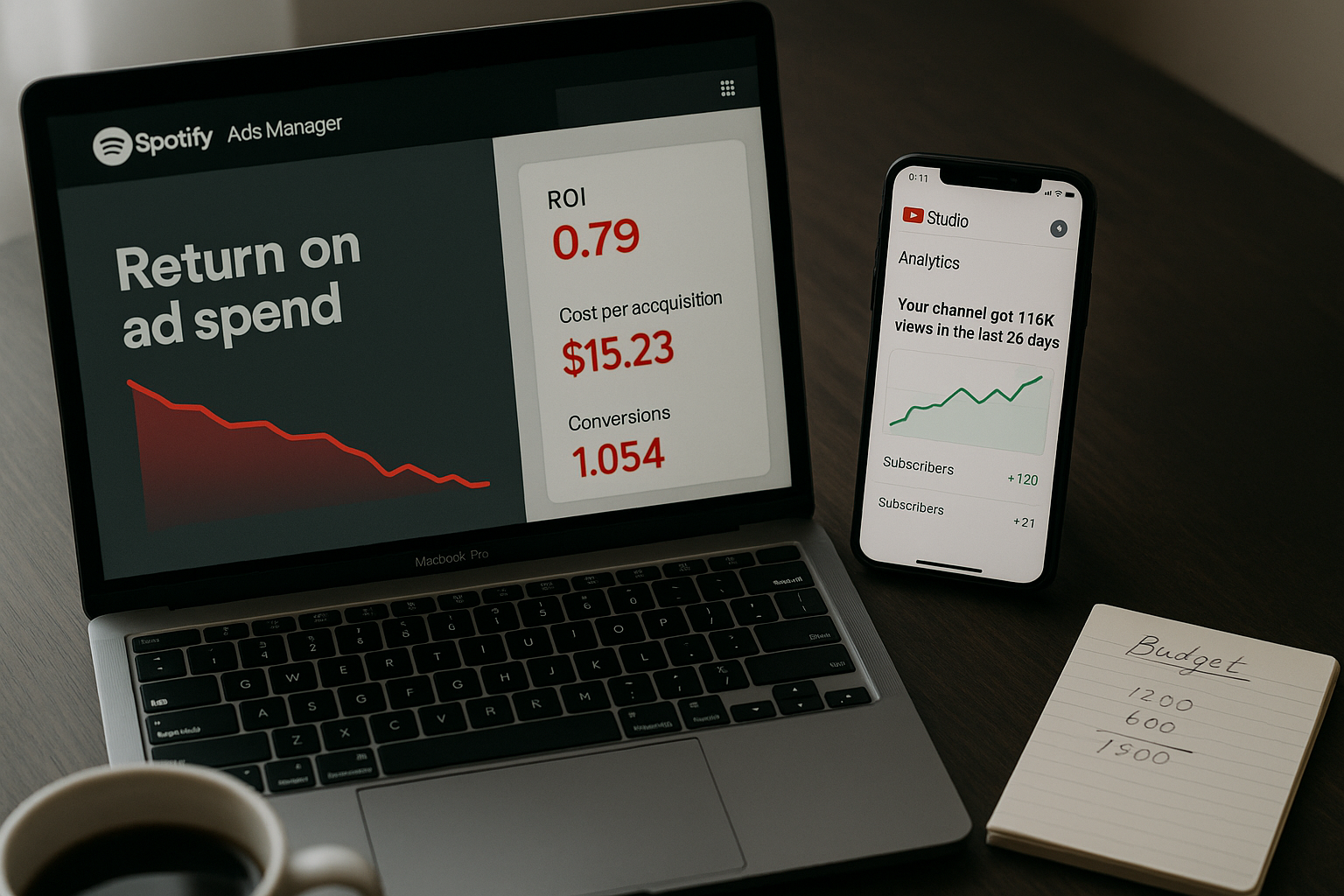
Picture sitting down to review your quarterly royalty statement, seeing half a million algorithmic streams on Spotify, and realising the payout barely covers the courier fee for your latest vinyl test pressings. When you chase shallow, passive playlist placements, you trade ownership for fractions of a penny; by shifting your strategy to cultivating high-density micro-communities, you bypass the platform gatekeepers and build a highly capitalised, sustainable business model.
Most independent artists are taught to chase reach. More playlist adds. More algorithmic pushes. More TikTok views. The assumption is that volume leads to viability. It doesn't. Broad, shallow audiences rarely convert. They stream once, maybe twice, then move on. You get fractions of a cent and no relationship to build on.
Niche artists operate differently. They build cultural capital inside micro-communities that already value what they make. These are not casual fans. They're invested participants. They buy merch, attend shows, share your work without being asked, and stick around for years. That depth translates to higher per-fan lifetime value, more predictable revenue, and actual career sustainability.
This isn't theory. It's structure. And it's how you build a catalogue that pays you long after the release window closes.
What cultural capital actually means in music
Cultural capital is your credibility and relevance within a specific community. It's not clout. It's not follower count. It's how much weight your voice carries when you show up.
In music, cultural capital comes from consistently delivering work that reflects the values, aesthetics, and lived experience of a defined group. When you do that well, you become part of the culture itself. People don't just listen to your music. They identify with it. They use it to signal who they are.
That identification is what drives monetisation. When someone sees your work as central to their identity, they don't hesitate to spend. A $30 vinyl, a $50 concert ticket, a $100 exclusive drop. These aren't impulse buys. They're investments in belonging.
Why micro-communities outperform mass audiences
Micro-communities are small, tightly connected groups built around shared interest or identity. They could be genre-specific (dark ambient, UK garage, hyperpop), geographically rooted (Brooklyn DIY scene, Melbourne techno), or culturally aligned (queer electronic artists, Afro-Latin producers).
What makes them valuable is engagement density. In a micro-community, your superfans know each other. They talk. They cross-pollinate. One person's recommendation carries real social weight because trust is already built into the network.
Compare that to a broad audience pulled from playlist adds. Those listeners are isolated. They have no relationship with each other or with you. Conversion rates are low because there's no cultural context to anchor the relationship.
The math is simple. 1,000 superfans spending $50 a year is $50,000. 100,000 passive listeners streaming your catalogue might generate $400. You don't need scale. You need depth.
How to identify your micro-community
Start by asking where your work already resonates. Look at your data, but don't stop there. Spotify for Artists and Instagram insights will show you cities, age ranges, and playlist placements. That's useful, but surface-level.
Go deeper. Check who's tagging you in stories, commenting on posts, and sharing your tracks in group chats or Discord servers. Look at who's showing up to shows, even small ones. These are early signals of cultural alignment.
Then research the spaces those people occupy. What subreddits do they post in? What labels do they follow? What other artists do they champion? What aesthetic or ideological threads connect them?
You're not looking for a demographic. You're looking for a culture. Once you find it, you can start speaking directly to it.
How to nurture cultural capital inside that community
Show up consistently. Post in the right forums. Comment on the right tracks. Attend the right shows. Collaborate with artists who are already embedded in that space. Cultural capital isn't built through ads or algorithms. It's built through presence and contribution.
Release work that reflects the community's values. If you're operating in a scene that prizes experimentation, don't sanitise your sound for playlist editors. If your community cares about DIY ethics, don't sign a deal that conflicts with that. Authenticity isn't a buzzword here. It's a requirement. People can tell when you're performing alignment versus living it.
Engage in two-way dialogue. Don't just broadcast. Ask questions. Share process. Bring people behind the scenes. Let them feel like insiders, because that's what they are. The more they see themselves in your work, the more invested they become.
And protect the culture. If your community values intimacy, don't flood it with mass marketing tactics. If it values experimentation, don't pivot to trend-chasing. Cultural capital erodes fast when people feel like you've sold out or moved on.
For more on how to build and protect this kind of cultural equity, read our cultural capital blueprint for niche artists.
How to monetise superfans without alienating them
Monetisation inside micro-communities works best when it feels reciprocal. You're not extracting value. You're offering access, exclusivity, or utility in exchange for support.
Direct-to-fan models are your foundation. Bandcamp, Patreon, and Shopify let you sell vinyl, cassettes, sample packs, stems, and limited merch directly. No middleman. No split with a DSP or label unless you choose one. Keep 80% to 95% of every sale.
Exclusive releases work particularly well. Offer early access to new tracks, alternate mixes, or physical-only editions. Create tiers. A $5 supporter gets the digital album a week early. A $25 supporter gets a signed vinyl. A $100 supporter gets a one-on-one listening session or production feedback call. Price for value, not volume.
Shows and experiences matter more in niche spaces. A 200-cap room filled with superfans will make you more money and build more momentum than a 2,000-cap room half-empty with casual attendees. Ticket sales, merch, and post-show engagement all perform better when the room is aligned.
Sync licensing is another underused lever. If your sound is culturally specific, it's also distinct. That makes it valuable to music supervisors looking for authenticity. Niche doesn't mean unmarketable. It means you're solving a specific creative problem for the right client.
And don't ignore the compounding effect. The more cultural capital you accumulate, the more opportunities come to you. Labels, management, booking agents, and brand partnerships all follow credibility. You're not pitching. You're being pursued. That shifts negotiation power entirely. We break this down further in our article on the compounding effect of cultural capital.
Why this model builds long-term sustainability
Superfan economics don't rely on algorithmic favour or viral moments. They rely on relationships. Those relationships don't degrade when TikTok changes its algorithm or Spotify adjusts its editorial strategy. They exist independent of platform volatility.
Your back catalogue also compounds in value. As your cultural capital grows, older releases become entry points for new fans. They don't age out. They deepen the narrative. A well-structured catalogue with clear thematic or sonic progression gives superfans more to explore and more reasons to spend.
This model also scales on your terms. You're not trying to go from 10,000 to 100,000 listeners. You're going from 500 superfans to 1,000, then 2,000. Growth is incremental, manageable, and directly tied to revenue. You're not building a media brand. You're building a business.
Final word
The music industry rewards depth more than it rewards reach. Niche artists who understand that will outlast and out-earn peers chasing virality.
To successfully build and monetise these micro-communities, you need absolute clarity on who your superfans are and which physical products yield the highest margins. The MAM Catalogue Manager integrates directly with your direct-to-fan platforms, giving you a unified view of product performance, real-time inventory levels, and customer lifetime value metrics.
Log in to your MAM dashboard today, connect your Bandcamp and Shopify accounts, and use the MAM Catalogue Manager to identify your top 10% highest-value supporters so you can execute your next exclusive release with absolute precision.
Ready to streamline your workflow?
Stop piecing together spreadsheets and scattered notes. Join the waitlist for Music Artist Manager and get your entire rollout in one place.
Written By
Gavin Alexander
Senior Marketeer
As the founder of Music Artist Manager, Gavin has spent years at the intersection of music and technology. Seeing firsthand how chaotic release rollouts and split sheets can be, he designed a platform that brings major-label infrastructure to independent artists and their teams. He writes extensively about industry trends, artist leverage, and workflow optimisation.