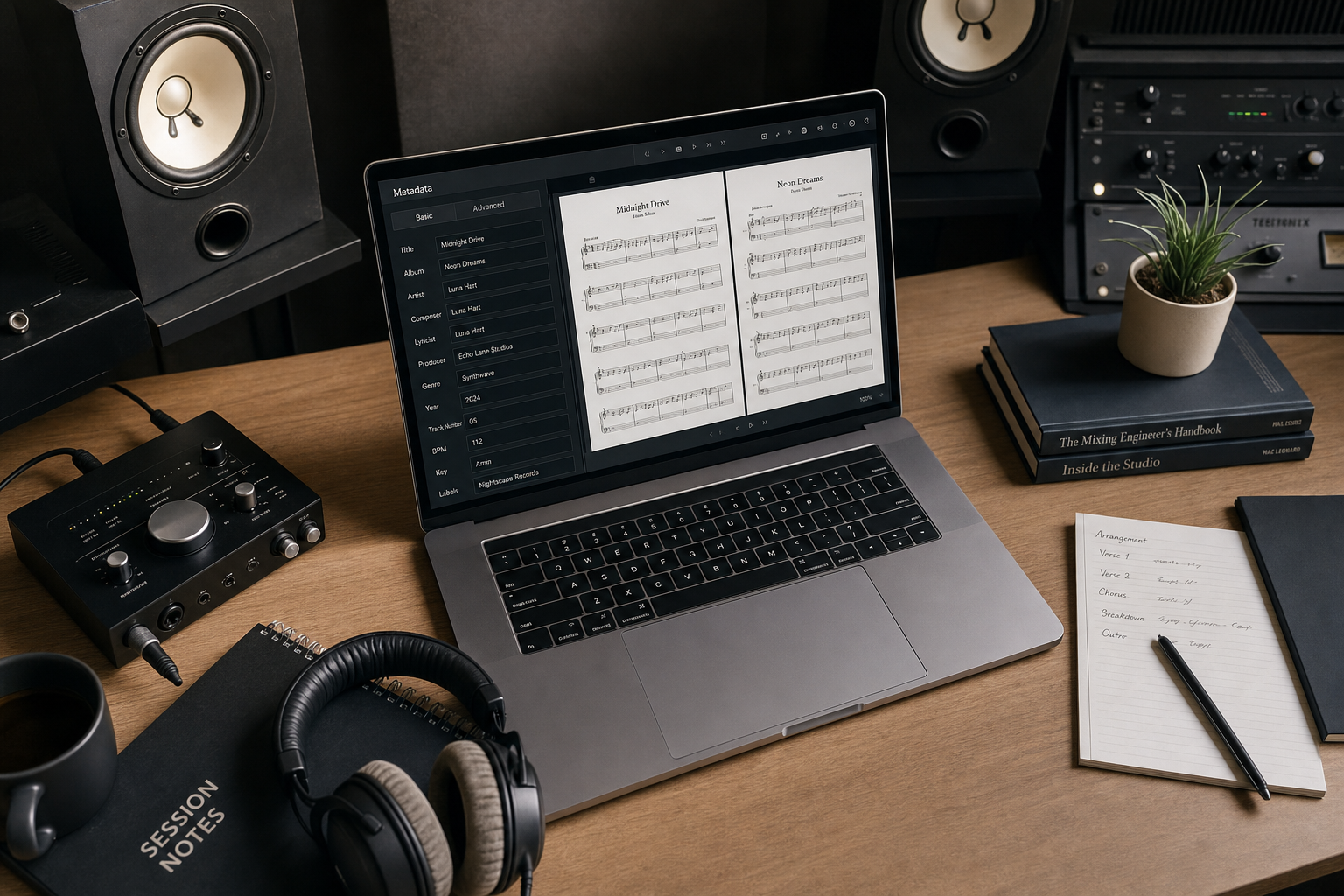
Artist development checklist
The specific work independent artists must complete in production, brand, business and audience before anyone pays attention.
Key Takeaways
Development is the infrastructure work you do before anyone notices your music.
Most artists are strong in one discipline but weak in the other three that matter.
Split sheets and direct contact lists are business infrastructure, not admin you do later.
Consistent release cycles and owned audience data beat algorithm dependency every time.
Artist development is not a vibe. It is a set of disciplines you build before the momentum arrives. This article breaks down the four operational pillars that separate working artists from those still waiting for a break, and the infrastructure decisions that make the difference when opportunity finally shows up.
Artist development used to be the label's job. A label would put years and serious budget into an artist before expecting anything back. Now independent artists are expected to do that work themselves, with no team, no budget and no roadmap.
Development is the work you do before the work gets noticed. The artists who break through are rarely the most talented. They are the ones who invest in four specific disciplines long before anyone starts paying attention.
This is not a motivation article. It is a structural checklist for the independent artist who wants to build a career that lasts beyond the first release. If you are waiting for the right moment, you have already lost time.
Why most artists stall
Most artists are strong in one discipline but weak in three. That imbalance is what holds you back.
You might have the production quality dialled in, but your brand feels like a placeholder. Or you have a clear visual identity, but your PRO registration is incomplete and your splits are unsigned. Or you have an audience on streaming platforms, but no owned marketing list and no direct way to reach them when the algorithm changes.
The gaps are where you lose the game. Development is the deliberate work of closing them.
The four disciplines of development
Each discipline is nameable, testable, and entirely within your control. Here is what each one means in practice.
1. creative development
This is the craft itself. Production quality, songwriting, sonic identity, and the collaborative skills that let you work with producers, session players, and co-writers without friction.
Creative development is not about practising more. It is about knowing where your sound sits in the market, what production benchmarks you need to meet, and which collaborators will raise the standard of your output.
Ask yourself:
- Can I describe my sonic identity in one sentence to a stranger?
- Do my recent releases meet the production standard of the playlist I want to be on?
- Have I worked with someone outside my usual circle in the last six months?
If the answer to any of these is no, your creative development has stalled.
2. brand identity
Brand is not your logo. It is the visual language and cultural context that make your music stick in someone's memory after the stream ends.
This means press images, single artwork, social content, and the narrative you use to introduce yourself. All of it should feel intentional and consistent within a defined era.
An era is a period of releases that share a visual and thematic direction. It gives your audience something to latch onto and makes your catalogue easier to understand. It also makes your work easier to pitch to editors, curators, and bookers who need to place you in a context quickly.
Ask yourself:
- If I deleted all the text from my Instagram grid, would someone still know what kind of artist I am?
- Can I explain my current era in two sentences to a journalist or booker?
- Do my visuals match the tone of the music I am releasing?
If you are creating visuals on a release-by-release basis with no connecting thread, you do not have a brand. You have a series of one-offs.
3. business infrastructure
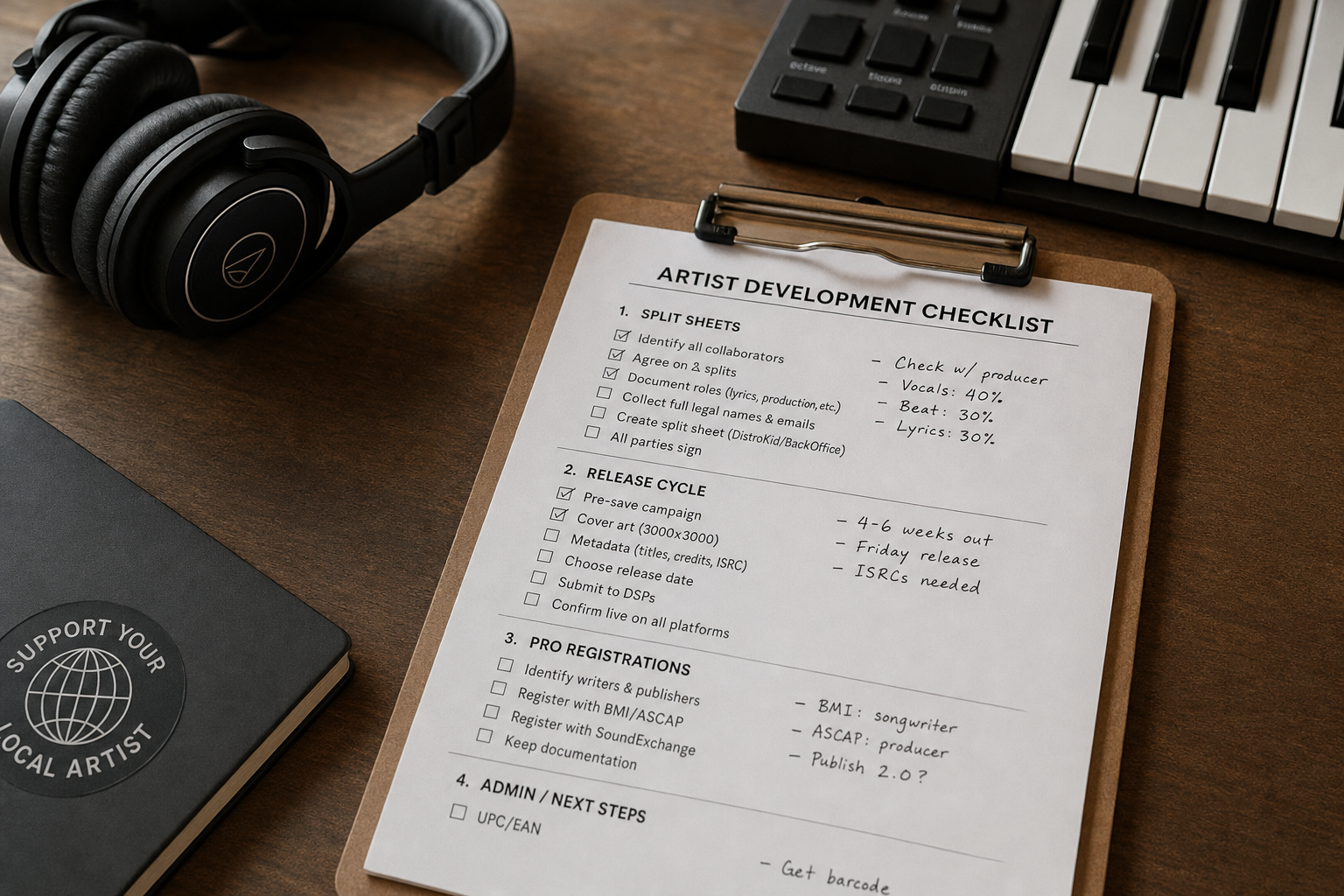
This is the admin that protects your income and your rights. PRO registrations, signed split sheets, active financial ledgers, and a working understanding of agreements and cashflow.
Business infrastructure is not glamorous. It is also not optional. Every unsigned split sheet is a potential dispute. Every missing PRO registration is royalty income you will never see. Every untracked expense is a tax deduction you cannot claim.
The artists who treat this as boring are the same artists who discover, three years later, that they own less of their catalogue than they thought.
Here is what you need:
- PRO registration for every territory where your music is distributed.
- Signed split sheets for every track with more than one writer or producer.
- A system for logging invoices and expenses that you actually use.
- A project budget for every release, so you know what you spent and what you can afford to spend next time.
If you are running your career without these, you are not independent. You are just unprotected.
You can draft split sheets, manage project budgets, log invoices and expenses, and store everything in one place using the tools in Music Artist Manager. Manager chat also gives you advice on agreements and cashflow when you need it.
4. audience building
This is the discipline most artists avoid because it feels like marketing. It is not. It is relationship infrastructure.
Audience building means owned marketing lists. Email and SMS subscribers. People who gave you direct permission to reach them, independent of any platform.
If you are relying on streaming algorithms or social media reach to find your audience, you do not have an audience. You have temporary access to someone else's audience. The moment the platform changes its rules, your reach disappears.
The developed artist builds a list from day one. Every release, every live show, every piece of content points to a signup form. That list becomes the foundation for every tour announcement, every pre-save campaign, and every direct sale you will ever make.
Ask yourself:
- How many people can I reach directly, right now, without paying a platform?
- When did I last send something valuable to that list?
- Do I have a clear reason for someone to sign up today?
If you cannot answer those questions, start building the list today. Use a landing page, a simple signup form, and a single piece of value you can send immediately. A demo, a guide, an early listen. It does not need to be complicated. It needs to exist.
Where artists lose the game
Here is the gap between the struggling independent artist and the developed one.
The struggling indie
- Releases music on a random schedule with no advance planning.
- Trusts the algorithm for discovery and waits for the platform to decide.
- Ignores split sheets and royalty setups until there is a problem.
- Has no direct way to contact fans outside of social media comments.
The developed artist
- Maintains a consistent release cycle that builds anticipation and allows for proper pitching windows.
- Builds an email and SMS subscriber base from the first release.
- Understands agreements and cashflow before signing or collaborating.
- Works within a defined brand era that makes every release feel connected.
The difference is not talent. It is structure.
Own the admin so you can own the art
If you are losing hours every week to spreadsheets, missed invoices, unsigned splits, and budget confusion, you are not being creative. You are being chaotic.
The point of infrastructure is not to become a better administrator. It is to offload the admin so you can return to the work that matters.
Music Artist Manager gives you one workspace for all of it. Draft split sheets before you leave the studio. Manage tracks and budgets for every project. Log invoices and expenses as they happen. Get brand, business, and strategy advice in Manager chat when you need a second opinion.
It is built for artists who want to run a career, not just release tracks.
What to do next
Go through the four disciplines and name your weakest one. Not the one you dislike. The one that is currently costing you money, opportunities, or time.
Then fix that one first.
If it is creative development, book a session with someone whose production standard is higher than yours.
If it is brand identity, define your current era in two sentences and audit your last ten pieces of content against it.
If it is business infrastructure, sign up for Music Artist Manager and draft the split sheets you have been avoiding.
If it is audience building, create a signup form today and add it to your link-in-bio.
Development is not a one-time project. It is the ongoing work of closing gaps before they become crises. The artists who treat it that way are the ones who are still here five years later.
Ready to plan your next release?
Stop piecing together spreadsheets and scattered notes. Get your free release strategy and keep your whole rollout in one place.
Written By
Gavin Alexander
Senior Marketeer
As the founder of Music Artist Manager, Gavin has spent years at the intersection of music and technology. Seeing firsthand how chaotic release rollouts and split sheets can be, he designed a platform that brings major-label infrastructure to independent artists and their teams. He writes extensively about industry trends, artist leverage, and workflow optimisation.