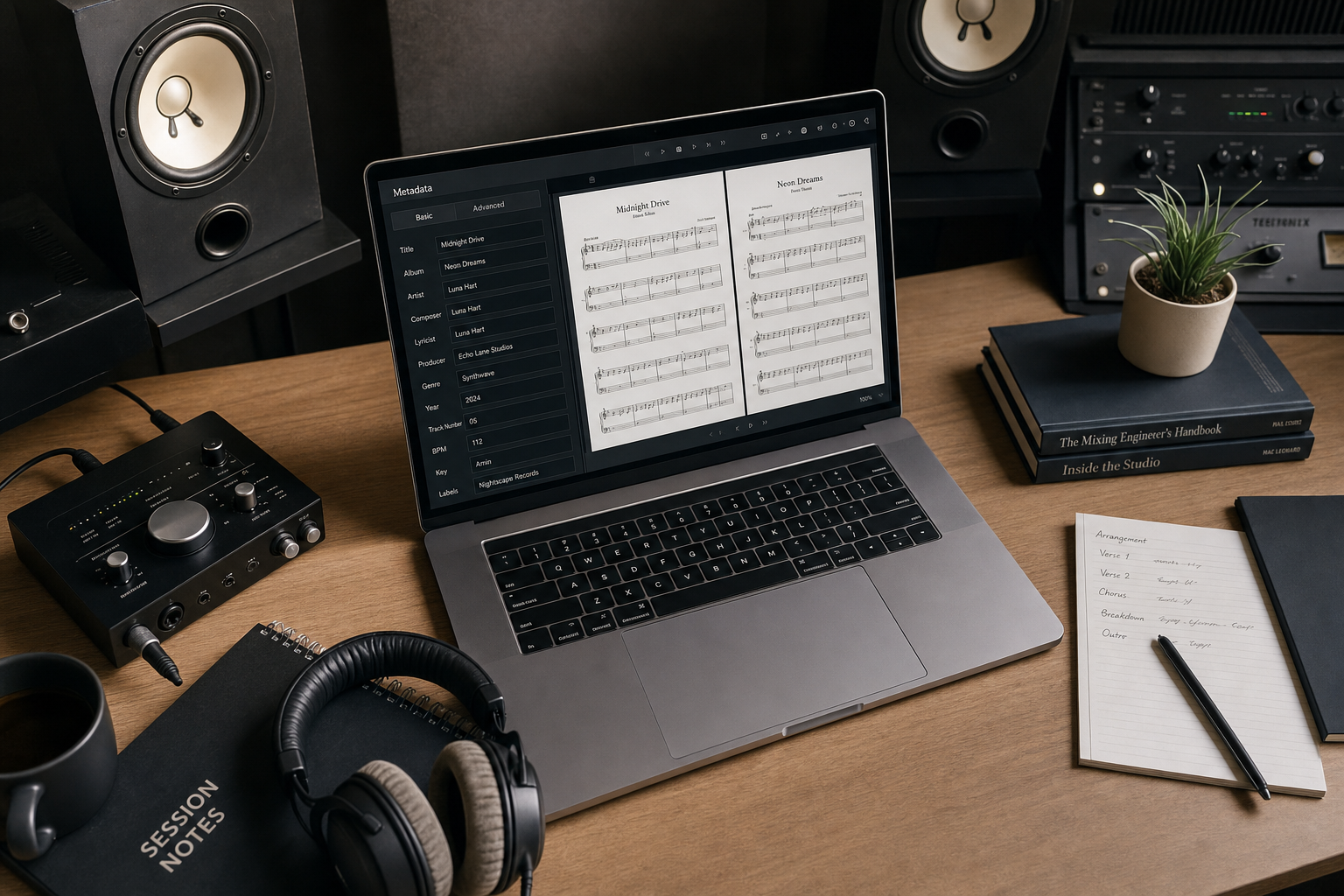
The artist as a micro-VC: How to spot and invest in your own overlooked creative assets
Audit your unreleased demos, visuals, and niche community like a VC audits startups, then bet on what converts best.

Key Takeaways
Your back catalogue isn't a graveyard. It's a portfolio waiting to be audited for value.
Most artists sit on revenue streams they don't recognise because they never learned to look at demos and visuals like assets.
Venture capitalists make calculated bets. You can apply that same framework to decide which unreleased track or niche community to develop next.
Minimal resources are enough when you know which creative output has hidden upside and which one doesn't.
You already own assets worth more than you think. The unreleased demo sitting in your Google Drive, the visual style you use on Stories, the 200-person Discord you started last year. Most artists treat these like scraps. Smart artists audit them like a VC reviews a portfolio, then place calculated bets on what to build next.
You already own assets that could pay you. Most independent artists do. The problem is not creation. It is allocation.
You have unreleased demos sitting in folders. You have a visual style no one else in your lane is using. You have a small but engaged community that shows up every time. These are not just files or followers. They are undervalued creative assets. And most artists treat them like clutter instead of capital.
A venture capitalist does not fund every pitch. They audit the market, look for asymmetric upside, and place calculated bets. You should do the same with your own work. Not because it sounds clever, but because your time and money are finite. Every hour you spend on the wrong asset is an hour you are not compounding the right one.
This is your framework for auditing what you already have and deciding what to build next.
Step one: run a creative portfolio audit.
List everything you have made or started in the last two years. Be literal. Go through your hard drives, voice memos, Google Docs, and Instagram drafts.
Sort them into three categories:
Released and performing.These assets are live and generating attention, streams, or revenue. A single that hit 50,000 streams. A video that got shared. A mailing list that converts at 8%. You know what works because the data already told you.
Released and underperforming.These went live but did not connect. Low streams. No shares. Weak engagement. Do not delete them yet. Some of these can be repositioned or repackaged. Others are sunk costs. You will decide later.
Unreleased or unfinished.Demos. Visual concepts. Collaborations that stalled. A half-written zine. A sample pack you made for yourself. This is your hidden inventory. Most artists have more here than they realize.
Now look at each item and ask three questions:
- Does this have an existing audience, even a small one?
- Can this be finished or repositioned with minimal new input?
- Does this differentiate me in my lane?
If the answer to two or more is yes, flag it. That is a potential bet.
Step two: calculate effort versus upside.
Not all assets cost the same to develop. Not all assets return the same value.
A demo that needs one more session and a mix might take 10 hours and $400. If you can release it as a standalone single or add it to your catalogue for streaming income, that is a contained bet with clear ROI.
A visual rebrand might take 40 hours of creative direction, new assets, and a refresh of your entire online presence. That is a bigger bet. It might be worth it if your current visuals are generic and your music deserves better framing. But you need to be honest about whether the upside justifies the cost.
Use this filter: low cost, high differentiation, clear path to revenue or attention. Those are your strongest plays.
Some examples of high-upside, low-cost bets:
- Turn three unreleased demos into a surprise EP with no rollout. Drop it on streaming and tell your mailing list first. Low lift. Adds catalogue depth. Rewards your core audience.
- Reposition an underperforming single with a new visual or a new playlist pitch angle. The song already exists. You are just reframing it.
- Package your sessions, voice memos, or studio photos into a Patreon tier or a one-time digital product. Fans will pay for access. You already own the content.
- Lean into the niche community you have. If 200 people always comment, always share, always show up, build something specifically for them. A private Discord. A listening party series. A referral program that rewards them for bringing others in.
The goal is not to do everything. It is to do the thing that moves the most with the least.
Step three: make the bet and set a decision point.
Once you choose an asset to develop, set a timeline and a success metric. This is not optional. Without it, you will work on something forever and never know if it worked.
Let's say you decide to finish and release that three-song EP. Your timeline is 60 days. Your success metric is 30,000 streams in the first 90 days post-release, 200 new mailing list subscribers, or 10 sync inquiries from the new material.
Pick the metric that matters most to your business right now. If you need streaming income, track streams. If you need fan infrastructure, track list growth. If you need licensing opportunities, track outreach and sync interest.
At the end of your timeline, evaluate. Did the asset perform? Did it justify the time and money you put in? If yes, double down. If no, move on. Do not get sentimental. You are not a hobbyist. You are allocating capital.
Step four: build a portfolio, not a single hit.
A VC does not bet everything on one company. They build a portfolio. Some bets fail. Some return 2x. A few return 10x or more. The portfolio approach lets you survive the failures and compound the wins.
Your creative output works the same way. Not every song will hit. Not every visual will land. Not every community experiment will convert. But if you are making smart bets on differentiated assets with clear upside, a few will work. And those few will fund the next round.
This is why your mailing list is worth more than your follower count. A mailing list is an owned asset that compounds. Every person you add increases the value of every future release. Social platforms do not work that way. Followers are rented attention. Email is owned infrastructure.
This is also why the great unsigning matters. Independent artists who own their masters, their data, and their fan relationships have more flexibility to make these bets. They do not need label approval to drop a surprise EP or test a new revenue stream. They can move fast and learn faster.
And this is why emotional ROI is part of the equation. The fans who feel closest to you will pay more, share more, and stay longer. Building for them is not soft. It is strategic.
Step five: reinvest the returns.
When a bet works, take the revenue or attention it generated and put it into the next one. This is how you build momentum without outside funding.
A successful single pays for the next music video. A growing mailing list lets you pre-sell a limited vinyl run. A strong Patreon tier funds studio time for the next project. You are not waiting for a label or a investor. You are your own investor.
Most independent artists underfund their own proven assets. They will spend money on ads for a song that has no traction, but they will not spend money to finish the demo that their core fans have been asking about for six months. That is backwards.
Fund what is working. Let the rest sit.
You already have more than you think.
The mistake is not that you lack ideas or talent. The mistake is that you are not treating your creative output like a portfolio. You are not auditing what you have. You are not calculating effort versus upside. You are not setting decision points. You are not reinvesting returns.
Start now. Open your hard drive. Make the list. Flag the bets. Pick one. Set the timeline. Execute. Measure. Move.
You do not need more. You need to invest in what you already own.
Related Reading:
- [Your mailing list is worth more than your follower count — here's why](https://www.musicartistmanager.com/blog/owned-email-asset)
- [The Great Unsigning](https://www.musicartistmanager.com/blog/great-unsigning-artist-infrastructure)
- [The emotional ROI](https://www.musicartistmanager.com/blog/emotional-roi-fan-empathy-revenue)
Ready to streamline your workflow?
Stop piecing together spreadsheets and scattered notes. Join the waitlist for Music Artist Manager and get your entire rollout in one place.
Written By
Gavin Alexander
Senior Marketeer
As the founder of Music Artist Manager, Gavin has spent years at the intersection of music and technology. Seeing firsthand how chaotic release rollouts and split sheets can be, he designed a platform that brings major-label infrastructure to independent artists and their teams. He writes extensively about industry trends, artist leverage, and workflow optimisation.