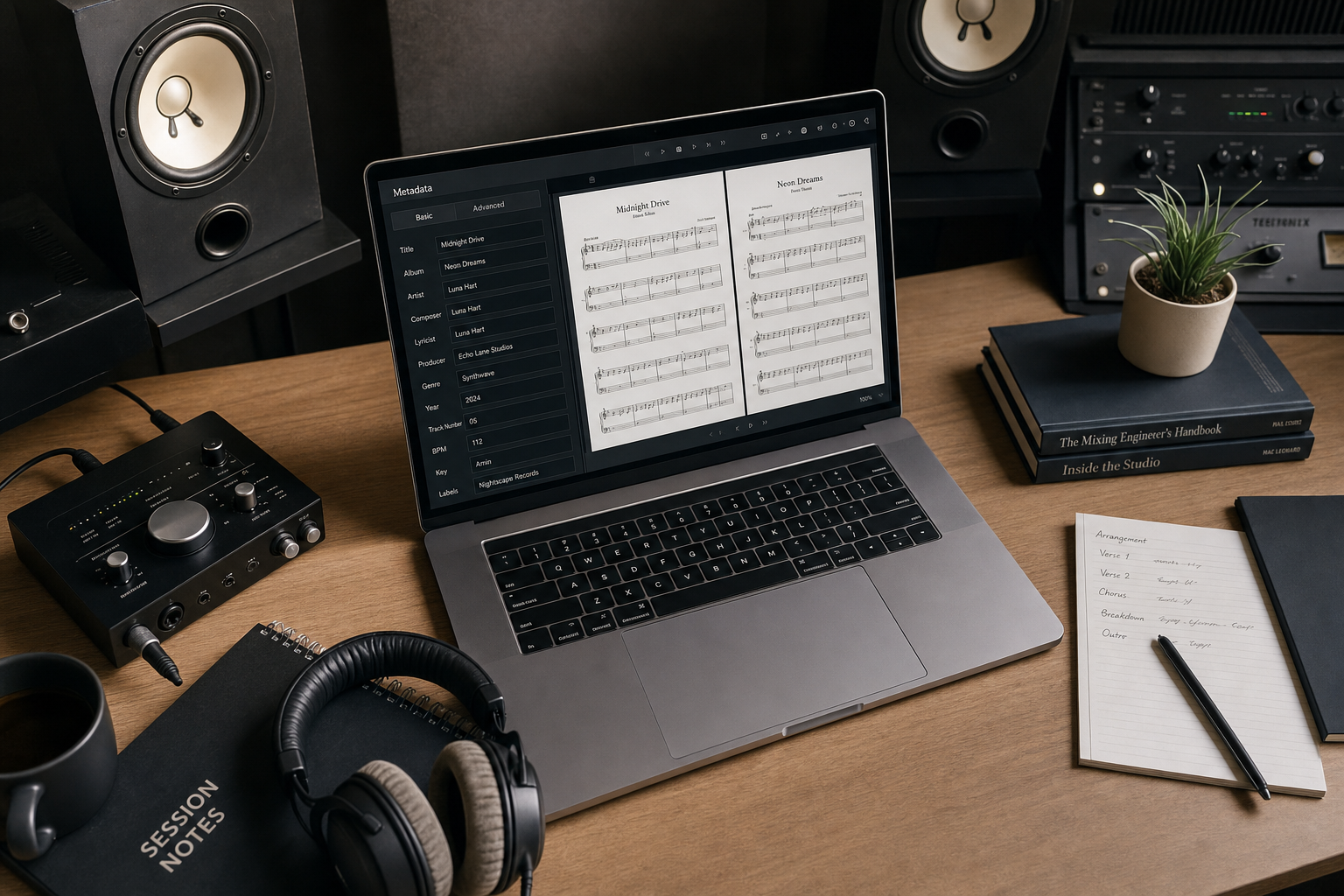
The great unsigning: Why choosing independence still requires a Major-Label mindset
How to build the operational infrastructure that makes independence viable, not just romantic.

Key Takeaways
Most artists treat independence as an identity when it is actually a business model requiring infrastructure.
Leaving the label system transfers every operational function to you, whether you perform it or not.
You cannot scale what you have not systematised: royalty collection, release cadence, and revenue diversification come first.
The artists winning independently are not rejecting major label thinking — they are applying it themselves.
Date: 2026-09-18 Theme: Artist Business Infrastructure Lens: Lyor Cohen (Systems) — operational infrastructure, scalability, team setup
The shift everyone's talking about
In 2026, a documented wave of artists is actively choosing not to sign or quietly exiting deals they already have. Industry observers are calling it "The Great Unsigning." The independent music market is now projected to hit £75.34 billion globally this year alone, growing at 6.8% year-on-year. That number gets cited in artist pitches, social posts, and manager slide decks. But here is what rarely gets said aloud: most artists using that statistic as justification for staying independent have none of the operational infrastructure that underpins it. The market is growing. Their businesses are not.
What's actually happening
The shift is real. Major labels are signing fewer artists, advancing less, and demanding more. At the same time, distribution, manufacturing, and marketing tools have dropped to near-zero marginal cost. The conditions for independent viability have never been better. But the framing in most artist communities has become dangerously romantic. Independence is treated as an identity rather than a business model. The artists winning in this parallel economy are not simply "unsigned." They are running lean, highly systematised operations that replicate, in miniature, the operational logic of the labels they chose not to join. The Great Unsigning is not a rejection of major-label thinking. It is a demand to apply it yourself.
The infrastructure gap no one's addressing
Understanding why this matters requires separating two things that are constantly conflated:
Independence (legal status): You own your masters. No label has a claim on your income. You control your release schedule.
Independence (operational reality): You have a functioning royalty collection stack (PRO, SoundExchange, neighbouring rights). You have a release cadence with marketing budgets mapped to each drop. You have a revenue model across at least three income streams. You have someone (a manager, a consultant, or a platform) actively tracking your data and adjusting strategy.
The first is achievable overnight. The second takes architecture. Most artists achieve the first and mistake it for the second. The result is creative freedom with financial stagnation.
Labels, whatever their faults, provide operational infrastructure: radio promotion, sync licensing contacts, playlist relationships, marketing spend, legal protection, and administrative systems for royalty collection. When an artist chooses not to sign, they are not eliminating those functions. They are deciding to build or buy them themselves.
Who this applies to
This approach is most relevant for artists who:
- Are generating some income (live, streaming, sync, or merchandise) but cannot clearly account for where it comes from or forecast the next 12 months
- Have a catalogue of at least 6–12 released tracks and an audience, however small
- Have already made the emotional decision to stay independent and are now facing the operational consequences of that choice
This is not for artists at zero. The infrastructure question only becomes urgent once there is something to protect and scale. And it is not for artists who genuinely want a label deal and are simply using "independence" as a negotiating posture. That is a different strategy entirely (and a legitimate one).
Six operational moves that change everything
1. Audit your royalty stack today
Log into every rights organisation you are registered with: PRS/ASCAP/BMI, SoundExchange, PPL, neighbouring rights administrators. If you cannot name three, you are leaving income uncollected. Independent artists are redefining revenue in 2026 by collecting every stream they are entitled to. Most still do not.
2. Map your income streams
List every revenue source from the last 12 months. Assign a rough percentage to each. If one stream accounts for more than 60%, you have a concentration risk. Address it before your next release.
3. Create a release infrastructure document
For each planned release, define: budget, distribution partner, marketing plan (platforms, spend, timeline), press approach, and success metrics. Treat it as a label would treat a greenlight memo.
4. Assign operational roles
Whether these are people, tools, or platforms, every major-label function must be covered: marketing, legal/admin, sync, live, digital. Document who or what handles each. Gaps are liabilities.
5. Schedule a quarterly business review
Once per quarter, sit down (with your manager if you have one) and review: revenue trends, audience growth, release performance against targets, and spend efficiency. Most independent artists never do this. It is the single highest-leverage habit of professionally managed careers.
6. Use your independence as leverage (but only once the infrastructure exists)
When a label, publisher, or sync house approaches you, the negotiation changes entirely if you can demonstrate a functioning business. "I don't need a deal" is only credible when you demonstrably don't.
The transfer of responsibility
The Great Unsigning is not the end of the story. It is the beginning of a harder one. Leaving (or never joining) the major label system is not freedom. It is a transfer of responsibility. Every function a label performs must now be accounted for, even if the artist never does it themselves. The artists who understand this (and build accordingly) are not just independent. They are operating like principals: with leverage, with optionality, and with the ability to make decisions from strength rather than desperation. That is the shift from performer to CEO. Not a mindset. An infrastructure.
Use Music Artist Manager's business dashboard to map your income streams, track release performance, and build the operational backbone your independence actually requires.
Related Reading:
- [Your "Independent" Distributor Just Got](https://www.musicartistmanager.com/blog/indie-distributor-bought-by-major)
- [The tiered pricing and $52 superfan playbook](https://www.musicartistmanager.com/blog/tiered-pricing-superfan-playbook)
- [The volume gap: Why more streams doesn't](https://www.musicartistmanager.com/blog/the-volume-gap-streams-vs-income)
Ready to streamline your workflow?
Stop piecing together spreadsheets and scattered notes. Join the waitlist for Music Artist Manager and get your entire rollout in one place.
Written By
Gavin Alexander
Senior Marketeer
As the founder of Music Artist Manager, Gavin has spent years at the intersection of music and technology. Seeing firsthand how chaotic release rollouts and split sheets can be, he designed a platform that brings major-label infrastructure to independent artists and their teams. He writes extensively about industry trends, artist leverage, and workflow optimisation.