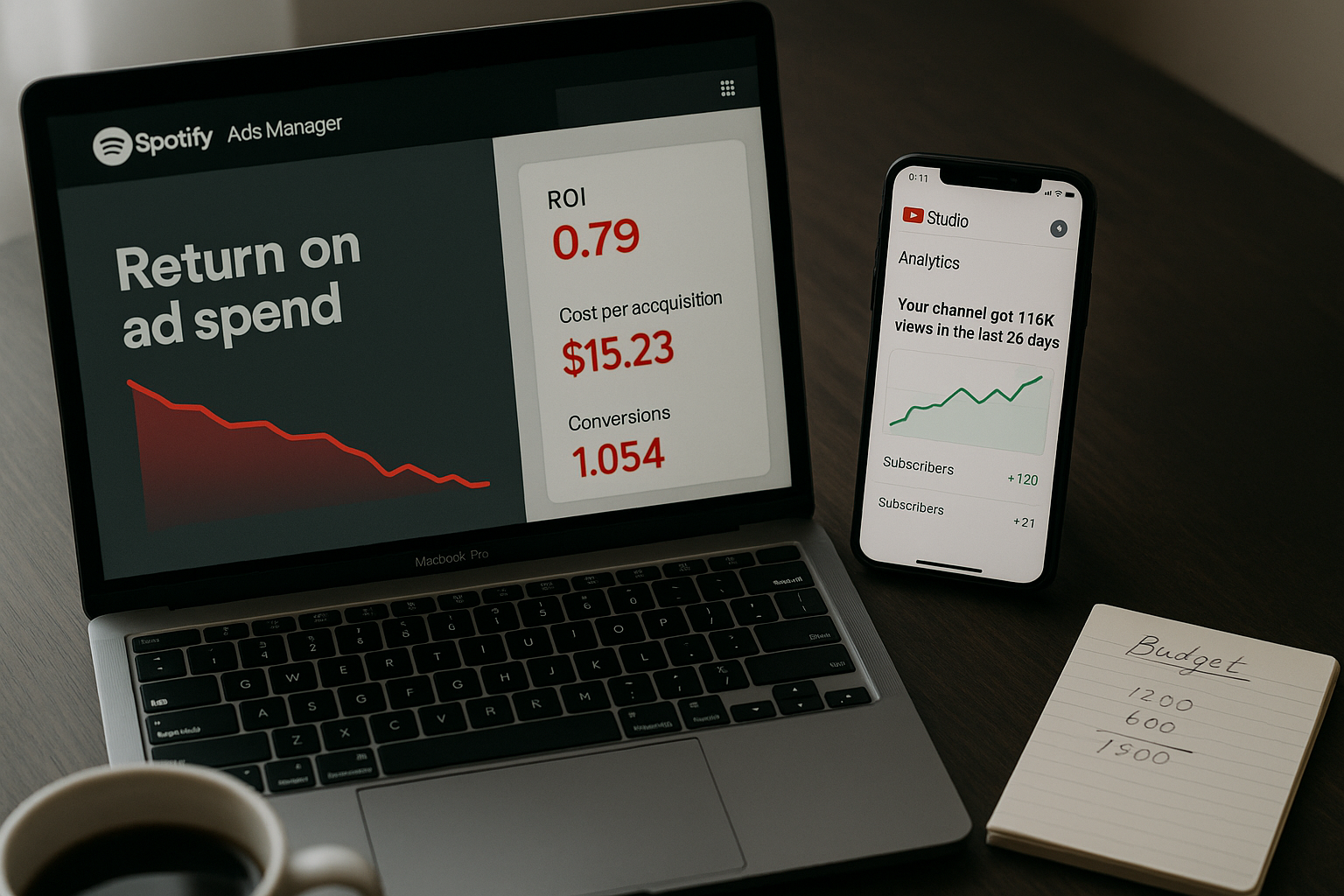
Driving sustainable artist revenue through deep fan empathy
Discover why fostering deep fan empathy leads to sustainable revenue for independent artists, beyond superficial engagement metrics.

Key Takeaways
Passive streaming metrics fail to measure willingness to pay; emotional resonance is what converts casual listeners into superfans.
A small core of dedicated supporters generating direct merchandise and ticket sales delivers higher net margin than vanity streams.
Build direct communication channels (email, community groups) where authentic storytelling drives transactional loyalty.
Focus on high-empathy engagement that turns listeners into long-term patrons rather than chasing ephemeral algorithmic virality.
Streams don't pay your rent. Likes don't fund your next release. If you're chasing engagement metrics instead of building real connection with your audience, you're optimising for the wrong outcome. This article shows you how to shift from vanity numbers to revenue-generating relationships that actually sustain your career.
You track saves. You watch shares. You count comments and measure reach. But here's what most artists miss: engagement metrics tell you what fans did. They don't tell you what fans felt, or what they'll pay for later.
Real revenue doesn't come from virality. It comes from fans who feel genuinely understood by you. That emotional connection is what turns a casual listener into someone who buys your variant vinyl, joins your Patreon at the top tier, or flies to another city for your show.
This isn't about being more "authentic" or posting more behind-the-scenes content. This is about designing your artist brand and output to create empathy at scale. When fans see themselves in your work, they don't just stream. They invest.
Why empathy drives higher fan lifetime value
Empathy means your audience believes you understand their internal world. Their frustrations, their aspirations, their identity. When that connection exists, fan behavior changes in measurable ways.
They stop waiting for singles to drop on DSPs. They go direct. They pre-save without prompts. They buy merch before tour dates are announced. They tell their friends not because you asked, but because sharing you feels like sharing a part of themselves.
This is the difference between transactional engagement and relational revenue. One dies the moment your content stops. The other compounds over time and survives slow release cycles, genre shifts, and algorithm changes.
Where most artist marketing breaks down
Most content strategies optimize for reaction speed. A trending sound. A meme format. A hot take designed to spike the algorithm. It works for reach, but it trains your audience to interact without attachment.
You're not building a relationship. You're renting attention in 15-second intervals.
Empathy requires a different content model. It's slower. It's more specific. And it doesn't always look like "engagement" in your analytics dashboard. But it creates fans who stick, spend, and scale your revenue without you spending more on ads.
How to build empathy into your release strategy
Start with your catalogue sequencing. Your singles, videos, and visual assets should reveal something true about how you see the world, not just what sounds good in pre-save copy. Fans connect to perspective, not polish.
When you're mapping a rollout, ask: what does this make someone feel? Does it mirror something they've experienced but couldn't name? Does it make them feel less alone, more understood, or seen in a way other artists haven't done?
If your content doesn't answer that, it's noise.
This doesn't mean oversharing your personal life. It means your creative output should reflect an emotional or cultural truth your audience lives inside. That's the empathy layer most artists skip because it's harder to manufacture than a TikTok hook.
Tactical shifts to prioritize connection over clout
Reframe your content calendar.Instead of "what will perform," ask "what will my audience recognize as true." Build posts, captions, and video concepts around those recognitions. Empathy grows when people feel you're narrating their inner monologue, not performing for them.
Design fan touchpoints that listen, not just broadcast.Run polls that aren't about your next single artwork. Ask questions that reveal how your fans see themselves. Use voice notes, longer captions, and comment replies that go past "thank you." Show that you're paying attention to who they are, not just what they give you.
Create offers that reflect understanding, not urgency.Stop selling merch with countdown timers. Start offering products and experiences that signal you know what your fans value. Limited capsules that reflect their identity. Listening events in cities they actually live in. Patreon tiers built around access they've actually asked for.
When your monetization model is rooted in empathy, price resistance drops. Fans don't feel sold to. They feel seen.
How empathy scales revenue without scaling ad spend
Most managers think growth means more budget. More ads, more placements, more influencer pushes. But empathy-led strategy works in reverse. It makes your existing audience worth more.
A fan who feels emotionally connected will spend three to five times more than one who just likes your sound. They'll convert on direct offers without retargeting. They'll renew subscriptions without discounts. And they'll bring other fans who are pre-qualified because they share the same values and identity markers.
That's how you build sustainable income as an independent artist. Not by chasing the next placement, but by deepening the relationship with the people already listening.
You don't need a bigger audience. You need a more resonant one.
What this looks like in practice
If you're releasing a project about isolation, don't just promote it with moody visuals. Build a pre-release content series where fans share their own isolation stories. Feature them. Respond to them. Make the rollout about their experience, not just yours.
If you're launching a Patreon, don't lead with "exclusive demos." Lead with "I want to build something with the people who actually understand what I'm trying to do." Frame it as collaboration, not transaction. Empathy-driven copy converts higher because it reframes value.
If you're planning a tour, don't just announce dates. Share why those cities matter. What you've noticed about the fans there. How their energy shaped a lyric or a set choice. Give them proof that you see them as more than ticket sales.
These aren't big moves. They're perspective shifts. But they change how fans perceive value, which changes how much they're willing to spend.
The long-term payoff of fan empathy
Artists who build empathy into their model don't just make more per fan. They create audiences that last longer. When your fans feel emotionally connected, they don't churn after the album cycle. They stay through rebrand phases, collaborations, and creative pivots.
That stability is what lets you take creative risks without tanking your income. It's what gives you leverage in label or distribution negotiations. And it's what makes you less dependent on playlist placement, TikTok trends, or anyone else's algorithm.
Empathy is the moat around your revenue model. Build it early, build it intentionally, and it will carry you further than any viral moment ever could.
You don't need more fans. You need fans who feel like you're speaking directly to them. That's the model. Now go build it.
\*\*
Related Reading:
Ready to streamline your workflow?
Stop piecing together spreadsheets and scattered notes. Join the waitlist for Music Artist Manager and get your entire rollout in one place.
Written By
Gavin Alexander
Senior Marketeer
As the founder of Music Artist Manager, Gavin has spent years at the intersection of music and technology. Seeing firsthand how chaotic release rollouts and split sheets can be, he designed a platform that brings major-label infrastructure to independent artists and their teams. He writes extensively about industry trends, artist leverage, and workflow optimisation.