Protecting your cultural IP from intelligent technology
Tactical steps to protect your IP and catalogue from AI exploitation, including opt-outs, metadata strategy, and legal scaffolding.
Key Takeaways
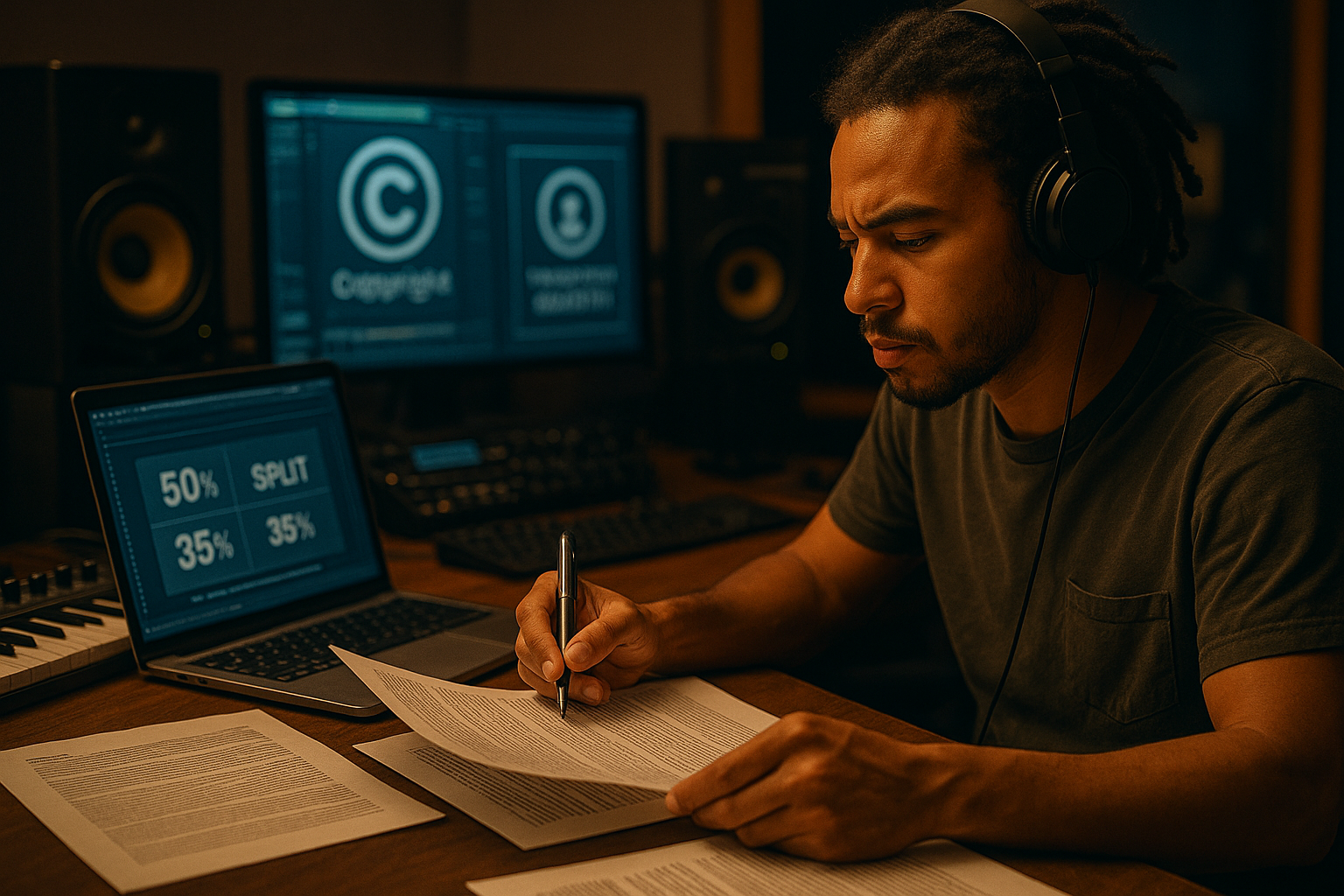
Artists who register their work early control how it gets used in AI training datasets.
You can opt out of scraping by updating metadata and using technical barriers before distribution.
Licensing your catalogue directly puts you in the negotiation, not outside it.
Documenting your creative process creates evidence that protects you when disputes over originality arise.
AI models are scraping your masters, your lyrics, and your likeness without asking. This article walks you through the tactical moves you need to make now to protect what you own. We're not waiting for the law to catch up.
You don't need to wait for Congress or a streaming platform to decide what happens to your catalogue. You can take action now.
AI companies are already training their models on music. Some have licensing deals. Others are scraping content and assuming silence means permission. If you don't assert ownership and set boundaries early, you may find your sound reconstructed, repackaged, and monetized without your involvement.
This is not about fear. It's about control.
Here's what you can do today.
Understand what you actually own
Before you protect anything, confirm what rights you hold.
If you own your masters and your publishing, you control the recording and the composition. That means you decide who uses your music, in what format, and under what terms.
If you signed away rights to a label, distributor, or publisher, review those agreements. Look for clauses around derivative works, synchronization, and mechanical licensing. Some contracts include language broad enough to cover AI training without naming it directly.
Your distributor may have already opted you in. If you didn't retain full ownership in writing, someone else may be negotiating on your behalf without asking.
Your distributor just did a deal with AI walks through what to look for in those contracts.
Register your works with the u.s. copyright office
Copyright exists the moment you create something. But registration is what gives you standing to enforce it.
If your music isn't registered, you can't file a claim for statutory damages or attorney's fees in federal court. That limits your ability to respond if your work is used without permission.
Registration is cheap. It's straightforward. And it establishes a public record of ownership that AI companies and platforms can't ignore.
File as soon as your track is finalized. Don't wait until distribution. The earlier you register, the stronger your position.
Opt out of AI training where possible
Some platforms now allow creators to opt out of having their content used for machine learning.
YouTube, SoundCloud, and Spotify don't currently offer blanket AI opt-outs for music uploads. But that doesn't mean you can't state your terms elsewhere.
Add a rights statement to your website, Bandcamp page, and social media bios. Make it clear that your music is not available for use in AI training, model development, or derivative generation without a signed agreement.
This won't stop bad actors. But it creates a documented position that strengthens your case if your work is scraped without consent.
Use plain language. No legal jargon. Just state what you allow and what you don't.
Example: "All recordings and compositions are protected by copyright. Use in AI training, machine learning models, or generative systems is prohibited without express written permission."
Watermark and metadata-tag your files
Metadata travels with your music. It identifies you as the creator, the owner, and the rights holder.
Make sure every file you upload includes:
- Artist name
- Track title
- ISRC code
- Copyright year and holder
- Publisher and PRO affiliation (if applicable)
Distributors auto-populate some of this. But not all. And once a file is ripped, reposted, or archived, metadata is often the only breadcrumb back to you.
Some artists are also embedding inaudible watermarks using tools like Audible Magic or AudioSeal. These don't prevent scraping, but they make it easier to trace where your music ends up.
If you're releasing stems, demos, or unmastered versions, metadata matters even more. That's the material most likely to end up in sample libraries or model training sets.
Don't give away sync rights in perpetuity
Sync deals can be solid revenue. But read the fine print.
Some agreements grant the buyer rights "in perpetuity, throughout the universe, in all media now known or hereafter devised." That last phrase is a trapdoor. It can include AI-generated content, virtual environments, and uses that don't exist yet.
Negotiate term limits. Cap the usage window. Specify formats. If a brief includes AI integration or generative media, ask for transparency and additional compensation.
Sync or Sink covers how to structure deals that don't gut your long-term control.
Independence gives you the leverage to walk away. Use it.
Why Your Independence Is Your sync advantage breaks down why ownership matters when negotiating placements.
Monitor where your music appears
You can't protect what you can't see.
Set up Google Alerts for your artist name, track titles, and label name. Use tools like Audible Magic, Pex, or HAAWK to track unauthorized uploads and sample usage.
Check SoundCloud, YouTube, TikTok, and Bandcamp regularly. Look for remixes, covers, and reinterpretations that you didn't approve. Some will be fan-made and harmless. Others may be AI-generated derivatives being monetized without credit.
If you find your work being used without permission, document it. Screenshot the page, download the file, and note the upload date. Then issue a DMCA takedown or contact the platform directly.
Most platforms comply fast when you provide proof of ownership. But only if you're watching.
Build direct relationships with your listeners
The more your audience knows your sound, the harder it is for someone else to replicate it and claim originality.
AI can mimic style. It can reconstruct melodies. But it can't replace the context you build with your listeners through newsletters, voice notes, live streams, and behind-the-scenes content.
When your fans know how you work, they notice when something feels off. They question where it came from. That cultural awareness is a layer of protection no legal team can provide.
Stay visible. Stay vocal. Let your audience be your first line of defense.
Don't assume silence protects you
AI companies are moving faster than most legal frameworks. Waiting for a court case to settle or a law to pass means giving up ground you may not get back.
You don't need to become a copyright attorney. You just need to assert ownership clearly, early, and consistently.
Register your work. State your terms. Monitor your catalogue. Negotiate from a position of control.
Your music is intellectual property. Treat it like the asset it is.
Ready to streamline your workflow?
Stop piecing together spreadsheets and scattered notes. Join the waitlist for Music Artist Manager and get your entire rollout in one place.
Written By
Gavin Alexander
Senior Marketeer
As the founder of Music Artist Manager, Gavin has spent years at the intersection of music and technology. Seeing firsthand how chaotic release rollouts and split sheets can be, he designed a platform that brings major-label infrastructure to independent artists and their teams. He writes extensively about industry trends, artist leverage, and workflow optimisation.