What Music Artist Manager actually asks you during onboarding, and
How Music Artist Manager uses your onboarding answers to personalise manager advice, watch your distributor's terms and write stage-specific strategy.
Key Takeaways
The onboarding questionnaire isn't a formality. It directly configures three live systems that run your account.
Your answers feed the manager chat system prompt, the distributor-specific terms monitoring engine, and every executive summary you generate.
Conditional branching means a touring band sees different questions than a bedroom producer, capturing what actually matters to your setup.
Resume anytime without losing progress. The data sits ready until you finish, then everything downstream starts working immediately.
Most software onboarding exists to get you to the dashboard as fast as possible. Music Artist Manager's onboarding questionnaire does the opposite: it asks for specific details about your distributor, your stage and your goals, then uses those answers to configure three separate systems that run for the duration of your account. Here's how a conversational setup form turns into personalised terms monitoring, stage-appropriate strategy advice, and manager chat that already knows your context from day one.
Most software onboarding exists to fill a database field. You answer questions, the form closes, and nothing you said matters again.
Music Artist Manager's onboarding questionnaire is different because the answers do work. Three separate live systems key directly off what you tell us in that initial conversation. The AI manager's first response already knows your distributor and your stage. The terms of service monitoring engine watches the platforms you actually use. The strategy documents reflect the goals you stated, not a template written for everyone.
This matters because personalisation usually means a mail merge with your name in it. Here, it means the product cannot function correctly without knowing specific facts about your setup. This article explains what those facts are, where they go, and why the questionnaire is structured as a resumable conversation rather than a long static form.
Who this is for
This article is for any artist or manager setting up a new Music Artist Manager account, and specifically for anyone evaluating whether a tool that claims to be personalised actually is.
If you have ever signed up for a service, answered twenty questions, and then never seen those answers reflected anywhere in the product, you will recognise why we are writing this down. The onboarding questionnaire is not a formality. It is the entry point for three distinct features that cannot work without it.
What the questionnaire captures and why each field exists
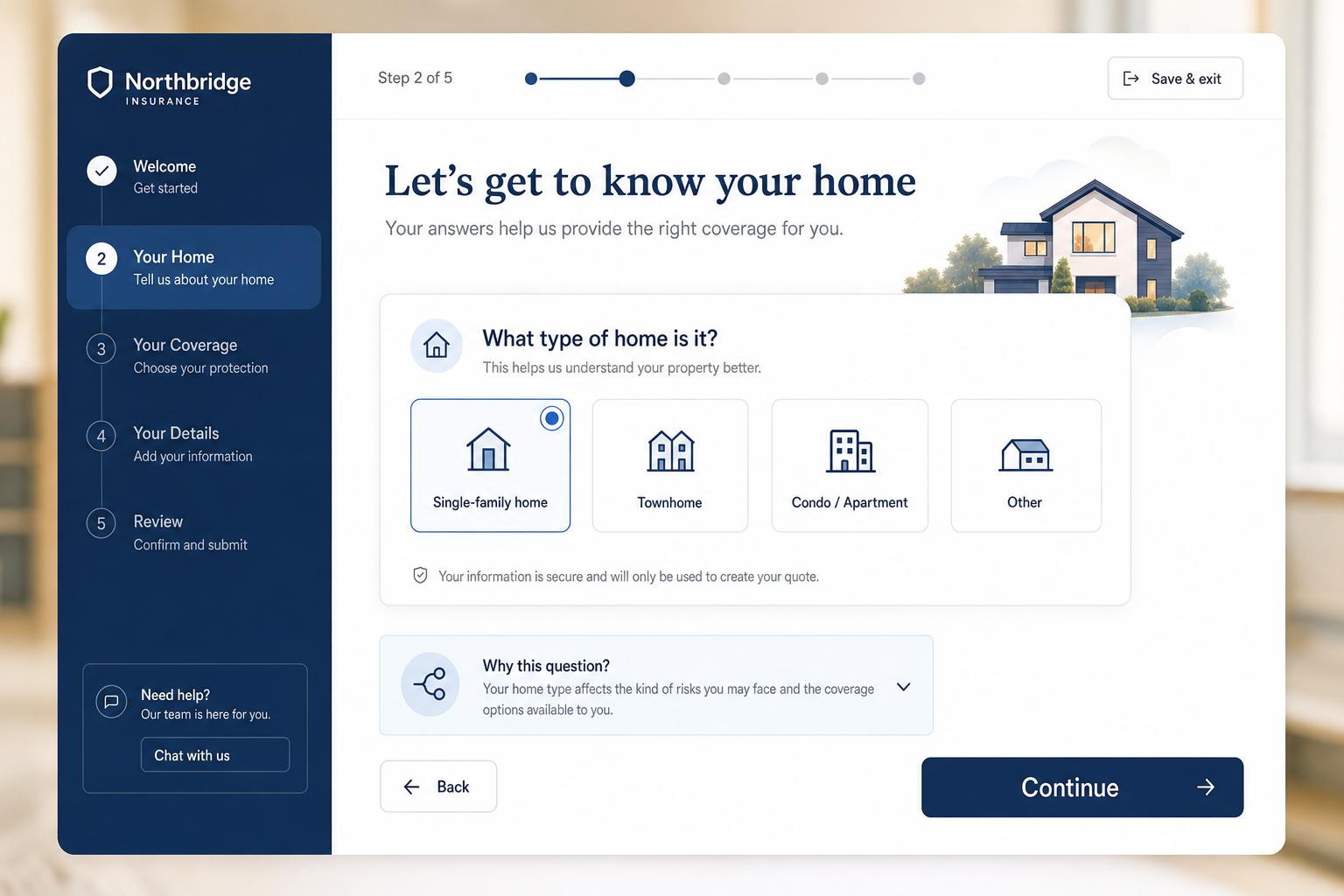
The questionnaire is organised as a conversation. It branches conditionally, which means the questions change based on earlier answers. A solo electronic producer does not see the same questions as a four-piece band with a live set.
It captures, among other things:
- Your primary distributor (DistroKid, TuneCore, CD Baby, or independent)
- Your current career stage (pre-release, early releases, regular output, catalogue with momentum)
- Your immediate goals (first release, growing streams, building a touring schedule, managing a back catalogue)
- Your release cadence and format preferences
Each answer feeds a specific downstream system. The distributor you name determines which platform terms of service changes Music Artist Manager monitors on your behalf. The career stage and goals shape the AI manager's system prompt, which means the advice you receive in chat reflects your actual situation rather than starting from zero every time. The strategy documents generated later reference these same data points, so they read as contextual rather than generic.
How it connects to live systems
Manager chat
The AI manager's system prompt is assembled partly from your onboarding answers. When you open Manager chat for the first time, the conversation already knows whether you are pre-release or managing a catalogue, and it already knows which distributor you use.
This is not magic. It is a system prompt populated with structured data. But it is the difference between a chat that asks you to repeat your setup every time and one that starts from your stated position.
Terms of service monitoring
Music Artist Manager watches for changes to platform terms that affect independent artists. The monitoring engine keys directly off the distributor you named during onboarding.
If you told us you use DistroKid, we watch DistroKid's terms. If you told us you use TuneCore, we watch TuneCore's terms. This only works because the onboarding questionnaire captured that distributor in the first place and stored it as a referenceable field.
We do not monitor every platform in the industry and then filter the alerts. We monitor the platform you told us you use. That is a scope decision, and it depends entirely on onboarding data being accurate and present.
Strategy documents
The executive summary and strategy documents generated by Music Artist Manager are written through the lens of your stated stage and goals. A pre-release artist receives different strategic advice than someone managing a catalogue with consistent monthly streams.
This is not a template with variables swapped in. The document generation references your onboarding data as context, which means the advice reflects your actual situation rather than a one-size-fits-all playbook.
Why it is a conversation, not a form
The questionnaire is structured as a multi-section wizard with conditional branching. That is a technical description. In plain terms, it asks you a question, listens to the answer, and then asks the next question based on what you just said.
This is intentional. A long static form with every possible question listed at once is faster to build but harder to complete. It front-loads cognitive load, and it asks questions that may not apply to you.
A conversational flow lets us ask only the questions that matter for your setup. If you are a solo artist with no band, you do not see questions about splits or lineup changes. If you have not released anything yet, you do not see questions about catalogue strategy.
The questionnaire can be left partway through and resumed later without losing progress. This is not a minor convenience. If you start onboarding on a phone and want to finish it on a laptop, you can. If you need to check your distributor login details before answering, you can close the questionnaire and come back.
What happens after you complete it
Once onboarding is complete, three things change immediately:
1. Manager chat becomes contextual. The first message you send receives a response that already knows your stage and distributor.
2. Terms of service monitoring becomes active for your named platform. You will see alerts only for changes that affect the distributor you told us you use.
3. Strategy documents and insights reflect your stated goals. The executive summary is not generic. It is written for the stage and goals you specified.
If you return to Music Artist Manager after a few days away, the catch-up modal reflects genuine state change. It does not say "welcome back" with no context. It tells you what changed while you were gone, based on your onboarding data and subsequent activity.
What this is not
This article is about the onboarding questionnaire itself and the three systems it feeds. It is not a full explanation of Manager chat, the executive summary, or the terms of service monitoring engine. Those are separate features with their own articles.
The onboarding questionnaire is the input mechanism. It captures structured data that makes those other features work. Without it, the AI manager starts every conversation from zero, the terms monitoring engine has no platform to watch, and the strategy documents are written for no one in particular.
Why this matters for evaluating the product
Most tools that claim to be personalised are lying. They mean you can change a colour scheme or reorder a dashboard. Music Artist Manager's personalisation is mechanical. The product cannot function correctly without knowing specific facts about your setup, and onboarding is where those facts are captured.
If you are evaluating whether this tool is worth your time, complete the onboarding questionnaire and then open Manager chat. Send a message that references your distributor or your current stage. The response will reflect what you told us during onboarding, because that data is live in the system prompt.
This is not a parlour trick. It is how the product is built. The onboarding questionnaire is load-bearing infrastructure, not a signup formality.
Ready to plan your next release?
Stop piecing together spreadsheets and scattered notes. Get your free release strategy and keep your whole rollout in one place.
Written By
Gavin Alexander
Senior Marketeer
As the founder of Music Artist Manager, Gavin has spent years at the intersection of music and technology. Seeing firsthand how chaotic release rollouts and split sheets can be, he designed a platform that brings major-label infrastructure to independent artists and their teams. He writes extensively about industry trends, artist leverage, and workflow optimisation.