The 'forever content' strategy: How repurposing micro-moments builds an evergreen catalogue of fan engagement
Learn how to turn one studio session into three months of content using a tactical capture and repurpose system.
Key Takeaways
Stop thinking in album cycles. Start building a content vault that feeds your audience for months.
One studio session contains dozens of moments. Your fans don't need polished posts. They need proof you're working.
Capture the micro-moments. Film the coffee break. Record the rough take. Screenshot the text thread with your producer.
These aren't throwaway clips. They're the raw material that keeps your presence consistent when the release window closes.
How to build a forever content vault (and stop scrambling for posts every week)
Most artists treat content like a panic button. Song drops in two weeks. Better post something. Studio session happened yesterday. Should've filmed it. The cycle repeats, and you stay two steps behind your own release calendar.
Here's the fix: stop creating content in real time. Start banking it.
A forever content vault is a planned capture system that turns one studio day, one rehearsal, or one writing session into 30 to 90 pieces of usable content. You film with intent. You organize with structure. You deploy on a schedule that keeps your channels warm between releases, during rollouts, and in the long gaps where most artists go silent.
This is not about posting more. It's about posting smarter using what you already have.
What counts as a micro-moment
A micro-moment is any piece of real activity that shows process, personality, or proximity to the music. It does not need to be polished. It needs to be honest.
Examples:
- A 6-second clip of you adjusting a mic in the vocal booth
- A screenshot of your DAW with a caption explaining the drum pattern
- A 15-second video of your engineer tweaking the mix while you listen
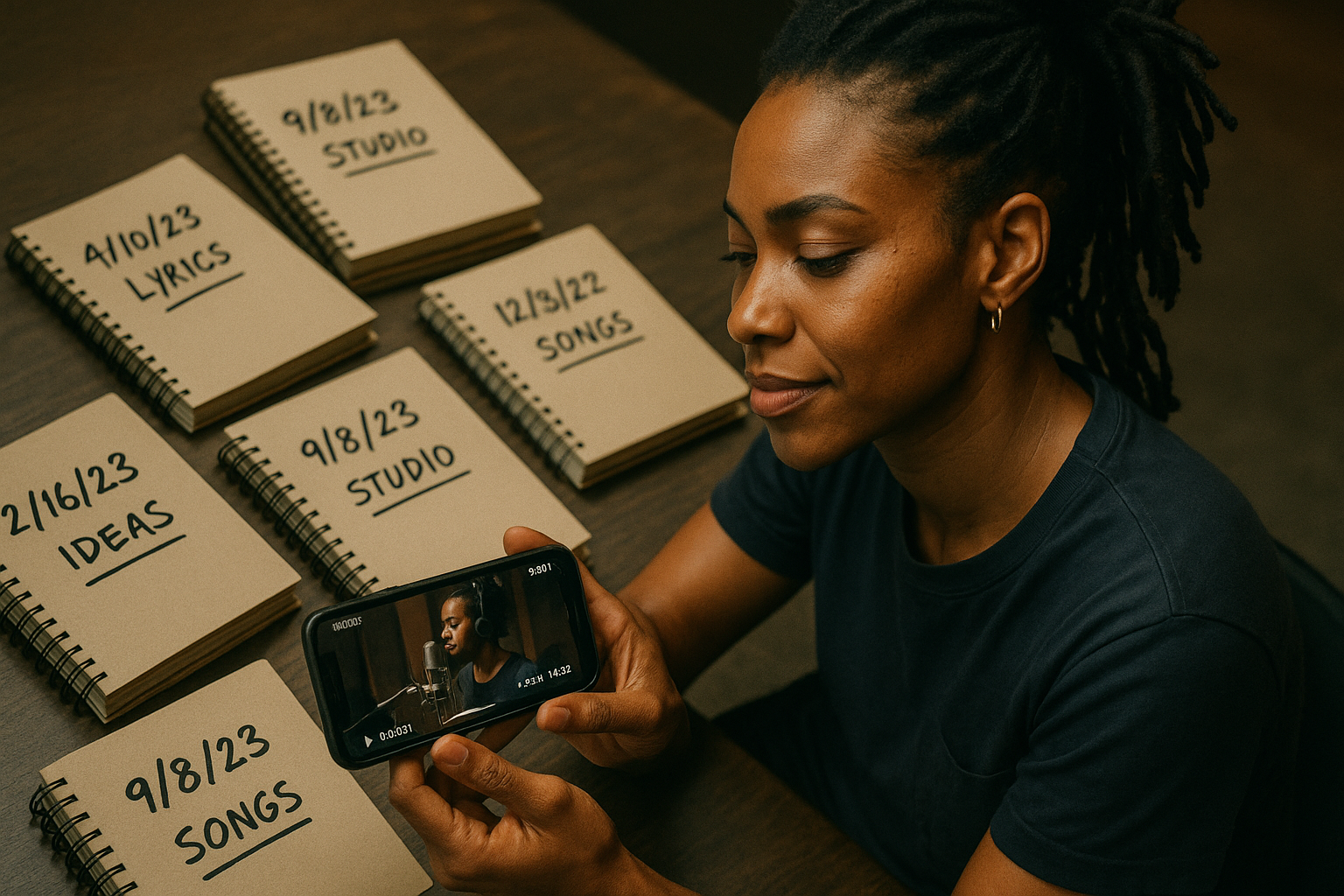
- A photo of lyric scribbles on your phone or notebook
- A reaction take after nailing a vocal run
- Your producer laughing at a mistake during playback
These are not B-roll. They are proof of work. Fans do not follow you for the highlight reel. They follow for access. Micro-moments give them that access without requiring you to overshare or break creative flow.
How to capture without killing momentum
You do not need a content team. You need a phone, a tripod, and a pre-session checklist.
Before you start working, set up two angles. One wide on the room. One tight on you or the gear. Let them roll. Do not perform for the camera. Do your actual work. The content is the byproduct, not the goal.
After the session, trim the footage into labeled folders by type: vocal takes, gear closeups, reactions, environment shots, talking head moments. Tag by mood or theme if you want to get specific later. The key is to make it retrievable. If you cannot find it in under 60 seconds, you will not use it.
This process takes 10 minutes after a four-hour session. That is the trade. Ten minutes for eight weeks of content.
How to structure the vault for long-term use
Your vault should be organized around content types, not dates. When you need to fill your grid or your story queue, you are pulling from categories, not searching through random footage from six months ago.
Sample structure:
- Process content: studio clips, writing sessions, production breakdowns
- Personality content: off-camera moments, commentary, unfiltered takes
- Proximity content: gear shots, environment stills, mood-driven visuals
- Context content: talking head explanations, track backstories, creative decisions
Label everything with the track or project it relates to. When the single drops, you already have 15 supporting pieces queued and ready to post. You are not scrambling. You are executing a plan you built two months ago.
How to deploy without oversaturating
More content does not mean more posts. It means more options and less pressure.
Your vault gives you the ability to stay present without burning out. You are not filming something new every day. You are pulling from an archive that already exists. That changes the entire relationship you have with content.
Post three times a week instead of seven. But make sure those three posts are always on time, always relevant, and always tied to your current project or your next one. Consistency beats volume. The vault makes consistency possible without requiring daily creative output.
Use stories and reels to surface micro-moments in real time. Use grid posts for more considered pieces. Repurpose the same moment across formats. A 10-second reel becomes a carousel. A talking head clip becomes a caption. A photo becomes a story with a voiceover. You are not repeating yourself. You are reaching different parts of your audience with the same source material.
The cultural compounding effect explains why this steady presence matters more than one-off viral moments.
How to use the vault during release cycles
Most artists ramp up content two weeks before release and disappear two weeks after. That is when momentum dies.
The vault lets you stay active before, during, and after. You are not depending on the release itself to generate content. You already captured the making of it. Now you control the release of that narrative over time.
Pre-release: surface process content. Show the work. Build anticipation through proximity, not hype.
Release week: let the music lead. Support it with context content that explains decisions, shares inspiration, or walks through specific moments in the track.
Post-release: keep the conversation open. Share fan reactions. Post alternate takes. Explain what you learned. Use personality content to stay human while the song runs its campaign.
This approach keeps you relevant beyond the algorithm's two-week attention span. It also builds a deeper relationship with listeners who want to understand how the music got made, not just hear the final version.
Why Independent Artists Are Wasting Their Release Budget (And What the Data Says to Do Instead) breaks down how content strategy directly impacts streaming performance and fan retention.
How to make old content feel new again
Your vault does not expire. A rehearsal clip from six months ago still works if the framing is right.
Recontextualize old moments with new captions. A studio clip from your last project becomes a "this is where it started" post when you announce your next single. A lyric snippet you filmed a year ago resurfaces when that line becomes a fan favorite on streaming.
You are not recycling. You are creating a narrative thread that connects past work to present output. Fans appreciate continuity. They want to see how you have grown. The vault gives you the material to show that progression without needing to shoot something new every time.
Use anniversaries, milestones, or project completions as natural moments to resurface older content. "One year since we tracked this" or "500k streams later, here's the original demo" are both valid content plays that require zero new production.
How to avoid the trap of content for content's sake
Not every moment needs to be posted. Not every clip needs to be shared.
The vault is a filter, not a dump. You capture widely so you can choose selectively. That choice is what keeps your content sharp. If a piece does not support your current narrative, does not reflect your sound, or does not add to the relationship you are building with your audience, leave it in the vault.
Quality is still the standard. The vault just makes it easier to meet that standard consistently because you are working from abundance, not scarcity. You have options. That lets you be more intentional about what you share and when.
The emotional ROI shows how strategic content builds long-term fan value, not just short-term engagement.
How to start building your vault this week
Pick your next session. Studio, rehearsal, writing day, it does not matter. Bring a tripod and a phone. Set up two angles. Press record. Work.
After the session, label and file the footage. Do not edit it yet. Just organize it so you can find it later.
Next week, pull three clips. Post them across your channels with context that ties them to your current project or your next release. Watch how much easier it is to stay consistent when the content already exists.
Repeat this process every time you work. In 90 days, you will have a vault deep enough to carry you through a full release cycle without needing to shoot anything new.
You are not creating more work. You are frontloading the work so your content strategy runs on inventory, not inspiration. That is the difference between artists who post when they remember and artists who show up like professionals.
Build the vault. Control the narrative. Stay present without burning out.
Ready to streamline your workflow?
Stop piecing together spreadsheets and scattered notes. Join the waitlist for Music Artist Manager and get your entire rollout in one place.
Written By
Gavin Alexander
Senior Marketeer
As the founder of Music Artist Manager, Gavin has spent years at the intersection of music and technology. Seeing firsthand how chaotic release rollouts and split sheets can be, he designed a platform that brings major-label infrastructure to independent artists and their teams. He writes extensively about industry trends, artist leverage, and workflow optimisation.