Why independent artists must own a community, not chase a playlist
Learn why niche communities now drive 60% of independent discovery, and how to build real fan trust before your next release.
Key Takeaways
Over 60% of new independent artist discovery now happens in niche communities, not playlists.
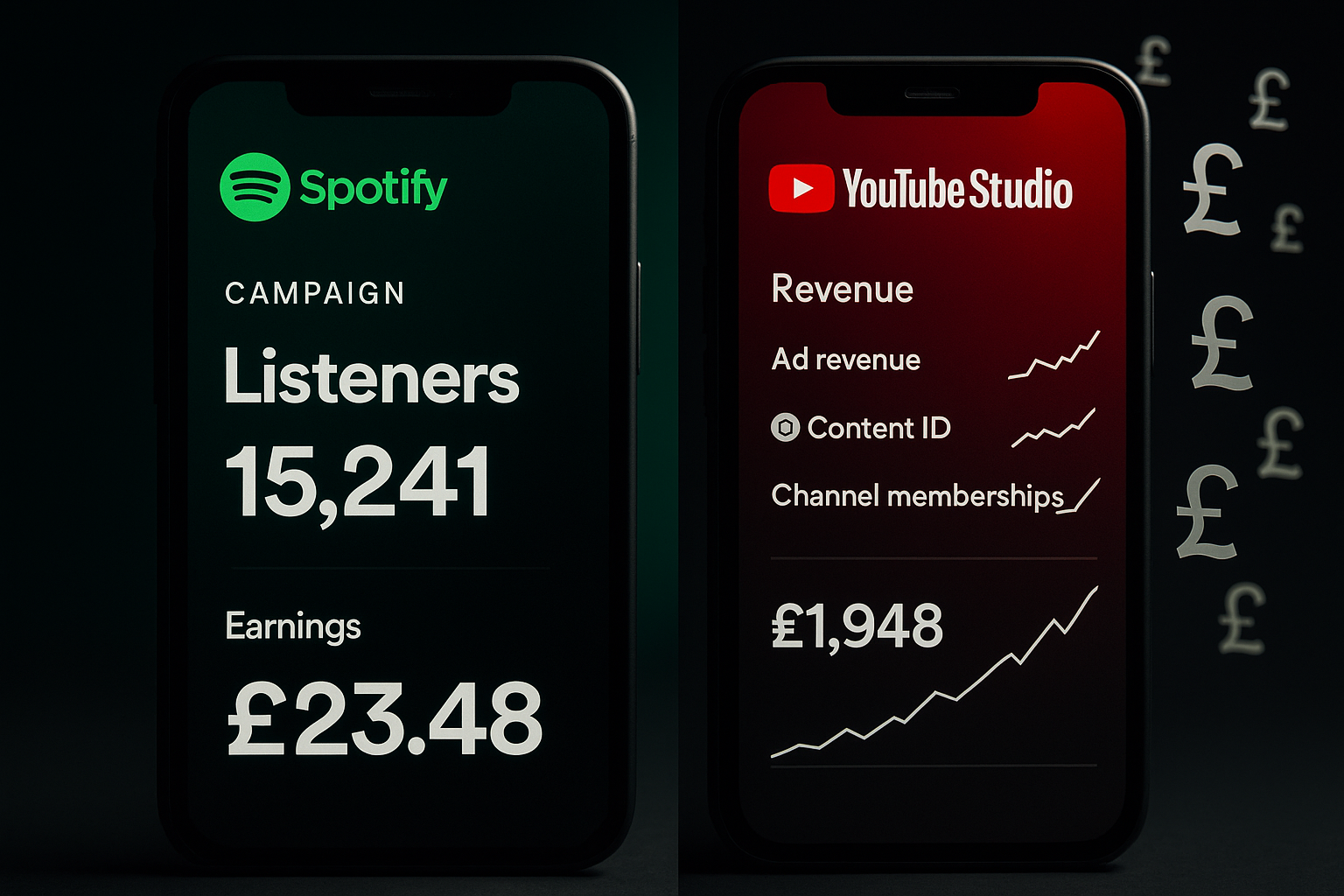
Streaming alone pays fewer than 1.2% of DIY artists more than £10,000 per year.
Community trust converts higher than algorithmic discovery because the audience is already self-selected.
Artists who contribute to communities before promoting their music see the strongest long-term fan conversion.
Playlist adds no longer drive discovery the way they did three years ago. Independent artists who build trust inside niche communities before they release music are seeing better conversion, stronger fan retention, and more direct revenue than artists who rely purely on algorithmic placement. This is not a theory — it is the structural shift happening across streaming, community platforms, and direct-to-fan economics in 2026.
New data from mid-2026 reveals that over 60% of new independent music discovery is now happening through hyper-localised, genre-specific community platforms, not global streaming playlists. At the same time, MIDiA Research confirms fewer than 1.2% of DIY artists earn more than £10,000 annually from streaming alone, with 76% relying on live and merchandise to sustain income. The playlist era isn't over, but it is no longer the engine. Managers who are still building release strategies around editorial pitching and Spotify algorithms are operating one cycle behind.
The macro shift is structural
As streaming has become commoditised, global playlists have lost algorithmic edge for breaking new artists. The catalogue is simply too large. What has emerged in its place: genre-specific Discord servers, niche subreddits, Substack communities, regional SoundCloud scenes, and genre-tagged TikTok sub-cultures that function as tastemaker communities. These communities have high trust, low noise, and strong conversion rates to real fans. Artists who anchor themselves inside one of these communities (and are seen as members, not promoters) are consistently outperforming artists whose strategy is purely platform-side.
The second layer: indie artists retaining 80–90% of direct-to-fan revenue when using Bandcamp and similar platforms (up from an estimated 50–60% in 2020) means the economic incentive to own your audience compound has never been stronger.
What community-first discovery actually means
Rather than distributing music to platforms and hoping algorithmic promotion picks it up, community-first artists embed themselves in pre-existing niche communities before release. They participate, contribute, and build trust. The release then travels inside the community via word of mouth, a fundamentally different distribution vector than a playlist add.
Why this works structurally
- Community members are self-selected fans of the genre, not passive listeners
- Conversion from community discovery to social follow, save, and purchase is significantly higher than playlist-driven streams
- Community trust is a moat. Once established, it cannot be bought by a major label budget
Key platform types to understand
- Discord servers: genre-specific, high-engagement, real conversations
- Reddit communities: long-tail discovery, high search indexability
- Substack: writers who curate genre/scene communities with high-spend readership
- Niche TikTok sub-cultures: #DarkAcademia, #LofiStudy, #AfroPunk
- Genre-specific YouTube channels: curator networks with loyal subscriber bases
Reality check
This strategy is not a shortcut. It requires genuine participation: posting in communities with intent to contribute, not purely to promote. Artists who approach communities transactionally are quickly identified and rejected.
Best fit: Artists with a clearly defined sonic identity and a niche genre angle. Bedroom pop, lo-fi, neo-soul, hyperpop, ambient, metalcore sub-genres. Any act that belongs somewhere specific benefits most. Generic "pop" acts with no community home will struggle.
Not a replacement for: Strong music, consistent release cadence, and a functional social presence. Community discovery amplifies quality. It does not substitute for it.
How to build community-first discovery
1. Audit your scene
Identify the top 5–10 communities (Discord, Reddit, Substack, YouTube) that are most active around your genre. Look for engagement quality, not just size.
2. Lurk before you post
Spend two weeks consuming content, understanding the language and norms of each community. Note what gets praised, what gets ignored, what gets rejected.
3. Become a contributor first
Share other artists' work, write thoughtful comments, answer questions. Build your community reputation before introducing your own music.
4. Time your release to the community
When you do share your music, frame it in community language. Reference the sub-genre, acknowledge influences the community respects. Post as a fellow fan, not as a self-promoter.
5. Map your community touchpoints in MAM
Use Music Artist Manager to track which community platforms are driving saves, profile visits, and follower growth. Double down on the channels generating the highest-quality attention.
6. Build a recurring community presence
The most effective community-anchored artists post consistently in 2–3 communities, not sporadically across 10. Commit to depth over breadth.
7. Convert community engagement to owned audience
Every community interaction should funnel (directly or indirectly) toward your email list or direct-to-fan platform. Community trust is borrowed. Your list is owned.
The new A&R question
Playlist chasing is a passive strategy. It places your career in the hands of an algorithm you cannot influence and an editorial team you cannot reach. Community-first discovery is an active, compounding strategy: the trust you build in a community does not depreciate. Every artist who treats a niche community as infrastructure (rather than a promotional channel) is building a discovery machine that no platform update can switch off. The best managers in 2026 are not asking "how do we get on the playlist?" They are asking "which community will claim this artist as their own?" That is the new A&R question.
Use Music Artist Manager's Audience Insights dashboard to identify which platforms and community touchpoints are generating your highest-quality fans, then build your community strategy around the channels that are already working.
Ready to streamline your workflow?
Stop piecing together spreadsheets and scattered notes. Join the waitlist for Music Artist Manager and get your entire rollout in one place.
Written By
Gavin Alexander
Senior Marketeer
As the founder of Music Artist Manager, Gavin has spent years at the intersection of music and technology. Seeing firsthand how chaotic release rollouts and split sheets can be, he designed a platform that brings major-label infrastructure to independent artists and their teams. He writes extensively about industry trends, artist leverage, and workflow optimisation.