Streams don't build fans: Why artists need to stop chasing virality
Why TikTok virality doesn't convert to fandom, and how independent artists can build sustainable income through direct fan monetisation instead.
Key Takeaways
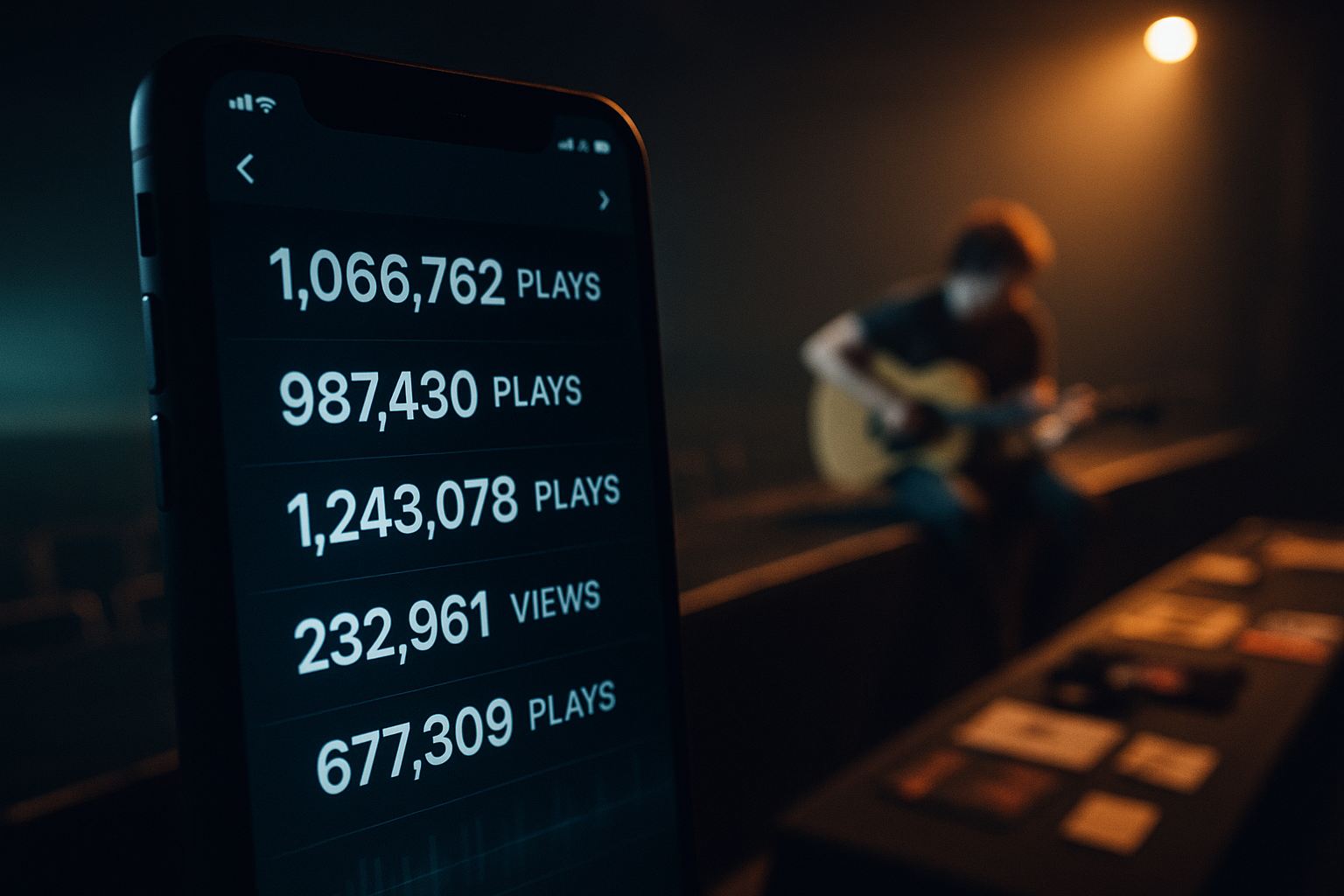
High streaming numbers frequently mask zero commercial traction; streams do not automatically equal fans.
The superfan layer—listeners willing to spend £50 to £300+ per year—is decoupled from passive background listening.
Measure artist health by direct email signups, ticket sales, and merchandise conversion rather than monthly listeners.
Structure your business model around monetizing dedicated relationships rather than maximizing low-yield stream volume.
Streams don't build fans. That's not opinion, it's data. MIDiA Research tracked 10,000+ music consumers and found that over 85% of viral songs fail to convert discoverers into followers or repeat listeners.
In September 2025, MIDiA Research published "All Eyes, No Ears: Why Virality Is Not Building Fandom," a report analyzing 10,000+ music consumers across global markets. The finding was stark: over 85% of viral songs fail to convert discoverers into followers or repeat listeners. A track might hit 2 million TikTok views in a week and add zero net followers to the artist's profile. This is not a bug. It is now the norm.
Here's the adjacent data point that most independent artists are ignoring: YouTube is the #1 music discovery platform globally according to MIDiA's Q4 2024 survey, not TikTok. Yet 76% of independent artists still prioritize TikTok for discoverability because it feels easier and cheaper. The strategy-reward mismatch is costing them millions in lost audience depth.
The music industry has been operating on a collective delusion for five years: viral moments on short-form video platforms translate to fan acquisition. New data from Q4 2024 through Q1 2026 exposes this as fundamentally wrong. Virality produces immediate stream spikes. It almost never converts into sustained fandom or long-term engagement. The underlying shift is structural and irreversible: streams have decoupled from fandom.
The Old Model Is Dead
For the past decade, the music industry playbook looked like this: generate streams → get algorithmic playlisting → accumulate listeners → hope some convert to fans. This model assumed that stream volume was a leading indicator of fan growth. It was never true, but the illusion held long enough to shape an entire generation's marketing strategy.
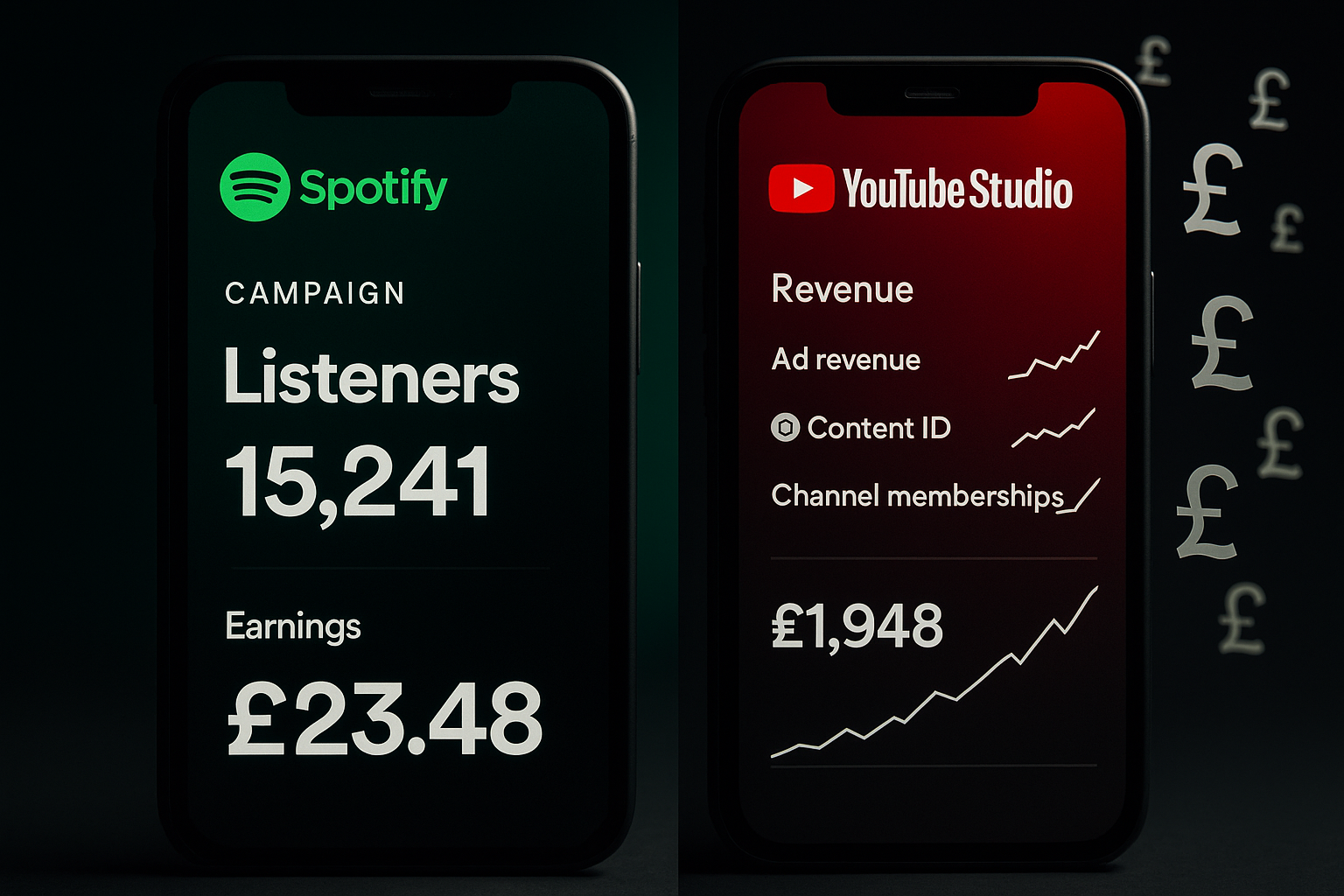
Streaming value per artist has now stagnated. Spotify reports that only 22,300 artists earned more than $10,000 annually in 2025, out of 11 million+ creators on the platform. That is a 0.2% success rate. The long tail is not just long. It is economically inert.
Meanwhile, the three major labels (Universal, Sony, Warner) have stopped relying on stream volume for artist monetization. Instead, they extract 20%+ of revenue from what the industry calls "expanded rights": merchandise sales, live ticket presales, brand partnerships, and fan subscriptions. These rights grew 21.5% in 2025 and now represent 11.3% of recorded music revenue industry-wide. That percentage will keep climbing.
Independent artists are still trapped in the old model. They chase streams, hope for playlisting, and repeat. This is not a strategy. It is a hamster wheel.
The Virality Trap: Why TikTok Doesn't Build Fans
Social algorithms optimize for engagement, not conversion. A 10-second hook that works on TikTok is designed to make a user stop scrolling, not turn them into a paying fan. The platform's incentive structure rewards content that holds attention for fractions of a second. It does not reward content that builds lasting relationships.
This explains the 85% failure rate. Virality is a spotlight, not a foundation. When a song goes viral on TikTok, the vast majority of viewers interact with the content, not the artist. They save the audio for their own video, or they scroll past. They do not click through to Spotify. They do not follow the artist's profile. They do not join an email list or buy a ticket.
The economic logic is clear: virality generates awareness, but awareness without conversion is just noise.
Where Real Discovery Actually Happens
YouTube remains the dominant music discovery engine because it supports passive listening, context-rich content, and repeat engagement. A fan can discover a song on YouTube, listen to the full track, watch a music video, explore the artist's back catalogue, read comments, and subscribe. All of this happens within a single session. The platform's design encourages depth, not just breadth.
Streaming playlists (algorithmic and editorial) drive sustained discovery because they place your music in curated listening contexts. A user who adds your song from a Discover Weekly playlist or a New Music Friday slot is already in listening mode, not scrolling mode. The intent is different. The conversion rate is higher.
Word-of-mouth through DMs, Discord servers, and private community groups produces the highest-converting fans because the recommendation comes with social proof. When a trusted friend or community member shares a song, the listener attributes value before they even press play.
TikTok drives momentary attention. YouTube, playlists, and community referrals drive fandom.
The Expanded Rights Thesis: Build Income Outside Streaming
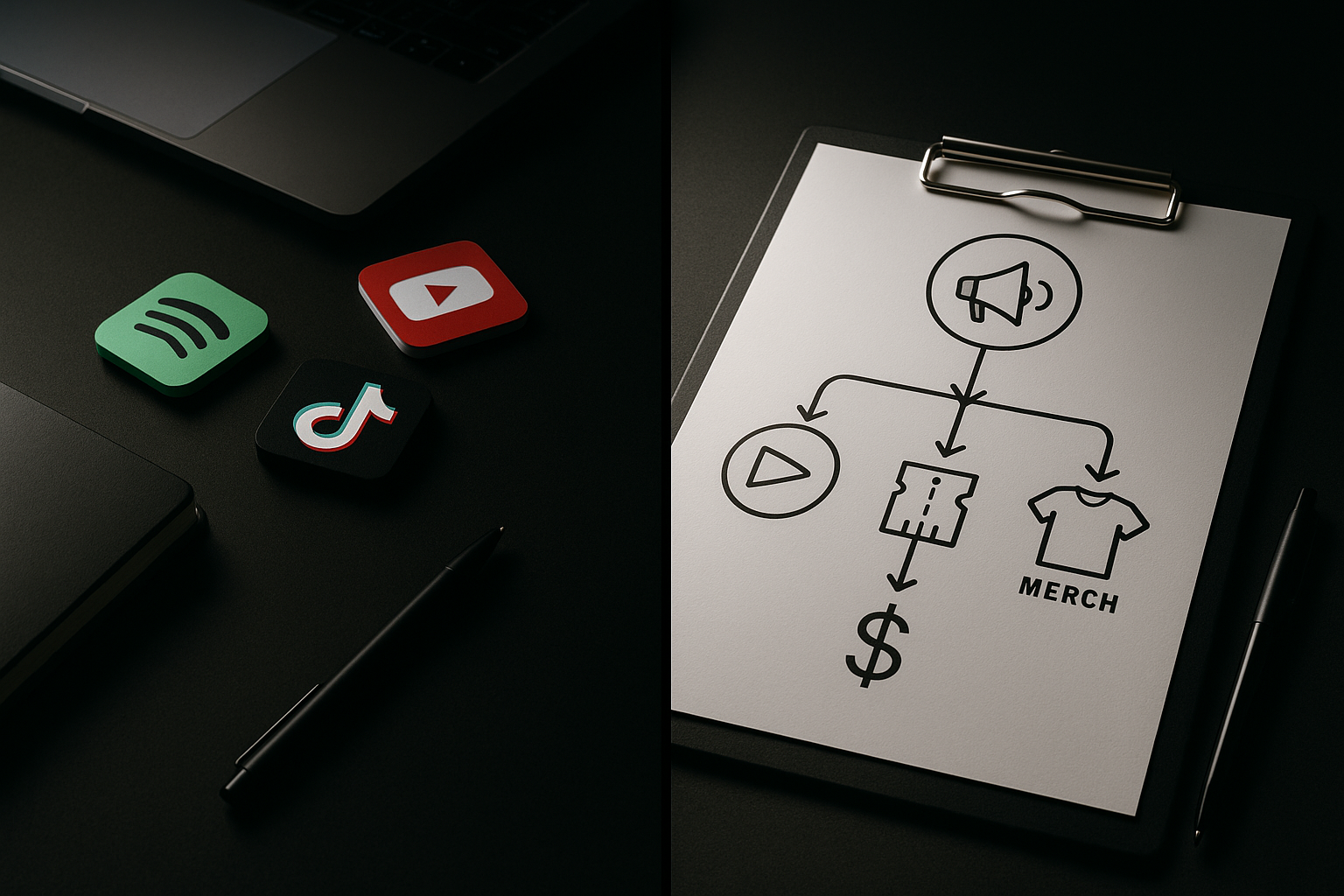
Expanded rights revenue is the industry's answer to the streaming payroll problem. If you cannot make money from streams alone, you monetize the fan relationship directly through merchandise, live events, exclusive content, and memberships.
Bandcamp has paid independent artists $154 million+ since 2020, with $19 million paid out in 2025 alone. Patreon supports over 250,000 creators globally, many of them musicians building stable monthly income from 50 to 500 paying subscribers. These platforms prove that direct fan monetization is not theoretical. It is already working at scale.
The fandom-revenue flywheel looks like this: deep fandom drives higher willingness to spend on merch, live shows, and exclusives. That direct revenue funds better content, better live experiences, and better fan engagement. Deeper fandom results. This is defensible. Virality is a one-shot lottery ticket.
The Fan Pyramid: How to Measure What Actually Matters
If you want to build a sustainable music career, you need to stop measuring vanity metrics and start measuring fandom depth. Here is the fan pyramid structure that matters:
**Tier 1: Aware** People who have heard your music but have not taken any action. This includes TikTok viewers, playlist skippers, and one-time listeners. These are not fans. They are potential fans at best.
**Tier 2: Engaged** People who have followed you on a platform, saved a song, or interacted with your content multiple times. These are early-stage fans. They know who you are.
**Tier 3: Connected** People who have joined your email list, Discord server, or community group. These are mid-stage fans. They want more from you than just music.
**Tier 4: Paying** People who have bought merch, attended a show, subscribed to Patreon, or purchased directly from Bandcamp. These are your core fans. They fund your career.
The ratio of Tier 1 to Tier 4 determines your economic health. If you have 100,000 social followers but only 100 email subscribers and 10 paying fans, you have a conversion problem, not a discovery problem. The goal is not to grow Tier 1. The goal is to move people down the pyramid into Tier 4.
How to Audit Your Fan Pyramid (This Week)
Count your followers across all platforms: Instagram, TikTok, Spotify, YouTube, Twitter, everywhere. Write down the total.
Now measure your community depth: email subscribers, Discord or Telegram members, Patreon supporters, Bandcamp followers. Write down those totals.
The ratio of social followers to email/community subscribers should be 10:1 or better for a healthy artist. If your ratio is 100:1 or worse, you have a fandom depth problem. You are building awareness without conversion infrastructure.
This audit takes 20 minutes. It will tell you more about your career trajectory than your total stream count ever will.
Shift Your Discovery Test (Next 30 Days)
Run a simple A/B test with your next two releases or promotional pushes:
**Virality play:** Optimize one song for TikTok or Reels. Use trending audio formats, popular hashtags, and short-form hooks. Track how many views, likes, and shares you generate. Then track how many of those viewers convert into followers, email subscribers, or paying fans.
**Community play:** Promote one song exclusively to your email list, Discord members, and YouTube subscribers. Skip TikTok entirely. Track engagement, click-through rates, and conversion to merch purchases or repeat listens.
Compare the two. Which strategy moved more people down the fan pyramid into Tier 3 or Tier 4? That is your answer.
Most artists will find that the community play converts at 10x to 50x the rate of the virality play, even with a fraction of the total reach. This is not a failure of virality. It is a feature of how these platforms work.
Build One Direct Revenue Channel (Next 60 Days)
Choose one direct monetization channel and launch it in the next 60 days. Your options:
**Bandcamp:** Upload your catalogue, set your own prices, offer exclusive content or early releases. Bandcamp takes 15% on digital sales and 10% on physical merch. You keep the rest.
**Patreon:** Create membership tiers ($5, $10, $20/month) with exclusive content, early releases, Discord access, or behind-the-scenes material. Target a 2% conversion rate from your engaged fanbase. If you have 1,000 engaged followers, that is 20 paying patrons at $10/month, or $200/month recurring.
**Shopify or Big Cartel:** Launch a merch store with 3-5 core items (shirts, hoodies, posters, vinyl if you have it). Use print-on-demand services like Printful to avoid upfront inventory costs.
**Private Discord with paid access:** Charge $5-$10/month for access to a private community with weekly Q&As, exclusive music drops, and direct interaction with you.
Launch with your 10% most engaged followers first. These are your power users. They will provide feedback, spread the word, and stabilize your first revenue. Do not try to convert everyone at once. Build momentum with your core.
Create a YouTube Hub (Next 90 Days)
YouTube is the most underutilized discovery platform among independent artists. If you are not uploading full tracks as official videos with clean visuals and lossless audio, you are leaving money and fans on the table.
Here is the 90-day build:
**Week 1-2:** Upload 3-5 of your best tracks as official videos. Use static visuals, lyric videos, or simple performance footage. The audio quality matters more than the visuals. Include timestamps in the description.
**Week 3-4:** Add direct links in every video description to your Bandcamp, Patreon, merch store, and email signup. YouTube descriptions are SEO-indexed. Use them.
**Week 5-8:** Start posting YouTube Shorts (60 seconds or less) with clips from your songs, studio sessions, or behind-the-scenes moments. Shorts drive discovery into your long-form content.
**Week 9-12:** Schedule Premieres for your next release. A Premiere creates a live event where fans can watch and comment in real time. It builds anticipation and community.
YouTube's algorithm rewards watch time, not just clicks. A listener who plays your full song is worth 10x more to the algorithm than a TikTok user who scrolls past after 3 seconds. Invest your energy where the platform rewards depth.
Measure Fandom Depth, Not Viral Reach (Ongoing)
Stop tracking vanity metrics. Start tracking fandom metrics.
**Vanity metrics (ignore these):** Total streams, social media follower count, TikTok views, playlist adds.
**Fandom metrics (track these):** Email open rate, Discord daily active users, Patreon churn rate, average customer lifetime value, merch conversion rate, repeat ticket buyers.
These predict income and sustainability. A 25% email open rate with 500 subscribers is more valuable than 50,000 Instagram followers with 0.5% engagement. The smaller, more engaged audience will generate more revenue and more career stability.
If you manage an artist or run your own career, build a simple dashboard that tracks these numbers monthly. Revenue follows fandom depth, not reach.
The Fan Economy Is the New Music Industry
The music industry has shifted from attention arbitrage (whoever gets the most eyeballs wins) to fan monetization (whoever builds the deepest fan wallet wins). This is good news for independent artists. You no longer need a viral moment or a major label deal to build a sustainable career. You need a focused community and the infrastructure to sell them things they actually want.
TikTok did not break music. It exposed the weakness of the old model. The artists who relied entirely on passive streaming income were always vulnerable. The ones who built direct relationships and multiple revenue streams were always protected.
Now you have a choice: compete for algorithmic visibility, which is a commodity and a race to the bottom, or build a defensible fan economy, which is a moat and a compounding asset. The artists choosing the latter are already winning in 2026.
Virality is not a strategy. Fandom is.
---
**Ready to stop chasing streams and start building fans?** Download our 90-Day Fandom-Building Playbook. It includes a fan pyramid audit template, a conversion test framework, and a metrics dashboard that tracks what actually matters.
Ready to streamline your workflow?
Stop piecing together spreadsheets and scattered notes. Join the waitlist for Music Artist Manager and get your entire rollout in one place.
Written By
Gavin Alexander
Senior Marketeer
As the founder of Music Artist Manager, Gavin has spent years at the intersection of music and technology. Seeing firsthand how chaotic release rollouts and split sheets can be, he designed a platform that brings major-label infrastructure to independent artists and their teams. He writes extensively about industry trends, artist leverage, and workflow optimisation.