Beyond the green room: How to audit your live performance data for hidden revenue
Learn how to audit venue reports, ticket data, and promoter deals to recover missed income and strengthen your next negotiation.

Key Takeaways
Most artists miss money after the show ends because they never audit the venue reports.
Merchandise logs and ticket sale data often contain errors that cost you hundreds per gig.
Promoter agreements have clauses you can renegotiate once you understand where the gaps are.
Every settlement is a data point that tells you what to ask for next time.
How to audit your live performance revenue and find money left on the table
Most artists close the tour, collect the settlement, and move on. That is where the leak starts.
Venue reports get filed without scrutiny. Merch logs go unverified. Promoter statements sit in your inbox with line items you never questioned. And six months later, you realise you left real money on the table because no one ran the numbers twice.
This is your post-tour audit protocol. It is not about chasing pennies. It is about building the muscle to verify every income stream, catch discrepancies before they compound, and walk into the next deal with leverage because you know exactly what your show is worth.
Why post-tour audits matter
Settlement night gives you a snapshot. The audit gives you the full picture.
You need to confirm what was reported matches what was sold. You need to verify your split was calculated correctly. You need to cross-check merch counts, ticket manifests, and add-on revenue like VIP packages or livestream sales. And you need to do this while the data is still accessible, before the venue moves on and your promoter closes the books.
This is not paranoia. This is standard financial hygiene for anyone running a business where cash changes hands in real time across multiple parties.
What you are auditing
Ticket sales data
Request the full ticket manifest from the promoter or venue. This should include total capacity, tickets sold by tier, comps issued, holds released, and final walk-up sales.
Compare this against the settlement sheet. If your guarantee was based on a percentage of gross after a certain threshold, confirm that threshold was calculated using accurate ticket counts and pricing. Verify that comps were accounted for per your contract terms.
Look for gaps between reported sales and actual attendance. If the room felt full but the report shows 70% capacity, ask why. Discrepancies here often point to underreported walk-up sales or comped tickets that should have been billed differently.
Venue settlement reports
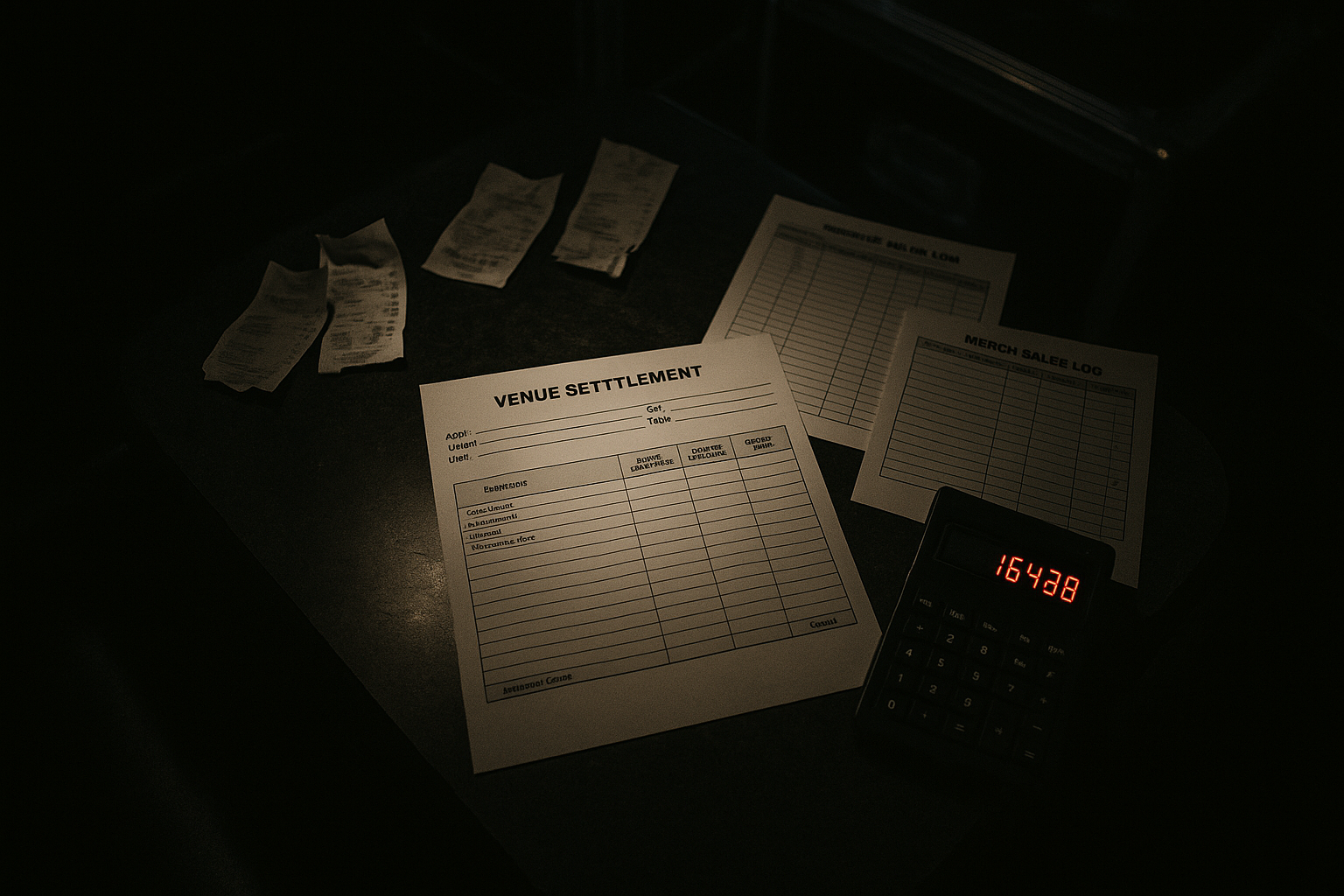
Your settlement sheet should itemise gross revenue, your split or guarantee, deductions for production or backline, and any venue charges that were contractually agreed upon.
Flag anything that was deducted but not outlined in your rider or deal memo. Common culprits include surprise sound fees, security overages, or ticket platform charges that were supposed to be absorbed by the promoter. If it was not in writing, it should not be on your statement.
Cross-check currency and tax withholding if you played internationally. Make sure the exchange rate used matches the date of the show, not the settlement date, unless your contract specifies otherwise.
Merchandise logs
Request a detailed merch report that includes units sold by SKU, price per item, total gross, and any venue or promoter merch fees.
Run your own inventory count before and after the show. Compare that to what the venue reports. If your pre-show count was 50 shirts and post-show count is 10, but the venue only reports 35 sold, you have a problem.
Merch splits vary wildly. Some venues take 20%, others take 30% or more. Confirm the percentage deducted matches your agreement. If the venue sold merch on your behalf and remitted payment later, make sure you received the full amount owed.
VIP packages and add-ons
If you offered meet and greets, early entry, or exclusive merch bundles, make sure every sale is accounted for. These are often handled separately from general ticket sales and can slip through reporting cracks.
Confirm who collected payment (you, the promoter, or a third party platform) and verify you received your agreed share. If the promoter bundled VIP into the ticket price, make sure your split reflected the higher gross, not just the base ticket.
Sponsorship and ancillary income
If the show included brand activations, livestream licensing, or venue bar minimums tied to your draw, confirm those payments were processed and reported.
Some deals include backend bonuses based on attendance or beverage sales. If your contract tied compensation to performance metrics, request the data that proves those thresholds were or were not hit.
How to conduct the audit
Step 1: Gather all documents
Pull your original performance agreement, rider, settlement sheet, ticket manifest, merch logs, and any correspondence with the promoter or venue that references financial terms.
If you do not have a settlement sheet, request it immediately. If the promoter says it is not ready, set a deadline. Thirty days post-show is standard. Anything beyond that is a red flag.
Step 2: Reconcile ticket data
Compare reported ticket sales to your manifest and any third-party data you have access to (like Spotify concert alerts or social media RSVPs). Look for mismatches in volume, pricing, or tier breakdowns.
If the promoter claims the show sold 200 tickets but your ticket link showed 250 registrations, dig in. Not every registration converts, but significant gaps deserve explanation.
Step 3: Verify deductions
List every line item deduction on your settlement sheet. Cross-check each one against your contract and rider. If something was deducted that you did not agree to, document it and raise it with your promoter in writing.
Pay special attention to production costs. If your rider specified backline but the venue charged you for it anyway, that is a contract breach. Same goes for sound, lights, or stage crew that were supposed to be included.
Step 4: Reconcile merch
Match your physical inventory count to the venue's reported sales. If you sold merch yourself and the venue took a cut, confirm the percentage deducted is correct.
If the venue or promoter handled sales, request proof of transaction totals. Some venues use Square or other POS systems that generate end-of-night reports. Ask for it.
Step 5: Follow up on outstanding payments
If any income was deferred (back-end ticket splits, merch settlements, sponsorship payments), set calendar reminders to follow up. Do not wait for someone else to remember. Chase it down before the trail goes cold.
Red flags that require escalation
You find deductions not listed in your contract. The promoter cannot or will not provide a ticket manifest. Reported merch sales do not match your inventory count. Payment for VIP or sponsorships was collected but not remitted. The settlement was issued in a different currency or with unexplained tax withholding.
If any of these apply, escalate immediately. Start with a formal written request for clarification. If the promoter stonewalls, consult a music attorney or accountant who specialises in live performance deals.
Document everything. Save emails, take photos of your merch setup and inventory, and keep copies of all financial statements. If this turns into a dispute, your records will be your evidence.
What to do with your findings
If the audit confirms everything checks out, file the documentation and move on. But if you find money owed, address it fast.
Send a clear, factual email to your promoter or venue outlining the discrepancy, referencing specific contract terms, and requesting payment or correction within a set timeframe. Keep it professional. No one wins if you burn the relationship, but you also cannot let money walk.
If the error was innocent, most promoters will correct it. If it was not, you now have a data trail that protects you in future dealings and informs who you work with next time.
Use what you learn to tighten your next deal. If merch splits were higher than expected, negotiate a better rate. If ticket reporting was sloppy, add audit rights and reporting deadlines to your contract. Every tour teaches you something. Make sure you are taking notes.
Build the audit into your tour workflow
The best time to audit is right after the show, when the data is fresh and everyone is still reachable. Assign someone on your team (yourself, your manager, your tour accountant) to run this process after every performance.
Create a checklist. Make it a template. Turn it into a non-negotiable part of closing out each date. The more you do this, the faster it gets, and the less likely you are to miss something.
Auditing is not about distrust. It is about accuracy. And accuracy is what separates artists who get paid from artists who get paid correctly.
For a deeper breakdown of how to structure your tour financials and read a promoter settlement, see the live tour P&L and promoter settlement playbook. And if you want to understand how unverified venue charges can quietly erode your margins, read The Silent Saboteur.
Ready to streamline your workflow?
Stop piecing together spreadsheets and scattered notes. Join the waitlist for Music Artist Manager and get your entire rollout in one place.
Written By
Gavin Alexander
Senior Marketeer
As the founder of Music Artist Manager, Gavin has spent years at the intersection of music and technology. Seeing firsthand how chaotic release rollouts and split sheets can be, he designed a platform that brings major-label infrastructure to independent artists and their teams. He writes extensively about industry trends, artist leverage, and workflow optimisation.