The Spotify fan remix switch: How to turn catalogue access into leverage
Learn how to turn Spotify's fan remix licensing deal into a deliberate catalogue strategy using selective opt-in and royalty tracking.


Key Takeaways
The Spotify fan remix tool is not a feature. It is a licensing decision that affects your catalogue income.
Opting in without auditing your rights stack first can create conflicts with your publisher or label negotiations.
Your back catalogue is a living rights portfolio. Selective opt-in turns passive streams into community-driven discovery.
Fan-made remixes generate royalties back to you under the Merlin agreement. Track them like any other income line.
On 4 August 2026, Spotify and Merlin signed a licensing deal that lets fans legally remix your music inside the platform. This is not a novelty feature. It is a structural shift in how catalogues generate discovery and royalties, and most artists will either click opt-in without thinking or avoid it entirely out of vague fear.
On 4 August 2026, Spotify signed a licensing deal with Merlin. Merlin represents thousands of indie labels and distributors. The deal extends Spotify's fan-made covers and remixes tool to independent catalogues. The tool was already agreed with Universal Music Group in May 2026. It lets listeners create licensed covers and remixes of participating artists' music directly on Spotify.
For the first time, your fans can legally remix your music on the world's largest streaming platform. The opt-in switch is sitting in your distributor dashboard right now. Most artists will click it without thinking or avoid it entirely out of vague fear. Both responses are wrong. A manager's job is to turn this into a deliberate strategic decision.
Market context
Platform-level fan creation tools are not a novelty feature. They are a structural shift in how discovery and engagement compound. Spotify processed the mechanics first via UMG, then locked in Merlin to ensure independent catalogues weren't left behind. The deal extends to all Merlin-member distributors. DistroKid, TuneCore, CD Baby and others are Merlin-affiliated. This means the majority of independent artists will have access.
What is shifting beneath the surface:
Fan-made content is moving from grey-market to licensed. Cover culture and remix culture have existed on YouTube and SoundCloud for years. Spotify is now formalising it with a royalty framework.
Discovery economics are changing. A fan-made remix that earns streams still flows royalties back to the original rights holder under the new agreement.
Opt-in equals a business decision, not a preference. Every artist who opts in is essentially opening a second licensing window inside their existing catalogue. No new content required.
What "opt-in" actually means technically
When an artist opts into the Merlin–Spotify agreement via their distributor, they are granting Spotify a limited synchronisation and mechanical licence. This allows fan-created derivative works (covers and remixes) to be published and streamed within Spotify's platform. The original master and publishing rights remain with the artist. Royalties generated by fan remixes flow back to the original rights holder at a rate negotiated by Merlin on behalf of the collective.
Key structures to understand
Master versus publishing. Both rights are involved. Artists who control their masters but have signed publishing elsewhere need to check their publishing agreement before opting in.
Attribution and control. Merlin's agreement does not give fans the right to redistribute the remix outside Spotify. It does not transfer any ownership interest.
Catalogue selectivity. Most distributors will allow track-level opt-in. This matters. An artist may want to open a back catalogue but keep a current single in controlled release mode.
Eligibility reality check
This is right for you if
- You are distributed via a Merlin-affiliated distributor (DistroKid, TuneCore, CD Baby, Amuse, and others)
- You control both your master recordings and your publishing, or your publisher has confirmed they are in the Merlin ecosystem
- Your fanbase has a creative or remix-culture dimension: producers, beatmakers, superfans who want to engage beyond passive listening
- Your catalogue is deep enough that you're not sensitive to a fan version "competing" with an active single
This is not right for you if
- You are in active negotiations with a label and do not want to create a precedent around catalogue access
- Your publishing is controlled by a major that has not yet agreed to the Spotify tool
- Your brand is tightly managed and fan-created interpretations could damage it (for example, niche genres with a specific sonic identity)
Practical action plan
1. Audit your rights stack first. Before touching any opt-in settings, confirm: do you control your masters? Who controls your publishing? Contact your distributor's support team or rights management portal to clarify your eligibility under the Merlin deal.
2. Make a catalogue tiering decision. Separate your catalogue into three buckets:
- Active singles/EPs: do not opt in until the release campaign has run its course
- Catalogue tracks over 18 months old: strong candidates for opt-in
- Evergreen brand-defining tracks: assess case by case
3. Enable opt-in selectively via your distributor. Log into your DistroKid, TuneCore, or CD Baby dashboard and locate the Spotify fan remix/covers permissions section. Toggle on only the catalogue tier you've approved.
4. Set up monitoring before you enable. Use a tool like Chartmetric or Spotify for Artists notifications to track when fan-made versions appear. You want visibility, not surprises.
5. Engage the first wave of fan remixes. When a strong fan remix appears, reshare it from your official channels. This is community building with no additional production cost. It is exactly the kind of fan-community-as-infrastructure play that the best technology-native managers execute.
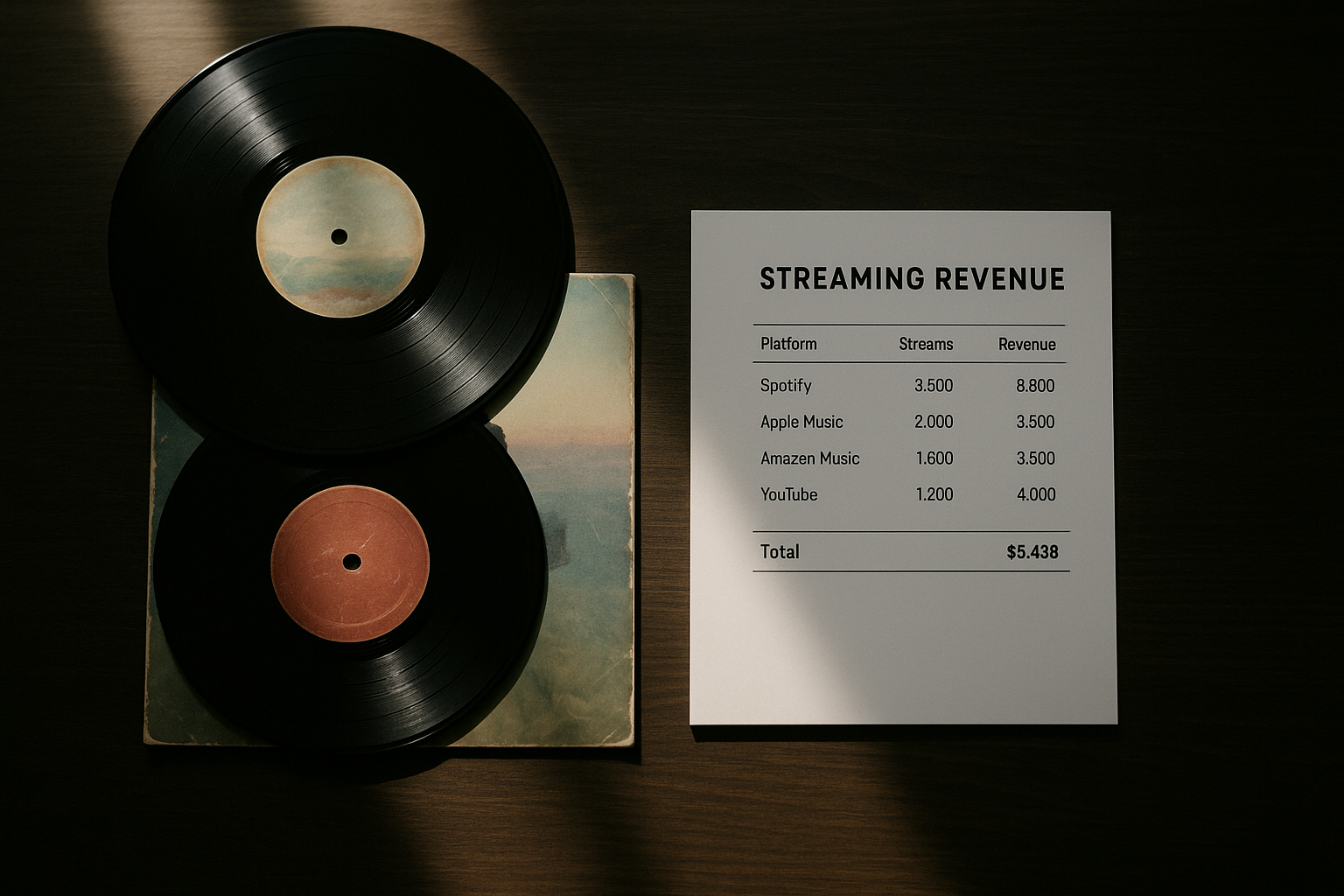
6. Document the royalty flow. After 60 to 90 days, pull a royalty statement from your distributor and identify any income lines attributed to the fan-made content programme. Build this into your income reporting dashboard in Music Artist Manager.
7. Revisit annually. Platform licensing terms evolve. The Merlin deal is multi-year but the specific rate structure will be renegotiated. Review your opt-in status at each catalogue audit.
Mindset closer
A performer waits to see what the platform does with their music. A CEO decides what role their catalogue plays in the platform's ecosystem and on what terms.
The Merlin–Spotify deal is not just a features announcement. It is Spotify acknowledging that fan creativity drives retention and that independent artists should benefit from that value exchange. The question is whether you treat this as something that happens to your music or something you deploy as a deliberate tool.
Your back catalogue is not an archive. It is a living rights portfolio. Opting in, selectively and strategically, turns passive streams into an active community engine. That engine, tracked and optimised, is exactly what separates a managed artist career from a content upload account.
Use Music Artist Manager's Rights & Revenue tracker to log your catalogue opt-in decisions, monitor royalty lines from the fan remix programme, and set review reminders for your next catalogue audit. Keep your rights stack clean and your income documented in one place.
Ready to streamline your workflow?
Stop piecing together spreadsheets and scattered notes. Join the waitlist for Music Artist Manager and get your entire rollout in one place.
Written By
Gavin Alexander
Senior Marketeer
As the founder of Music Artist Manager, Gavin has spent years at the intersection of music and technology. Seeing firsthand how chaotic release rollouts and split sheets can be, he designed a platform that brings major-label infrastructure to independent artists and their teams. He writes extensively about industry trends, artist leverage, and workflow optimisation.