Resources and courses: How to upskill as an independent artist
Learn which business skills actually limit independent artists' growth and how to apply them to your next release.

Key Takeaways
Distribution strategy, DSP behaviour, and release sequencing are more commercially valuable than most production skills.
Audience growth requires understanding platform-specific behaviour and the principles beneath surface-level tactics.
Royalty streams, distribution splits, and basic contracts are non-negotiable literacy for any artist running music as a business.
One course completed and applied to a real release outperforms five courses finished and filed away.
Musical ability alone does not build a sustainable, independent career. The gap most artists face is not creative; it is operational, strategic, and commercial. Closing it requires deliberate, focused learning applied immediately to real work.
The skills gap is the real gap
Most independent artists have more musical ability than business literacy. Closing that gap does not require a music industry degree — it requires deliberate, focused learning in the areas that actually limit your growth.
The skills that matter most for independent artists
Distribution and DSP strategy. Understanding how streaming algorithms work, how playlists are curated, and how release sequencing affects performance is more commercially valuable than most production skills. There are strong courses available from practitioners who have worked inside DSPs and labels. Look for content that goes beyond "upload to DistroKid" — you want the mechanics of algorithmic behaviour, release timing, and funnel construction.
Audience building and marketing. Growing an audience requires understanding platform-specific behaviour, content strategy, and conversion. Social media managers who work in music, independent label marketing teams, and practitioners like the Water and Music newsletter produce consistently useful material. Study what artists in your genre are doing, but focus on the underlying principle, not the surface tactic.
Financial management. Understanding royalty streams, distribution splits, sync licensing, and basic accounting is not optional if you want to run music as a business. There are free resources from PRS, PPL, and the Music Publishers Association. The BPI and AIM publish practical guides for independent artists.
Negotiation and contracts. You will encounter management agreements, distribution contracts, sync licensing terms, and collaboration agreements. Understanding what you are signing — or at minimum knowing which clauses to question — is a fundamental skill. The Contract Lens profile in the Collaboration Desk is useful for preparing for these conversations: paste in any agreement and it generates a plain-language breakdown of what to ask a solicitor before signing.
How to use Music Artist Manager as a learning tool
The Collaboration Desk is structured as a set of specialist advisors, each of which can serve as an on-demand tutor for its domain.
The Distro Hacker can explain DSP strategy for your specific release type and audience. Ask it: "Walk me through what a waterfall release strategy would look like for this project." The response will be specific to your genre, your current follower count, and your release timeline.
The A&R Architect can give you a frank assessment of your catalogue and what it is missing commercially. Ask it: "What does my release history communicate to a label or publisher?" The answer will be honest, which is more useful than the answer you want to hear.
The Brand Architect can guide you through building a coherent visual and cultural identity. Ask it to identify your core brand pillars based on your genre, era, and stated influences.
These are not replacements for real learning or studying the game, but they are tools for applying what you learn to your current reality immediately.
Building habits over buying courses
The most common mistake in self-education is accumulating courses and not finishing them. The second most common is finishing them and not applying them.
One course, completed and applied to a real release, is worth more than five courses completed and filed away. When you learn something new, a release strategy tactic, a financial concept, a negotiation principle - build it into your next project immediately. Create a task in your project, set a deadline, and execute against it.
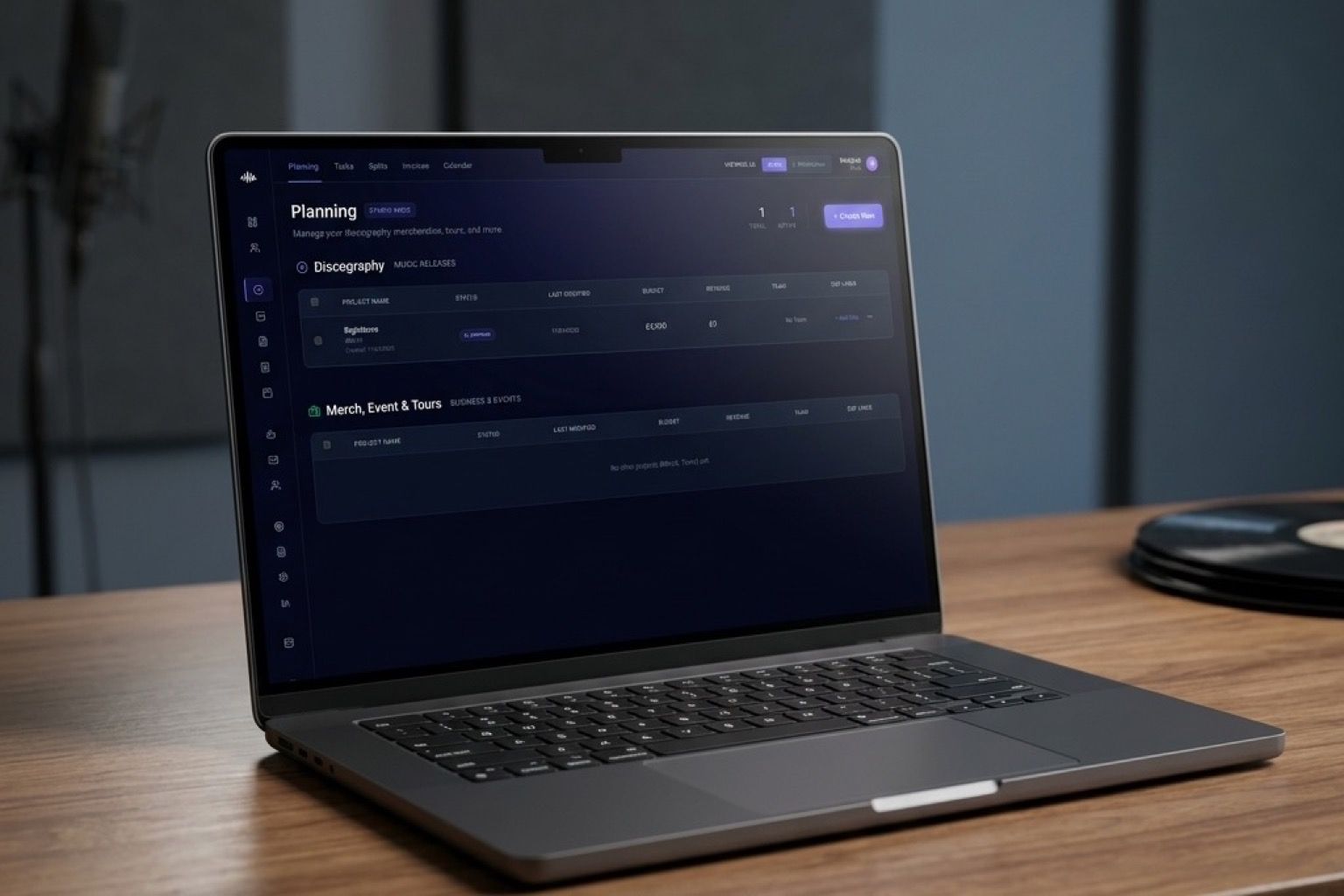
Learning compounds when they are applied. Music Artist Manager gives you the operational infrastructure to apply what you learn immediately, in a real project, with real deadlines and real financial tracking. The combination of deliberate study and active application is what separates artists who get better with every release from those who stay stuck.
Pick one skill. Study it properly. Apply it to this release. Then pick the next one.
Ready to streamline your workflow?
Stop piecing together spreadsheets and scattered notes. Join the waitlist for Music Artist Manager and get your entire rollout in one place.
Written By
Gavin Alexander
Senior Marketeer
As the founder of Music Artist Manager, Gavin has spent years at the intersection of music and technology. Seeing firsthand how chaotic release rollouts and split sheets can be, he designed a platform that brings major-label infrastructure to independent artists and their teams. He writes extensively about industry trends, artist leverage, and workflow optimisation.