The phantom revenue: Why your distributor's 'black box' settlements are costing you money
Learn how to audit your distributor statements, spot royalty discrepancies, and reclaim phantom revenue with precise financial oversight.


Key Takeaways
Your distributor's royalty statement isn't gospel. It's a starting document that requires your scrutiny and challenge.
Phantom revenue sits in distributor black boxes because most artists never audit the numbers or ask hard questions.
Every discrepancy you ignore is revenue you're choosing to leave on the table for someone else to claim.
Treat your distributor like a business partner who must earn trust through transparent reporting, not goodwill.
Your distributor's royalty statement isn't a source of truth. It's a starting point. Most independent artists and managers never audit these figures, which means they're leaving money on the table every single quarter.
Every quarter, you get a statement from your distributor. It tells you what you earned. Most artists scan it, nod, and move on.
That's a mistake.
Distributor royalty statements are not neutral documents. They are financial reports from a vendor that has every incentive to delay payment, round down, and attribute revenue to "processing delays" or "unmatched metadata." The black box is real. It costs independent artists millions annually. And it's your job to audit it.
This is not paranoia. It's business hygiene. You audit your splits, your DSP dashboards, and your sync licenses. Your distributor should be no different.
The black box is not a conspiracy. It's a structural problem.
Distributors collect payments from DSPs, PROs, and licensing platforms on your behalf. They aggregate data from dozens of sources, match it to your releases, apply deductions, and then pass you what remains.
That matching process is where money disappears.
Unmatched metadata means a stream happened, but the distributor couldn't confirm it was yours. Label copy errors, inconsistent ISRC codes, duplicate artist profiles, and misspelled features all cause matching failures. When a match fails, the revenue sits in a holding account. Some distributors call it "pending." Others call it "black box revenue." Either way, it's your money, and it's not moving.
Here's what else hides in there:
- Settlements from DSPs for prior-period adjustments
- Currency conversion rounding errors that favor the distributor
- Withheld mechanical royalties due to unclear publishing ownership
- Revenue from territories your distributor doesn't report line-by-line
- Deductions for "platform fees" that were never in your original agreement
You signed a contract, but that doesn't mean your distributor is executing it correctly. Contracts are only as strong as your ability to verify compliance.
How to audit your distributor statement.
Set a recurring calendar event every quarter. Label it "distributor audit." Treat it like you would a tax filing. This is not optional maintenance. It's financial oversight of a vendor relationship.
Step one: cross-reference your DSP dashboards.
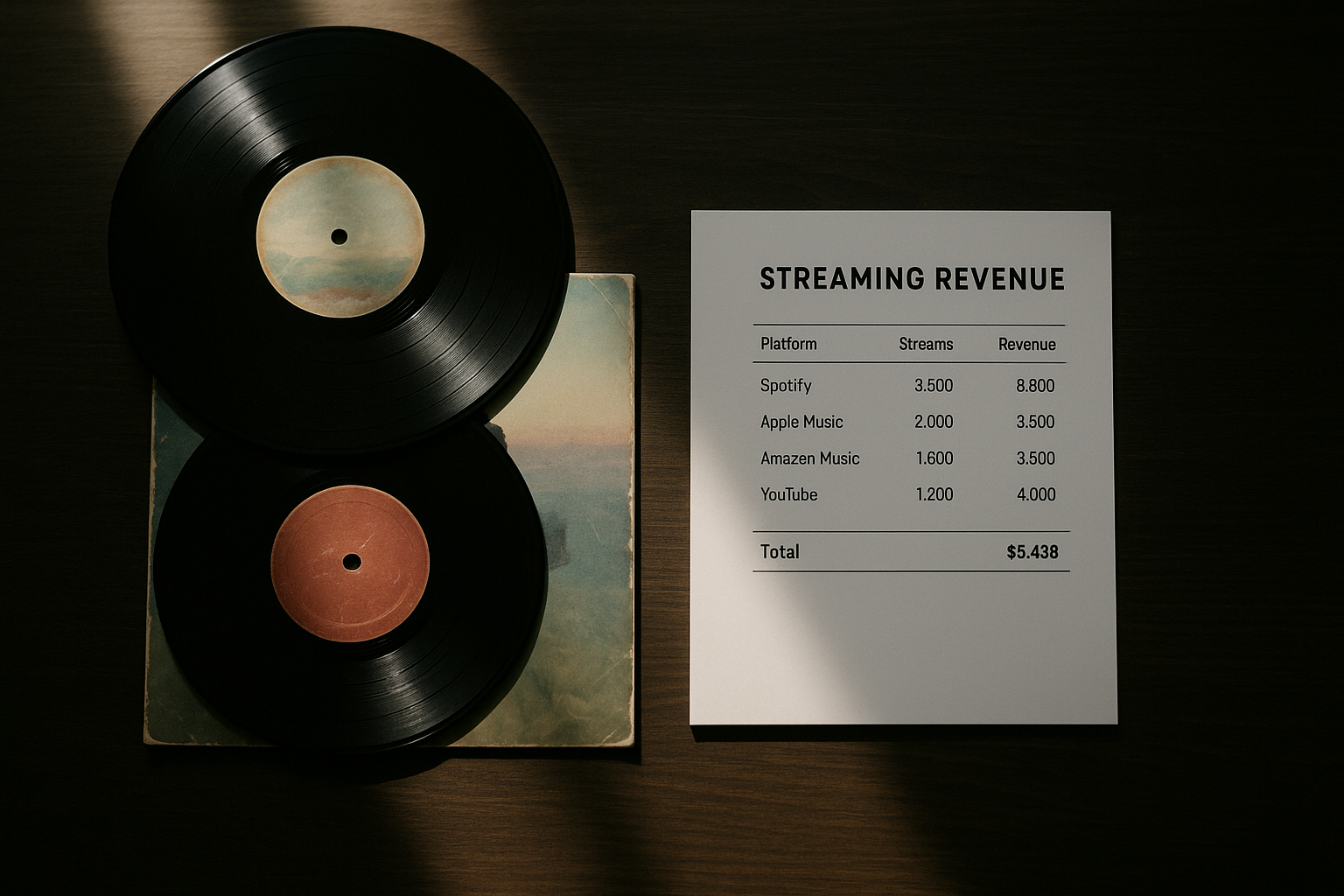
Pull data from Spotify for Artists, Apple Music for Artists, and YouTube Studio for the same reporting period. Compare total streams to what your distributor is claiming.
If the numbers don't match, document the variance. Note the date range, the platform, and the difference in stream count. Email your distributor and ask for an explanation. Do not accept vague language. Ask for a line-by-line breakdown.
Step two: check your metadata consistency.
Log into your distributor's backend and pull the metadata for every release in your catalogue. Look for:
- ISRC codes that don't match across platforms
- Artist name variations (ft. vs feat. vs featuring)
- Duplicate profiles under slightly different spellings
- Missing or incorrect UPC codes
Metadata errors don't just hurt discoverability. They break the revenue matching system. If your distributor can't confidently attribute a stream to your release, that stream doesn't get paid out.
Fix every inconsistency. Resubmit corrected metadata if needed. Then follow up in the next statement to confirm the fixes worked.
Step three: demand territory-level reporting.
Most distributor statements lump revenue into regional buckets: North America, Europe, Rest of World. That's not good enough.
Ask for country-by-country breakdowns. Some territories have higher per-stream rates. Others have settlement delays. If your distributor is bundling them, you can't verify whether you're being paid correctly.
If your distributor refuses, that's a red flag. Transparency is not a premium feature. It's a baseline expectation.
Step four: track withheld revenue over time.
Create a spreadsheet. Track every instance of "pending," "unmatched," or "withheld" revenue across your statements. Note the amount, the reason given, and the quarter it first appeared.
If the same revenue sits in pending status for more than two quarters, escalate. That's not a processing delay. That's your money being held without explanation.
Step five: compare your contract terms to actual deductions.
Pull your distribution agreement. Find the section on fees and deductions. Compare what you agreed to against what's being deducted in your statements.
Look for:
- Platform fees that aren't named in your contract
- Currency conversion rates that seem high
- "Administrative costs" that were never disclosed
- Deductions labeled "other" with no further detail
If you find a discrepancy, flag it immediately. Send your distributor a side-by-side comparison of the contract language and the actual deduction. Ask them to reconcile it or remove it.
When to escalate.
If your distributor is unresponsive, vague, or dismissive, you have options.
Start by documenting everything. Every email, every statement, every variance. Build a file.
Then escalate internally. Most distributors have account managers or artist relations teams. Go above your first point of contact. Be direct. Use numbers. Show the math.
If that doesn't work, consider moving distributors.Your mailing list is worth more than your follower count — here's why, and the same principle applies here. Your catalogue is an asset. You owe it to that asset to work with a distributor that respects financial transparency.
Before you move, check your contract for back catalogue terms. Some distributors claim ongoing rights to revenue from releases uploaded during your term, even after you leave. If that's the case, you need to negotiate an exit that includes full release of your catalogue and all associated royalty claims.
Treat your distributor like a vendor, not a partner.
The language in this industry makes it easy to forget what this relationship actually is. Distributors are not your partners. They are vendors. You are their client.
That means you set expectations. You demand transparency. You verify their work. And when they fail to meet the terms of your agreement, you hold them accountable.
This is not adversarial. It's professional. Every healthy business relationship includes oversight and accountability. The fact that most independent artists skip this step is why the black box exists in the first place.
Reclaiming phantom revenue is not a one-time project.
Auditing your distributor is not something you do once and forget. It's a recurring discipline. The same way you monitor your release calendar, your sync pipeline, and your email open rates.
Build it into your quarterly operations. The Multi-Return Rule applies here too. Every hour you spend auditing your statements is an investment that compounds. You catch discrepancies early. You train your distributor to be more careful with your account. And over time, you reclaim revenue that would have otherwise disappeared.
The black box shrinks when you shine a light on it. But only if you're willing to do the work.
You are the CFO of your catalogue.
No one else is going to protect your revenue the way you will. Not your manager. Not your distributor. Not your DSP account rep.
This is your business. Treat it like one.
Audit your statements. Verify the numbers. Demand transparency. And when your distributor fails to deliver, act accordingly.
The Superfan Window taught you to move fast and capture value before it's diluted. The same principle applies to distributor oversight. The longer you wait, the harder it is to reclaim what's yours.
Start auditing this quarter. Build the system. Protect your revenue.
You've earned it. Now make sure you collect it.
Related Reading:
- [The Superfan Window](https://www.musicartistmanager.com/blog/superfan-window-before-majors-move)
- [Your mailing list is worth more than your follower count — here's why](https://www.musicartistmanager.com/blog/owned-email-asset)
- [The Multi-Return Rule](https://www.musicartistmanager.com/blog/multi-return-promotional-spend-rule)
Ready to streamline your workflow?
Stop piecing together spreadsheets and scattered notes. Join the waitlist for Music Artist Manager and get your entire rollout in one place.
Written By
Gavin Alexander
Senior Marketeer
As the founder of Music Artist Manager, Gavin has spent years at the intersection of music and technology. Seeing firsthand how chaotic release rollouts and split sheets can be, he designed a platform that brings major-label infrastructure to independent artists and their teams. He writes extensively about industry trends, artist leverage, and workflow optimisation.