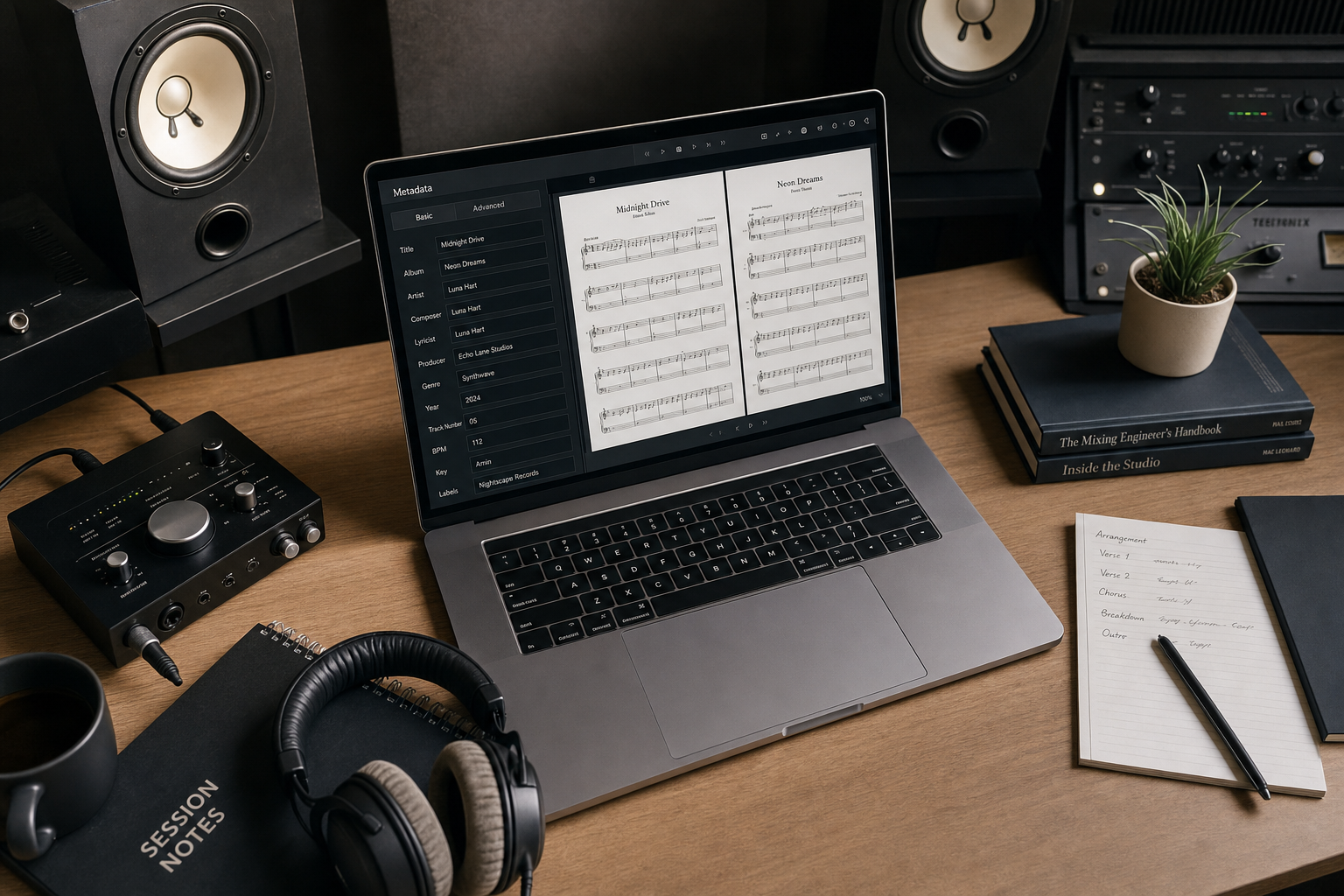
Why sync supervisors are choosing independent artists over major
Independent artists who own their masters can clear sync deals in 24 hours while major labels take six weeks.
**Independent artists who own their masters can clear sync deals in 24 hours while major labels take six weeks.**
In January 2026, Spotify confirmed it paid out $11 billion to rights holders in 2025. Independent artists and labels accounted for half of all royalties. It is the most significant proof yet that streaming parity is real. But there is a quieter story buried beneath that headline, and a good manager spots it immediately.
Sync licensing supervisors are now actively seeking out independent artists over major-label catalogues. Not out of goodwill. Out of commercial urgency. Licensing a major-label track is expensive, bureaucratically slow, and involves multiple approval layers across label, publisher, and legal teams. An independent artist who controls their own masters can clear a deal in 24 hours. A major-label track might take six weeks. The supervisor has a deadline, not a development timeline.
The structural advantage has flipped. And most independent artists have no idea.
What is shifting beneath the surface in 2026
The streaming economy rewards volume and consistency. Sync rewards rights clarity and speed. These are different games, and they require different preparation.
Streaming services are commissioning more original content than ever. Netflix, Apple TV+, Amazon, and a growing number of regional platforms all need cleared music at scale. Their music supervisors are under constant deadline pressure.
Digital advertising is growing faster than TV advertising. Short-form branded content (TikTok and YouTube ads, branded Reels, global campaigns) has an insatiable need for music that can be cleared cleanly and quickly. Budgets for sync in this space are rising.
Major-label clearance is structurally slow. Rights are frequently split between the label (master) and publisher (composition), each with their own legal and licensing teams. Multiple sign-offs. Multiple territories. Multiple timelines.
Independent artists who own both their master and publishing are the fastest-moving rights holders in the market. A single phone call or email can authorise a deal. This is increasingly rare and highly prized.
The opportunity window is real. But artists must be operationally ready to capture it.
How music rights actually work
Understanding why this advantage exists requires a brief literacy lesson in music rights.
**Master recording rights** are the rights to the specific recorded version of a song. Whoever paid for and owns the recording owns the master. Historically, major labels owned these. Independent artists who self-fund their recordings own them.
**Composition (publishing) rights** are the rights to the underlying song: melody and lyrics. These are separate from the master. Songwriters retain these unless they sign them away. An artist who writes their own songs and has not signed a publishing deal retains 100% of composition rights.
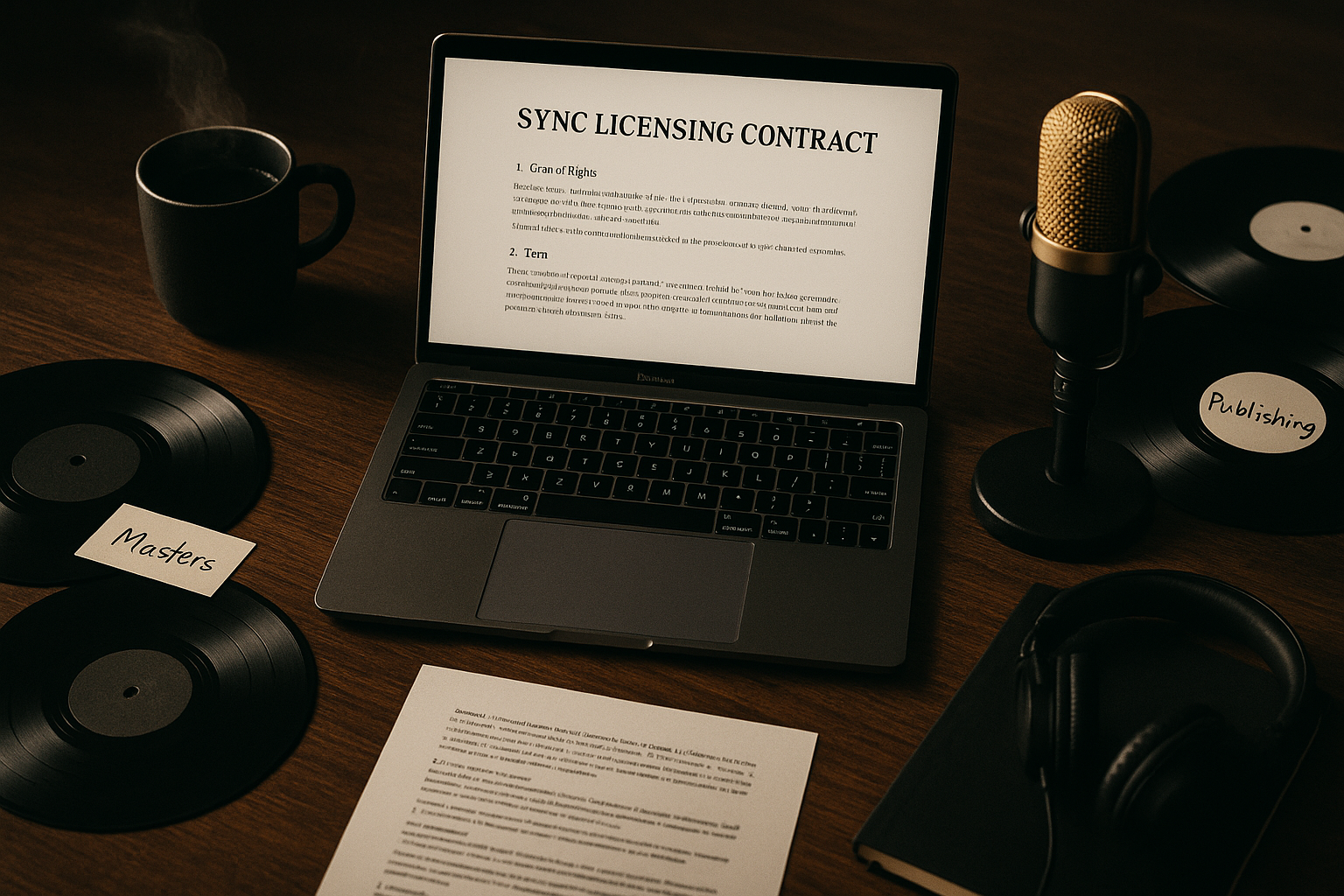
**Synchronisation (sync) licence** is permission to use a piece of music in timed relation to visual media. A sync deal requires clearance from both the master owner and the composition rights holder. This is where major-label complexity creates friction. When an independent artist owns both, they are the only person a supervisor needs to call.
**One-stop clearance** is the industry term for a track where a single entity controls all rights needed for a sync licence. One-stop tracks are worth a premium to supervisors and music libraries. They move deals faster and reduce legal risk.
The independent artist who understands this infrastructure does not see their self-ownership as a consolation prize for not having a label deal. They see it as a competitive moat.
Is this opportunity actually for you?
This opportunity is real, but arriving unprepared wastes it.
**This is for you if:**
- You own your master recordings (self-funded, no label deal, or you have reacquired your masters)
- You write your own songs and have not signed an exclusive publishing deal, or you have a co-publishing deal where you retain control for sync decisions
- Your music is professionally recorded and mixed to broadcast standard
- You are prepared to register your music with a PRO (PRS for Music in the UK, ASCAP/BMI in the US) so that performance royalties generated from any sync placement are correctly collected
**This is not yet for you if:**
- Your label owns your master. Approach their licensing team first. Understand the process.
- Your publisher controls your sync approval. Review your contract carefully. Some deals require publisher co-approval (or sole approval) on sync.
- Your recordings are not broadcast-ready. A sync placement should not be the moment you discover your mix sounds thin on a cinema system.
What to do right now
**Audit your rights status.** For every track you want to pitch for sync, confirm: do you own or control the master? Do you control the composition? Document this clearly. A supervisor will ask.
**Register with your PRO immediately.** In the UK: PRS for Music. Register both as a writer (composition) and label (master/PPL). Without registration, you cannot collect performing rights royalties when your sync placement generates broadcast or public performance.
**Build a one-stop sync pack for each track.** This should include: a high-quality WAV file (24-bit, 48kHz), a brief rights clearance statement confirming one-stop availability, BPM and key, a lyric sheet, and ISRC codes. Have this ready before you approach a supervisor or library.
**Pitch to boutique sync libraries that specialise in independent catalogues.** Libraries such as Musicbed, Artlist, Marmoset, and Pond5 actively curate independent catalogues for commercial use. Music Gateway (UK-based) has placed independent artists with Netflix, Disney, and NBC. Submit properly catalogued, one-stop-cleared material.
**Develop a sync-ready production strategy.** Some placements specifically require instrumental versions, alternative mixes without profanity, or stems (separate vocal/instrument tracks). If you are producing new music, build these variants into your workflow from the start rather than retrofitting them later.
**Respond to enquiries immediately.** Speed is your advantage. A supervisor contacts you on a Wednesday for a Friday lock. If you take three days to respond, the placement goes to someone else. Have a standard licensing rate card ready (upfront fee range by media type) so you do not have to negotiate from scratch each time.
**Use a platform like Music Artist Manager to track your sync pipeline.** Log each track's rights status, submission history, current placements, and royalty expectations in one place. Manage it like a sales pipeline, because it is one.
Why this matters
The artist who treats their masters as a creative archive is leaving money on the table. The artist who treats their masters as a business asset (a catalogue of cleared, accessible, one-stop-ready intellectual property) has built something that generates revenue independently of how many people stream it on Friday morning.
Jay-Z did not obsess over owning his masters because he wanted control for its own sake. He understood that ownership creates optionality: the ability to say yes or no on your own terms, at your own speed, for your own price. A sync supervisor ringing a major label and waiting six weeks for a clearance decision is not a failure of that label. It is the predictable output of a system that was never designed to move quickly on behalf of the artist.
You were. Use it.
---
**Use Music Artist Manager to track your rights, manage your sync submissions, and build a catalogue pipeline that works around the clock.**
Learn how our rights and catalogue management tools help you stay operationally ready for sync opportunities, or explore how indie infrastructure is outpacing major-label systems in 2026.
---
External references
- "Sync Licensing Trends in 2026: What Supervisors Are Looking For Right Now" — GetSyncReady
- "From $11B in 2025 Payouts to What We're Building for Artists in 2026" — Spotify Newsroom
- "Sync Licensing in 2026 | Your Golden Ticket to Actually Getting Paid and Heard" — Music Gateway
- "Music Sync Licensing: The Definitive Artist Guide" — Artist.tools
- "Music Industry Trends 2026: Key Shifts in Distribution, Publishing, and Sync" — One World Media
Ready to streamline your workflow?
Stop piecing together spreadsheets and scattered notes. Join the waitlist for Music Artist Manager and get your entire rollout in one place.
Written By
Gavin Alexander
Senior Marketeer
As the founder of Music Artist Manager, Gavin has spent years at the intersection of music and technology. Seeing firsthand how chaotic release rollouts and split sheets can be, he designed a platform that brings major-label infrastructure to independent artists and their teams. He writes extensively about industry trends, artist leverage, and workflow optimisation.