The licensing consent framework
Spotify's May 2026 UMG deal proved AI remixes need new consent, not old distribution terms. Here's what independents must do now.
Key Takeaways
Spotify negotiated AI rights separately from UMG instead of reinterpreting existing distribution agreements.
Independent artists' pre-AI distribution contracts do not automatically grant platforms AI-derivative creation rights.
The Spotify-UMG deal establishes opt-in consent, separate tracking, and dedicated revenue as the licensing standard.
Artists who act now can negotiate explicit AI terms before features launch and terms become standardised.
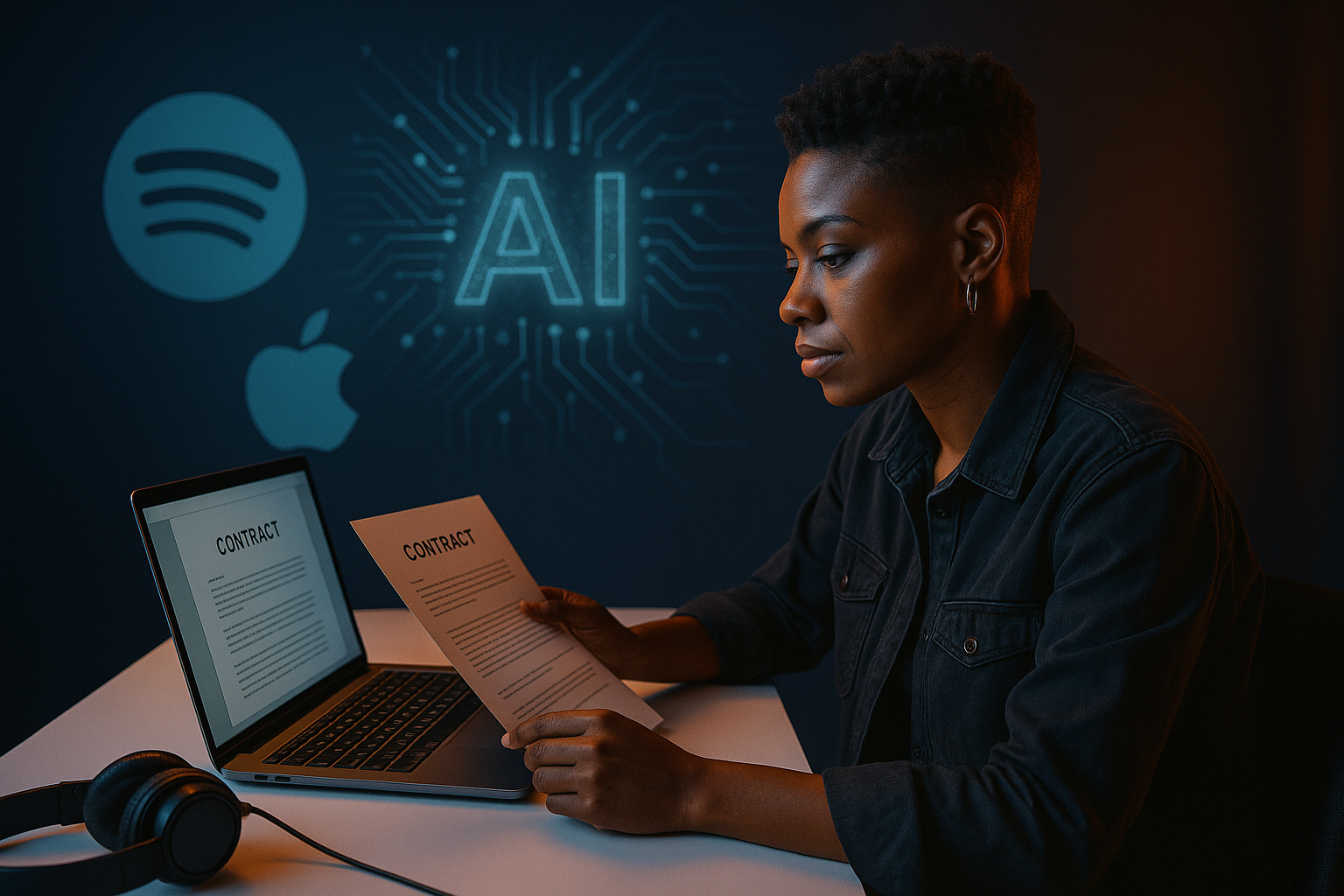
On May 21, 2026, Spotify and Universal Music Group signed a licensing deal that changed how AI-derivative music works on streaming platforms. The real story isn't the feature itself. It's that Spotify admitted it needed new licenses for AI covers and remixes, not old distribution agreements reinterpreted. For independent artists, this is the first explicit proof that your existing distributor contracts don't automatically cover AI-derivative use of your masters and compositions.
On May 21, 2026, Spotify and Universal Music Group announced a licensing agreement for fan-created AI covers and remixes through a paid Premium add-on. The detail that matters: Spotify admitted it needed new licenses for AI-derivative music, not reinterpreted old ones.
This wasn't a product launch. It was a legal precedent that independents need to understand now.
What Actually Happened
Spotify built AI remix and cover tools months before the announcement. The tech worked. The legal framework didn't. In their Q1 2026 earnings, Spotify stated AI licensing was "the only structural blocker" preventing rollout.
Translation: They had to negotiate explicit permission before launching. UMG got paid to say yes. Independent artists using DistroKid, TuneCore, CD Baby, and other distributors are facing the same question UMG just answered, but most don't know it yet.
Why This Creates a Precedent
Standard distribution agreements contain broad language drafted before generative AI existed. Terms like "stream, perform, distribute, reproduce" covered delivery to listeners. They did not anticipate platforms creating new derivative versions of your music using AI.
Spotify's decision to negotiate separately with UMG proves those old agreements aren't sufficient cover. This establishes three principles:
- AI-derivative rights require opt-in consent. Platforms cannot assume permission.
- Separate revenue tracking is required. AI-created versions need dedicated royalty streams.
- Silence equals risk. If you don't clarify your position, platforms may interpret old language as permission or exclude you entirely.
What This Means for Your Catalog
If you're an independent artist with music on streaming platforms, your distribution agreement probably doesn't mention AI, derivatives, or generative content. That gap is now a business risk.
Here's why: The music industry has historically moved technology first, then litigated rights later. This time, Spotify negotiated before launch. That shift signals AI-derivative revenue is large enough to justify legal friction. Platforms will roll out features. Independent artists who stay silent will wake up to terms they didn't negotiate and revenue splits they didn't control.
Who This Applies To
- This matters if you:
- Distribute music through third-party platforms (DistroKid, TuneCore, CD Baby, Amuse, etc.)
- Own your masters and compositions (artist-songwriters)
- Care about how your music is used in remix culture or fan participation
- This does not apply if you:
- Are signed to a major label (your label negotiates DSP terms on your behalf)
- Have already opted out of AI features via distributor settings (if that option exists)
The Market Context Behind the Move
Spotify is not building AI remix tools for creative expression. They're building them to increase ARPU (average revenue per user). Western subscriber growth has stalled. 95% of US households with streaming already have it. Platforms need new revenue streams. AI-derivative music is a premium add-on that deepens engagement and creates incremental income.
The strategic move is clear: lock down consent now, build the feature, charge for access, split the revenue. UMG negotiated their split. You haven't.
What to Do Right Now
1. Audit your distribution agreement
Log into your distributor dashboard. Search your agreement for "AI," "derivative," "remix," or "generative." Most agreements won't include these terms.
2. Document the gap
Write a brief note: "My distribution agreement does not include explicit language permitting AI-derivative creation. I have not consented to this use case." Save this. It creates a legal paper trail.
3. Contact your distributor
Send this message:
"Do my existing rights grant you or streaming platforms the ability to create AI covers, remixes, or derivative works using my music? If yes, on what contractual basis? Please cite specific language."
Force them to answer clearly or admit the gap.
4. Watch for platform rollout
If Spotify, Apple Music, or Amazon Music launch AI-remix features in your region, check whether your music is included by default or opt-in. Default inclusion without updated terms is an infringement risk.
5. Negotiate proactively
If your distributor admits the gap, propose updated terms:
- Opt-in consent required for AI-derivative use
- Separate royalty tracking for AI-created versions
- Explicit revenue share for AI remixes and covers
Model this on the Spotify-UMG framework: consent, credit, compensation.
Why Timing Matters
Spotify chose to negotiate before launching AI features. That's unusual. It signals the revenue potential is significant and the legal risk is real. Independent artists have a narrow window to clarify their position before features go live and terms get set by default.
The artists who act now will control how their music is used in AI contexts. The artists who wait will have terms imposed on them.
The Real Question
Do standard distribution agreements already grant DSPs the right to create AI remixes and covers using your master and composition?
The Spotify-UMG deal answered it: No. Not without new negotiation.
You are the CEO of your catalog. Act like it.
- Download our AI Rights Audit Checklist: 5 Questions to Ask Your Distributor. This PDF guide includes templates for distributor correspondence and a step-by-step framework for protecting your AI-derivative rights.
Ready to streamline your workflow?
Stop piecing together spreadsheets and scattered notes. Join the waitlist for Music Artist Manager and get your entire rollout in one place.
Written By
Gavin Alexander
Senior Marketeer
As the founder of Music Artist Manager, Gavin has spent years at the intersection of music and technology. Seeing firsthand how chaotic release rollouts and split sheets can be, he designed a platform that brings major-label infrastructure to independent artists and their teams. He writes extensively about industry trends, artist leverage, and workflow optimisation.