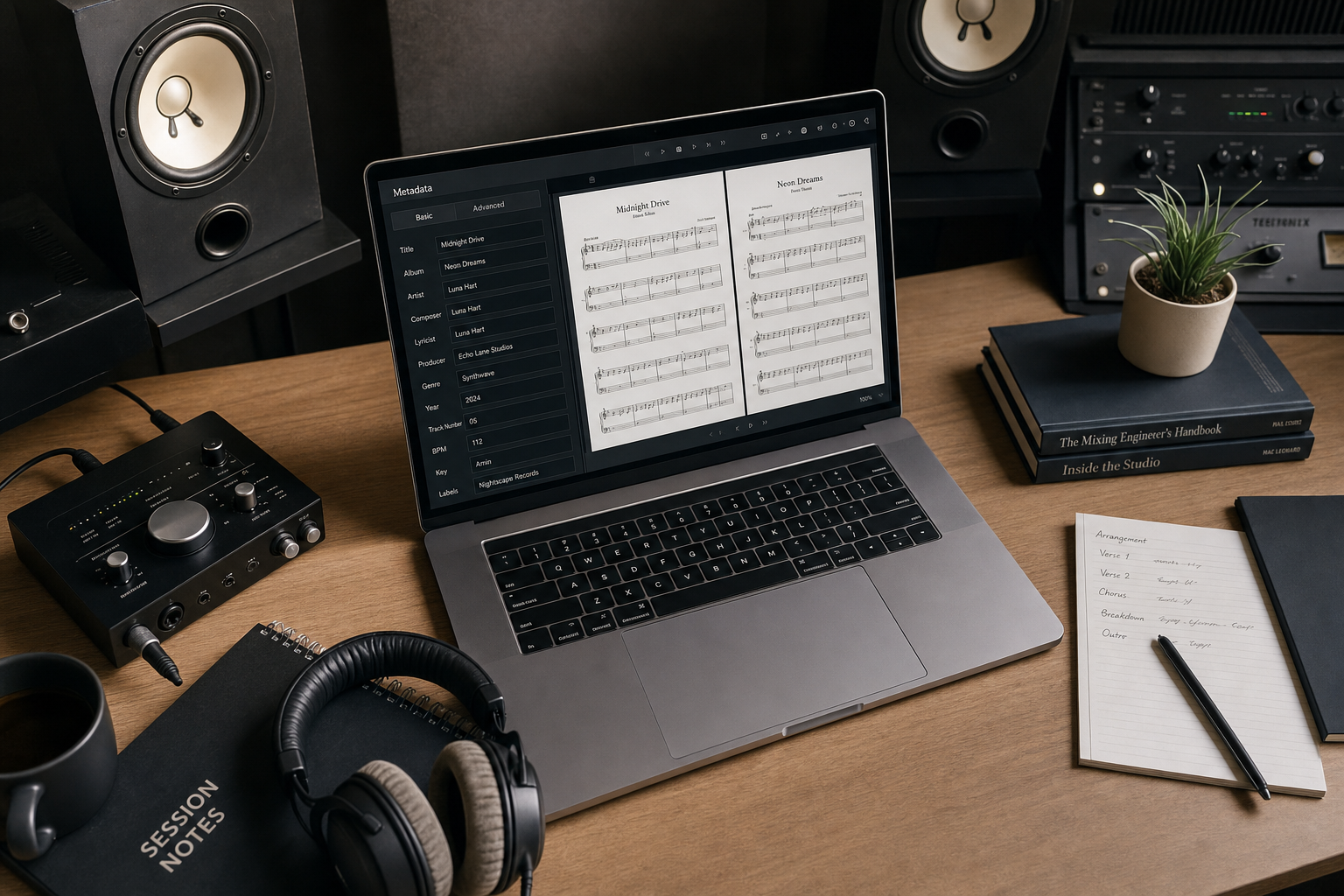
When artists walk: Building the infrastructure behind a label
In March 2026, Lorde ended her 17-year relationship with Universal Music Group. She did not retire. She did not pause. She continued as an independent artist. The difference is this: without UMG's infrastructure behind her, every operational function UMG once managed invisibly now lands on her team.

Key Takeaways
Exiting a label deal transfers operational responsibility—distribution, legal, marketing, and accounting—directly to the artist.
Building sovereign business infrastructure before leaving guarantees seamless catalog continuity and revenue collection.
Establish direct collection accounts with PROs, SoundExchange, and neighboring rights societies to capture full income.
Operate as a business principal with a CEO mindset: leverage optionality, protect equity, and build long-term catalog value.
In March 2026, Lorde walked from Universal Music Group after 17 years. The press called it freedom. The reality is more complex: she inherited the entire operational stack UMG used to manage invisibly. For independent artists, the lesson is not about leaving labels. It is about building the infrastructure that makes walking (or never signing) a viable choice.
The story behind lorde's UMG departure that nobody is writing about
In March 2026, Lorde ended her 17-year relationship with Universal Music Group. She did not retire. She did not pause. She continued as an independent artist. The difference is this: without UMG's infrastructure behind her, every operational function UMG once managed invisibly now lands on her team.
This is the story the press is not telling. The Great Unsigning, a documented 2026 trend in which marquee artists are walking from major deals, is being framed as a freedom narrative. It should be understood as an operational challenge. When an established artist exits a label, they are not escaping complexity. They are inheriting it.
For independent artists who have never been signed, the lesson is more urgent: do not wait for a label deal to force-build your infrastructure. Build it now, from zero, while the stakes are lower.
The 2026 landscape: Three signals you need to understand
Three signals define the moment:
- Lorde left UMG after 16 years (March 2026). Reports describe the move as strategic, not reactive. Her team will now own or license every operational layer, from distribution and publishing administration to sync pitching and international royalty collection.
- Drake is in active litigation with UMG (filed August 2024, ongoing into 2026). The dispute exposes the depth of contractual entanglement in major deals. It is not merely about royalties. It is about who owns the mechanisms of distribution, promotion, and revenue collection.
- Streaming payout pressure is rising. AI-generated music is flooding platforms (Orphiq, June 2026), compressing organic discovery. Artists who rely solely on streaming are more exposed than ever. Revenue diversification is structural necessity, not a bonus.
Label deals are increasingly being reframed not as partnerships but as infrastructure rentals. Artists are paying for systems with equity instead of cash, and many are realising the rental terms are poor.
What a label actually does: The eight-layer operational stack
When a major label manages an artist, it operates a stack of interdependent systems. Most independent artists manage one or two of these. None manage all eight coherently.
- Distribution
- Label Provides: Direct DSP relationships, priority placement
- Independent Artist Needs: Distributor (DistroKid, TuneCore, etc.)
- Publishing admin
- Label Provides: In-house publishing arm
- Independent Artist Needs: Publishing administrator (Songtrust, etc.)
- Sync licensing
- Label Provides: Internal sync team + briefs
- Independent Artist Needs: Sync agent or self-pitch capability
- International royalties
- Label Provides: Sub-publishing deals per territory
- Independent Artist Needs: PRO membership + international reciprocal agreements
- Accounting
- Label Provides: Quarterly/annual statements
- Independent Artist Needs: Accounting software + manager oversight
- Legal
- Label Provides: Label's lawyers (conflicted interest)
- Independent Artist Needs: Independent music solicitor
- Marketing
- Label Provides: Label budget + staff
- Independent Artist Needs: Self-funded or commission-based publicist
- Tour support
- Label Provides: Advances, routing, logistics
- Independent Artist Needs: Self-funded or revenue-share booking agent
A label exit, or a serious run at a career without ever signing, requires building this stack deliberately. It does not happen by accident.
The artists winning in 2026 are not the ones with the most streams. They are the ones whose infrastructure can capture value from all eight layers simultaneously.
Who this applies to (and who should wait)
This is not for artists who are still in the "making music in their bedroom" phase. Building the full stack requires:
- Existing catalogue with PRO registration (PRS, ASCAP, BMI, or equivalent)
- Some revenue baseline, enough to justify paying for a publishing administrator
- A manager or trusted adviser who can own the operational layer, or a platform that organises it for them
- Time and willingness to treat administrative tasks as serious creative infrastructure
If you have under three releases and no registered publishing, start with the fundamentals: register your works, pick a distributor, join a PRO. The full stack can wait. The mindset that you will eventually need it cannot.
How to build your operational stack: Seven steps
1. audit your current stack
Map all eight functions from the table above. Mark which are covered, which are partially covered, and which are completely missing. This is not a theoretical exercise. Open a spreadsheet and list every function, who handles it, which platform or service you use, and where the gaps are.
2. register your publishing
If your works are not registered at a PRO (PRS in the UK, ASCAP/BMI in the US), do this today. Unregistered works leave money uncollected permanently. There is no retroactive claim window in most territories. Every track you have ever released should have an ISWC (International Standard Musical Work Code) and be registered with your PRO.
3. appoint a publishing administrator
Even if you are early-stage, a publishing admin (Songtrust, Sentric, CD Baby Pro) handles international sub-publishing so you collect royalties in territories you would never think to chase manually. The cost is typically a percentage of collected royalties (15-20%), which means you only pay when they collect money you would not have captured yourself.
4. build a sync-ready catalogue
Create instrumental versions of your five best tracks. Ensure metadata (ISRC, ISWC, BPM, mood tags) is complete. Sync supervisors cannot place what they cannot categorise. A track without clear metadata, clean splits, and an instrumental version is functionally invisible to the sync market, which remains one of the highest-margin revenue streams in 2026.
5. separate your revenue streams in your accounting
Streaming, sync, live, merch, and brand deals need distinct tracking. Aggregated income statements obscure which channels are actually growing. If you cannot tell which revenue stream is growing quarter over quarter, you cannot make informed decisions about where to invest time and budget.
6. establish your legal baseline
A single consultation with a music solicitor to review your distribution agreement, any existing deals, and your publishing split is worth more than six months of marketing spend. Most independent artists operate with unsigned agreements, unclear splits, or distributor terms they have never fully read. A solicitor catches these gaps before they become disputes.
7. document your operational processes
Who does what, which platforms hold your login credentials, who is authorised to pitch for sync. If this lives only in someone's head, it is a liability. A shared document or project management system (Notion, Airtable, Asana) with clear ownership of each function ensures continuity if someone leaves your team or if you need to bring in a new collaborator.
The real reason this matters now
Lorde did not walk from Universal because she had no plan. She walked because she had built enough of her own plan to make the exit viable.
The artists watching Lorde and thinking "I could never do that" are making the wrong comparison. The better question is: if your best opportunity arrived tomorrow, a significant sync placement, a major brand partnership, a label offer you actually wanted to negotiate on equal terms, would your infrastructure support it?
Most artists would have to say no. Not because they lack talent. Because they lack systems.
The Great Unsigning is not a celebrity story. It is a signal. The artists who read it as such, and act on it now, are the ones who will be positioned to dictate their own terms, at whatever scale they eventually reach.
How music artist manager supports this
Music Artist Manager helps independent artists build and manage the full operational stack, from release planning and royalty tracking to contract management and revenue reporting, inside a single platform built specifically for artists who run their career like a business.
(#)
Related Reading:
- https://www.musicartistmanager.com/blog/sync-ready-before-the-call
- https://www.musicartistmanager.com/blog/streaming-fraud-payment-gatekeeping
- https://www.musicartistmanager.com/blog/masters-sync-advantage-2026
Further Reading:
- Why Artists Go Independent: Benefits, Challenges & Industry Shift — https://imusician.pro/en/resources/blog/why-are-great-artists-going-independent — iMusician
- The Great Unsigning: Why Independent Artists Are Taking Over in 2026 — https://www.tjplnews.com/post/the-great-unsigning-independent-artists-2026-tjpl-news-issue-41 — TJPL News
- The Great Unsigning — PressReader — https://www.pressreader.com/uk/tjpl-news-9y9n/20260501/281814290452840 — TJPL News via PressReader
- How Music Artists Actually Make Money in 2026 — https://orphiq.com/resources/how-musicians-make-money-2026 — Orphiq
- Sync Licensing for Independent Artists 2026 — https://www.chartlex.com/blog/money/music-sync-licensing-guide-independent-artists-2026 — Chartlex
Ready to streamline your workflow?
Stop piecing together spreadsheets and scattered notes. Join the waitlist for Music Artist Manager and get your entire rollout in one place.
Written By
Gavin Alexander
Senior Marketeer
As the founder of Music Artist Manager, Gavin has spent years at the intersection of music and technology. Seeing firsthand how chaotic release rollouts and split sheets can be, he designed a platform that brings major-label infrastructure to independent artists and their teams. He writes extensively about industry trends, artist leverage, and workflow optimisation.