The physics of modern music revenue: Why limited edition vinyl is now your Highest-Margin product
Learn how selling 50 limited-edition vinyl units per month can generate more net revenue than 600,000 Spotify streams.
Key Takeaways
D2C physical sales can generate 40–60% more monthly revenue than streaming alone.
A limited vinyl run of 100 units matches the net income of 600,000 Spotify streams.
Streaming builds your audience. Physical products monetise the fans who actually showed up.
The artist who owns the customer relationship wins. Streaming platforms own the listener.
Streaming has hit a ceiling for independent artists. Spotify pays $0.003–$0.005 per stream in 2026. Apple Music runs slightly higher at $0.006–$0.007. Even at 1 million monthly streams, a respectable achievement, you're looking at $3,000–$7,000 gross monthly income. After platform margins, distributor cuts, and tax, you net roughly 50–60% of that.
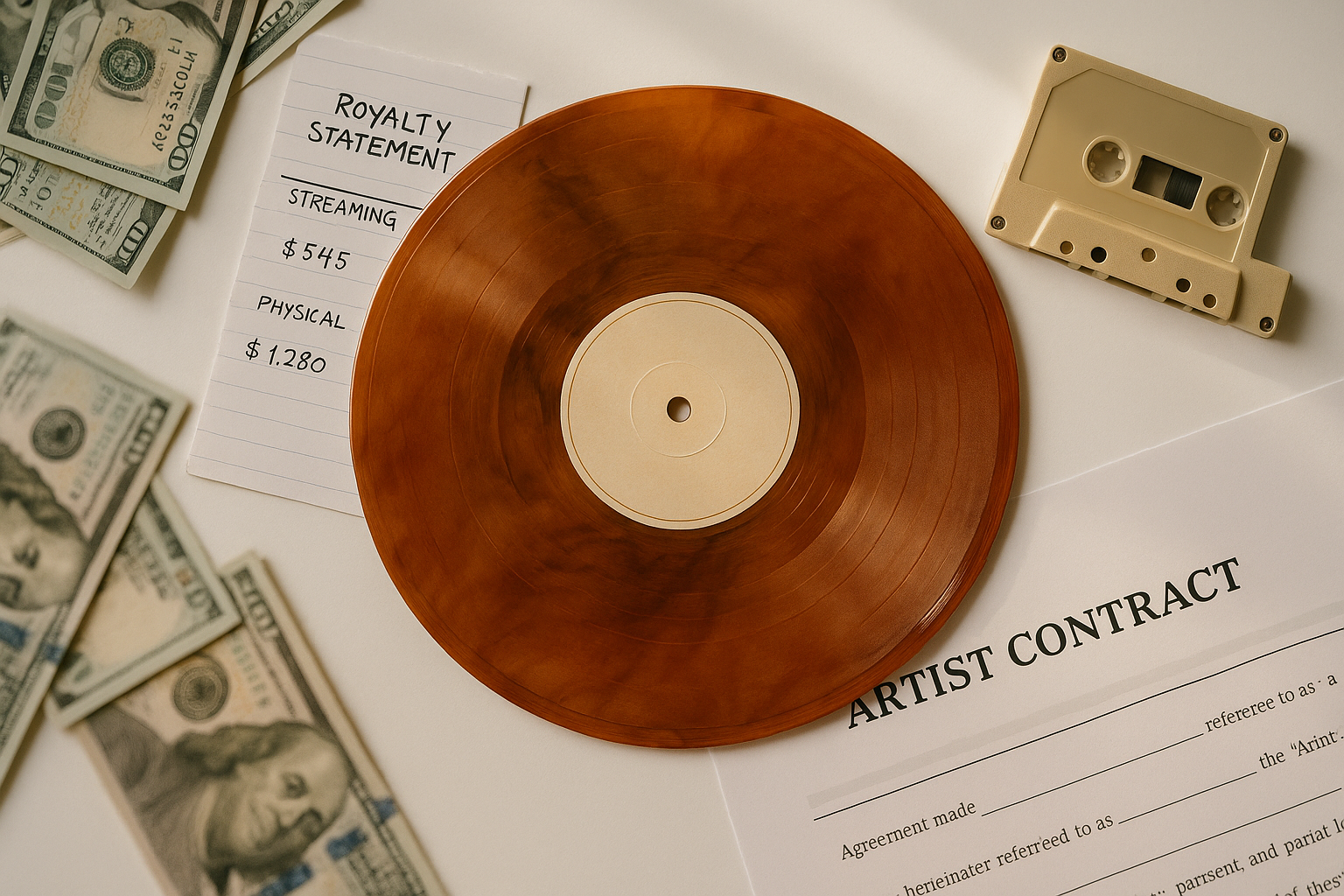
Meanwhile, direct-to-consumer physical sales now account for 13.6% of all physical album sales, according to Collabhouse's Q1 2026 music economics survey. More crucially, physical music is now the highest-margin product in most artists' entire merchandise and sales programs. An artist selling 50 limited-edition vinyl units at $40 margin per unit (net after production and shipping) generates $2,000 in monthly revenue. That's more than what you'd earn from 600,000 Spotify streams.
The structural shift is clear. Independent artists are no longer betting on streaming scale. They're bifurcating their revenue model:
- Streaming = brand maintenance, discovery engine, global reach (low margin, but essential for credibility)
- D2C physical = direct cash generation and fan segmentation (high margin, scalable, but requires infrastructure)
The evergreen lesson: In mature technology markets, the last mile always becomes the profit center. Streaming platforms keep the middle. D2C captures the end-consumer relationship and the margin. Artists who master D2C in 2026 are building a direct enterprise, not a streaming hobby.
The market context: why this matters now
Independent artists are moving away from single-platform revenue models and adopting portfolio strategies. Streaming remains critical for reach and algorithmic promotion, but streaming payout rates have plateaued. Marginal listener growth delivers diminishing returns. Simultaneously, fan-first platforms like Sesh, Patreon, and Beacons have commoditized the infrastructure needed to sell directly to fans. Sesh alone raised $7M in April 2025 to scale exclusive community and wallet features for superfans, a direct response to artists seeking higher-margin, direct-relationship revenue models.
Limited-edition physical products (vinyl variants, cassettes, handmade items) serve dual functions: high-margin revenue and fan segmentation. Superfans are willing to pay 2–3x retail to own exclusive, limited formats.
Here's why this matters now:
Streaming saturation. Playlist pitching costs $500–$3K per pitch, and success rates are low (5–15% of pitched artists land major playlist placements). ROI on streaming promotion is negative for most independents.
Physical format resurgence. Vinyl sales have grown steadily since 2010 and remain strong through 2026. Unlike streaming, vinyl has built-in differentiation: limited runs, variants (colored vinyl, gatefolds, signed editions), and collectibility create perceived value and premium pricing.
D2C infrastructure maturity. Tools like Sesh, Shopify, and WooCommerce have lowered the barrier to entry for direct sales. An artist can set up a D2C storefront in a weekend.
Fan psychology shift. Listeners aged 18–35 increasingly see streaming as a "try" platform and physical/merchandise as the "support" platform. Owning a limited-edition cassette or colored vinyl signals fandom more than a Spotify follow.
Understanding the margin structure: physical vs. streaming
Let's break down the economics.
Spotify: Artist nets $0.0015–$0.0025 per stream after all cuts. 1M streams = $1,500–$2,500.
Vinyl (direct-to-consumer): Retail $30, production $8–$10, packaging $3, shipping $5 = roughly $12 margin. Sell 100 units/month = $1,200 net.
The math: 1,000 D2C vinyl sales = 600,000 Spotify streams in terms of net revenue. But vinyl requires a customer relationship. Streaming does not.
Limited edition as a scarcity product. Scarcity drives perceived value and premium pricing. A limited run of 500 units of colored vinyl at $35 retail feels collectible. An unlimited digital album does not. Variants (clear vinyl, opaque, marble, splatter) let you create multiple SKUs from the same recording and encourage repeat purchases from collectors.
The customer acquisition and segmentation game. A D2C physical buyer has revealed themselves as a superfan. They've provided email, address, and payment info. They're in a database you control. Streaming listener data is algorithmic and ephemeral.
This database becomes your moat: direct email marketing, exclusive content drops, merchandise bundling, and next-album pre-sales.
Example: An indie electronic artist with 150K monthly Spotify listeners ($600–$900 in streaming revenue) launched a monthly limited-edition cassette series in partnership with a small tape manufacturer. At $25 retail ($15 margin per unit), they sell 80–120 units monthly, generating $1,200–$1,800 in net revenue. The physical product became a customer acquisition tool: cassette buyers receive an exclusive email community with early access to new music and merchandise.
An independent artist generating $3,000/month from streaming can add $1,200–$1,800 monthly from a modest D2C physical operation (50–100 units/month at $40 margin each). This 40–60% revenue uplift comes with zero impact to streaming strategy and requires only email marketing and inventory management infrastructure.
The operational infrastructure required
Physical D2C is not zero-touch. It requires manufacturing partnerships, inventory management, fulfillment (or outsourcing), customer service, and email marketing.
But these are learned skills, not expensive. An artist can manage 50–100 unit/month operations solo with spreadsheets and a small-batch manufacturer.
Who this applies to (and who it doesn't)
This strategy works for:
- Independent artists with a modest but loyal fanbase (5K–100K monthly streams, or 5K–50K social media followers). You don't need massive scale. You need engaged listeners.
- Artists willing to invest time (or small budget) in operations: inventory management, customer service, email marketing.
- Artists in genres where physical formats are still culturally relevant: indie rock, hip-hop, electronic, metal, folk. (Pop and dance streaming-first genres see lower physical conversion, but niche genres see higher.)
This strategy does NOT work for:
- Artists still in the growth phase with no established fanbase. Focus on streaming and social media first. D2C comes later.
- Artists unwilling to manage operational overhead. If you hate admin work, outsourcing D2C to a third-party fulfillment service eats all your margin gains.
- Artists with zero manufacturing relationships or capital to invest in small runs (100–500 units). Cold outreach to manufacturers takes time. Relationships matter.
The honest take: D2C physical is not a replacement for streaming strategy. It is a complement. You still need streaming for reach, algorithmic credibility, and discoverability. D2C physical is where you monetize the fans that streaming brought you.
How to execute: six practical steps
Step 1: Audit your fan engagement channel.
Where do your most engaged fans live? Email list? Instagram following? Discord server? TikTok?
Start with the channel you already have. If you have an email list with 500+ subscribers, you have enough to launch a D2C physical pilot.
If you don't have an email list, build one. Add an email signup to your Linktree, Spotify bio, Instagram, and website. Aim for 1K emails before launching a D2C physical product.
Step 2: Choose a physical format and test with a small run.
Start with one format: cassettes, vinyl, or even CD. Don't do all three.
Test with a small run: 50–100 units. Costs:
- 50 copies of limited-edition cassette: $150–$250 (manufacturing) + $50 (packaging/labels) = $200–$300 total (roughly $4–$6 per unit)
- 50 copies of vinyl (12-inch, limited color): $300–$500 (manufacturing) + $100 (packaging/inserts) = $400–$600 total (roughly $8–$12 per unit)
Retail prices: $15–$20 for cassette, $25–$35 for vinyl. Aim for $10–$15 margin per unit.
Step 3: Set up a simple storefront.
Use Shopify, WooCommerce, or Bandcamp to create a simple product page. Bandcamp is free and music-native. Shopify/WooCommerce offer more customization.
List the product with 2–3 product photos (physical item, packaging detail, artist holding it).
Write a brief description: limited run number, release date, shipping timeline, and a personal note from you. This drives emotional connection.
Step 4: Market to your email list.
Send an email announcement 2 weeks before launch: "I'm pressing a limited-edition [format]. Only 50 copies. Available [date]."
Send a launch email on day one: "It's live. Direct link. Ships in [X] days."
Send a scarcity email 1 week in: "20 copies remaining."
Track open rates and click-through rates. High engagement here means your fans are ready for D2C.
Step 5: Collect data and iterate.
Track: total units sold, revenue, email addresses captured (if new buyers), and return customer rate.
After first run, survey buyers: "What would make you buy the next edition? Different format? Higher price? Signed edition?"
Use this data to refine. If cassettes underperform and vinyl sells out in 3 days, your answer is clear.
Step 6: Build recurring revenue (optional but powerful).
Once you've validated demand with 1–2 runs, consider a subscription model: "Monthly limited-edition vinyl for $35/month, exclusive to subscribers."
Or: "Buy the new album (digital) + limited cassette bundled for $45."
Recurring revenue smooths cash flow and deepens fan relationships.
The professional principle
The artist who owns the customer relationship wins. Streaming platforms own the listener-to-artist relationship. You're just a creator within their system. D2C physical is the inverse: you own the customer relationship, and the platform (your storefront) is just infrastructure.
In 2026, independent artists are winning by recognizing that streaming is not a business model. It is a marketing channel. The business model is the direct relationship. The artists who treat D2C as an afterthought or a nice-to-have are leaving 40–60% revenue on the table. The artists who treat it as a core business lever are building sustainable careers that are not hostage to algorithm changes or platform policy shifts.
Physical products are the excuse to capture the relationship. The real asset is the email list, the repeat customer, and the fan who opts into your world. Stream first for reach. Sell physical to own the relationship.
Download the MAM D2C Physical Quick Start: A 30-day launchpad for selling limited-edition products directly to your fans. Includes manufacturer directory, template email sequences, and pricing calculator.
Join the MAM community to share D2C wins and get feedback from other independent artists scaling direct revenue.
External resources:
- Physical Album Sales and Direct-to-Consumer Revenue in 2026 – Collabhouse Blog
- Music Industry Trends 2026: Where the Money Is Moving – Orphiq
- Why Direct-to-Consumer (D2C) Is the Future for Music Artists – Desi Renaissance
Ready to streamline your workflow?
Stop piecing together spreadsheets and scattered notes. Join the waitlist for Music Artist Manager and get your entire rollout in one place.
Written By
Gavin Alexander
Senior Marketeer
As the founder of Music Artist Manager, Gavin has spent years at the intersection of music and technology. Seeing firsthand how chaotic release rollouts and split sheets can be, he designed a platform that brings major-label infrastructure to independent artists and their teams. He writes extensively about industry trends, artist leverage, and workflow optimisation.