The brand architect: Why independent artists need a chief creative director
Learn how to define your artist archetype, build brand pillars, and turn surface-level content into long-term cultural positioning.
Key Takeaways
Your artist brand isn't a mood board. It's a strategic system that drives revenue and fan retention.
Archetypes aren't personality tests. They're frameworks that shape how your catalogue, visuals, and messaging align across platforms.
Curated content builds brand equity. Raw content tests ideas. Know which one you're publishing and why.
A defined visual DNA makes every release recognisable before the first note plays. That consistency compounds over time.
The brand architect: how to define your artist identity and build commercial longevity
Most independent artists think branding is posting on Instagram. They're wrong.
Branding is the architecture behind every release, every visual, every public statement. It's the framework that makes your content coherent and your catalogue defensible. Without it, you're just throwing assets into the void and hoping something resonates.
This is where the brand architect role comes in. Not a graphic designer. Not a social media manager. A strategist who defines your artist archetype, visual DNA, and cultural footprint before you ever hit record.
If you want long-term commercial viability, you need to understand how to build this yourself or hire someone who can.
What a brand architect actually does
A brand architect builds the internal logic of your artist identity. That means:
- Defining your archetype using frameworks like Jungian psychology
- Establishing brand pillars that inform every creative and business decision
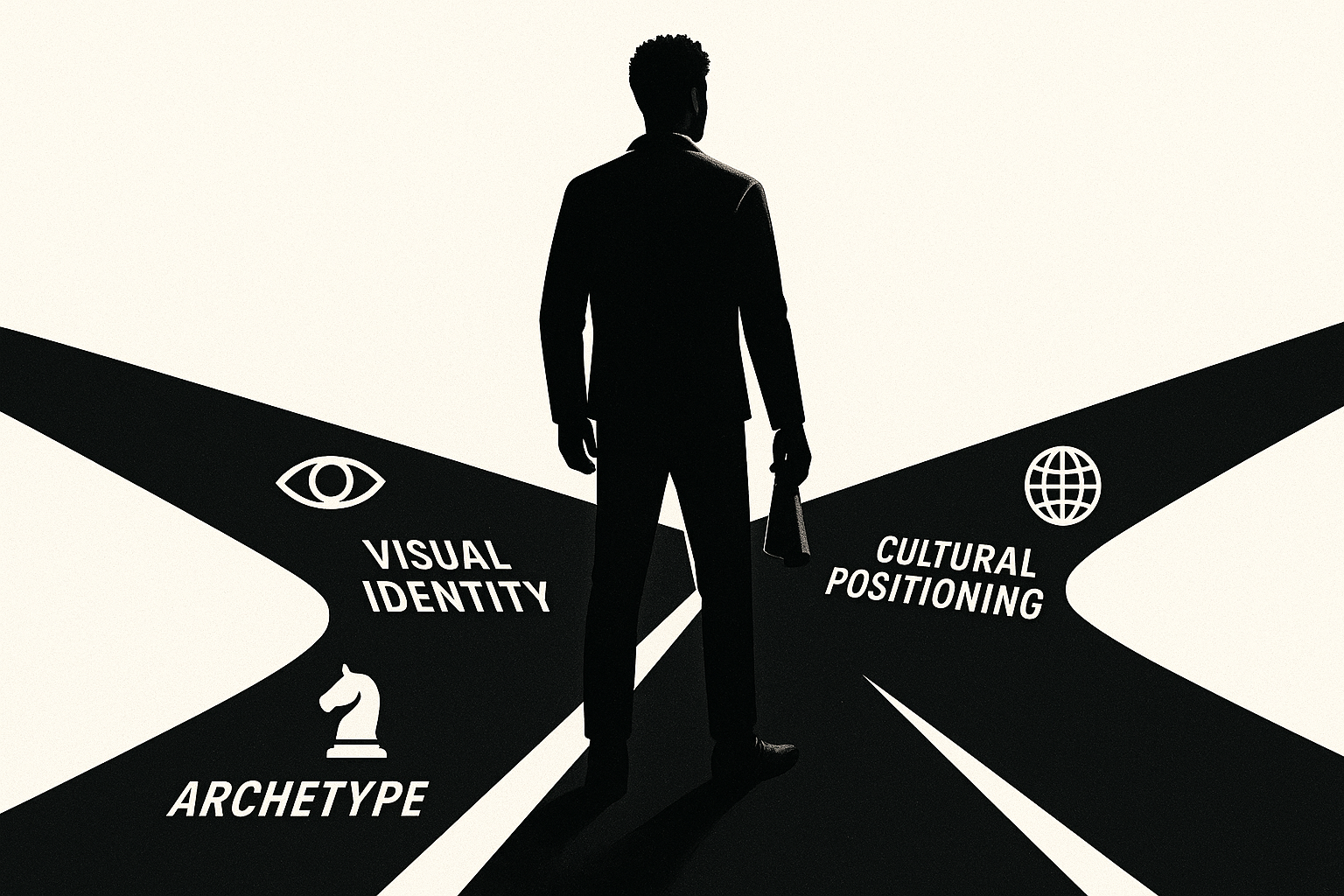
- Creating a visual identity system that scales across formats and platforms
- Mapping content strategy to audience psychology, not just trends
- Ensuring every asset reinforces the same core narrative
This isn't subjective. It's structural. The same way you wouldn't release music without mastering it, you shouldn't release yourself to the public without a defined brand system.
Why artist archetypes matter
An archetype is a universally recognized character pattern. Think: the rebel, the sage, the lover, the hero. Carl Jung outlined 12 core archetypes, and modern brand strategy has applied them to commercial identity for decades.
For independent artists, archetypes provide two things: clarity and consistency.
When you know your archetype, you know how to talk, what to wear, which collaborators fit, and what stories to tell. Your audience begins to recognize you not just by sound, but by presence.
Examples:
- Tyler, the Creator operates as the creator archetype. Experimental, bold, unafraid to rebuild his identity with every era. His visuals, album rollouts, and even Golf Wang branding all reinforce this.
- Billie Eilish leans into the outlaw archetype. Subversive, anti-establishment, refusing the typical pop playbook. Every visual choice, from oversized clothes to muted palettes, signals this.
- Chance the Rapper embodies the everyman. Accessible, community-driven, spiritually grounded. His independence, his refusal to sign, his public faith, all align.
These aren't accidents. They're decisions. And they create commercial value because they make the artist easier to understand, remember, and evangelize.
How to develop your brand pillars
Brand pillars are the three to five core values or themes that define your artist identity. They guide every decision: what you post, who you work with, what opportunities you take.
Here's how to build them:
Step 1: audit your catalog and content
Look at your last 10 releases, 50 posts, and any press coverage. What themes repeat? What emotions dominate? What do people say about you in comments or DMs?
Write it down. Be honest. This isn't what you wish you were. It's what the work already shows.
Step 2: identify gaps between output and intention
Where does your content drift? Where are you inconsistent? Are you posting memes one day and moody visuals the next with no through line?
Mark the disconnects. That's where your brand is weakest.
Step 3: define three to five pillars
Each pillar should be one word or short phrase. Examples:
- Authenticity
- Sonic experimentation
- Visual storytelling
- Community building
- Spiritual grounding
These aren't generic. They're specific to you. And once you define them, every piece of content should map to at least one pillar.
Step 4: test decisions against the pillars
Before you post, collaborate, or sign a deal, ask: does this align with my brand pillars? If not, don't do it. This is how you protect your identity and avoid dilution.
Visual DNA: building a system, not a mood board
Visual identity isn't about having a cool album cover. It's about having a repeatable, recognizable system.
That means:
- A defined color palette (three to five colors maximum)
- Consistent typography (one to two fonts across all assets)
- A visual tone (grainy film vs. clean digital, warm vs. cold, minimal vs. maximalist)
- Recurring motifs (symbols, textures, compositions that show up across releases)
This is how you become instantly recognizable in a feed, a playlist cover, or a festival lineup poster.
Look at how Bad Bunny uses neon, surrealism, and bold sans-serif type across every visual. Or how SZA leans into soft focus, earthy tones, and analog texture. These aren't aesthetic choices. They're brand systems.
You don't need a big budget. You need consistency and intention.
Curated content vs. trial-surface interaction
Here's where most artists lose the thread: they confuse posting with strategy.
Curated content is intentional. It aligns with your pillars, reinforces your archetype, and moves your narrative forward. It's planned, batched, and purposeful.
Trial-surface interaction is reactive. It's responding to trends, commenting in real time, showing up in Stories. It's lighter, faster, and less polished.
You need both. But you need to know which is which.
Curated content builds your brand. Trial-surface content builds your accessibility. The ratio matters. If you're 90% reactive and 10% curated, your brand will feel weak. Flip that, and you risk feeling distant.
A good baseline: 60% curated, 40% trial-surface. Adjust based on your archetype and audience behavior.
How brand strategy drives fan connection
People don't follow artists because of music alone. They follow because of identity alignment.
When your brand is clear, your audience self-selects. They see themselves in your archetype. They connect with your pillars. They trust your consistency.
This drives:
- Higher engagement rates
- Stronger word-of-mouth growth
- Better conversion on merch and ticket sales
- More organic playlist adds and press coverage
- Easier partnership and sponsorship deals
Labels and managers look for this. A well-branded artist is a lower-risk investment. You're not a question mark. You're a known entity with a defensible position in the market.
How to apply this starting today
You don't need to hire anyone yet. You can start building your brand architecture right now.
Week 1: define your archetype
Research the 12 Jungian archetypes. Pick the one or two that feel most aligned with your music and public presence. Write a one-paragraph description of how that archetype shows up in your work.
Week 2: establish your pillars
Use the audit process above. Write down three to five brand pillars. Test them against your last month of content. Adjust as needed.
Week 3: build your visual system
Pick your color palette and fonts. Apply them to one piece of content. Post it. See how it feels. Refine.
Week 4: map your content calendar to pillars
Plan your next 10 posts. Tag each one with the pillar it supports. If a post doesn't map to a pillar, cut it or rewrite it.
This is foundational work. It's not flashy. But it's the difference between an artist with a fanbase and an artist with a career.
Final word
Brand architecture isn't optional for independent artists anymore. The market is too crowded. The attention economy is too brutal. If you don't define yourself, the algorithm will define you by default.
You are the CEO of your own creative enterprise. That means you're responsible for the infrastructure, not just the product. Build your brand like you build your catalogue: with intention, consistency, and long-term vision.
The artists who do this early are the ones who survive the next decade.
Ready to streamline your workflow?
Stop piecing together spreadsheets and scattered notes. Join the waitlist for Music Artist Manager and get your entire rollout in one place.
Written By
Gavin Alexander
Senior Marketeer
As the founder of Music Artist Manager, Gavin has spent years at the intersection of music and technology. Seeing firsthand how chaotic release rollouts and split sheets can be, he designed a platform that brings major-label infrastructure to independent artists and their teams. He writes extensively about industry trends, artist leverage, and workflow optimisation.