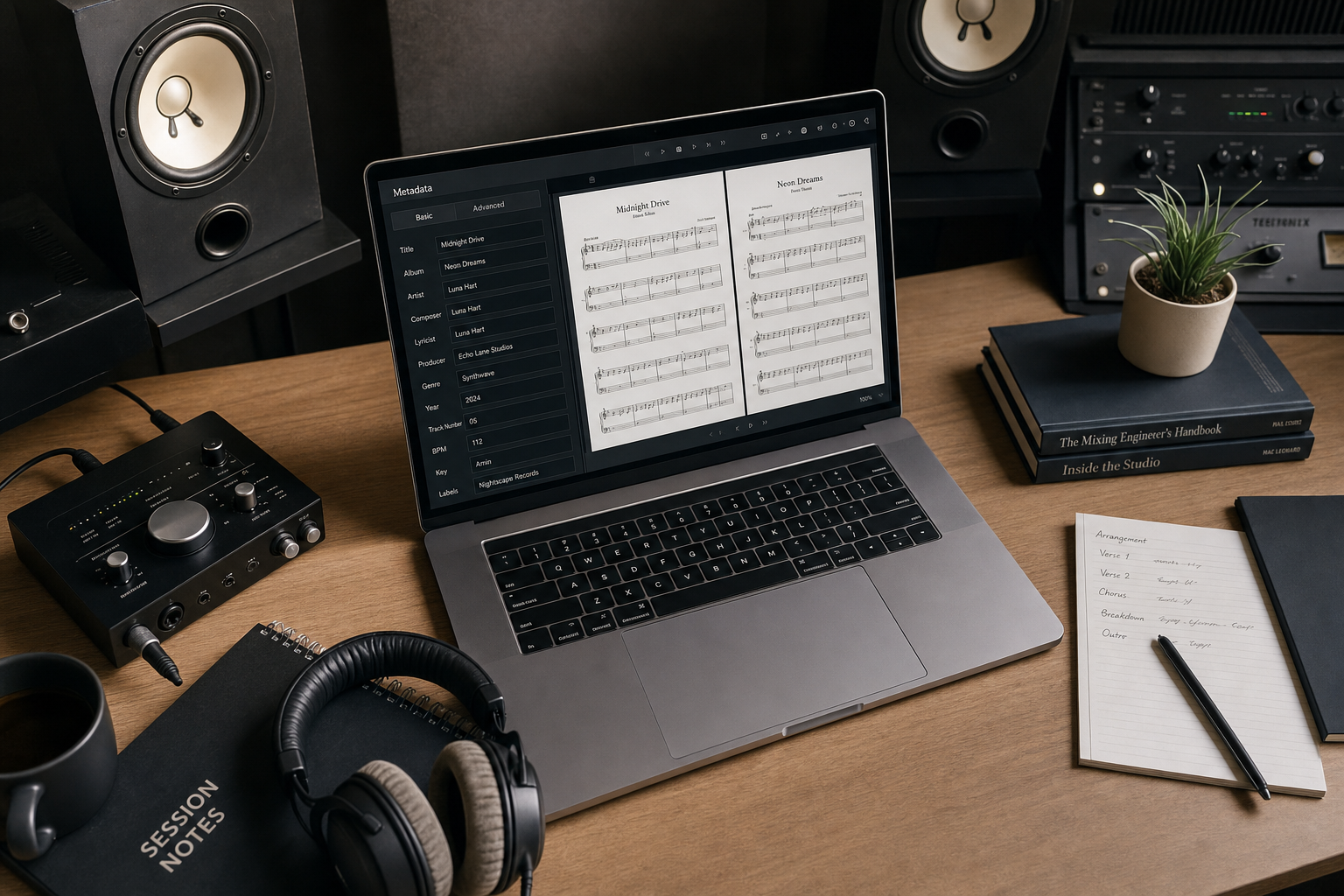
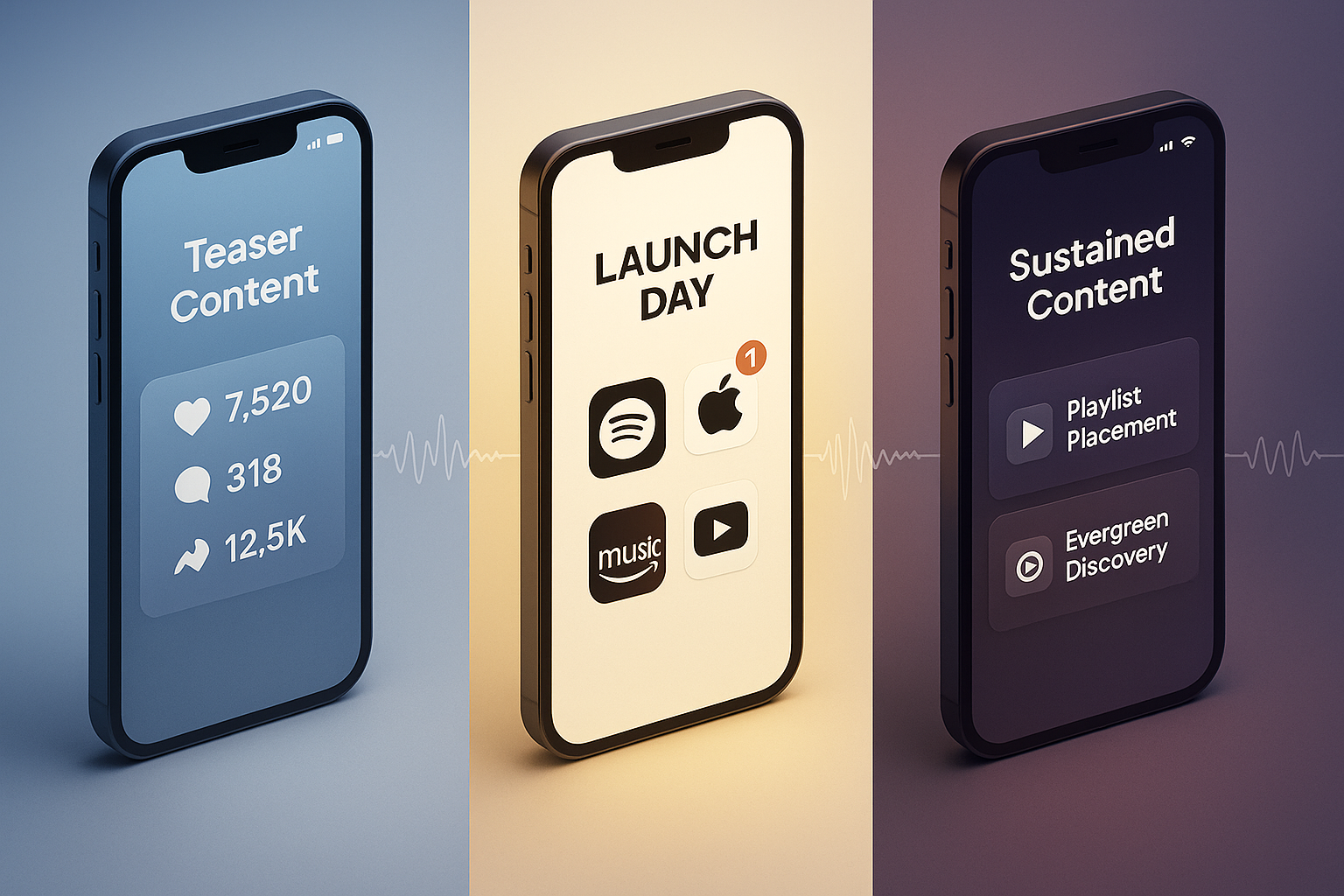
The three-phase content rollout after single release day
Most artists stop at 'out now' and miss the real play: a three-phase content system that builds narrative and sustains discovery.
Key Takeaways
Most artists treat release day like the finish line when it's actually the starting gun.
Your content plan should span three months, not three posts.
Pre-save campaigns are table stakes, not a strategy.
Sustain phase content is what separates catalogue earners from one-week wonders.
Most artists stop creating content the day their single drops. That's the exact moment you should be doubling down. This guide walks you through the three-phase rollout framework used by independent artists who treat their releases like campaigns, not coin flips.
Most artists lose their release in week two. here's how to hold ground for 90 days.
You spent three months on the track. Two weeks planning the rollout. Then you posted "out now" on Friday and wondered why streams fell off a cliff by Tuesday.
This is not a creativity problem. It's a content architecture problem.
Most independent artists treat a release like an event. One spike. One push. One weekend of attention, then on to the next drop. That approach worked when radio was the only game and scarcity drove demand. It does not work now.
DSPs reward momentum. Playlists favor tracks that hold listeners past the first seven days. Algorithms prioritize sustained engagement, not launch-day vanity metrics. If you stop feeding the system after release day, the system stops feeding you.
The fix is a three-phase content rollout: Tease, Launch, and Sustain. Not three posts. Three strategic content windows, each with distinct goals, formats, and KPIs. This is how major label campaigns are structured. This is how catalogue gets built. And this is what most independent managers and artists skip entirely.
Let's break it down.
Phase one: Tease (14 to 21 days pre-release)
This is not hype. This is narrative setup.
Your goal in the Tease phase is to give your audience a reason to care before the song exists. You are building context. You are planting story. You are priming the algorithm with early engagement signals so the DSPs know something is coming.
What this looks like in practice:
- Behind-the-scenes studio clips showing the process, not just the result.
- Songwriter or producer spotlights that introduce collaborators and add credibility.
- Lyric or concept teasers that hint at theme without giving away the hook.
- Pre-save link drops with a clear, specific call to action.
Do not overcomplicate the pre-save ask. One post. One caption. One link. Tell them why it matters to you, and ask them to lock it in. Skip the giveaways. Skip the guilt trip. Just ask directly.
The content in this phase should feel unfinished. Let people in on the work. Let them see the decisions being made. That builds investment. Polished teasers do not convert like raw process does.
Track your pre-save count daily. Set a baseline goal based on your current follower count and email list size. If you are not hitting 5% conversion from engaged followers, your messaging is not clear or your audience is not warmed up yet. Adjust accordingly.
One more thing: do not tease for longer than three weeks. Attention spans are short. Momentum dies if you stretch this phase too long. Two weeks is ideal. Three is the ceiling.
Phase two: Launch (release day through day seven)
This is the loudest you will be. This is where you convert passive listeners into active streamers, playlist curators, and sharers.
Your content in this phase should do three things:
- Announce availability across all DSPs with direct links.
- Deliver the narrative payoff you teased in phase one.
- Create shareable moments that extend reach beyond your core audience.
What this looks like:
- Official visualizer or lyric video posted within 24 hours of release.
- Story-driven captions that explain what the song is about, who made it, and why it exists now.
- Short-form clips pulling the best 15 seconds of the track, formatted for Reels, TikTok, and Shorts.
- Playlist placement updates as they happen, tagged and reshared.
- Thank-you posts that acknowledge collaborators, early supporters, and anyone who pre-saved.
Do not just post the link and walk away. Give people multiple entry points. Some will click Spotify. Some will find you on TikTok. Some will only engage if a friend shares it. Your job is to create content for every behavior type.
Launch week is also when you should be pitching directly to independent playlist curators, messaging artists in your genre for co-signs, and submitting to blogs or channels that cover new releases. Do not wait for discovery. Go get it.
Track your first-week streams, playlist adds, and follower growth. These are your leading indicators. If streams are strong but playlist adds are weak, your song is not holding attention past the first 30 seconds. If playlist adds are strong but streams are flat, your audience is not showing up. Use the data to diagnose where the gap is.
Most artists stop here. That is the mistake.
Phase three: Sustain (day eight through day 90)
This is where catalogue strategy separates professionals from hobbyists.
Sustain is not about posting the same link every week. It is about extending the life of the release through secondary content, performance moments, user-generated content, and cross-catalogue promotion.
Your goal in this phase is to keep the song discoverable, keep the algorithm engaged, and keep new listeners flowing in long after the initial push fades.
What this looks like:
- Acoustic or stripped versions that give fans a new way to experience the track.
- Remix or feature opportunities that introduce the song to adjacent audiences.
- Fan cover or UGC campaigns that turn listeners into co-promoters.
- Performance clips from live shows, rehearsals, or radio spots.
- Playlist strategy updates as you move from editorial to algorithmic placement.
This is also when you start connecting this release to the rest of your catalogue. Cross-promote older tracks in the same mood or style. Build custom playlists on Spotify that include your new single alongside similar artists. Link your music in the context of a vibe, not just a drop.
If you are a manager, this is where you earn your percentage. Sustain requires planning, content calendars, and consistent output. It is operational, not inspirational. But it is what keeps streams climbing in month two when everyone else's release is dead.
Track your 30-day and 60-day retention. Watch your algorithmic playlist adds. Monitor your listener-to-follower conversion rate on Spotify. These are the metrics that tell you if your Sustain phase is working or if you are just posting into the void.
One more thing: if the song is not performing by day 60, move on. Do not force it. Catalogue builds over time, and not every release will hit. The goal is to get better at this system with every drop, not to make every song a hit.
Why this works
DSPs do not reward spikes. They reward consistency.
Spotify's algorithm looks at how long a track holds listeners, how often it gets saved or added to playlists, and how engagement trends over time. A song that gets 500 streams a day for 60 days will outperform a song that gets 10,000 streams on day one and then nothing.
TikTok works the same way. A sound that gets steady usage over weeks will surface in more feeds than a sound that spikes once and dies.
Instagram and YouTube prioritize recency and consistency. If you post once on release day and then go silent for a month, the algorithm assumes your audience is not interested. If you post consistently with varied formats, it keeps testing your content with new viewers.
This is not theory. This is how the platforms are built. You either design your rollout around it or you lose.
What most managers and artists get wrong
They treat content like a chore instead of a strategic asset.
They post the same caption on every platform. They reuse the same 15-second clip for three weeks. They do not track what is working. They do not adjust based on data. They hope for virality instead of building momentum.
Content is not decoration. It is infrastructure. Every post should have a purpose. Every phase should have a goal. Every piece of content should either drive streams, build narrative, or expand reach. If it does not do one of those three things, cut it.
Final structure
Here is your 90-day rollout checklist:
Tease (14 to 21 days out):
- Studio process content
- Collaborator spotlights
- Lyric or concept teases
- Pre-save link with clear ask
Launch (day zero through day seven):
- Visualizer or lyric video
- Story-driven announcement posts
- Short-form clips optimized for each platform
- Playlist and press updates
- Thank-you posts
Sustain (day eight through day 90):
- Acoustic or alternate versions
- Remix or feature opportunities
- UGC and fan engagement
- Live performance content
- Cross-catalogue promotion
- Playlist strategy updates
Track everything. Adjust weekly. Build your next rollout based on what worked this time.
If you want to see how this ties into long-term catalogue strategy and algorithmic placement, read our breakdown on catalogue strategy in the algorithmic age. If you are structuring a manager deal around content execution, check out our guide to equity partnerships and artist-manager deals.
Most artists lose their release because they stop working when the song goes live. You are not most artists. Treat every release like a 90-day campaign, not a one-day event. Build the system. Trust the structure. Hold your ground.
Ready to streamline your workflow?
Stop piecing together spreadsheets and scattered notes. Join the waitlist for Music Artist Manager and get your entire rollout in one place.
Written By
Gavin Alexander
Senior Marketeer
As the founder of Music Artist Manager, Gavin has spent years at the intersection of music and technology. Seeing firsthand how chaotic release rollouts and split sheets can be, he designed a platform that brings major-label infrastructure to independent artists and their teams. He writes extensively about industry trends, artist leverage, and workflow optimisation.