Structuring your back catalogue as an active licensing asset
How to turn your catalogue into a perpetual sync income engine by treating backend royalties like the long-term revenue system they actually are.

Key Takeaways
Sync is not a lottery; it is an organized infrastructure play built on metadata tagging and persistent pitching relationships.
Backend royalties from TV, film, and gaming placements create predictable residual income that hedges streaming volatility.
Audit your existing back catalog for unexploited instrumental versions, acoustic cuts, and thematic tracks.
Document all rights holders and publishing shares to ensure zero royalty leakage when placements air internationally.
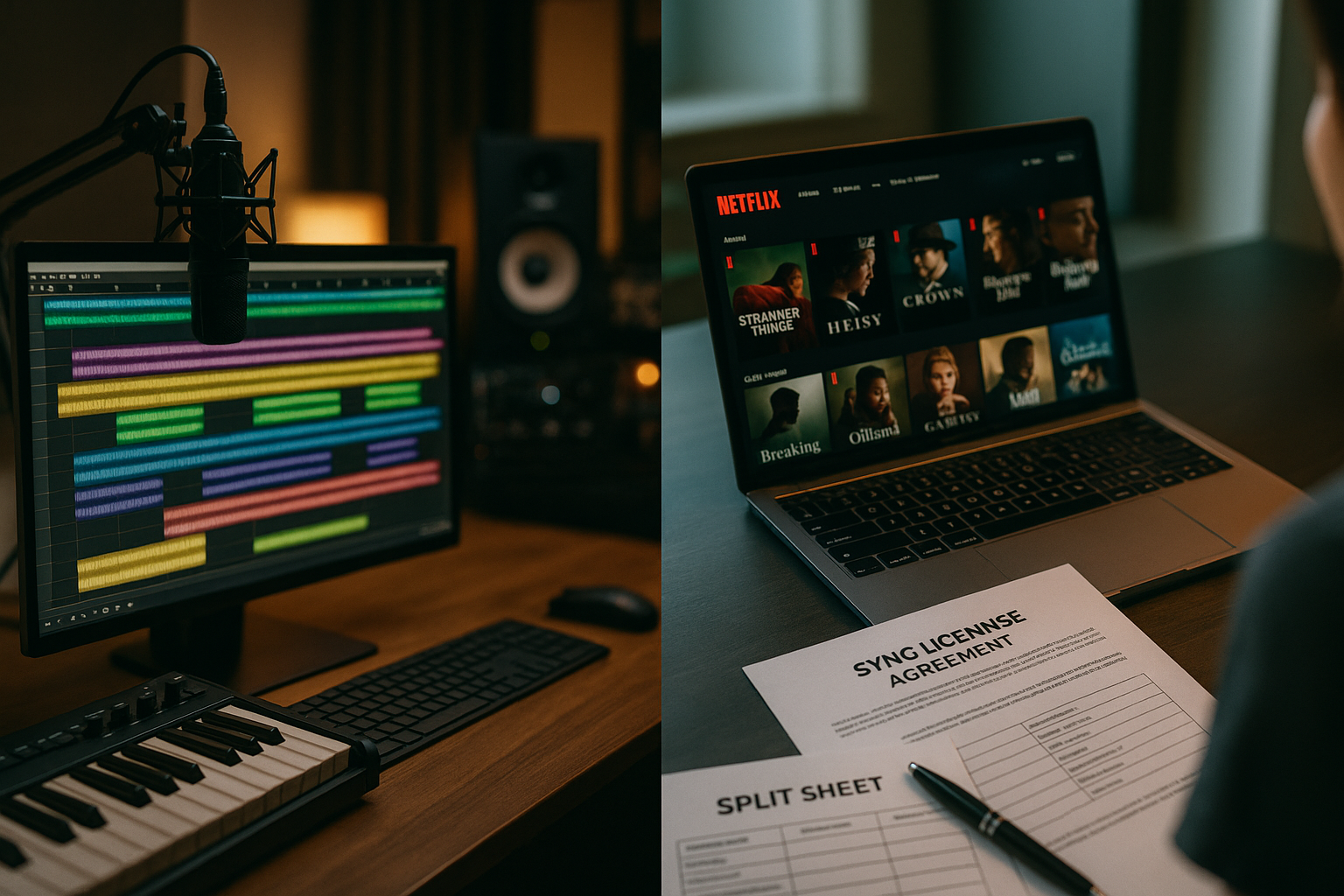
Most independent artists treat sync as a lottery. They pitch one song, hope for a placement, then move on. The artists actually winning in 2026 are treating sync as infrastructure: a systematically prepared catalogue that generates compounding multi-territory income long after the placement date.
Global sync revenues hit $641 million in 2025 according to the IFPI Global Music Report 2026. But the number itself is less important than where that money is actually coming from now.
As licensing expert Aaron Davison wrote in January 2026: "A placement that feels small can generate backend royalties across multiple territories for months or years. Artists who focused only on upfront fees often missed how powerful that long-tail income became. Going into 2026, this changes how you should think about catalogue strategy."
Most independent artists are still chasing sync as a lottery. They pitch one song, hope for a Netflix placement, then move on. The artists actually winning in 2026 are treating sync as infrastructure: a systematically prepared catalogue that generates compounding multi-territory income long after the placement date.
Why this moment is different
Three forces are converging right now:
- Global streaming distribution has made every placement international. A scene in a Korean drama, a Brazilian ad campaign, a UK docuseries all distribute globally almost overnight. That means PRO backend royalties accumulate across dozens of territories from a single placement.
- Independent market share is growing. Independent artists and labels now account for approximately 35% of global streaming revenue, up from 31% in 2024 according to Music24. Major labels no longer gatekeep the sync market.
- Technology is opening the catalogue tier. Hypebot noted in December 2025 that a "streamlined, technology-enabled approach for back catalogue and emerging repertoire" is unlocking "faster decision-making, broader usage, and more revenue." Music supervisors are now accessing independent catalogues at scale via automated search tools.
The barrier to sync has dropped. The differentiator is now readiness at scale.
The two income events most artists misunderstand
There are two distinct income events in a sync placement:
1. upfront sync fee
Paid by the licence holder (production company, brand, game studio) at the time of placement. Ranges from nominal (£200 for a student film) to significant (£50,000+ for a global TV advertisement). This is a one-time payment for the master recording.
2. backend performing rights royalties
Collected by your PRO (PRS in the UK, ASCAP/BMI in the US, etc.) every time the licensed work airs, streams, or broadcasts. This revenue accrues long-term across every territory where the content airs and where you are registered.
The critical misunderstanding: most independent artists optimise for the upfront fee and ignore the backend infrastructure. But the long-tail backend royalties can equal or exceed the sync fee over 12 to 36 months for any placement in content with longevity (TV series, documentary, video game).
What needs to be in place before you pitch
For this system to work, the following must be in place before a pitch:
- 100% unencumbered ownership confirmed
- Why it matters: Music supervisors need a clean one-stop licence
- Split sheets signed by all collaborators
- Why it matters: Prevents disputes blocking the deal
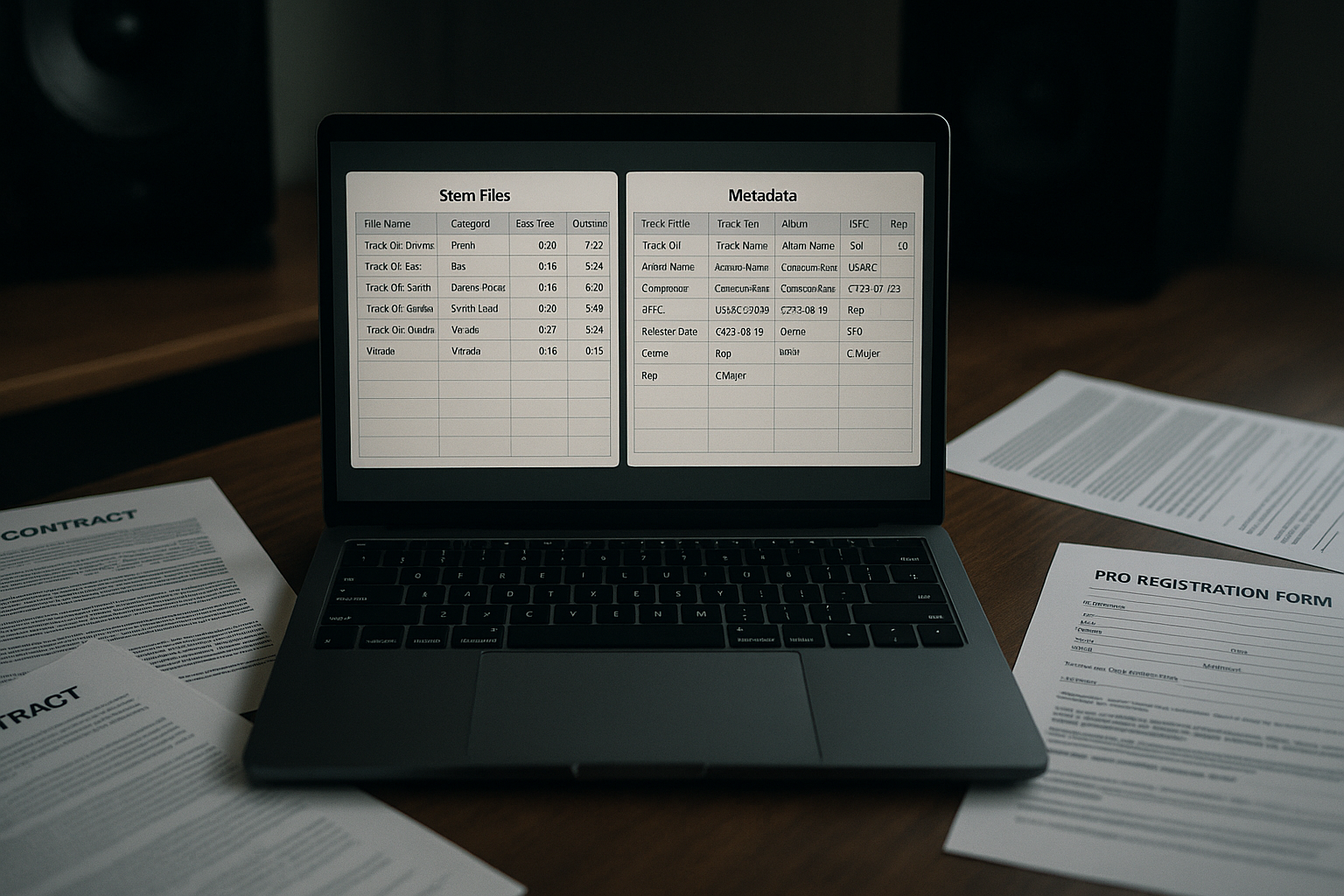
- Stems and instrumentals prepared
- Why it matters: Most placements require clean split files
- Metadata registered with PRO
- Why it matters: Ensures backend royalties route correctly
- Music registered with your publisher/admin
- Why it matters: Covers both writer and publisher share
- ISRC codes assigned to all tracks
- Why it matters: Enables tracking across platforms
Music supervisors operate on tight deadlines. If you cannot provide clean clearance documentation within 24 to 48 hours, you lose the placement to someone who can.
Who this strategy actually works for
This is most immediately actionable for artists who:
- Have released at least 10 to 15 tracks with clean ownership (sole-written or split sheets signed)
- Are registered with a PRO and a publishing administrator (e.g., Songtrust or a boutique publisher)
- Create music that is instrumentally adaptable (films, ads, and games overwhelmingly use instrumentals and custom stems)
This is not a first-year artist play. If you are still building your initial catalogue or have unresolved co-writer splits, the priority should be cleaning ownership infrastructure first. Pitching music you cannot cleanly licence wastes your relationship capital with music supervisors.
How to build your sync infrastructure
Phase 1: Catalogue audit (week 1 to 2)
-- list every released track. for each, confirm ownership split, verify co-writer split sheets are signed, note whether stems exist.
-- identify the top 20 to 30 tracks most likely to be sync-ready (instrumentally flexible, mood-versatile, no clearance issues).
-- register any unregistered tracks with your pro and publishing administrator immediately.
Phase 2: Technical preparation (week 3 to 4)
-- export stems and instrumentals for your priority 20 tracks: Full mix, instrumental, vocal-up, and stems-separated versions.
-- assign or verify ISRC codes on all tracks via your distributor.
-- build a simple one-page sync catalogue pdf: Track name, bpm, key, mood tags, genre, clearance status, contact.
Phase 3: Outreach system (month 2+)
-- research three to five sync libraries that accept independent submissions in your genre (e.g., musicbed, artlist, epidemic sound's artist programme, sync stories).
-- submit your top five tracks to each. track submission dates and follow-up windows in a simple CRM or spreadsheet.
-- register with a sync pitching platform (e.g., groover sync, syncfloor, taxi) for inbound supervisor access.
-- revisit and grow the sync-ready catalogue quarterly as you release new music.
The operating mindset shift
Most artists think about sync as getting discovered. That is the wrong frame entirely.
Lyor Cohen's operating thesis across his career (from managing Run-DMC to scaling Def Jam to YouTube) has consistently been the same: build systems, not gambles. The artists who break do not get lucky. They build infrastructure that makes luck inevitable.
A sync-ready catalogue is not a lucky break waiting to happen. It is a perpetual revenue engine. Once built, it continues generating income as the digital content world expands into new markets, new platforms, and new territories. The artist who spends two weeks preparing 20 tracks properly positions themselves to generate multi-territory backend royalties on every placement for the next five years.
Stop chasing the placement. Build the machine that earns the placement.
Next step
Manage your sync-ready catalogue in one place.Music Artist Manager's catalogue and rights tools let you track ownership status, split sheet completion, and PRO registration across every track so when the brief lands, you can respond in minutes, not days.
Ready to streamline your workflow?
Stop piecing together spreadsheets and scattered notes. Join the waitlist for Music Artist Manager and get your entire rollout in one place.
Written By
Gavin Alexander
Senior Marketeer
As the founder of Music Artist Manager, Gavin has spent years at the intersection of music and technology. Seeing firsthand how chaotic release rollouts and split sheets can be, he designed a platform that brings major-label infrastructure to independent artists and their teams. He writes extensively about industry trends, artist leverage, and workflow optimisation.