The superfan land grab: Why independent artists must own their deepest fans before the labels do
UMG is building infrastructure to monetise your superfans. This is what independent artists need to do before that window closes.

Key Takeaways
UMG is building superfan infrastructure to monetise your deepest fans before you do.
A superfan spending £41 yearly through platforms gives you a royalty, not a customer relationship.
Owning your email list and paid tiers means owning a compounding asset platforms cannot take.
Twenty paid members at £5 monthly proves the model and builds £1,200 annual recurring revenue.
UMG's chairman just told investors the major labels are coming for your superfans. They are building the infrastructure to extract more revenue from your most devoted listeners before you have even built a direct relationship with them. This is not a distant threat. It is happening now, and the window to own those relationships yourself is closing.
UMG Chairman Sir Lucian Grainge has publicly declared that superfans are "massively under-monetised" and that UMG's next strategic phase, following its artist-centric royalty push, is building superfan product and experience infrastructure in partnership with its platform partners. (Music Business Worldwide, 2026.)
Read that carefully: the largest music company on earth is telling investors it intends to systematically extract more revenue from your most devoted fans, and it is doing this by building the pipes before independent artists have thought to lay their own.
For an independent artist, this is a four-alarm signal. Not because UMG is a threat you can defeat, but because the window to own your superfan relationships directly, before those relationships get intermediated by a label-platform deal, is closing.
The economics are real
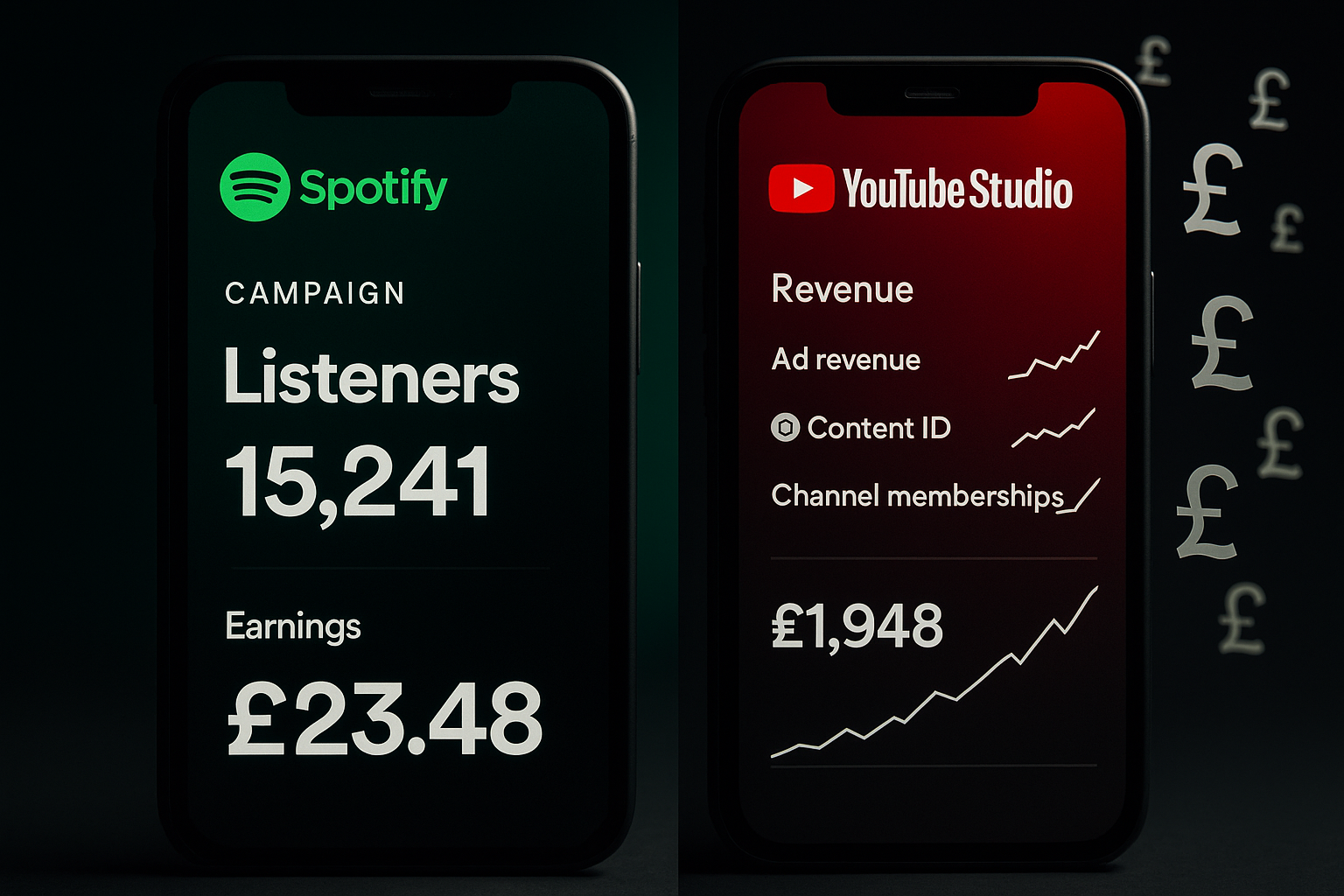
The numbers are not abstract. Chartlex's 2026 campaign data puts average superfan value at approximately £41/year (c. $52) when an artist combines consistent streaming presence with a Patreon or direct membership tier. That figure rises sharply, to £150–200+/year, for artists who operate a deliberate patron ladder including premium tiers.
A major label's superfan product will extract that value through ticketing partnerships, exclusive merch drops, and fan subscription layers, all inside platforms that retain data, own the billing relationship, and take a clip. The artist gets a royalty statement, not a customer list.
Independent artists can run an entirely different model: they can be the platform. A direct email list, a Patreon or Ko-fi membership, a Discord community, and exclusive digital or physical releases sent to subscribers. These are not complicated. But they must be built before the label-platform ecosystem commoditises the relationship.
Joel Gouveia's widely-shared "Invisible 2%" framing (Substack, March 2026) makes the point starkly: the only fans that constitute a sustainable business are the top 2% of your audience, and almost every artist is currently leaving most of that value on the table.
What you need to know
What is a superfan?
Not simply someone who streams you a lot. A superfan is a person who will spend money to access more of you: more often, in more formats, at higher price points. Spotify Monthly Listeners is a vanity metric for this segment. What matters is: how many people have paid you directly, even once?
The fan value ladder
Most artists operate a single tier: free (streaming). A properly structured fan economy has at minimum three layers:
- Free— streaming, social, YouTube. Discovery layer.
- Low-friction paid— £5–10/month membership. Early access, demos, behind-the-scenes, monthly Q&A.
- High-value tier— £50–200+/year. Limited physical releases, signed items, direct calls, exclusive sessions.
First-party data is the asset
Every fan who gives you their email is 50× more valuable than a Spotify follower. You own the relationship. You can reach them. Platforms cannot algorithm you away from your own mailing list.
The intermediation risk
When UMG builds a superfan product inside Spotify or Apple, the artist gets access to a feature, not a customer. The data stays inside the platform. If the artist leaves, they take nothing. Independent artists who own their data own a compounding asset. Artists who rely on platform-mediated superfan tools own nothing.
Who this works for
This strategy is not for artists with fewer than approximately 500 genuine, engaged listeners: people who comment, share, and respond, not just stream passively.
Before investing in paid tiers, an artist needs:
- A consistent release schedule (monthly content minimum)
- A direct contact mechanism: email list, SMS, or Discord
- Something genuinely worth paying for beyond the free version
If those three conditions are not met, the superfan infrastructure will be empty. Building the container is not the work. Building the audience that fills it is.
What to do now
1. Audit your current superfans this week
Look at your DMs, comments, and email inbox. Who has reached out more than once? Who has bought merch, come to multiple shows, or tagged you in content? These are your seed superfans. List them.
2. Launch a low-friction paid tier immediately
Patreon, Ko-fi, or a Substack for music. Pick one. Set the entry price at £5/month. Offer one genuine exclusive: a monthly voice note, an early demo, a 20-minute Zoom. Invite your seed superfans personally, not via a broadcast post.
3. Start your email list if you have not already
ConvertKit, Mailchimp, or even a Google Form. Put a link in every bio, every post description, every show flyer. The list is the asset, not the follower count.
4. Design your patron ladder before you need it
Map three tiers: Free / Core (£5–10/month) / Superfan (£50–100/year). You do not need to launch all three immediately. But having the architecture means you can grow into it.
5. Set a 90-day target
20 paid members at £5/month = £100/month recurring. That is not life-changing, but it is a proof of concept, and it compounds. Track it in Music Artist Manager's Expenses ledger, not a spreadsheet.
6. Protect your data
Export your member list monthly. Own the CSV. Never allow your entire superfan relationship to live inside a single platform you do not control.
The manager's view
Lucian Grainge's memo to investors is, in effect, a market signal: the value hiding in your deepest fan relationships is real enough for the world's largest music company to build a product around it. The question is whether you get there first.
Independent artists often think about superfan monetisation as a tactic, something to bolt on once they are "big enough." The manager's lens inverts this entirely. Superfan infrastructure is the foundation of the business, not a later-stage add-on. The artist who has 200 paying members at an average of £80/year is generating £16,000 annually in baseline revenue, before a single show, a single sync deal, or a single brand partnership. That artist has options. The artist with 50,000 Spotify Monthly Listeners and no direct relationships has an audience but no leverage.
Build the relationship before the platform owns it. The window is not permanently open.
Track your superfan revenue alongside every other income stream in one place.Music Artist Manager's Expenses ledger gives you a complete view of what your business is actually generating, so you can make decisions based on data, not gut feel.
→ Try Music Artist Manager free for 14 days
\*\*
Related Reading:
- https://www.musicartistmanager.com/blog/wrightymedia-technical-briefing-2026-07-23
- https://www.musicartistmanager.com/blog/headless-agility-for-growth-how-marketing
- https://www.musicartistmanager.com/blog/decommissioning-dark-data-architecting-for-proactive
Further Reading:
- - [Sir Lucian Grainge: After 'artist-centric' royalties, UMG's next focus is superfan experiences and products](https://www.musicbusinessworldwide.com) — Music Business Worldwide
- - [Superfan Monetization: Earn $52/Year Per Top Fan (2026)](https://chartlex.com) — Chartlex, March 2026
- - [The Invisible 2%: The Only Real Business in Music](https://joelgouveia.substack.com) — Joel Gouveia, Substack, March 2026
- - [Every Way Artists Make Money From Music in 2026](https://collabhouse.com) — Collabhouse, March 2026
Ready to streamline your workflow?
Stop piecing together spreadsheets and scattered notes. Join the waitlist for Music Artist Manager and get your entire rollout in one place.
Written By
Gavin Alexander
Senior Marketeer
As the founder of Music Artist Manager, Gavin has spent years at the intersection of music and technology. Seeing firsthand how chaotic release rollouts and split sheets can be, he designed a platform that brings major-label infrastructure to independent artists and their teams. He writes extensively about industry trends, artist leverage, and workflow optimisation.