Why your marketing budget should never go to Spotify
Why independent artists should stop running paid ads to Spotify and build monetisable subscriber counts on YouTube instead.
Key Takeaways
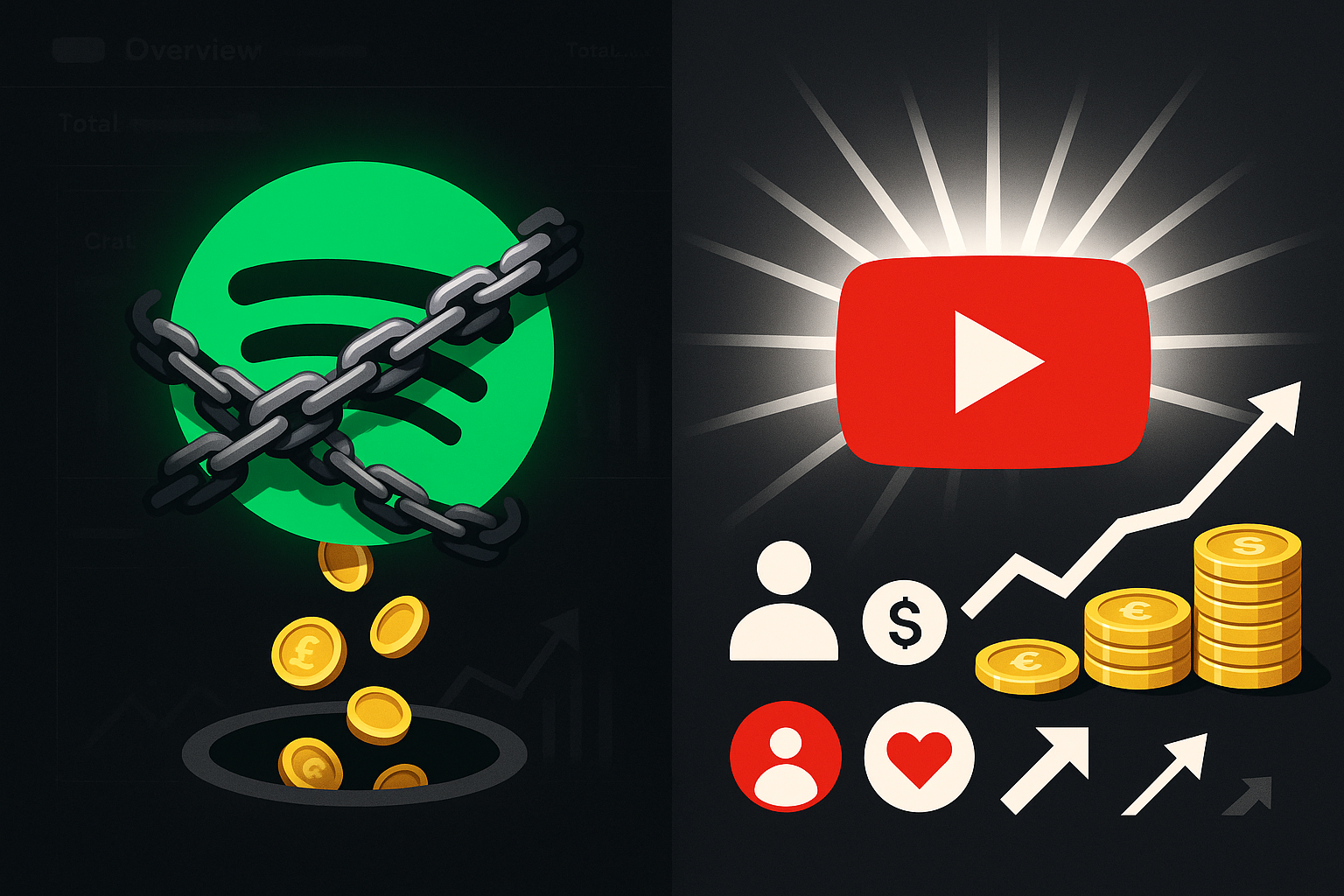
Stop running paid ads to platforms that pocket your marketing budget instead of paying you back.
YouTube monetises every view once you hit Partner threshold, Spotify pays fractions and owns the relationship.
Discovery platforms build awareness, monetisation platforms build revenue — know which one you're feeding with your ad spend.
Consistent video content on YouTube compounds for years, Spotify streams evaporate the second your campaign ends.
In May 2026, Julie Klein told a room full of managers to stop spending ad money on Spotify. The logic is simple: every pound you spend driving traffic to a streaming platform that pays you £0.003 per stream is a pound that could have built you a monetised YouTube audience instead. This is about treating your marketing budget like investment capital, not like a visibility tax.
At a major industry conference in May 2026, Julie Klein, COO of C3 Management, made a blunt case that landed like cold water: stop running paid ads to Spotify. Every pound spent driving listeners to Spotify lines the platform's pockets, not yours. The smarter allocation? YouTube, where you monetise every stream, where video content demonstrates live value to bookers and fans alike, and where the algorithm rewards consistency rather than release spikes.
This is the kind of operational discipline that separates artists managing a career from artists hoping for one.
The economics are simple
Independent artists are now running marketing budgets. Even modest ones. The question of where those budgets go is becoming as strategically important as the music itself.
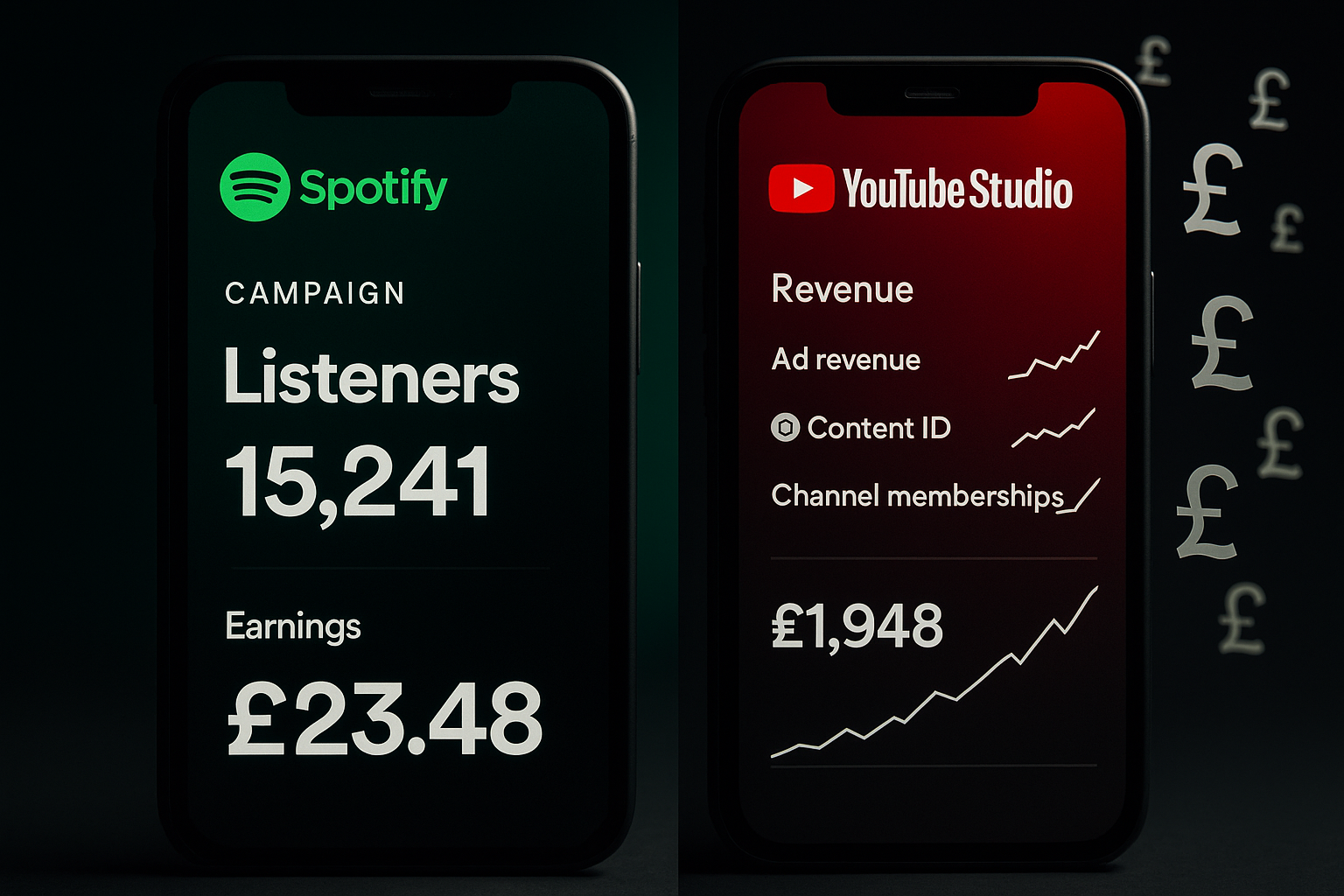
Spotify remains a credibility signal and a discovery layer. But as a direct monetisation vehicle for an emerging independent artist, it is structurally weak. The per-stream rate sits below £0.005. There is no direct artist-fan transaction. Paid traffic rarely converts into the kind of loyal listener that buys tickets or merch.
YouTube, by contrast, offers:
- Ad revenue starting at the YouTube Partner threshold (1,000 subscribers, 4,000 watch hours)
- Long-form content permanence. A well-titled video surfaces for years through search.
- Live show conversion. Video content shows a booker (or a potential fan in a new city) exactly what the live experience looks like.
- Direct fan engagement through comments, community posts, memberships, Super Thanks.
The parallel economy that independent artists are building in 2026 runs on owned and monetisable channels. YouTube qualifies on both counts.
Platform economics for artists
| Platform | Pays per stream/view | Artist can monetise directly | Fan relationship |
|---|---|---|---|
| Spotify | ~£0.003–0.005 | No | Passive listener |
| YouTube | ~£0.001–0.005 per view + ad rev share | Yes (YPP) | Active subscriber |
| Apple Music | ~£0.007–0.01 | No | Passive listener |
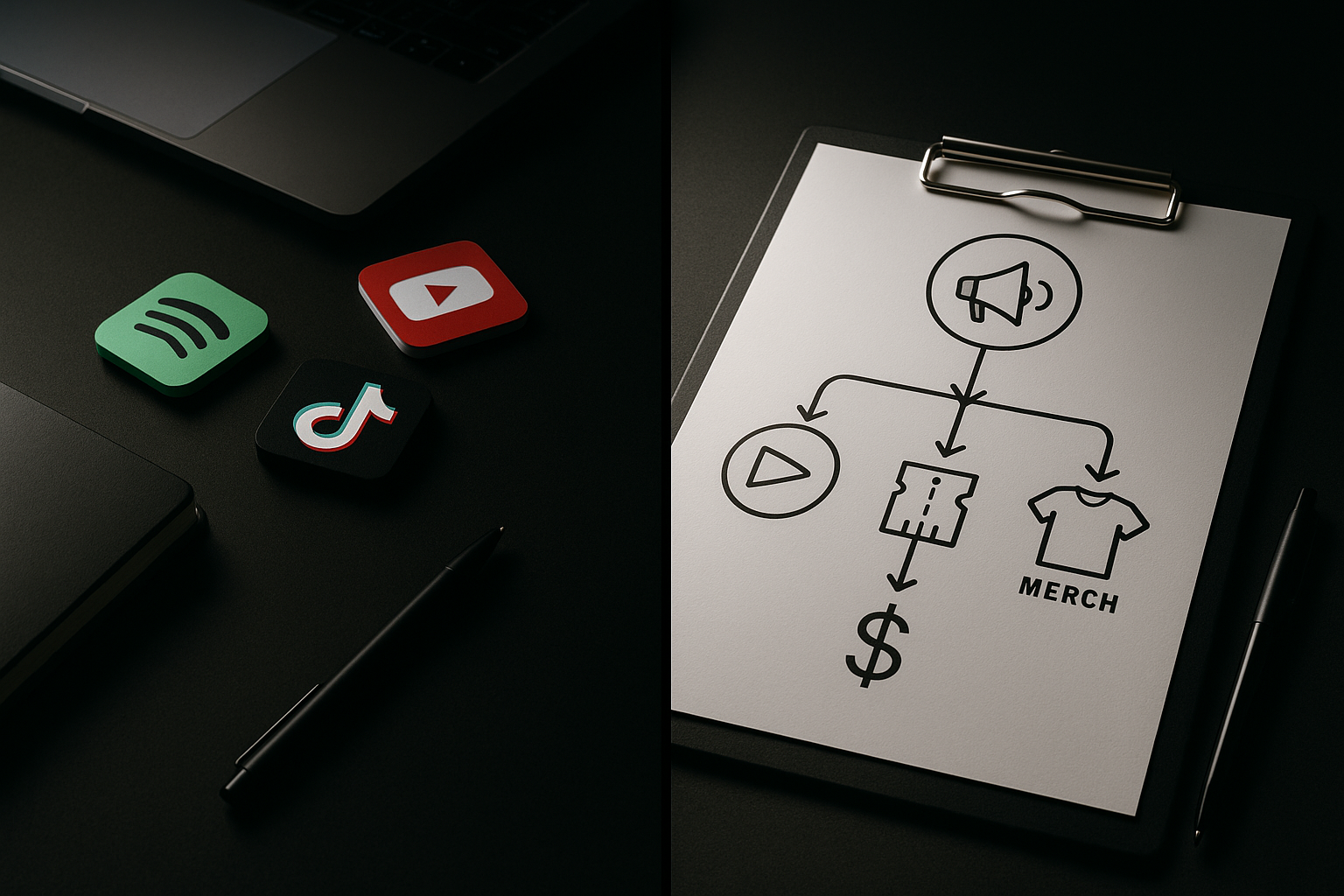
The distinction managers need to drill into their artists: discovery platforms (Spotify, Apple Music, TikTok) versus monetisation platforms (YouTube, Bandcamp, direct-to-fan).
Running paid advertising to a discovery platform is rational only if you're a major label with catalogue-deep monetisation on the back end. When one new listener eventually buys a concert ticket, streams 400 tracks, or purchases sync. For an independent artist with a shallow catalogue and no backend, that same £5/day ad spend on YouTube builds a monetisable subscriber count.
Content formats that convert on YouTube
- "Behind the track" explainer videos (2–5 min)
- Live session/acoustic versions
- Tour diary vlogs tied to single releases
- Lyric breakdowns (index well in search)
Who this works for
This strategy is for artists who:
- Have at least 3–5 pieces of video content ready or in production
- Are willing to treat YouTube as a primary platform, not an afterthought
- Have a release cycle consistent enough to sustain weekly or biweekly uploads
It is not a shortcut. YouTube rewards longevity. An artist who posts twice and abandons the channel will see no return. The competitive advantage here is that most independent artists still treat YouTube as a dumping ground for music videos. The bar for genuine engagement is low for those willing to show up consistently.
Your action plan
1. Audit your current ad spend.Identify any campaigns currently running to Spotify or Apple Music. Pause them.
2. Claim and optimise your YouTube channel.Custom URL, channel art, links to all platforms, organised playlists by era/project.
3. Map 4–6 content ideas to your next single release.A studio clip, a lyric walkthrough, a "making of," and one live performance.
4. Start a YouTube Partner Programme tracker.Log subscriber count and watch hours weekly in Music Artist Manager's dashboard. Set a 90-day milestone.
5. Reallocate £5–10/day from Spotify-targeted ads to YouTube pre-roll or search ads targeting fans of 3–5 comparable artists.
6. Add a live performance reel.60–90 seconds of live footage as a pinned video. This is your pitch to bookers who find you organically.
7. Link your monetisation channels.In every YouTube video description, link to your Bandcamp, merch store, or Music Artist Manager-managed booking page.
The mindset shift
A performer asks: "How do I get more streams?"
A CEO asks: "Which platform pays me back for every pound I put in?"
Spotify is a shop window. YouTube is the shop. Independent artists in 2026 who are building parallel economies (growing revenue without label infrastructure) understand that marketing spend is investment, not expense. Every view on YouTube is a compounding asset. Every Spotify ad impression is a toll paid to someone else's platform.
The shift from "more listeners" to "more monetised listeners" is the single most important operational mindset change an independent artist can make.
Use Music Artist Manager's Projects to schedule your YouTube content calendar alongside your single rollout.Map every video asset to a release date, track your YPP progress, and ensure no marketing pound goes to a platform that doesn't pay it back.
**
Related Reading:
- [Why Smart Managers Are Moving](https://www.musicartistmanager.com/blog/managers-moving-ad-spend-to-youtube)
- [Your promotional budget is on the wrong](https://www.musicartistmanager.com/blog/ad-spend-spotify-youtube-shift)
- [Why Smart Managers Are Moving](https://www.musicartistmanager.com/blog/youtube-over-spotify-ad-spend)
Further Reading:
- - [How to be an Artist Manager in 2026](https://www.artistforartist.com/post/how-to-be-an-artist-manager-in-2026) — Artist for Artist
- - [Industry Report: Independent Artists Are Redefining Revenue](https://brmusicgroups.com/pulse/4) — BR Music Groups
- - [The Great Unsigning: Why Independent Artists Are Taking Over](https://www.tjplnews.com/post/the-great-unsigning-independent-artists-2026-tjpl-news-issue-41) — TJPL News
Ready to streamline your workflow?
Stop piecing together spreadsheets and scattered notes. Join the waitlist for Music Artist Manager and get your entire rollout in one place.
Written By
Gavin Alexander
Senior Marketeer
As the founder of Music Artist Manager, Gavin has spent years at the intersection of music and technology. Seeing firsthand how chaotic release rollouts and split sheets can be, he designed a platform that brings major-label infrastructure to independent artists and their teams. He writes extensively about industry trends, artist leverage, and workflow optimisation.