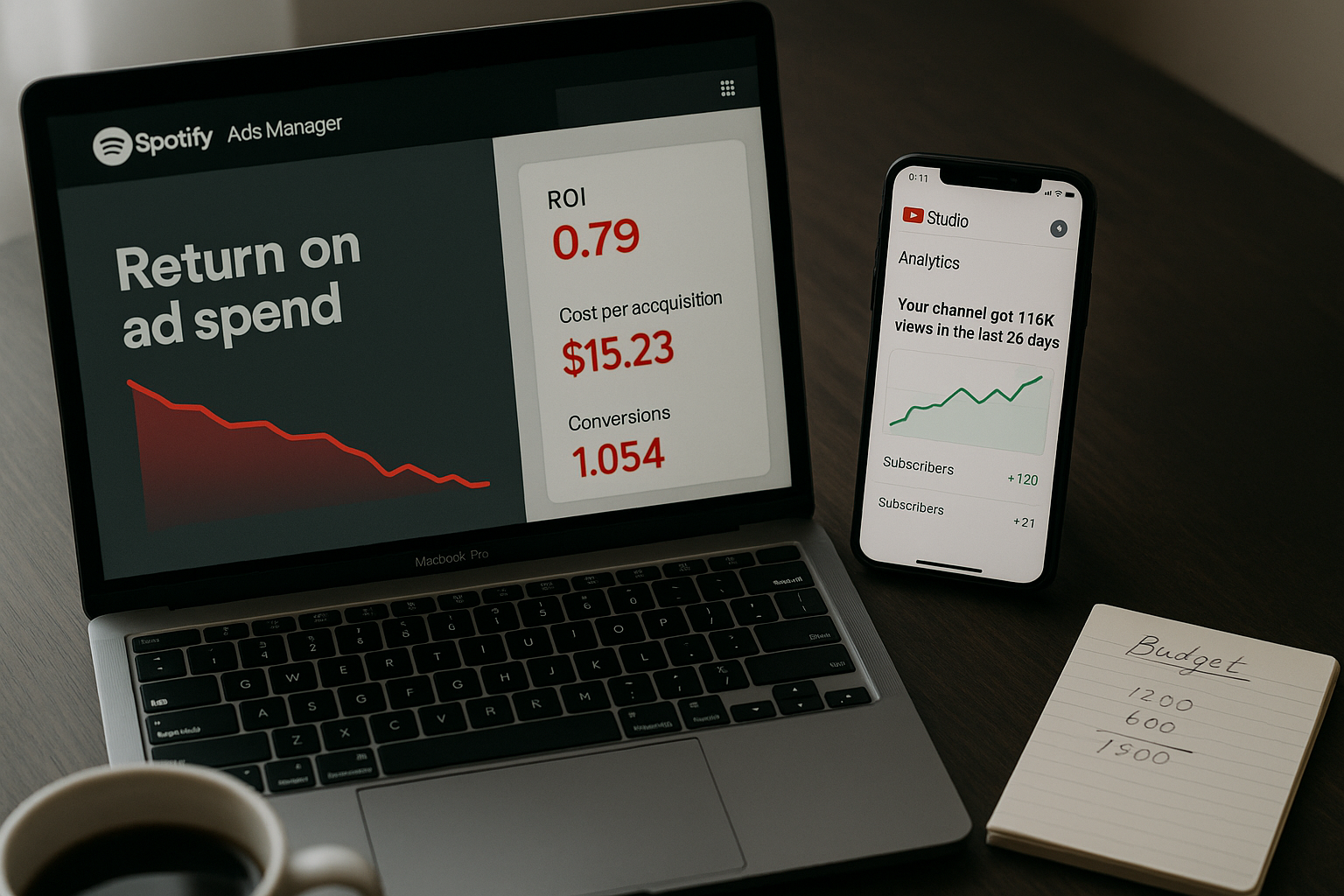
The major labels just paid to copy your superpower — build your
UMG just paid for the direct-fan infrastructure you already have access to. Here's how to build your moat before label artists catch up.
**UMG just paid for the direct-fan infrastructure you already have access to. Here's how to build your moat before label artists catch up.**
The major labels just paid to copy your superpower. build your moat before they catch up.
Universal music group just bought what you already have for free
On 18 February 2026, Universal Music Group announced a multi-year strategic partnership with EVEN, a direct-to-fan platform. The goal: give every UMG artist turnkey access to tools that let them sell directly to fans without a middleman.
Read that again. The largest music company on Earth just paid for infrastructure that independent artists have had open access to for years.
At the same time, Spotify's Loud & Clear 2025 report confirmed that independent artists and labels collected half of all royalties from the platform's record $11 billion payout. Not a small slice. Half.
The signal is unmistakable: direct fan ownership is now a strategic priority at every level of the industry. The window of independent advantage is real, but it won't stay open forever.
Why the majors are scrambling to catch up
The major label system has a structural problem. They have enormous catalogues and marketing budgets, but they do not own the fan relationship. Streaming platforms own the discovery. Social platforms own the attention. Until now, labels largely accepted that arrangement.
UMG paying to embed EVEN's infrastructure across its entire global roster is an acknowledgement that the direct fan relationship is the most valuable asset in the new music economy. And that they have been giving it away.
For independent artists, this moment cuts both ways:
**Opportunity:** You already have access to the exact same tools UMG just bought. You are not behind. You are ahead, if you act now.
**Warning:** When label-backed artists start deploying sophisticated direct-to-fan funnels at scale, the bar for what fans expect will rise. The artist who builds their owned audience infrastructure in 2026 will have a compounding head start over the one who waits until 2027 or 2028.
The parallel to Spotify's payout data is instructive. Independents capturing 50% of streaming royalties did not happen by accident. It happened because thousands of artists systematically built catalogues, release cadences, and audience relationships that convert. Direct-fan infrastructure is the next version of that same compounding work.
What direct-to-fan infrastructure actually means
A direct-to-fan stack is not just a Bandcamp page or a Shopify store. It is a layered system with four core components:
1. owned contact list
Email and SMS addresses you hold regardless of any platform's algorithm or policy change. A warm list of 1,000 active fans converts at 10–40× the rate of passive social followers. This is not promotional theory. This is conversion data from artists who track their numbers.
2. transactional layer
A storefront for digital downloads, exclusive merch, vinyl, access passes, and bundles. You control the pricing. You control the margin. Platforms like Bandcamp or a custom Shopify setup give you this immediately.
3. community or membership layer
A recurring revenue vehicle. Patreon, a paid Discord, a fan club subscription. This converts your most engaged listeners into reliable monthly income. The difference between a one-time buyer and a recurring member is the difference between transactional revenue and compounding cash flow.
4. data layer
The purchase and engagement history that tells you who your superfans are, where they are geographically, and what they spend on. This is not vanity metrics. This is business intelligence that informs your next release strategy, your tour routing, and your pricing decisions.
EVEN, the platform UMG licensed, sits primarily at layers 2–4. Tools already available to independent artists replicate this entirely without a label deal:
- **Layer 1:** Mailchimp or Klaviyo
- **Layer 2:** Bandcamp or Shopify
- **Layer 3:** Patreon or Memberful
- **Layer 4:** Your distributor's analytics dashboard plus email tagging
The compounding dynamic
Each of these layers feeds the others. Every sale grows the list. Every email builds community. Every community interaction surfaces the next superfan. The longer you run the system, the more defensible your position becomes.
This is not a growth hack. This is infrastructure.
Who this strategy is for (and who it is not for)
This approach is most applicable to artists who:
- Have released at minimum one project that has generated measurable streaming or social engagement. You have some audience to convert.
- Are willing to treat fan communication as a genuine creative practice, not a marketing checkbox. This means writing real emails, not scheduling press releases.
- Can commit to a consistent release or content cadence for at least six to twelve months. The system compounds. It does not sprint.
This is not for:
- Artists at absolute zero. Your immediate priority is building the audience first, not the funnel infrastructure.
- Artists who want a set-it-and-forget-it passive income solution. Owned audience requires active stewardship.
How to build your direct-to-fan stack in 90 days
Phase 1: Build the foundation (weeks 1–2)
1. Pick one email platform. Mailchimp free tier works. ConvertKit offers more sophisticated segmentation if you need it. Create a single sign-up form.
2. Add the sign-up link to every bio, link-in-bio, and release description across all platforms today.
3. Set up a simple two-email welcome sequence:
- **Email 1:** Genuine personal introduction plus one exclusive (a demo, a wallpaper, a lyric sheet).
- **Email 2:** Your back-catalogue recommendation with a brief story behind it.
Phase 2: Create the first owned transaction (weeks 3–4)
1. Identify one thing your most engaged fans would pay £5–£15 for. A stems pack. An extended commentary track. A Zoom listening session for your next release. An exclusive vinyl variant.
2. Set it up on Bandcamp or Gumroad. Not a full storefront rebuild. Just one SKU.
3. Announce it exclusively to your email list first, before anywhere else. This trains your audience that being on the list has tangible value.
Phase 3: Introduce recurring revenue (month 2–3)
1. Launch a low-barrier membership tier (£3–£5/month) on Patreon or Memberful with a clear, specific promise. Monthly unreleased track. Early access. A private Q&A each quarter.
2. Promote it to your list with a founding member offer. The first 50 subscribers lock in a discounted rate forever.
Phase 4: Close the data loop (ongoing)
1. Tag your email subscribers by how they joined (Spotify link, Instagram bio, live show, etc.). After your first 500 subscribers, you will see clear patterns about where your superfans actually come from.
2. Use that data to double down on the single highest-converting acquisition channel. Cut two that are not working.
The CEO artist mindset
UMG did not pay to license EVEN because it is a nice-to-have feature. They did it because someone in that organisation ran the numbers and concluded that the direct fan relationship is a balance sheet asset. It has compounding economic value that belongs on the ownership side of the ledger.
The independent artist's advantage has always been proximity. You are closer to your fan than any label A&R will ever be. The major label system is only now building the infrastructure to close that gap.
The CEO artist does not wait for a label to build their fan relationship for them. They treat their email list as the highest-value asset on their own balance sheet. More valuable than playlisting. More defensible than a social following. More resilient than any streaming algorithm.
You already have access to everything UMG just paid for. The question is whether you will use it before they catch up.
**Track your direct-fan growth with MAM's Fan CRM Dashboard.** See your email list growth, per-fan revenue, and direct touchpoints in one place alongside your release schedule and royalty income. Watch how your owned audience compounds against your streaming numbers over time.
Ready to streamline your workflow?
Stop piecing together spreadsheets and scattered notes. Join the waitlist for Music Artist Manager and get your entire rollout in one place.
Written By
Gavin Alexander
Senior Marketeer
As the founder of Music Artist Manager, Gavin has spent years at the intersection of music and technology. Seeing firsthand how chaotic release rollouts and split sheets can be, he designed a platform that brings major-label infrastructure to independent artists and their teams. He writes extensively about industry trends, artist leverage, and workflow optimisation.