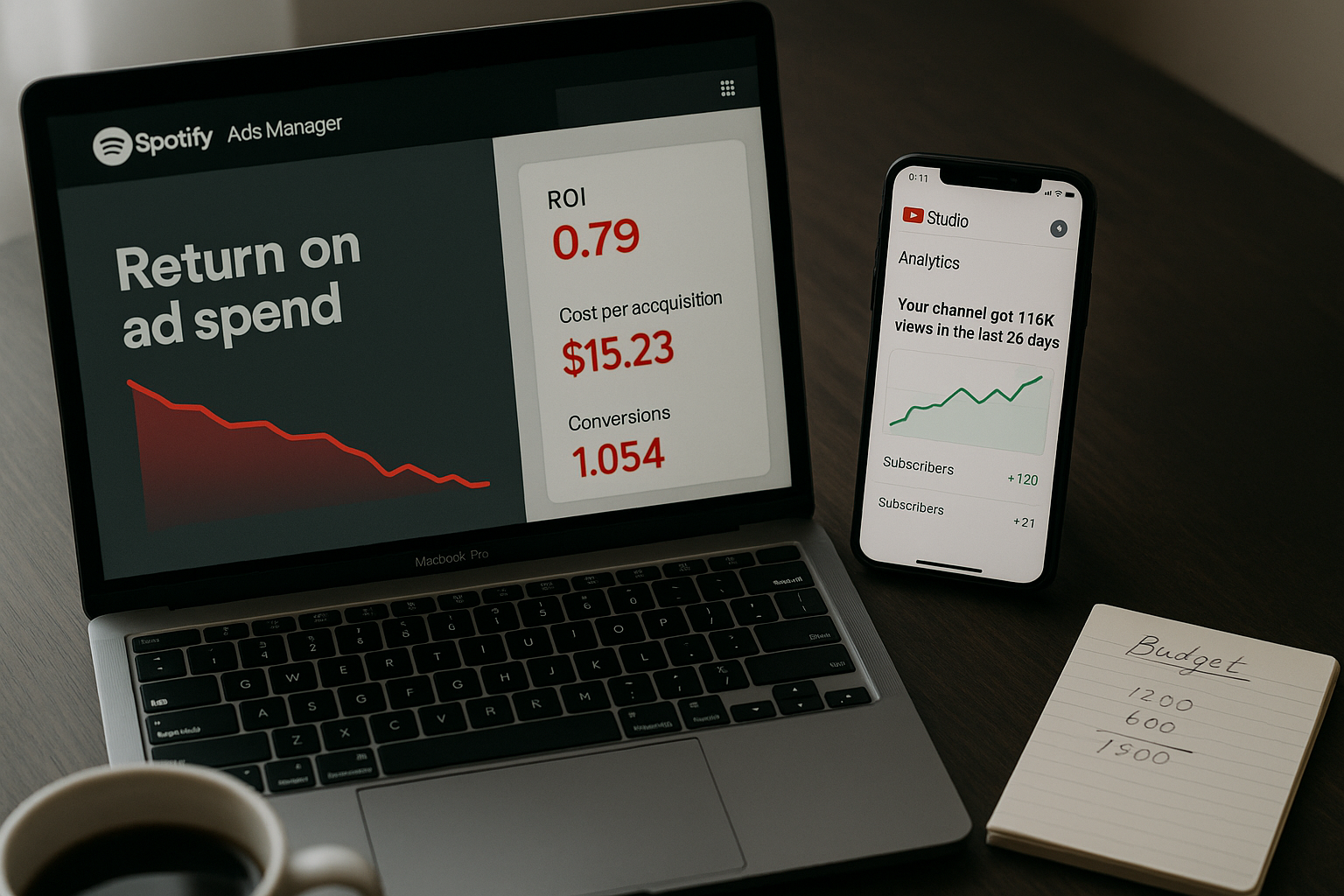
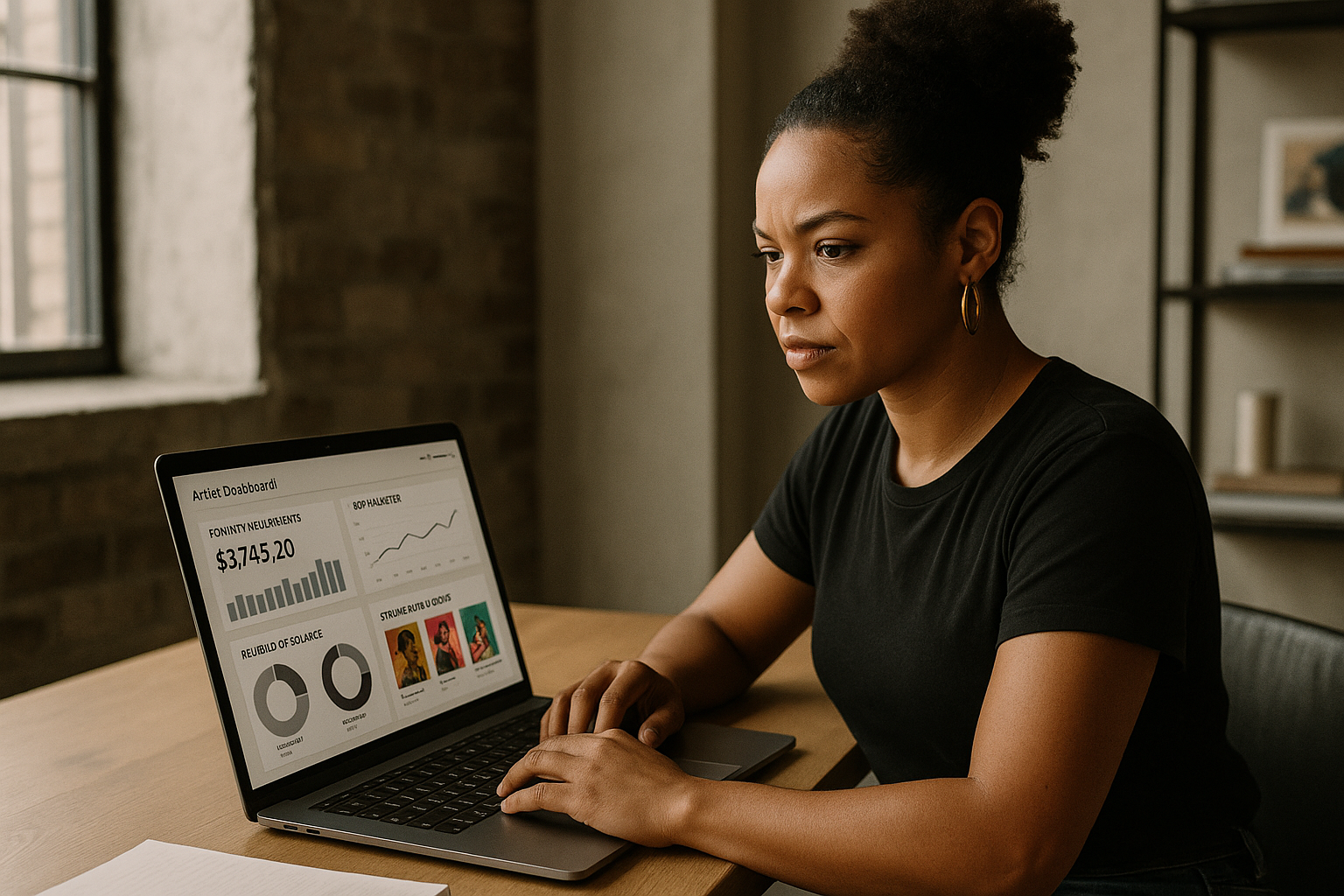
AI won’t promote your music for you - but it can if you know how
Almost every independent artist we’ve spoken to this quarter is using AI, and almost none of them are using it for the right thing.
Key Takeaways
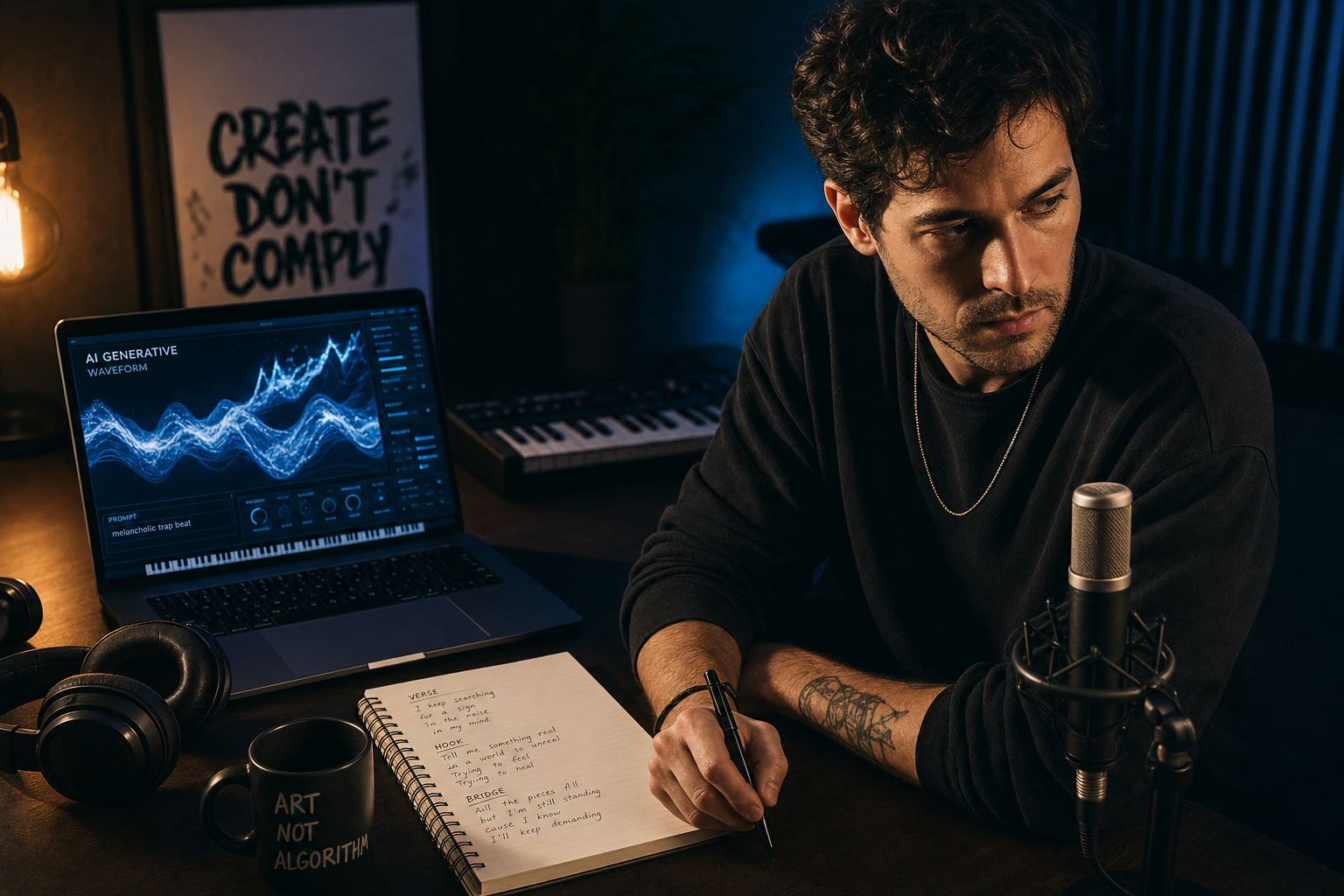
AI is a promotional multiplier that should be used to scale outreach rather than replace songwriting.
Using AI to generate music without an existing distribution strategy simply creates more unheard tracks.
AI enhances skill but cannot paper over a lack of genuine A&R instincts or audience understanding.
The most powerful music requires a real human story that no generative model can supply.
The industry is debating whether AI will replace musicians, but independent artists are asking the wrong questions. The real value of AI isn't in creating more music—it's in building the distribution systems to ensure your music actually gets heard.
Almost every independent artist we've spoken to this quarter is using AI. Almost none of them are using it for the right thing.
We didn't set out to track that. But the pattern became impossible to ignore. And it matters now because the gap between artists who grow and artists who stall is widening faster than most people in this space want to admit.
The conversation everyone is having (and why it's the wrong one)
The noise around AI in music has been loud. Majors are renegotiating sync deals with AI clauses baked in. DSPs have quietly updated their content policies. Artist advocacy groups have staked out formal positions on AI-generated recordings.
The infrastructure is shifting fast.
And most independent artists are sitting completely outside that conversation. Not because they don't care. Because none of it maps to their actual problem.
The questions they're actually sitting with:
- Is using AI to write lyrics cheating?
- Will AI replace me?
- Is AI-generated music even real art?
These are creative questions. The industry's top-down framing around rights, royalties, and regulation doesn't touch them.
But here's what's worth saying clearly: those creative questions are also not the ones that determine whether your music career grows.
The real issue isn't AI. It's distribution.
Music has always been distribution-driven, not creation-driven. A song no one hears has no commercial value, regardless of how it was made.
Most artists know this somewhere. But their behaviour doesn't reflect it. They spend hours using AI to finish a song faster, and then that song sits unheard on a DSP with zero playlist placement.
The bottleneck was never production. It was always promotion.
That's the frame. Everything else flows from it.
Three questions that actually matter for AI music promotion
After working across independent and major-distributed projects, the complexity comes down to three questions. Every independent artist needs to answer these before AI becomes useful to them at all.
Question 1: Are you using AI to make music, or to make sure your music gets heard?
The default assumption is that AI is a creative tool. That's the wrong frame for artists trying to build a career.
Here's how it plays out depending on context:
- An artist uses AI to co-write lyrics. The song gets finished faster. It sits unheard on a DSP with zero playlist placement.
- An artist uses AI to draft personalised outreach emails to independent playlist curators. Their song gets pitched to 40 curators in the time it used to take to pitch five.
- An artist uses AI to repurpose one song into a week of story-driven content. Streaming numbers lift because their audience actually knows the song exists.
The first scenario produces more music. The second and third produce more listeners. Those are not the same outcome.
The mistake is reaching for AI as a songwriting tool before you've built a system for getting your music in front of people. If you want to use AI for music promotion, start there.
Question 2: Does the artist have the underlying skill AI is supposed to enhance?
AI enhances skill. It does not replace it.
Think of it like a professional mixing engineer. They can make a well-recorded track sound exceptional. They cannot save a song with no emotional core. The raw material still has to be there.
Here's how this plays out in practice:
- An artist with no A&R instincts uses AI to generate release ideas. The output is generic because the inputs were generic.
- An artist who already understands their audience uses AI to stress-test their content strategy. The output sharpens something that was already working.
- An artist with no promotional experience uses AI to write outreach emails. The emails go out. The pitch angle is wrong, the targeting is off, and the curator ignores it.
AI assumes the person using it knows what they're trying to build.
"AI is not helping if you're not ready to be helped" is not a motivational line. It's a diagnostic. Artists who invest in AI tools before understanding how music promotion actually works will spend money and energy on outputs that don't move the needle.
The real variable is foundational knowledge of distribution, audience-building, and monetisation. The mistake is assuming a better tool fixes a strategy problem.
Question 3: Is the music coming from somewhere real?
This feels like a philosophical question. It isn't. It's a commercial one.
Songs that connect are not necessarily the most technically accomplished. They're the ones that feel like they came from a real place. In a streaming environment where skip rates directly influence DSP algorithm performance, the difference between a song that feels real and one that feels "filled in" has measurable consequences for reach.
Here's how this distinction shows up:
- An AI-assisted lyric built around a real personal moment retains the specificity and emotional weight that makes a listener stop scrolling.
- A fully AI-generated lyric optimised for rhyme and rhythm lands flat because it carries no lived perspective.
- A human-written lyric that uses AI to tighten structure is typically the strongest outcome. The idea is intact. The execution is cleaner.
AI can help an artist shape, structure, and communicate a story. It cannot supply the story.
The real variable is whether the artist starts with something true. The mistake is using AI to paper over the absence of a genuine idea rather than to sharpen one that already exists.
A practical breakdown: where to actually use AI as an independent artist
Shift the question from "how can AI make my music?" to "how can AI help people discover my music?"
That single reframe changes everything about how you deploy the tool.
Outreach Use AI to write personalised emails to blogs, playlist curators, sync supervisors, and collaborators. Most artists are pitching five people a week. A well-structured AI workflow gets you to 40 without sacrificing personalisation. That's not a small difference. That's compounding reach over a release cycle.
Content repurposing One song can generate a week of content if you know how to pull it apart. Use AI to build multiple posts, story-driven captions, and behind-the-scenes narratives from a single release. Your audience needs to hear about a song multiple times before it registers. AI makes that repetition sustainable.
Storytelling structure Why did you make the song? What moment did it come from? What does it mean now? These are the questions that turn passive listeners into genuine fans. AI can help you structure those answers clearly and consistently across platforms.
Release planning and scheduling Visibility is a system, not a moment. AI can help you plan release windows, sequence content, and maintain presence across a full campaign cycle without burning out.
The defensive stance vs the strategic one
The defensive stance sounds like this:
- "Will AI replace my music?"
- "Is using AI cheating?"
- "I don't want to touch it until I know what the rules are."
The strategic stance sounds like this:
- "How do I use AI to get my music in front of more people?"
- "What can AI handle so I can focus on the parts only I can do?"
- "Where in my workflow does AI actually give me an advantage?"
Artists asking the second set of questions are already building. The major labels and larger DSPs will resolve rights frameworks and content policies at the infrastructure level. But those frameworks are built for catalogue-level decisions. They are not built for the independent artist trying to get their next single to 10,000 streams.
You still need your own playbook.
The one thing to hold onto
You don't need every tool. You don't need every strategy. You don't need to follow every trend in AI music marketing strategies for 2026.
You need one clear story and one consistent way to share it.
Create something real. Then use AI to make sure it gets seen.
That's it. That's the whole game.
Ready to streamline your workflow?
Stop piecing together spreadsheets and scattered notes. Join the waitlist for Music Artist Manager and get your entire rollout in one place.
Written By
Gavin Alexander
Senior Marketeer
As the founder of Music Artist Manager, Gavin has spent years at the intersection of music and technology. Seeing firsthand how chaotic release rollouts and split sheets can be, he designed a platform that brings major-label infrastructure to independent artists and their teams. He writes extensively about industry trends, artist leverage, and workflow optimisation.