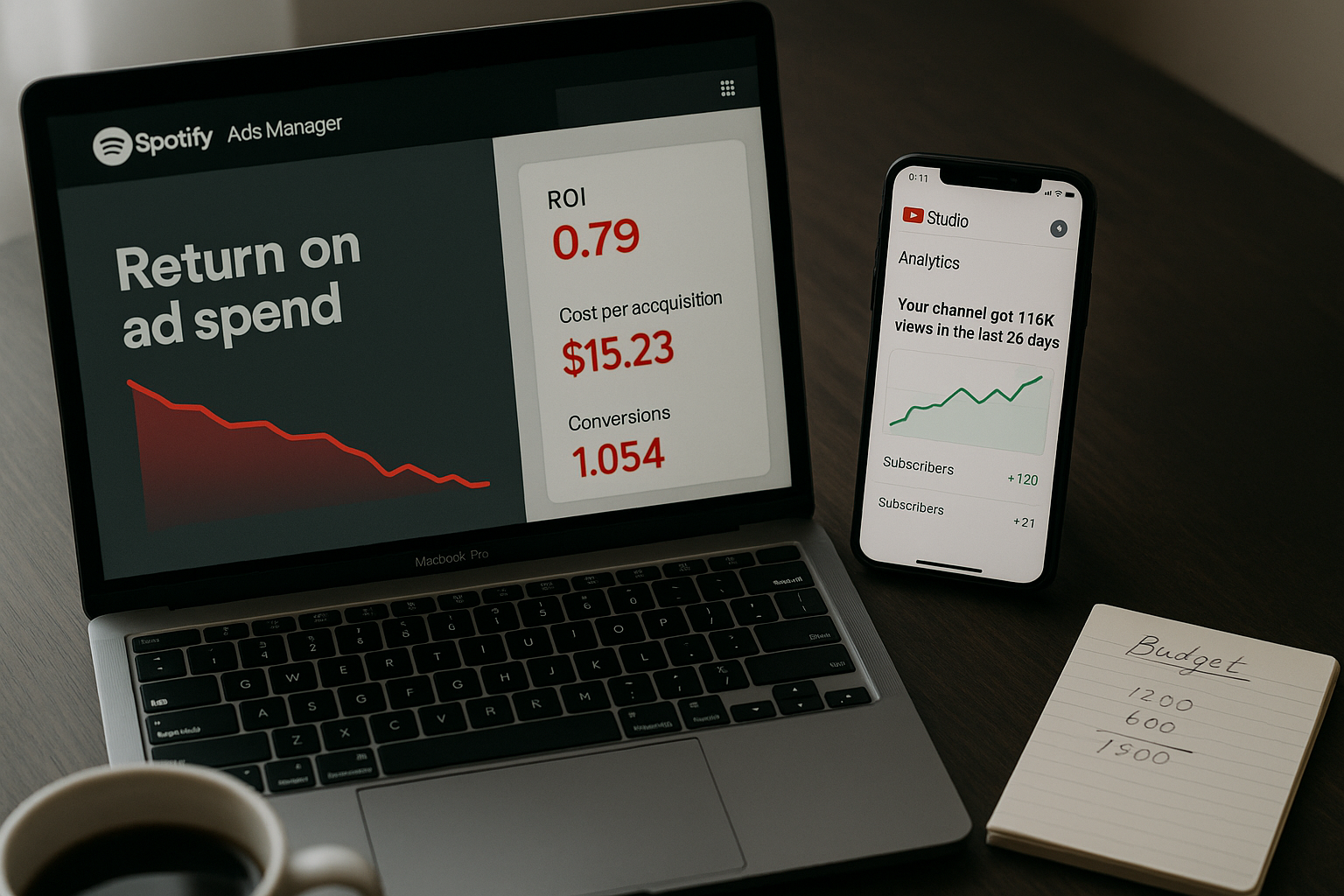
Building your fanbase with targeted social campaigns
How to build targeted social campaigns that convert followers into streams, not just content that fills your feed.
Key Takeaways
Random posting doesn't build a fanbase. Campaigns with clear goals and defined audiences do.
A campaign isn't just consistency. It's a timeframe, a target, and a repeatable content format.
Saves and shares matter more than likes. Track what converts, not what flatters your ego.
Paid ads only work when you're scaling proven content. Test organic first, then amplify what already works.
How to build targeted social campaigns that actually grow your fanbase
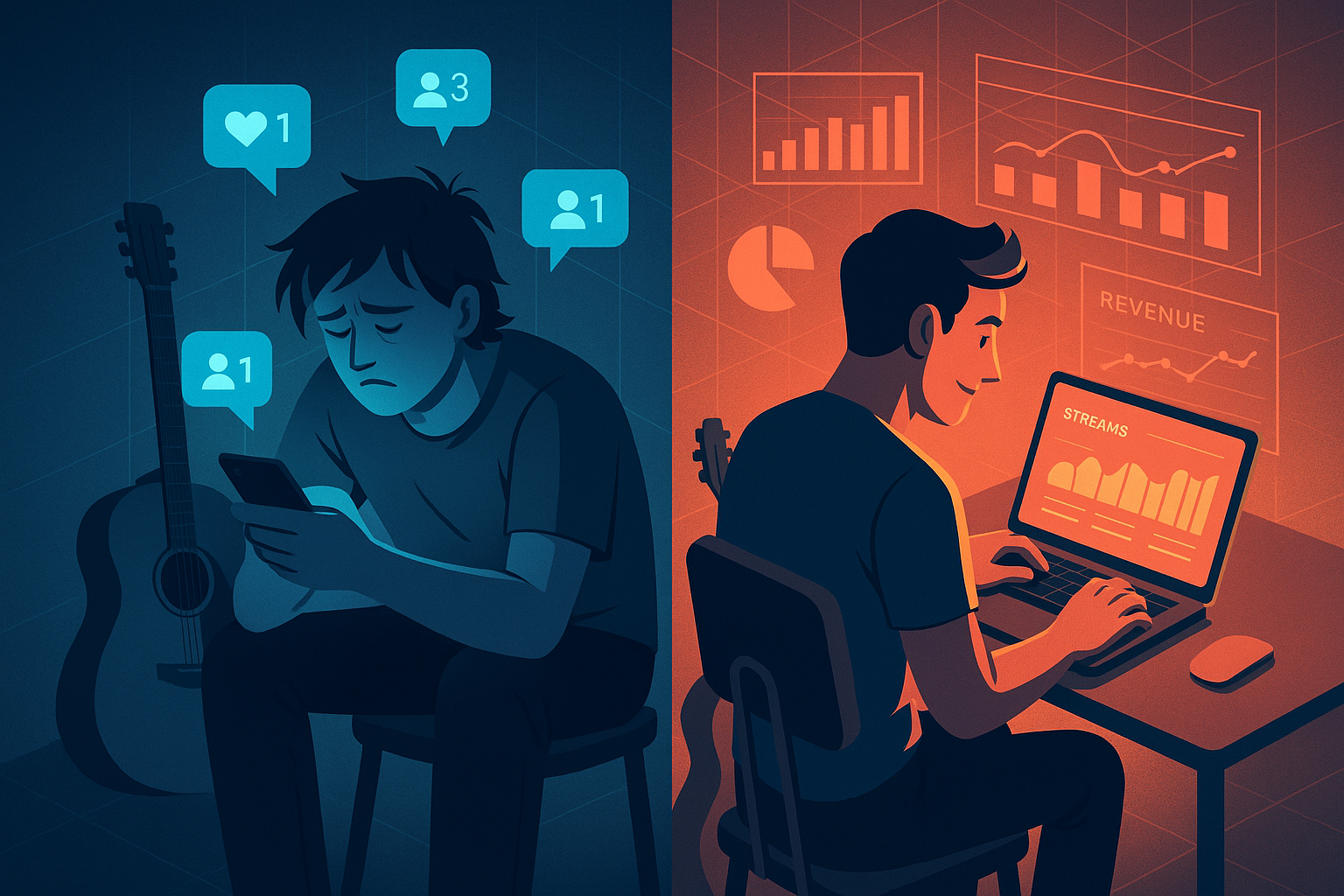
Most independent artists treat social media like a content treadmill. They post daily, chase trends, and wonder why their follower count stays flat. The problem isn't consistency. It's direction.
Growth comes from campaigns, not random posts. A campaign has a goal, an audience, and a timeframe. Everything else is just noise.
Why posting without strategy keeps you stuck
You've been told to post three times a day. You've been told to stay consistent. But consistency without a target is just busy work.
Most artists post whatever feels right in the moment. A studio clip on Monday. A lyric graphic on Wednesday. A personal story on Friday. There's no through line. No reason for someone to follow you today versus next month.
The shift you need to make is simple: stop posting content and start running campaigns.
What is a targeted social campaign?
A campaign is a focused effort with three elements:
Defined goal: Are you driving streams? Building your email list? Growing followers in a specific city?
Defined audience: Not "everyone who likes music." A specific listener profile based on genre, location, or behavior.
Defined timeframe: Campaigns run for two to four weeks. Not forever. Not randomly.
Without these three elements, you're just posting. And posting alone doesn't move the needle.
How to choose the right audience for your campaign
You need to know who you're talking to before you create a single piece of content.
Start by deciding: are you talking to existing fans or new listeners? The content strategy changes completely depending on your answer.
For existing fans:
- Go deeper. Share process, lyrics breakdowns, and early access.
- Use Instagram stories, close friends lists, and direct messages.
- The goal is conversion: streams, merch, email signups.
For new listeners:
- Lead with hooks. Your best 15 seconds. No context needed.
- Use TikTok, Reels, and YouTube Shorts.
- The goal is awareness: follows, saves, shares.
Once you know the audience type, get specific. Define the niche. If you make melodic rap, target fans of SZA and Brent Faiyaz, not "hip hop fans." If you're a bedroom pop artist, target listeners in college towns who engage with Clairo and Beabadoobee content.
Platform signals help you refine this. Look at who saves your posts, comments on your videos, and shares your music. That's your core audience. Build the campaign around them.
Campaign types that actually work
Not all campaigns are built the same. Here are the four formats that consistently drive results.
Release campaigns
These run two weeks before and two weeks after a single or EP drops. The goal is to maximize first-week streams and playlist adds.
Content types:
- Snippet videos with lyrics on screen
- Behind the scenes from the recording session
- Breakdown of the song's meaning or inspiration
- Pre-save links in bio, stories, and pinned comments
Repetition is the strategy. You're not annoying people. You're making sure they remember the release date.
Content series campaigns
These build momentum without a release. Think 30 days of freestyles, or a weekly "making the beat" series.
The benefit: familiarity. When someone sees the same format three times, they start to expect it. That expectation builds audience.
Pick one format. Commit to it for three to four weeks. Don't switch halfway through because you're bored. The audience needs time to catch on.
Community-driven campaigns
Challenges, duets, and reply threads. These campaigns rely on participation, not passive consumption.
Example: ask fans to remake your chorus in their own style. Repost the best ones. Tag them. Build a feedback loop.
This works because it gives people a reason to engage beyond liking a post. Participation creates investment.
Lead capture campaigns
The goal here is simple: get people off the platform and onto your email list.
Offer something valuable. A free download. Early access to a new song. A behind-the-scenes video pack. Drive traffic to a landing page with a clear call to action.
Email is the only audience you own. Social platforms can change algorithms overnight. Your email list can't be taken away.
Content strategy within a campaign
Once you pick a campaign type, you need a content plan. Here's the framework.
Repetition beats randomness. You're not creating 30 different ideas. You're creating three to five content formats and rotating them.
Example for a release campaign:
- Format 1: 15-second snippet with on-screen lyrics
- Format 2: Studio footage with voiceover explaining the song
- Format 3: Fan reaction or testimonial (if you have it)
- Format 4: Pre-save reminder with a hook from the track
- Format 5: Release day post with streaming links
Repeat these formats across platforms. TikTok gets the snippet. Instagram gets the studio footage. YouTube Shorts gets the reaction. You're not starting from scratch every day.
Hooks matter more than production quality. The first three seconds determine if someone keeps watching. Start with the most interesting moment. No intros. No setup.
Storytelling builds connection, but only after you've earned attention. Don't lead with context. Lead with impact.
Paid vs organic targeting
Organic reach is inconsistent. Paid ads give you control. But you need to know when to use each.
Use organic first. Test content formats, hooks, and messaging without spending a dollar. See what gets saved, shared, and commented on. That's your signal.
Use paid ads for validation and scaling. Once you have a video with strong organic performance (high save rate, high watch time), put $20 behind it. See if the engagement holds with a cold audience.
If it does, scale the budget. If it doesn't, go back to organic testing.
Retargeting is where paid ads really work. Run ads to people who've watched 75% of your videos, or engaged with your profile in the last 30 days. These people already know you. The ad is a reminder, not an introduction.
Never boost a post just because it exists. Only boost content that's already proven.
Measuring what matters
Likes are not the metric. Likes are passive. You need active engagement.
Here's what to track:
Saves: Someone wants to come back to this. High intent.
Shares: Someone is vouching for you to their network. Social proof.
Comments: Someone is invested enough to respond. Conversation.
Click-through rate: How many people went from your post to your link.
Conversion rate: How many people took the action you asked for (stream, sign up, follow).
Vanity metrics feel good. Conversion metrics build careers.
If you're running a release campaign, track how many people went from your post to Spotify. If you're running a lead capture campaign, track how many people joined your email list. Everything else is secondary.
Turning campaigns into systems
Once a campaign works, document it. Write down the content formats, the posting schedule, the audience you targeted, and the results you got.
This becomes your playbook. Next time you release a single, you don't start from scratch. You run the same campaign structure with new content.
Over time, you build a repeatable growth engine. You know what works. You know how long it takes. You know what to expect.
That's how independent artists scale without burning out. Not by posting more, but by running smarter campaigns.
Final word
Fanbase growth isn't luck. It's not about going viral. It's about structured campaigns executed consistently.
Artists who treat content like strategy win. Artists who post randomly stay stuck.
Pick a campaign type. Define your audience. Create three to five content formats. Run it for three weeks. Measure what matters. Document what works.
Then do it again.
**
Related Reading:
- How to Build a Consistent Content Strategy for Artists
- Email Marketing for Music Artists: Turning Fans into Community
- How to Monetise Your Audience as an Independent Artist
Ready to streamline your workflow?
Stop piecing together spreadsheets and scattered notes. Join the waitlist for Music Artist Manager and get your entire rollout in one place.
Written By
Gavin Alexander
Senior Marketeer
As the founder of Music Artist Manager, Gavin has spent years at the intersection of music and technology. Seeing firsthand how chaotic release rollouts and split sheets can be, he designed a platform that brings major-label infrastructure to independent artists and their teams. He writes extensively about industry trends, artist leverage, and workflow optimisation.