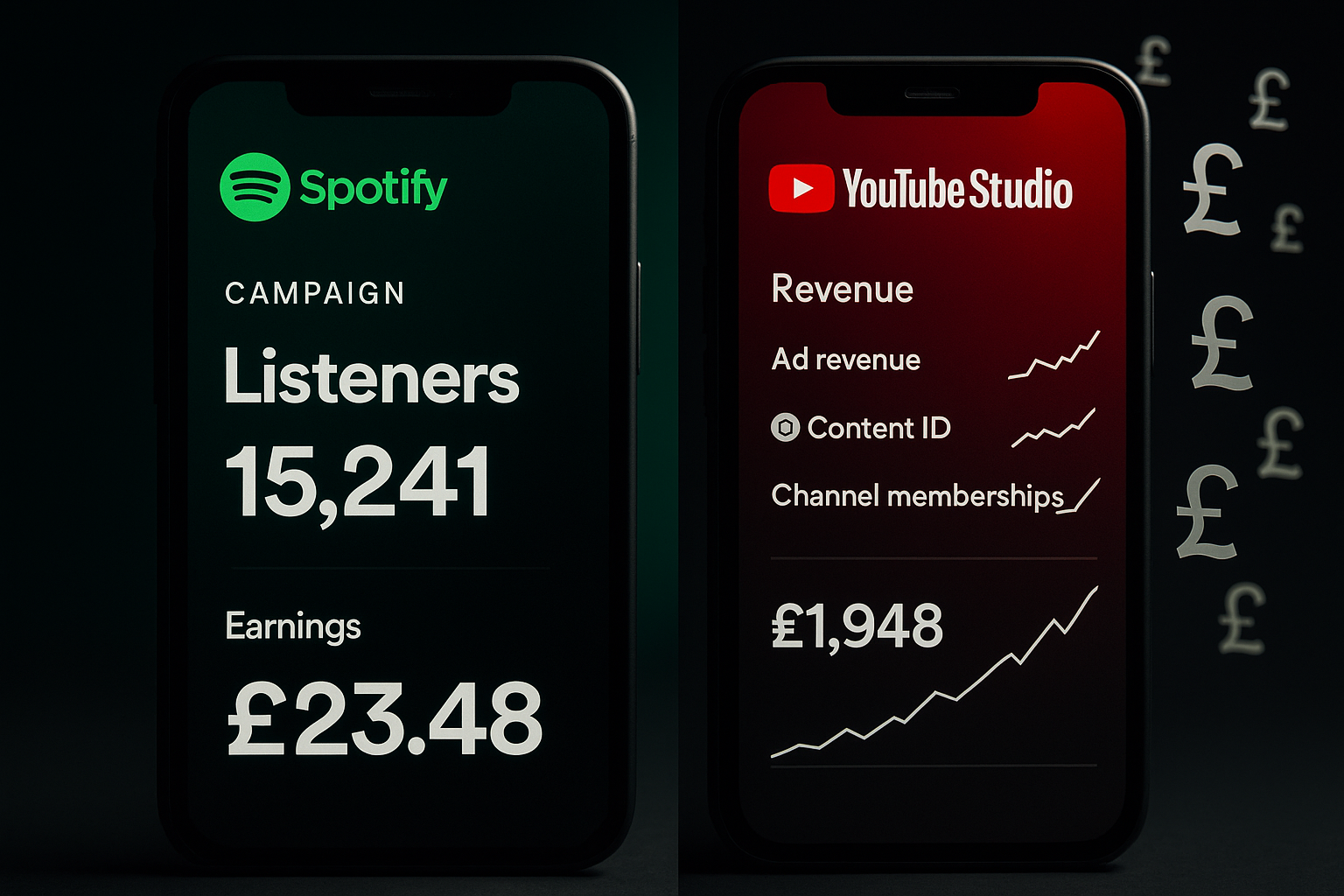
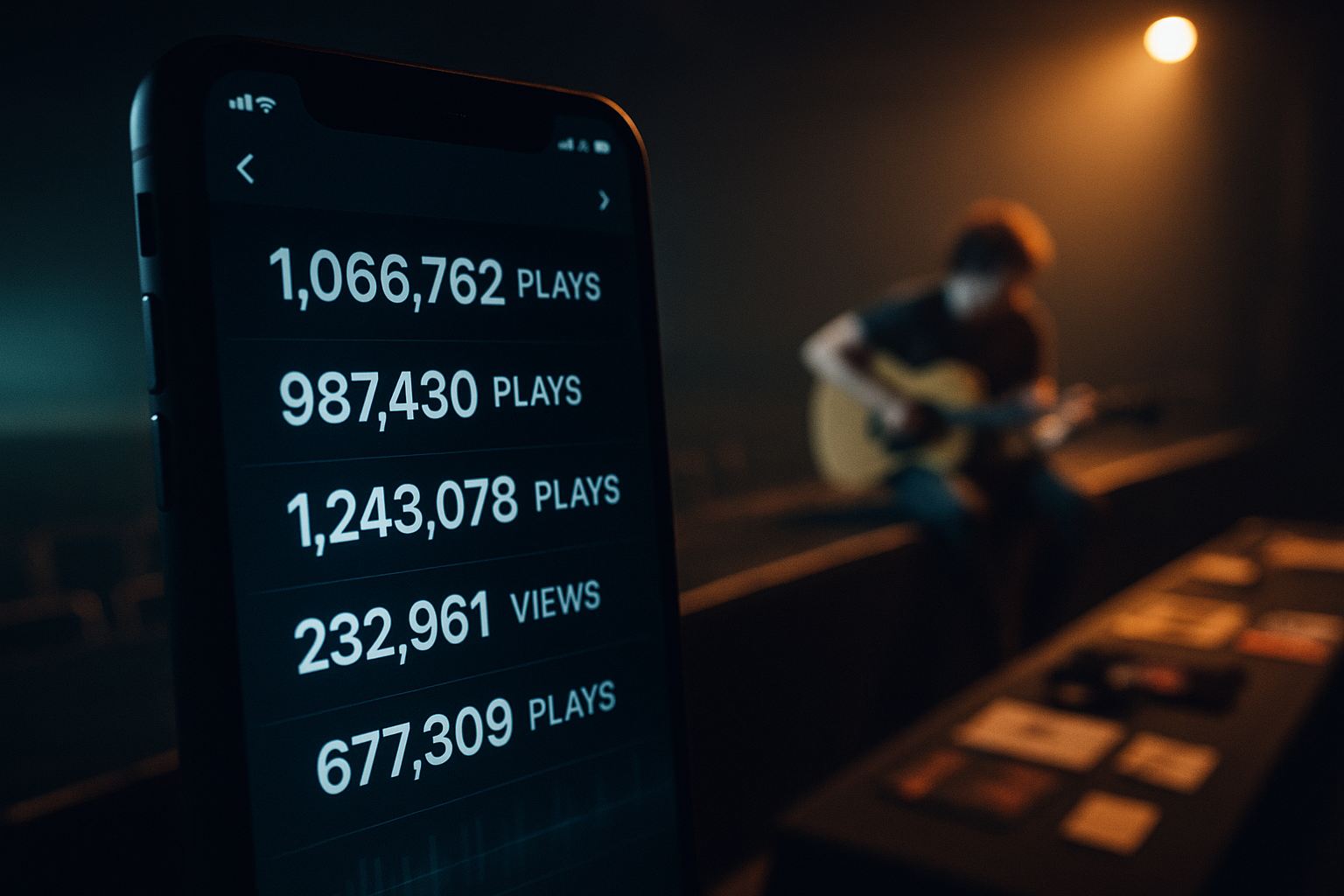
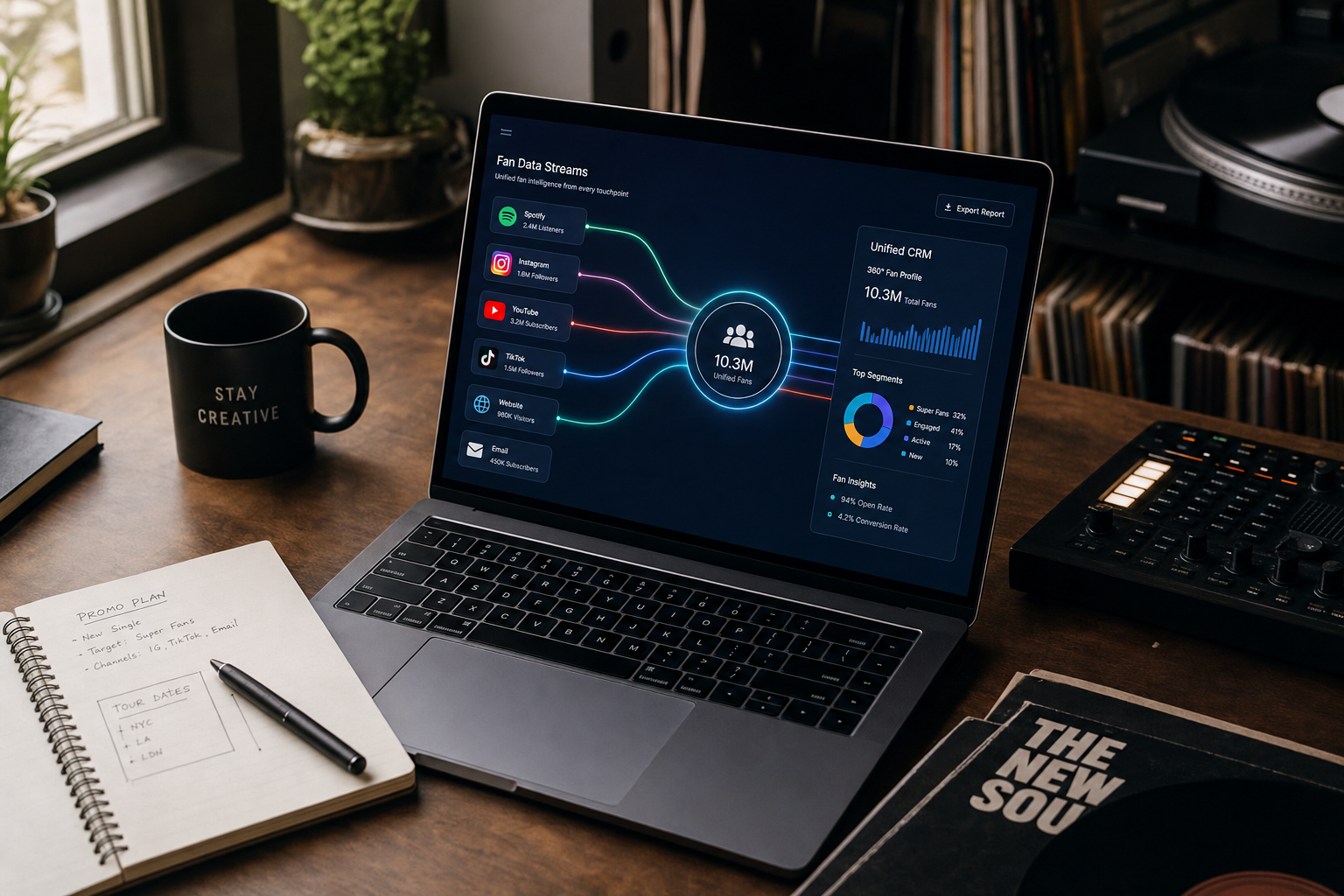
Why 1,000 superfans are worth more than 100,000 TikTok followers
Learn why building your own CRM gives you more control, better data, and long-term leverage than renting attention on social platforms.
Key Takeaways
You don't own followers. You own email addresses and phone numbers.
Paid ads stop working the second you stop paying. A CRM compounds forever.
Every stream without a conversion funnel is leaving money on the table.
Build your database now or spend the next five years rebuilding from scratch.
You do not own your Instagram followers. You do not control your TikTok reach. Every minute you spend chasing platform algorithms is time spent building someone else's asset. The shift to owned audiences is not coming later. It is here now, and the tools to make it happen are already in your hands.
You've built a TikTok following of 50,000 fans. You drop a single. The algorithm shows it to 800 people. You don't own that audience. You're renting it.
Every platform you post to is borrowed land. Instagram changes the feed. Spotify adjusts playlist placements. TikTok tweaks the FYP. Your reach drops by 70% overnight, and there's nothing you can do about it.
This is why serious artists are building CRMs.
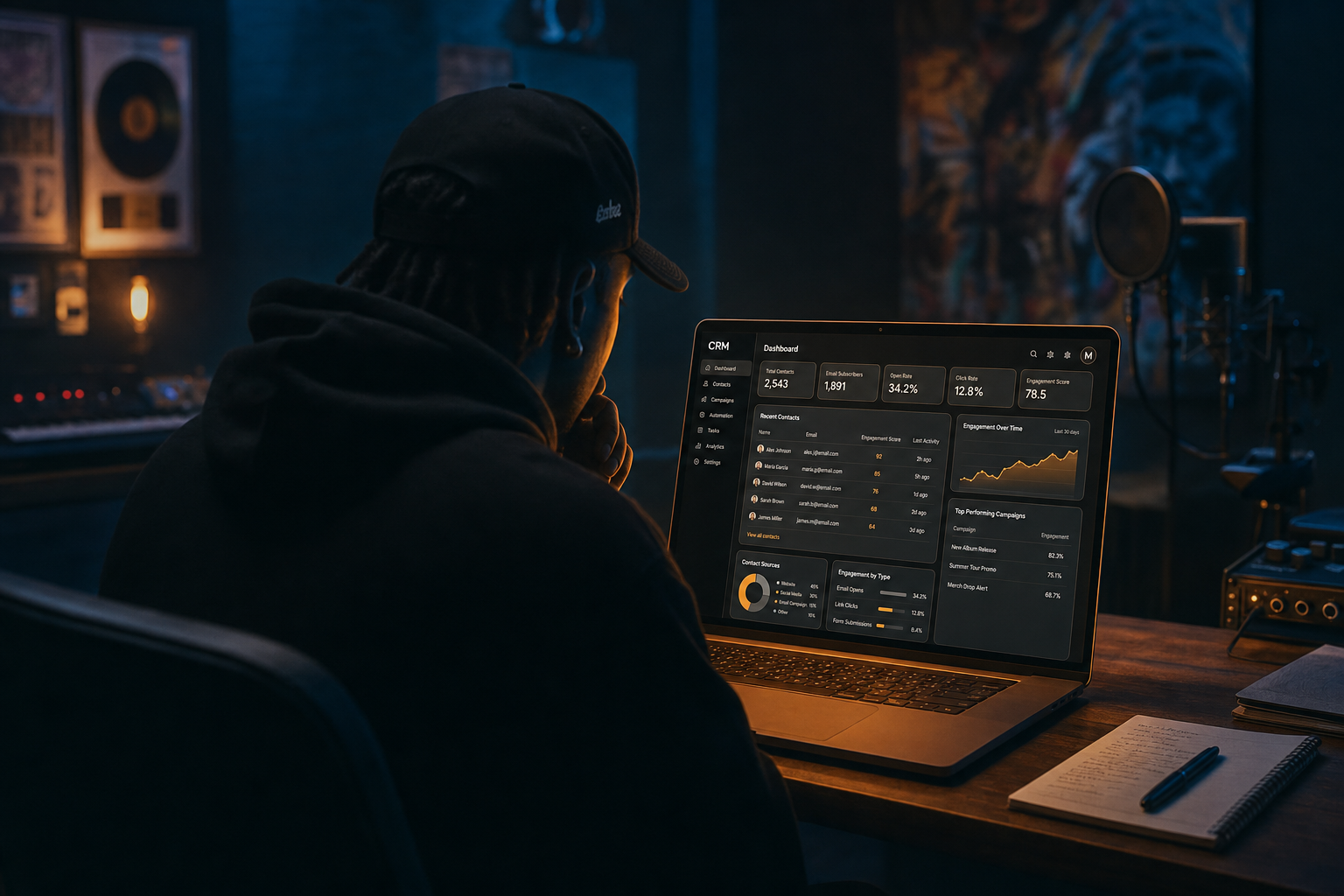
What a CRM actually does for artists
A CRM is a customer relationship management system. In practice, it's a database of everyone who has ever shown interest in your music. Email addresses. Phone numbers. Purchase history. Show attendance. Streaming behavior.
It's the only marketing asset you truly own.
When you have 5,000 email addresses, you can reach 5,000 people whenever you want. No algorithm. No ad spend. No platform risk. You write an email, hit send, and it lands in their inbox. Open rates for independent artists with engaged lists sit between 25% and 40%. That means 1,250 to 2,000 people see your message every time you send one.
Compare that to paying Meta $200 to reach the same number through ads, or hoping the TikTok algorithm picks your video.
How to start building your CRM today
You don't need expensive software. Start with a simple email tool. Mailchimp, ConvertKit, or Klaviyo all work. Pick one and set it up this week.
Then create capture points. These are places where fans can give you their contact info:
- A landing page offering an unreleased track or acoustic version in exchange for an email
- A text-to-join number promoted in your Instagram bio and at live shows
- A pre-save campaign that collects emails before your next release
- A merch purchase flow that adds buyers to your list automatically
Every artist I've managed who scaled past six figures in annual revenue had one thing in common. They owned their audience data.
What to send once you have a list
This is where most artists freeze. They build the list, then never email it because they don't want to "bother" people.
You're not bothering anyone. They signed up because they want to hear from you.
Send a welcome email immediately when someone joins. Introduce yourself. Link to your best three songs. Tell them what to expect. This sets the relationship.
Then send regularly. Once every two weeks minimum. Share:
- New releases 48 hours before they go live on DSPs
- Behind-the-scenes studio footage or writing sessions
- Ticket pre-sales for shows in their city
- Merch drops or limited vinyl runs
- Honest updates about what you're working on
The artists who treat their email list like a direct line to their core fans see the highest conversion rates when it's time to sell tickets, move merch, or fund a project.
The math that changes everything
Let's say you release four projects a year. You email your list two weeks before each release and again on launch day. That's eight emails.
If 30% of your list opens each email, and 10% of openers click through to stream or pre-save, here's what happens with a 5,000-person list:
- 1,500 opens per email
- 150 clicks per email
- 1,200 engaged actions per release cycle
Those 1,200 actions trigger algorithmic momentum on Spotify, Apple Music, and YouTube. Early saves and streams tell the platform your release has heat. That pushes you into editorial consideration and algorithmic playlists.
You didn't rent that momentum. You owned it.
Stop optimizing for platforms that don't care about you
Social platforms will always prioritize their business model over your career. That's not evil. It's just how they work.
Your job is to use those platforms as top-of-funnel tools. Drive attention to capture points. Move people from rented land to owned land.
Every post should have a purpose. Either it's building awareness or it's moving someone closer to your CRM. If it's doing neither, don't post it.
What happens when you own your audience
You can test new music directly with your most engaged fans before spending money on a full release. You can sell out a 300-cap venue by sending one email. You can fund a project through pre-orders without waiting on a label advance.
You have leverage in negotiations because you can prove audience size and engagement rates. You have data to show a promoter or a booking agent or a brand partnership.
Most importantly, you have stability. When a platform changes its algorithm or kills your reach, your business doesn't collapse. You still have a direct line to the people who actually care.
Stop renting attention. Start building a CRM. The artists who figure this out early are the ones who build sustainable careers.
Ready to streamline your workflow?
Stop piecing together spreadsheets and scattered notes. Join the waitlist for Music Artist Manager and get your entire rollout in one place.
Written By
Gavin Alexander
Senior Marketeer
As the founder of Music Artist Manager, Gavin has spent years at the intersection of music and technology. Seeing firsthand how chaotic release rollouts and split sheets can be, he designed a platform that brings major-label infrastructure to independent artists and their teams. He writes extensively about industry trends, artist leverage, and workflow optimisation.