Managing your music catalogue as a high-yield financial asset
Stefflon Don sold her entire catalogue in a multimillion-dollar deal, becoming the latest artist to cash out on her master recordings and publishing rights.


Key Takeaways
• Stefflon Don sold her entire catalogue in a multimillion-dollar deal, becoming the latest artist to cash out on her master recordings and publishing rights.
• Catalogue sales are not just for legacy acts anymore. They are now a viable liquidity option for independent artists who own their masters.
• You can sell your catalogue outright, license specific tracks for media placements, or borrow against future royalties without giving up ownership.
• Each option serves a different financial goal. Understanding the mechanics determines whether you maintain long-term income or extract capital now.
Stefflon Don sold her catalogue for multiple millions while still actively releasing music. This is not about retiring. It is about converting future royalty income into immediate capital, and it shows how catalogue sales have become a strategic financial tool for working artists who own their rights.
Stefflon Don just sold her catalogue for multiple millions. This is not a retirement move. This is a calculated financial decision by an artist still actively releasing, and it signals where the independent music economy is heading.
The catalogue sale market has shifted. What was once reserved for heritage acts and artists approaching the end of their careers is now a strategic tool for working musicians. Stefflon Don is 32 years old. She is not slowing down. She sold her catalogue because someone valued it highly enough to write a cheque that changed her financial position immediately.
This is not about legacy. It is about leverage.
Why catalogue sales matter now
Catalogue valuations have risen sharply over the past five years.Music catalog sales grew 180% last year, driven by investment funds, publishing companies, and independent buyers actively purchasing master recordings and publishing rights from artists at multiples of annual royalty income. The standard valuation range sits between 10x and 20x net publisher's share for publishing, and 8x to 15x for masters, depending on catalogue performance, predictability of income, and cultural relevance.
For independent artists who own their masters and publishing, this creates a new financial instrument. You are sitting on an asset that can be monetised now, not just over decades.
The shift matters because it gives artists access to capital without traditional label advances, without giving up future creative control, and without waiting for streaming income to compound slowly over time.
What you are actually selling
When you sell your catalogue, you are selling future income. The buyer acquires the right to collect all royalties generated by your recordings and compositions. That includes streaming revenue, sync placements, radio play, public performance, mechanical royalties, and any other income tied to those works.
You receive a lump sum. The buyer receives everything those songs earn going forward.
There are two main components you can sell separately or together.
Master recordings: These are the actual recorded versions of your songs. If you own your masters, you control the sound recording copyright. Selling your masters means the buyer now collects recording royalties from DSPs, sync deals, and neighbouring rights.
Publishing rights: These are the underlying compositions. The lyrics and melody. If you are the songwriter, you own the publishing. Selling your publishing means the buyer collects mechanical royalties, performance royalties, and sync fees tied to the composition, regardless of who recorded it.
You can sell one without the other. Many artists sell masters but keep publishing, or vice versa. The deal structure depends on what you want to retain and what the buyer values most.
Who is buying
Catalogue buyers fall into several categories. Each operates with different goals and different valuation models.
Music rights investment funds: These are financial entities that treat music catalogues as income-generating assets. They pay multiples based on projected cash flow. Examples include Hipgnosis Songs Fund, Primary Wave, and Concord.
Major publishers: Companies like Sony Music Publishing, Universal Music Publishing Group, and Warner Chappell acquire catalogues to expand their administration portfolios and increase their share of global royalty collection.
Independent buyers and syndicates: Smaller funds, private investors, and artist-focused buyers who target niche catalogues or emerging artists with strong streaming momentum. Royalty Access Studio recently launched with plans to deploy £20 million in artist financing.
Direct artist-to-artist sales: Some artists buy each other's catalogues as investments or creative collaborations.
Each buyer type offers different deal terms, different levels of creative involvement post-sale, and different speeds of closing. Knowing who you are negotiating with shapes what you can ask for.
Licensing vs selling vs borrowing
You do not have to sell outright. There are other ways to monetise your catalogue while retaining ownership.
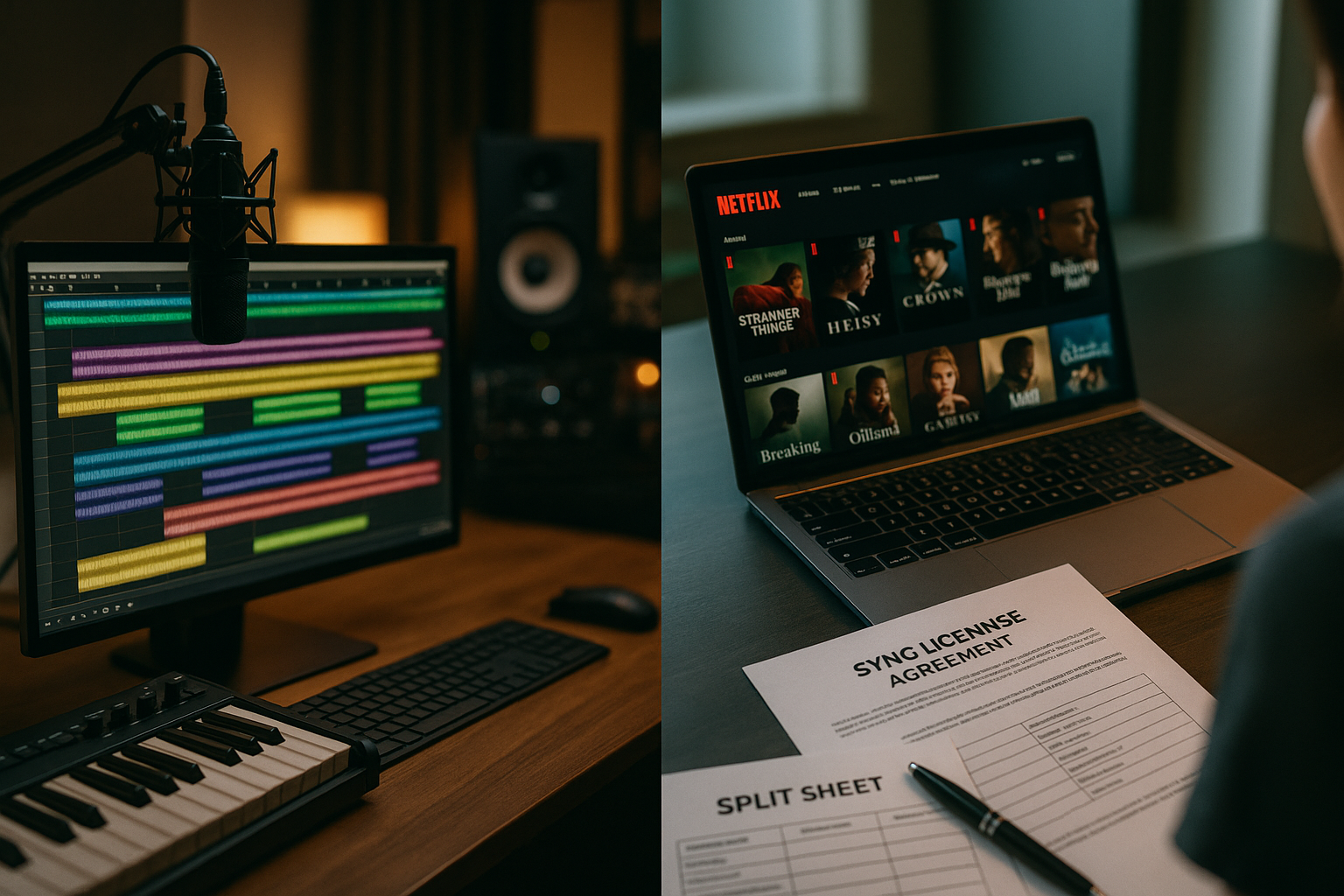
Licensing: You grant a third party the right to use your music in a specific context for a set period. This includes sync deals for film, TV, ads, games, or trailers. You keep ownership. You collect a one-time fee or ongoing royalties depending on the deal.
Catalogue financing: You borrow money using your future royalties as collateral. The lender advances you capital based on projected earnings. You repay the loan from royalty income over time. You retain ownership. This is sometimes called royalty-backed financing or music IP lending. Companies like Lyric Financial, Sound Royalties, and Beatdapp offer this.
Partial sales: You sell a percentage of your catalogue rather than the whole thing. For example, you might sell 50% of your publishing. You still collect half the income. The buyer collects the other half. This gives you liquidity while maintaining ongoing revenue.
Each option serves a different need. If you need capital now but want to keep long-term income, licensing or financing might fit better. If you want to cash out fully and reinvest elsewhere, a sale makes sense.
What your catalogue is worth
Valuation depends on performance, consistency, and predictability. Buyers look at trailing 12-month royalty income, growth trends, and catalogue age.
A catalogue earning £50,000 annually might sell for £500,000 to £750,000 depending on those factors. A catalogue earning £10,000 annually might sell for £80,000 to £150,000.
Buyers also assess cultural relevance, sync potential, and whether the catalogue includes evergreen tracks or viral hits that may fade.Queen made history selling their catalogue for more than $1 billion, but that reflects decades of consistent global income and cultural staying power.
If your catalogue is tied to a single viral moment, expect lower multiples. If your catalogue shows steady growth across multiple releases, expect higher offers.
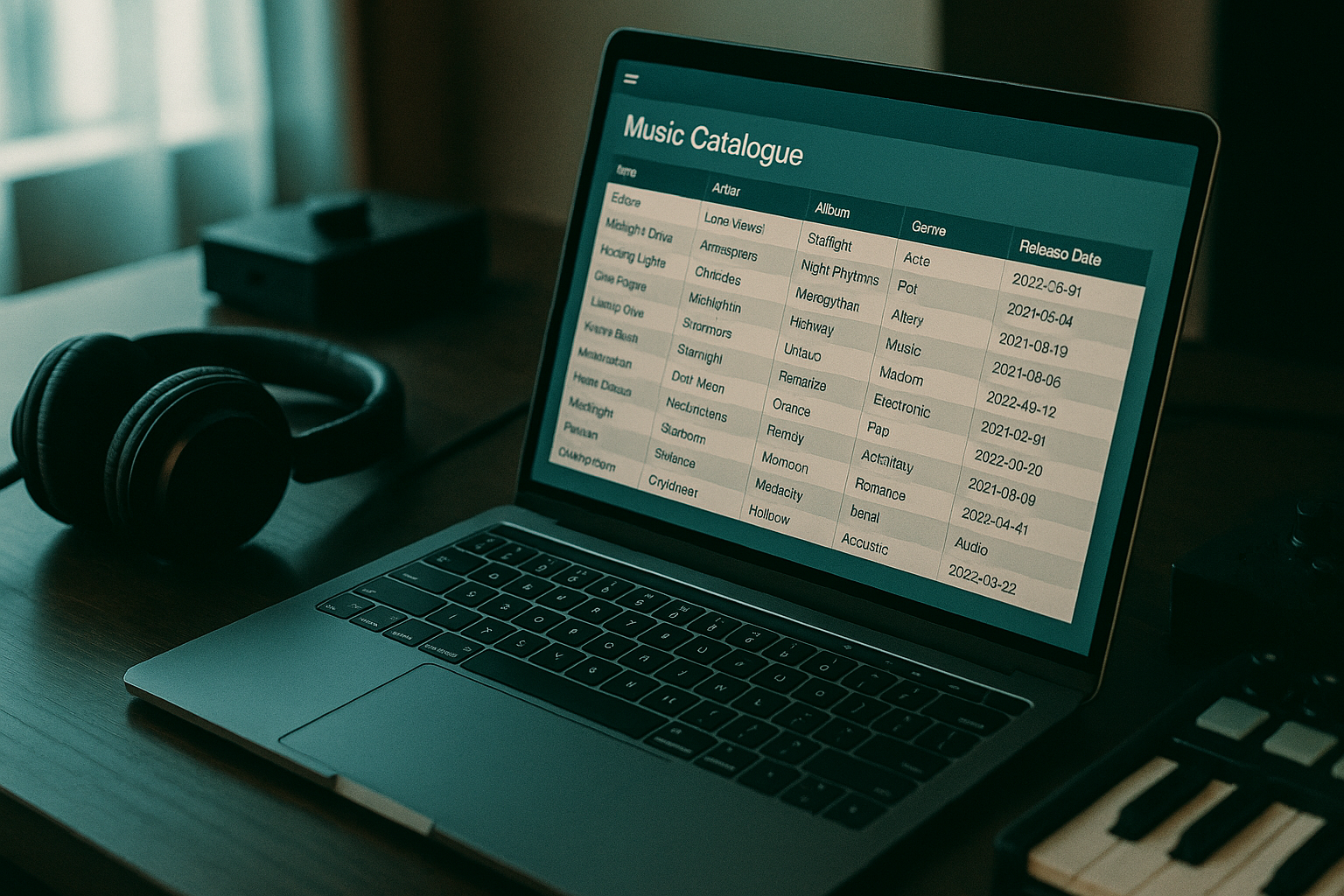
You will need clean metadata, clear ownership, registered works with your PRO and CMO, and ideally three years of consistent royalty statements. The cleaner your data, the faster the deal closes and the higher the valuation.
Who this applies to
This is not only for artists with millions of streams. If you own your masters, have consistent royalty income, and can document it, you have a sellable asset.
Buyers are increasingly interested in independent catalogues with 500,000 to 5 million monthly streams, especially if income is growing and the artist is still active.
You do not need to be retiring. You do not need to be famous. You need to own your rights, have verifiable income, and understand what you are signing away.
Who this does not apply to
If you do not own your masters or publishing, you have nothing to sell. If you signed a traditional label deal where the label owns your recordings, those rights are not yours to monetise.
If your catalogue income is inconsistent or undocumented, buyers will either lowball you or pass entirely. If you have unresolved splits, unregistered works, or disputed ownership, you will not close a deal until that is fixed.
If you are early in your release cycle with one or two singles and no track record, you are not yet in the buyer's range. Build the catalogue first. Prove the income. Then explore liquidity.
What to do next
If you are curious whether your catalogue has value, start by pulling your royalty statements. Calculate trailing 12-month income from all sources. Masters and publishing. Streaming, sync, performance, mechanical.
Register every work with your PRO and your local CMO. Make sure splits are documented and agreed with all collaborators. Clean metadata now saves months during due diligence.
If your catalogue is generating consistent income and you want to explore a sale, speak with a music attorney who specialises in catalogue transactions. Do not approach buyers directly without representation. You will leave money on the table.
If you want to retain ownership but need capital, research royalty-backed financing. Run the numbers. Understand repayment terms. Compare offers.
If you are not ready to sell but want to increase catalogue value, focus on growing streaming income, landing sync placements, and keeping your releases active in playlists and algorithms. Every incremental increase in monthly income raises your valuation multiple.
Your catalogue is not just your past work. It is a financial asset. Treat it like one. Track it. Protect it. Understand what it is worth. Then decide whether to hold, borrow, or sell based on where you are financially and where you are going creatively.
Music Artist Manager gives you the infrastructure to manage your catalogue, track splits, store contracts, and prepare for these conversations before they happen. If you are serious about treating your music like a business, this is where you start. Visit Music Artist Manager and get your catalogue in order.
Further Reading:
- Music Catalog Sales Grew 180% Last Year — Billboard — https://www.billboard.com/pro/music-catalog-sales-grew-180-percent/
- Music industry veteran Tony Latham launches Royalty Access Studio — Music Business Worldwide — https://www.musicbusinessworldwide.com/music-industry-veteran-tony-latham-launches-royalty-access-studio-with-plans-to-deploy-20m-in-artist-financing-over-next-12-months/
- Queen Makes History As They Sell Their Catalog For More Than $1 Billion — Forbes — https://www.forbes.com/sites/hughmcintyre/2024/06/20/queen-makes-history-as-they-sell-their-catalog-for-more-than-1-billion/
Ready to streamline your workflow?
Stop piecing together spreadsheets and scattered notes. Join the waitlist for Music Artist Manager and get your entire rollout in one place.
Written By
Gavin Alexander
Senior Marketeer
As the founder of Music Artist Manager, Gavin has spent years at the intersection of music and technology. Seeing firsthand how chaotic release rollouts and split sheets can be, he designed a platform that brings major-label infrastructure to independent artists and their teams. He writes extensively about industry trends, artist leverage, and workflow optimisation.