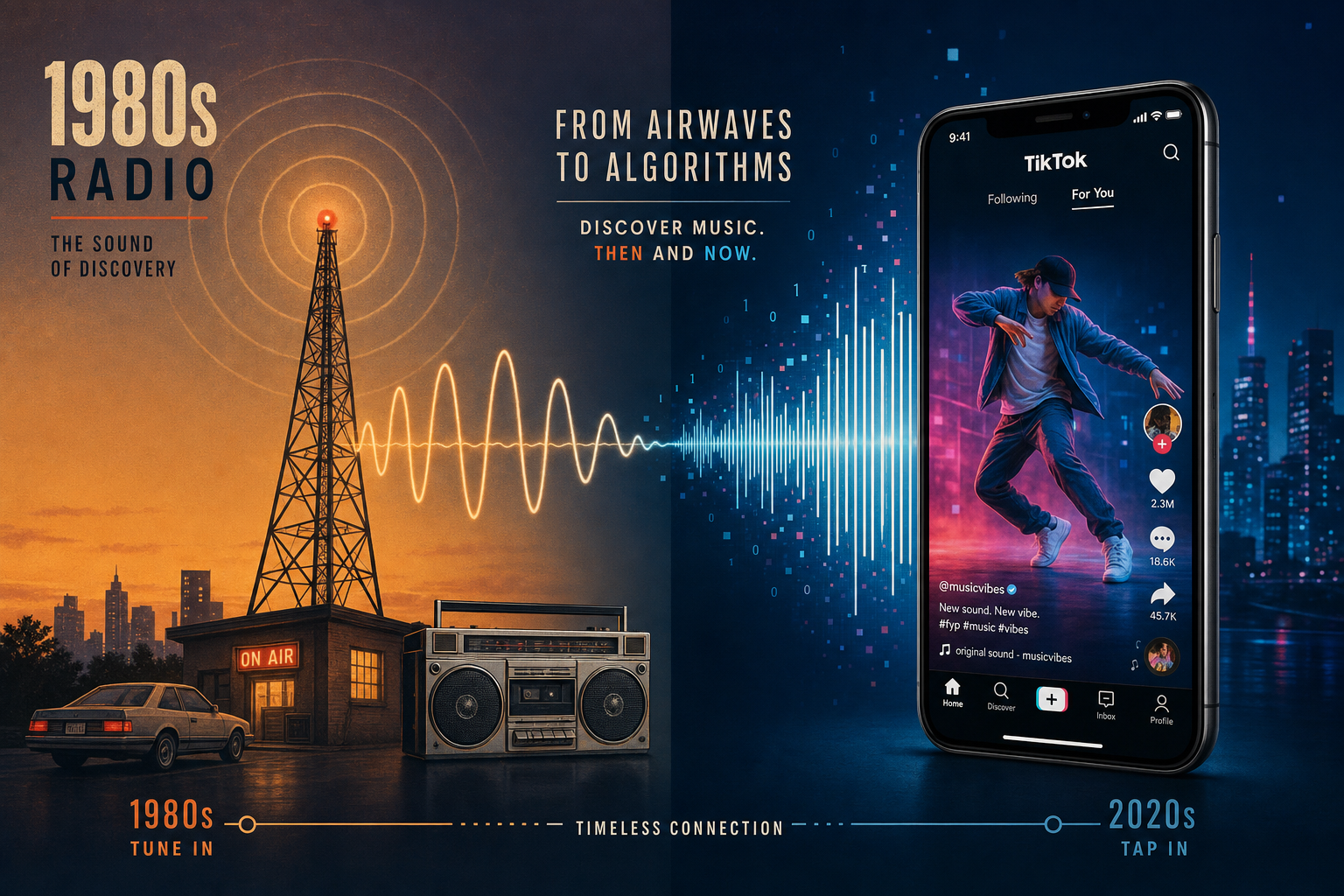
Outperforming polished marketing with authentic artist identity
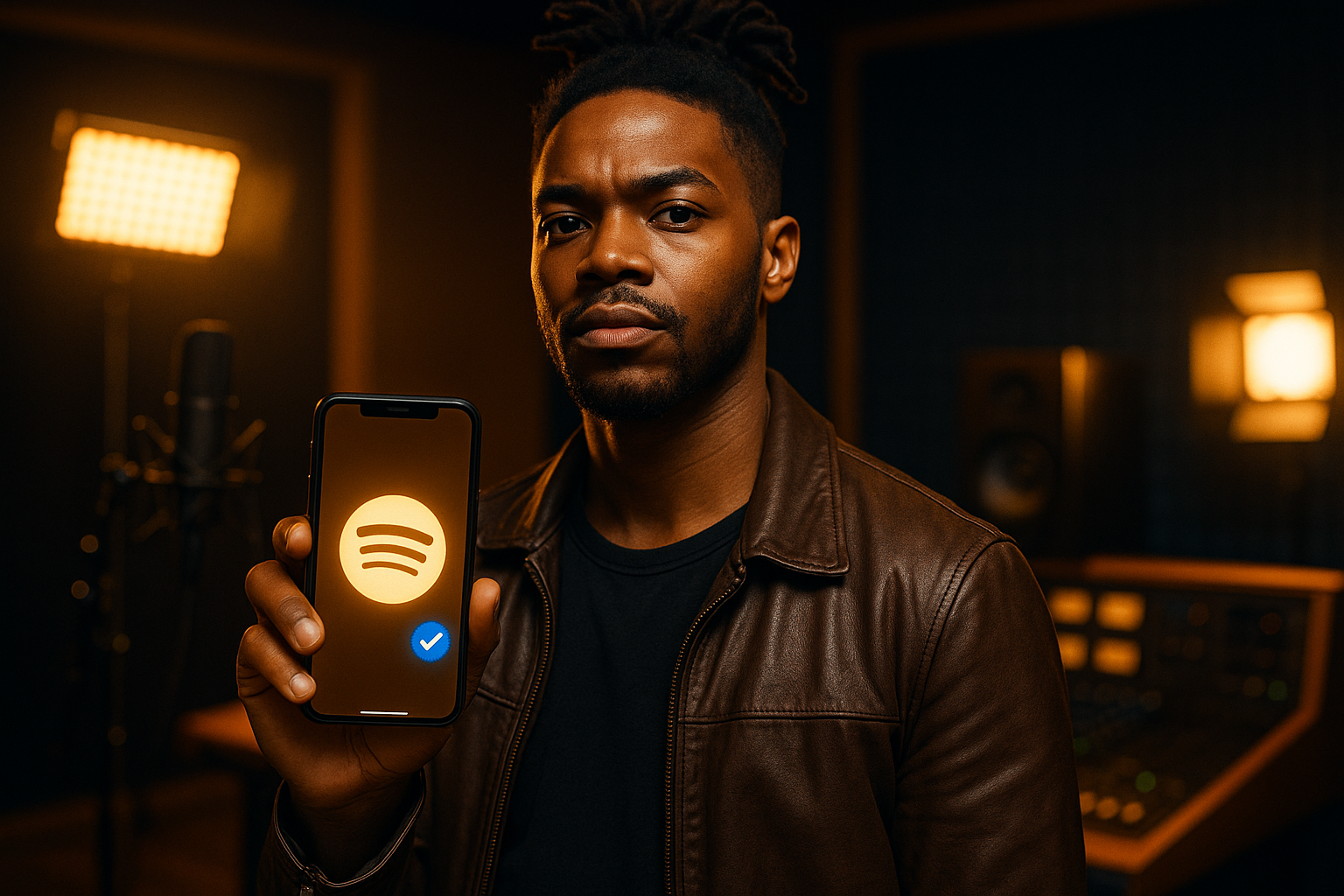
Spotify's verification badge now separates human artists from AI-generated spam, and fans are actively looking for proof you're real.
Key Takeaways
Spotify's verification badge is now a credibility filter that fans actively look for before listening.
AI-generated music floods playlists at scale, making your provable humanity a structural competitive advantage.
Documenting your creative process creates a verifiable trail that algorithmic personas cannot replicate or fake.
Verification requires official web properties and social handles that stack proof of your intentionality as an artist.
Spotify now separates human artists from AI-generated accounts with verification badges. Fans are actively looking for that badge, and being unverified is starting to hurt your credibility. Your humanity isn't a liability anymore—it's a structural advantage in a saturated market.
Spotify just rolled out verification badges to separate human artists from AI-generated personas. But here's what matters: fans are now actively looking for that badge. Being unverified is becoming a liability.
This isn't about gatekeeping. It's about survival in a market flooded with algorithmically generated content. If you're an independent artist competing for playlist spots and listener attention, your humanity just became your most valuable asset.
The market shifted while you weren't looking
AI music generation tools like Mubert and Loudly are proliferating. Spotify saw enough AI avatar spam to intervene with a verification system. The data tells the story: only 14% of Spotify's 11 million artists have more than 10,000 monthly listeners. The rest are fighting algorithmic noise.
Independent artists competing against AI doesn't mean fighting algorithms. It means standing out as provably human.
The problem is structural. AI-generated music is free to produce at scale. It floods playlists. Algorithms favor novelty over quality. A bot can release 50 tracks in the time it takes you to finish one song.
How spotify's verification system actually works
Spotify's badge functions as a quality filter. It confirms you're a real artist with a documented presence, not an algorithmic content farm.
Who qualifies: artists with an established web presence, verified social media handles, and a clear trail of authenticity. Spotify checks for official websites, documented creative processes, and consistent engagement patterns that only humans produce.
What it signals to fans: this artist is real. They make intentional creative choices. They're present in their work.
Your humanity is not a liability. It's an asset that machines cannot replicate.
The reality of eligibility
The badge alone doesn't guarantee growth. It's a necessary credibility signal, not sufficient.
Early-stage artists may not qualify for verification immediately. But you can start building the trail of authenticity now. Official website. Real social media. Documented creative process.
This applies hardest to independent artists in saturated genres where AI poses the most direct threat: lo-fi, electronic, ambient. If you're in these spaces, verification is not optional.
Build your authenticity infrastructure now
Here's the tactical playbook:
1. claim your official Spotify artist profile
Do not let a third party or algorithmic auto-generation own your profile. Take ownership through Spotify for Artists. This is the foundation.
2. document your creative process
Begin posting behind-the-scenes content: studio sessions, production decisions, the human choices behind your music. This builds a verifiable record of intent.
Algorithmic personas don't show mixing board decisions at 2am. You do.
3. create official web presence
Register a website. Use your artist name as the domain (artistname.com, not a Spotify link tree). Spotify's verification process checks for official web properties as proof of intentionality.
Your website is evidence that you're building a business, not generating content.
4. build verified social handles
Use platform verification where available: Instagram, Twitter, TikTok verified badges. Stack these signals. They corroborate your authenticity.
Each verified handle is another data point that confirms you're real.
5. engage authentically with your fanbase
Respond to DMs. Engage in comments. Share your real story. Algorithmic personas don't do this. Humans do. Make that visible.
Fans exhausted by algorithm-optimized content are looking for artists who are actually present.
6. when you're eligible, apply for verified by Spotify
Understand the criteria. Make sure you have the paper trail to back your claim of being the real artist. The application process is straightforward if you've built the infrastructure.
Scarcity is the enemy, not AI
AI is not your enemy. Scarcity is.
In a world of infinite content, being verifiably human is not nostalgia. Having a real name, a real story, real engagement - that's your structural advantage.
The artist who is present, documented, and undeniably real wins the attention of fans who are exhausted by algorithm-optimized content.
Verification is not a badge. It's a commitment to being present in the work you create.
That presence is what AI cannot replicate. That presence is what fans are searching for when they look for that verification symbol.
Build the infrastructure now. Document your process. Be undeniably real.
That's the competitive moat.
- Download the Artist Authenticity Toolkit: 7 signals of credibility that help fans (and algorithms) trust you're real.
Further Reading:
- Introducing Verified by Spotify, a Signal of Authenticity and Trust for the Artists Behind the Music — Spotify Newsroom — https://newsroom.spotify.com/2026-04-30/verified-by-spotify-badge-artist-details/
Ready to streamline your workflow?
Stop piecing together spreadsheets and scattered notes. Join the waitlist for Music Artist Manager and get your entire rollout in one place.
Written By
Gavin Alexander
Senior Marketeer
As the founder of Music Artist Manager, Gavin has spent years at the intersection of music and technology. Seeing firsthand how chaotic release rollouts and split sheets can be, he designed a platform that brings major-label infrastructure to independent artists and their teams. He writes extensively about industry trends, artist leverage, and workflow optimisation.